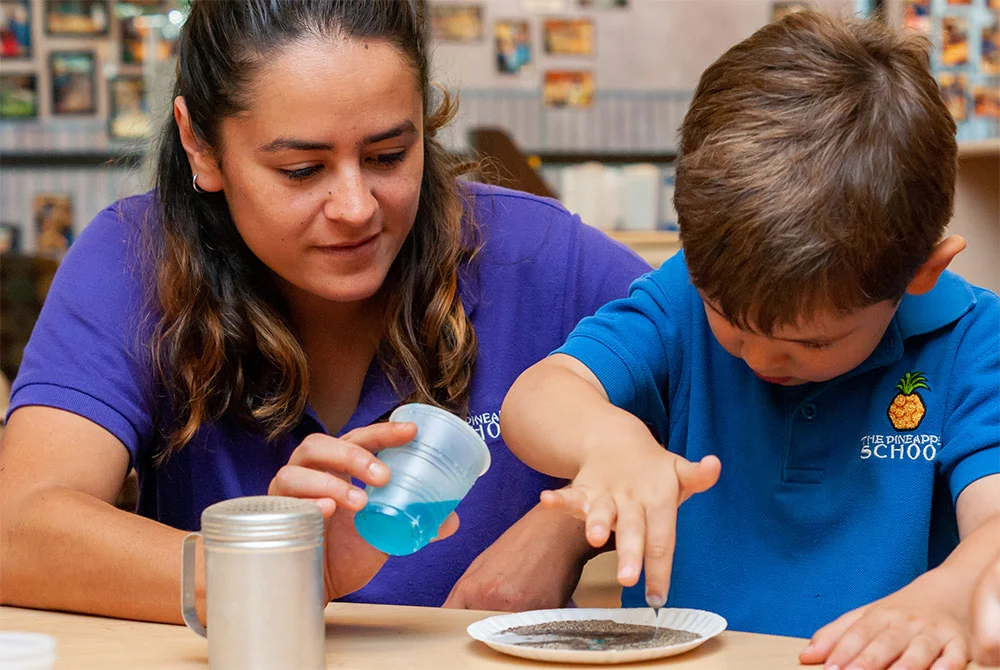
Traditional education, often relying on lectures and memorization, can fail to connect learning with real-world application. Contextual learning offers an alternative by linking new information to meaningful situations, helping students connect academic concepts to their everyday lives, future careers, and personal interests.
The Benefits of Learning in Context
Shifting to a contextual learning model offers significant advantages for learners of all ages. By grounding abstract ideas in practical reality, this approach makes education more relevant, memorable, and impactful.
Enhanced Memory and Retention
Have you ever crammed for an exam, only to forget most of the information a week later? This happens because the information was learned without a proper frame of reference. Contextual learning solves this problem by creating strong neural connections. When you learn something in the context of its application, your brain links the new knowledge to existing memories and experiences. This makes the information more meaningful and much easier to recall later. For example, learning about fractions by baking a cake is more memorable than simply completing a worksheet.
Deeper Engagement and Motivation
When students see the relevance of what they are learning, their motivation soars. Contextual learning answers the age-old question, “When will I ever use this?” By connecting lessons to students’ lives and future aspirations, educators can spark genuine curiosity. A science lesson on ecosystems becomes far more engaging when it involves a field trip to a local park to study the environment firsthand. This direct connection makes learning feel less like a chore and more like an adventure, boosting participation and a student’s desire to learn more.
Practical Real-World Application
The ultimate goal of education is to prepare individuals for success in the world. Contextual learning excels at this by bridging the gap between the classroom and real life. It encourages the development of critical thinking and problem-solving skills, as students must apply their knowledge to solve tangible problems. This hands-on experience builds confidence and prepares them for the challenges they will face in their careers and personal lives. Students learn not just what to think, but how to think and act in complex situations.
Contextual Learning in Action
The principles of contextual learning can be applied across various settings, from elementary schools to corporate training programs. Here are a few practical examples that illustrate its effectiveness.
In the Classroom
- Project-Based Learning: Instead of a traditional history lecture on ancient Rome, a teacher might assign a project where students design and build a model of a Roman aqueduct. To complete the task, they would need to research Roman engineering, mathematics, and societal needs, applying their learning in a hands-on, multidisciplinary way.
- Immersive Language Programs: Learning a new language becomes much more effective when it’s part of an immersive experience. For instance, Spanish immersion preschools, such as those in San Antonio, create an environment where children learn the language naturally through play, songs, and daily interactions, rather than through rote memorization of vocabulary lists.
- Math for Life: A math teacher could use a contextual approach to teach budgeting and percentages. Students could be tasked with planning a hypothetical class trip, managing a budget, calculating discounts for group bookings, and figuring out the per-person cost. This makes abstract mathematical concepts concrete and immediately useful.
In Professional Training
- Simulations for Skill Development: In the medical field, aspiring surgeons can practice complex procedures in a simulated operating room. This allows them to apply their theoretical knowledge in a safe, controlled environment, honing their skills before working with actual patients.
- Case Study Method: Business schools frequently use the case study method to teach strategy and decision-making. Students analyze real-world business problems, discuss potential solutions, and defend their recommendations. This simulates the high-stakes environment of corporate leadership and prepares them for future challenges.
- On-the-Job Training and Apprenticeships: Many vocational fields, such as plumbing or electrical work, have long used contextual learning through apprenticeships. Trainees learn their craft by working alongside experienced professionals, applying theoretical knowledge directly to real-world jobs. This model ensures that they develop both the skills and the practical wisdom needed to excel in their trade.
How to Implement Contextual Learning
Incorporating contextual learning doesn’t always require a complete overhaul of existing educational structures. Educators and trainers can start by integrating these strategies into their current methods.
- Connect to Students’ Interests: Begin by understanding what motivates your learners. Tailor examples, projects, and discussions to their hobbies, cultural backgrounds, and career goals.
- Use Real-World Problems: Frame lessons around challenges and questions that exist outside the classroom. Use news articles, community issues, or common workplace scenarios as a basis for instruction.
- Promote Collaborative Learning: Encourage students to work in groups to solve problems. Collaboration mirrors how tasks are often accomplished in the professional world and allows students to learn from one another’s perspectives and experiences.
- Incorporate Field Trips and Guest Speakers: Bring the outside world in, or take the learning out. Visits to museums, businesses, or nature centers can provide powerful context. Similarly, inviting professionals to speak about their experiences can show students the real-world applications of their studies.
Challenges and Solutions
Despite its benefits, implementing contextual learning can present some challenges. It often requires more planning and resources than traditional teaching methods. Educators may need additional training to design effective contextual projects, and schools might face logistical hurdles when organizing activities like field trips.
A potential solution is to start small. Teachers can begin by incorporating one or two contextual projects per semester. Collaboration among educators can also help distribute the planning workload and generate more creative ideas. Furthermore, leveraging technology, such as virtual field trips or online simulations, can provide rich contextual experiences without the logistical challenges of physical excursions.
Conclusion
Contextual learning is a fundamental shift in education, connecting learning to real life to help students retain information, think critically, and apply skills. This approach prepares them for 21st-century challenges, unlocking human potential and building a more capable society.