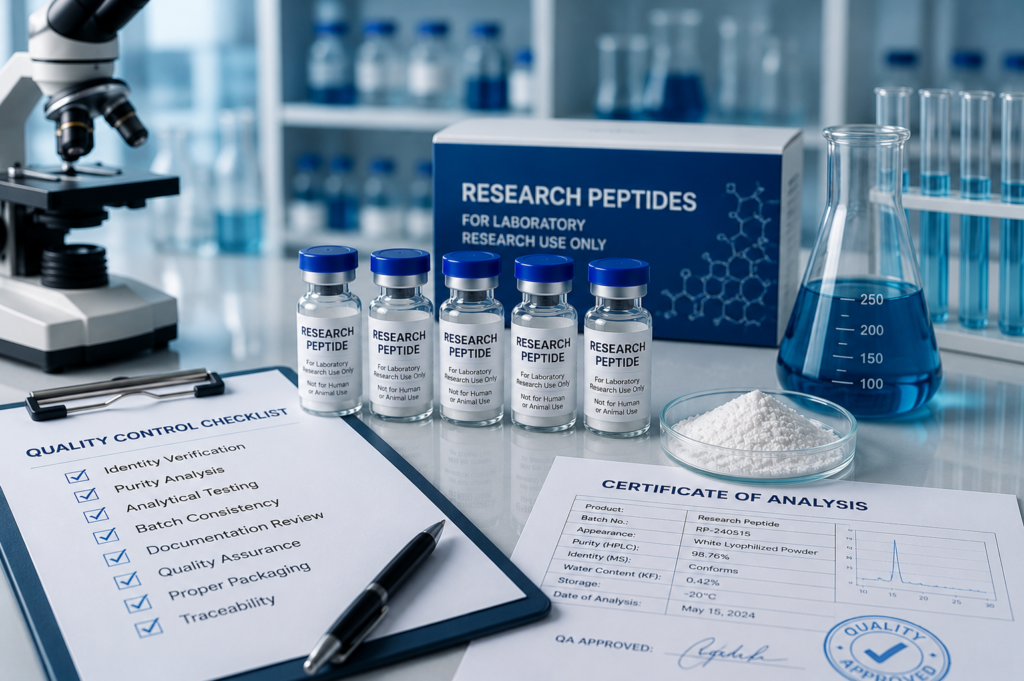
Quality control is one of the most important aspects of modern peptide research. As laboratories continue to expand their research capabilities, expectations for consistency, documentation, and transparency have become significantly higher. Researchers are no longer focused only on obtaining research materials—they also expect suppliers to demonstrate reliable quality standards that support responsible laboratory practices.
Whether research is conducted in universities, independent laboratories, or private research organizations, dependable sourcing contributes to well-organized projects and consistent laboratory workflows. Selecting materials supported by clear documentation and structured quality-control procedures helps researchers make informed decisions throughout every stage of the procurement process.
When laboratories evaluate High-purity research peptides, they often consider much more than product availability. Manufacturing consistency, analytical documentation, and transparent quality assurance have become essential factors in supplier selection.
What Quality Control Means in Peptide Research
Quality control refers to the procedures used to verify that research materials meet established manufacturing and analytical standards before they reach the laboratory. These procedures help maintain consistency between production batches while supporting organized documentation.
Modern quality-control systems often include identity verification, purity analysis, batch tracking, labeling accuracy, and analytical review. Together, these measures provide researchers with useful information about the materials they intend to use for laboratory research.
Although every research institution performs its own internal evaluations, sourcing products supported by structured quality-control practices contributes to greater confidence during procurement.
The Importance of Manufacturing Consistency
Consistency is an important characteristic of any reliable research material. Laboratories conducting long-term projects frequently require dependable sourcing across multiple orders to help maintain organized experimental planning.
Manufacturing consistency involves following standardized production procedures, maintaining documented processes, and verifying product quality throughout manufacturing and packaging.
Researchers often review available documentation before selecting a supplier because consistent manufacturing practices help reduce unnecessary variability in sourcing. Reliable production standards also support better inventory management and procurement planning within laboratory environments.
Why Documentation Is Essential
Quality-control procedures become significantly more valuable when they are supported by detailed documentation. Researchers rely on analytical reports and product records to understand the characteristics of laboratory research materials before incorporating them into scientific studies.
Common documentation may include Certificates of Analysis (COAs), purity reports, identity verification, batch identification, and analytical testing information. These records help laboratories maintain organized procurement files while supporting reproducibility and internal documentation standards.
Well-prepared documentation also promotes transparency between suppliers and research institutions by providing objective information rather than relying on promotional statements.
Analytical Testing and Independent Verification
Analytical testing remains a central part of modern quality assurance. Researchers frequently evaluate suppliers based on the availability of analytical documentation that supports product identification and quality-control procedures.
Independent third-party testing has also become increasingly valuable within the research community. Additional analytical verification provides laboratories with another source of information when reviewing research materials before purchase.
These analytical practices contribute to greater transparency throughout the sourcing process while helping laboratories maintain detailed procurement records. Although analytical reports do not replace internal laboratory evaluations, they provide useful supporting information during supplier assessment.
Selecting a Supplier That Prioritizes Quality
Choosing a dependable research peptide supplier requires careful evaluation of multiple factors. Researchers often review manufacturing consistency, documentation practices, quality-control procedures, transparency, and communication before establishing long-term sourcing relationships.
Quant Peptides supplies products strictly for laboratory and research use only. The products are not intended for human or animal consumption.
The company sources its products from a manufacturer that also produces generic pharmaceutical products. However, this should not be interpreted as FDA approval, medical endorsement, authorization for human use, or evidence that the products are pharmaceutical grade.
Suppliers that provide accurate documentation and maintain transparent quality standards help laboratories make informed purchasing decisions while supporting responsible scientific research.
Supporting the Future of Research Through Quality Standards
As peptide research continues to advance, quality-control standards will remain one of the defining characteristics of responsible laboratory sourcing. Researchers increasingly value suppliers that demonstrate transparency, organized documentation, and consistent manufacturing practices instead of relying on unsupported claims.
Comprehensive quality assurance benefits laboratories by improving procurement confidence, supporting accurate recordkeeping, and encouraging responsible research planning. These practices contribute to stronger laboratory management and help establish long-term confidence in research materials.
The future of peptide research will continue to emphasize accountability, documentation, and transparency. Laboratories that prioritize carefully sourced materials supported by established quality-control standards will be better positioned to maintain organized and dependable research workflows.
Throughout every stage of the sourcing process, researchers should remember that products supplied by Quant Peptides are intended exclusively for laboratory and research use only. They are not intended for human or animal consumption, nor should they be described as medications, supplements, treatments, or products intended to diagnose, treat, cure, or prevent any condition.