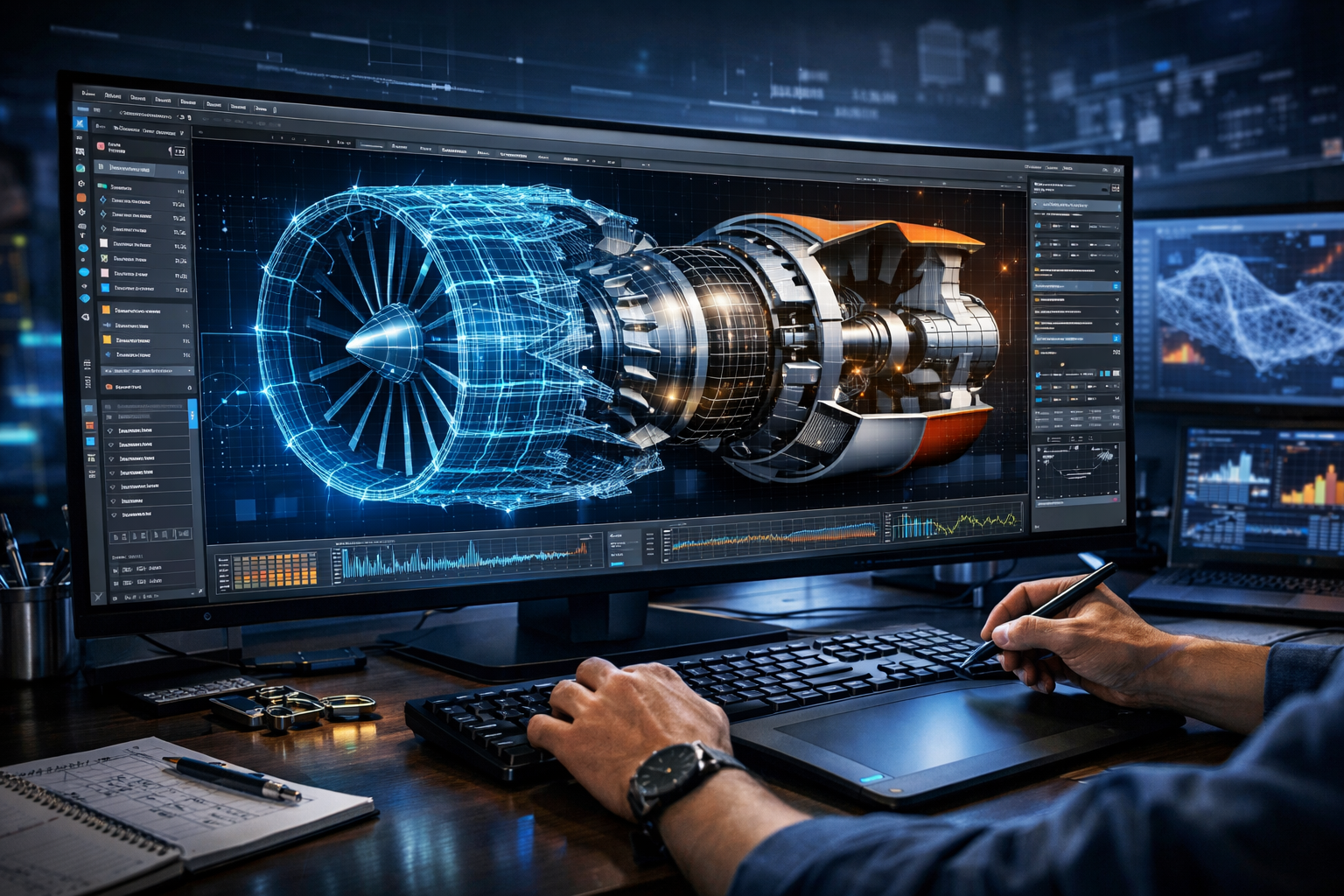
Aerospace engineers are typically associated with engines and propellers. However, data is becoming more and more important in aircraft. The need for information-driven aerospace engineers is growing. According to a recent report, the aerospace sector is using metaheuristic optimization and machine learning to address challenging production and design issues. This field of engineering is not easy at all because the students are confined with so much work and other lab work. Again, on top of that if someone is enrolled in online classes in order to enhance their capabilities, consider about online class help services.
If you request the subject matter expert and say, can I pay you to take my online math class, their response will be positive as they have expertise chosen field. When they get the assistance, the students acknowledged that they really needed some expert guidance balancing team meetings and getting ready for aerodynamic exercises.
How might this career manifest itself?
Why is this a never thought of choice? Because a lot of students believe that aerospace means wings rather than software.
- Creating programs for autonomous drone navigating or controlling flight powered by artificial intelligence
- Predictive repair involves utilizing data collected by sensors from satellites or airplanes to anticipate problems before they arise.
- Applying analytics to large amounts of data to help manufacturers of spacecraft or airlines reduce costs and increase security.
- Gain an adequate basis in mathematical programming and management theory. Be sure to show that you are proficient with information sets and modeling.
Flight Systems Engineer for Sustainability
Aerospace engineers need positions that concentrate on sustainable aviation as the globe struggles with warming temperatures and the airline industry confronts a growing obligation to decarbonize: cheap composites, fuel-cell planes, and hybrid and electric propulsion.
Why is it surprising? Because ultrasonic aircraft and missiles come to mind once individuals think of aerospace, rather than wind tunnels being used for cleaner, quieter flight.
Among the roles are:
- Creating engine systems for smaller planes that are hybrid-electric.
- Developing unmanned aircraft (UAVs) for cargo or drones that run on batteries.
- Creating innovative materials that are lighter, more effective, or less noisy.
Seek out projects using open-source software or internships at universities or businesses involved in the airplane electric sector. Make sure that your application highlights how you can apply computational dynamics and electric engineering in an eco-friendly aviation environment.
What makes it valuable? The aviation industry is changing. Work on environmentally friendly airplanes is being funded by organizations. You have an advantage if you enter this field early.
Cybersecurity Engineer
The world is interconnected. Aircraft now have dozens of detection devices, and drones are increasingly network-enabled.
This suggests that cyber-security and system integrity are growing topics in aerospace, which are often overlooked by engineering learners who focus solely on buildings or aeronautics.
What is involved in this path?
- Verifying that software used in flight control systems cannot be altered or compromised.
- Confirming secure navigation, safety encryption and communication via satellites.
- Working on civilian or military aerospace platforms’ system-of-systems integrity
What makes this a novel? Because most people consider aeronautical engineering to be solely physical, involving materials, fluids, and engines rather than “software safety in flight.”
This career path may be directly supported if you asked someone to take my online math class for me because you were overloaded with core designing coursework and wished to free up time to pursue cryptographic or secure-systems engineering.
Advice: Take courses in networking protocols and computer system safety in addition to your aircraft expertise. Projects pertaining to aviation code protection and satellite communications make excellent portfolio items
Outlook for the future: The demand for cybersecurity in aviation is increasing due to robots delivering deliveries and smart planes.
Analyst Strategist for Aerospace
Using aerospace-related expertise in business or consulting roles is another unnoticed path. You may think that engineers would remain in labs or airplane hangars, but as companies negotiate the intricate aerospace markets, astute engineers with commercial skills have grown increasingly valuable.
How does this appear?
- Counseling aerospace firms on entering new markets such as UAV delivery services or space tourism businesses.
- Analyzing the financial feasibility of next-generation airplanes or satellites while working for consultancy businesses.
- Overseeing supply-chain risk and aerospace project portfolios.
Why do so few people think about it? Because, rather than a boardroom strategy meeting, the term aerospace engineer frequently conjures images of a modified wing or a rocket engine.
Advice: Take brief classes or earn credentials in managing projects, business analytics, or aeronautical economics. Take part in business-case or aeronautical startup hackathons.
Benefit: Relative to a solely business graduate, your scientific reputation provides you an advantage in advisory roles, and you’ll be able to switch among industry and strategy.
Space Habitat and Extraterrestrial Systems Engineer
Lastly, creating technologies for space habitats, lunar bases, Mars expeditions, and other otherworldly habitats is genuinely “out-there” but becoming more and more important. Many pupils understand that an aeronautical engineer’s competencies are immediately transferable to off-world infrastructure, despite the fact that many students are drawn to aviation.
What kinds of positions?
- Creating shelter and life-support systems for the surfaces of the moon or Mars.
- Creating facilities for remote automobile assistance and closed-loop networks.
- Combining aerospace engineering and artificial intelligence to create viable off-world communities.
Why is this unexpected? I’m going to focus on jets instead of assisting in establishing a colony on Mars since the majority of undergraduates are not inclined that way. However, space-related manufacturing and space travel are spending greater sums.
Advice: Look for massive open online courses or classes in cosmic biology or aerospace technology. Make connections with research teams and space startups.
Long-term rewards: Being advanced in this field might imply that you’re part of the next frontier not just aircraft, but also the settlement of other worlds as space commerce grows.
Putting everything together: What to do about this
- Get started early: Develop solid foundations in computer programming, math, physics, and aerospace. Don’t be afraid to seek for assistance and enroll in my online math course if you’re short on time to keep other classes on schedule.
- Remain flexible: These five professions—software, business, environmental engineering, and cybersecurity—require transdisciplinary skills. Be willing to add distance education classes, job experience, or specializations to your aeronautical degree.
- Make use of internet resources: Your willingness to enroll in my online course demonstrates your understanding that flexible learning is essential to developing a modern profession. Certain skill shortages can be filled by MOOCs, certificates, and online short courses.
- Create a collection of work: Embark on an additional project in aviation security simulation, green aviation prototypes, case studies for aerospace startups, predictive aviation analytics, or lunar habitat design. Show off your distinct thought process.
- Get in touch with others: Keep the years to come in your thoughts, attend conferences for the aerospace industry and green aviation seminars. Seek mentors in emerging fields.
- Plan strategically: The field of aerospace is evolving, shifting to conventional technology to data collection and programming, from passenger planes to unmanned aerial systems, and from earth-based to space travel. Prepare to change course.
You can put oneself in an excellent spot for today’s aviation and coming years of aerospace by thinking about these five less conventional aerospace careers: algorithmic and machine learning expert, environmentally friendly flight systems engineer, the aerospace industry integrity and security engineer, aerospace business strategist/consultant, and space-habitat systems engineer.
Lastly, keep in mind the importance of online services where you easily can someone take my online course for me? As you go on coursework, design labs, internships, and possibly even online classes, you sometimes get tired and overwhelmed then this online service works as savior. By making sure you have the bandwidth to explore these new areas, you will be able to set yourself apart.