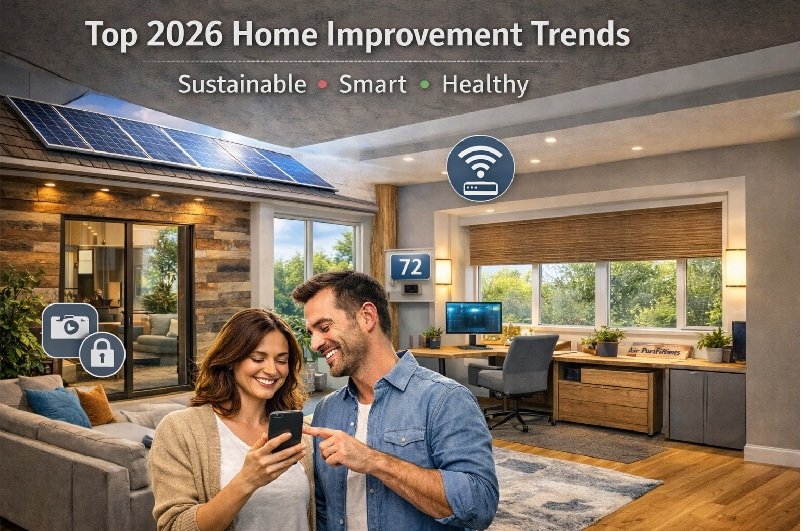
Want to upgrade your home? Not sure where to begin? Home improvement has changed a lot. In 2026, people care about three big things: going green, adding tech, and staying healthy. This guide shows you the trends that matter and how they help your home.
Sustainable Materials Dominate Home Renovations
Green materials are everywhere now. People pick them because they save money and make homes worth more.
Eco-Friendly Building Materials You Can Use
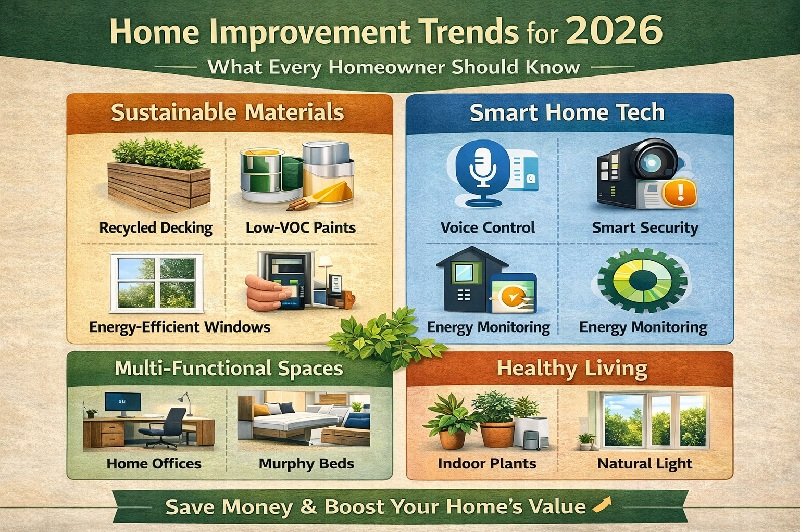
Recycled decking has replaced old wood for patios. Here’s why it’s better:
- Handles rain and sun without rotting
- Never needs painting or staining
- Made from recycled plastic and wood pieces
Reclaimed wood gives rooms character. Plus, you’re using old wood instead of cutting down new trees.
Low-VOC paints keep your air clean. VOC means “volatile organic compounds.” That’s just a fancy way of saying harmful chemicals. These paints have way less of the bad stuff.
Energy-efficient windows cut your heating and cooling bills big time. New triple-pane windows stop 50% more heat from getting in or out compared to old ones. If your windows look beat up, call a window repair company to see if fixing them or getting new ones costs less.
Why People Choose Green Upgrades
The money part makes sense:
- Cut utility bills by 20-30% each year
- Get your money back in 5-7 years
- Sell your home for 5-10% more than similar houses
Buyers want homes that save them money every month.
Smart Home Tech Becomes Normal
Smart home gear used to be fancy. Now it’s basic. People want to control their homes from their phones.
Everyday Automation You Can Add
Voice control lets you talk to your house. Say “turn on the lights” and they turn on. Say “make it warmer” and the heat goes up. These systems learn what you like and do it automatically.
Smart security gives you:
- Lock checks from anywhere
- Camera views on your phone
- Alerts when something weird happens
Automated blinds move by themselves based on the sun and temperature. They:
- Block glare when it’s too bright
- Keep furniture from fading
- Save energy without you doing anything
Technology That Tracks Energy Use
Real-time monitoring shows how much power everything uses. You find what wastes energy and fix it.
AI helpers look at your energy use and tell you what to improve. They show which changes save you the most money.
Solar panels now work smoothly with your home. Smart panels know when to use solar power and when to use regular electricity based on what’s cheaper.
Rooms That Do Multiple Jobs
Rooms that only do one thing waste space. Smart homeowners make rooms work harder.
Making Space for Work at Home
Home offices are still huge because people keep working from home. Turn a spare bedroom into a real workspace with:
- Good lighting
- Soundproofing so calls don’t bug your family
- A comfortable desk and chair
Furniture that folds away helps small spaces work better. Murphy beds hide in walls. Tables fold down when you need them. Your yoga room in the morning becomes your office in the afternoon.
Rooms With Two or Three Uses
Guest room plus office gives you both without wasting space. Get a good sleeper sofa or wall bed.
Open floor plans keep getting popular. When you remove walls between the kitchen, dining room, and living room:
- Rooms feel bigger
- More natural light gets in
- Families spend more time together
Finished basements unlock hidden space. Turn them into:
- Game rooms
- Home gyms
- Teen hangout spots
Good waterproofing keeps them dry and comfortable all year.
Design That Makes You Healthier
Your home affects how you feel. Good design helps you stay healthy and happy.
Bringing Nature Inside
Indoor plants and living walls do three things:
- Clean your air
- Lower your stress
- Look beautiful
Pick easy plants if you’re not good at keeping them alive.
Natural light makes you feel better and sleep better. Get more with:
- Bigger windows
- Skylights in dark rooms
- Mirrors that bounce light around
Natural materials create calm spaces. Real stone, wood, and woven stuff feel better than fake materials.
Cleaner Air at Home
Advanced filters remove:
- Allergens that make you sneeze
- Pollution from outside
- Germs floating in the air
Non-toxic materials go beyond just paint. Look for:
- Cabinets without formaldehyde
- Carpets made from natural fibers
- Real wood furniture
Humidity control stops mold and makes breathing easier. Whole-home systems keep moisture just right without you thinking about it.
How Trends Affect Your Home’s Value
Good upgrades make your home worth more and nicer to live in.
What you get back:
- Kitchen remodels: 60-80% of what you spend
- Bathroom updates: 60-80% of what you spend
- Energy-efficient windows: 70-75% of what you spend
- Smart home tech: Helps sell faster but doesn’t always raise the price yet
Energy upgrades save you money right away. You don’t have to wait until you sell to benefit.
Common Questions About 2026 Home Trends
What upgrade saves the most money?
Energy-efficient changes give you the best return. Start with:
- LED light bulbs
- A programmable thermostat
- Better insulation
These cost less to install and start saving money immediately.
Do smart home features raise your home’s price?
Smart tech helps your home sell faster. Buyers like it. But home appraisers don’t add much value for it yet. That will change as smart homes become normal.
Do green materials cost more?
You pay 10-20% more at first. But they last longer and need less fixing. The energy you save often pays back the extra cost in a few years.
How do I start making my home healthier?
Begin simple:
- Improve your air quality with filters
- Let in more natural light
- Add some plants
- Switch to natural cleaning products
- Get a water filter
These small changes make a big difference in how you feel.
Start Your Home Improvement Project Now
You don’t need to do everything at once. Pick what fits your budget. Start with energy upgrades that pay for themselves. Add smart tech and health features when you can afford them. Your home should work for how you live. What will you improve first?
Nice home improvement trends 2026 review