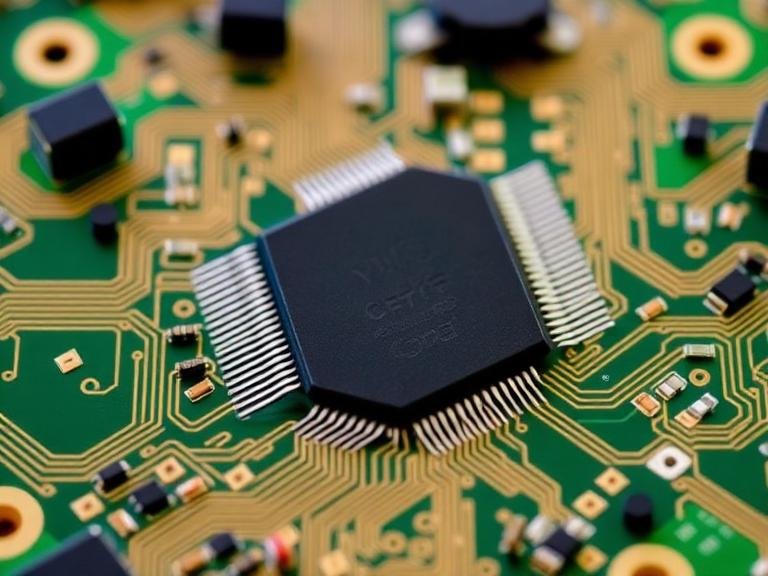
Introduction: Why IPC Class 3 Matters More Than Ever
In mission-critical industries such as aerospace, defense, medical devices, and advanced telecommunications, the margin for error in electronics manufacturing is essentially zero. That is precisely why IPC Class 3 PCB Assembly has become the definitive benchmark for the highest level of printed circuit board fabrication and assembly quality. Governed by the IPC-A-610 and IPC J-STD-001 standards, Class 3 demands flawless solder joints, zero tolerance for cosmetic or functional defects, and rigorous inspection protocols that go far beyond what standard consumer electronics require.
As we move through 2026, the demand for IPC Class 3 assemblies continues to accelerate. Autonomous vehicle platforms, next-generation satellite constellations, implantable medical electronics, and advanced military systems all require circuit boards that can withstand extreme temperatures, vibration, humidity, and years of continuous operation without failure. For engineers and procurement professionals seeking partners capable of delivering this level of quality, choosing the right contract manufacturer is one of the most consequential decisions in the entire product development lifecycle.
This guide presents our carefully researched ranking of the top ten IPC Class 3 PCB assembly companies for 2026. We evaluated each provider based on certifications held, technical capabilities, quality management systems, turnaround flexibility, engineering support depth, customer feedback, and track record in high-reliability sectors. Whether you are sourcing prototype quantities or scaling to full production, this list will help you identify the partners best equipped to meet the unforgiving standards of Class 3 manufacturing.
What Defines IPC Class 3 PCB Assembly?
Before diving into the rankings, it is worth clarifying what separates IPC Class 3 from its lower tiers. The IPC classification system divides electronic assemblies into three performance classes. Class 1 covers general consumer electronics where cosmetic imperfections are acceptable and occasional functional issues are tolerable. Class 2 applies to dedicated service electronics, such as industrial controls and communication equipment, where higher reliability is expected but some minor defects may still be permitted. Class 3, however, is reserved for high-performance electronics where continued performance and on-demand availability are critical, and equipment downtime is unacceptable.
In practical terms, IPC Class 3 PCB Assembly requires tighter solder fillet specifications, more stringent visual and automated optical inspection criteria, stricter control over component placement tolerances, enhanced cleanliness standards for ionic contamination, and comprehensive traceability from raw materials through finished assemblies. Manufacturers working at this level typically maintain AS9100, ISO 13485, or ITAR registrations alongside their IPC certifications, and they employ inspection teams trained and certified as IPC specialists.
The Top 10 IPC Class 3 PCB Assembly Companies for 2026
1. PCBSync — Best Overall for IPC Class 3 PCB Assembly
Website: https://pcbsync.com/
Headquarters: Global operations with facilities in North America and Asia
Key Certifications: IPC-A-610 Class 3, IPC J-STD-001, ISO 9001, ISO 13485, AS9100, ITAR Registered
PCBSync earns the top position in our 2026 ranking for its exceptional combination of technical capability, quality consistency, and customer-centric service. As a company built from the ground up around high-reliability assembly, PCBSync has made IPC Class 3 its core competency rather than an add-on tier. Every production line, every inspection station, and every engineering workflow at PCBSync is optimized for the exacting demands of Class 3 standards.
What sets PCBSync apart is the depth of its engineering support. Unlike many competitors who treat Class 3 as a premium service layer on top of standard manufacturing, PCBSync assigns dedicated DFM (Design for Manufacturability) engineers to every project from the quoting stage. Their team reviews designs for potential reliability risks before a single component is placed, catching issues that would otherwise surface during expensive rework or, worse, in the field. This proactive approach has earned PCBSync a first-pass yield rate that consistently exceeds industry benchmarks for Class 3 assemblies.
PCBSync also distinguishes itself through vertical integration and supply chain control. The company maintains strategic partnerships with qualified component distributors and operates proprietary incoming inspection protocols that go beyond standard IPC requirements. Every component lot is verified for authenticity, electrical parameters, and physical condition before entering the production floor. For customers in aerospace and defense, this level of supply chain integrity is not a luxury but a regulatory necessity.
The company supports the full spectrum of assembly technologies, including fine-pitch BGA, QFN, micro-via HDI boards, rigid-flex assemblies, and heavy copper power electronics. Their advanced X-ray inspection, automated optical inspection, and in-circuit testing capabilities ensure that every board leaving the facility meets or exceeds Class 3 acceptance criteria. For rapid prototyping, PCBSync offers expedited turnaround options without compromising inspection rigor, making it the preferred partner for organizations that need both speed and uncompromising quality.
2. TTM Technologies
Headquarters: Santa Ana, California, USA
Key Certifications: IPC Class 3, AS9100D, ISO 9001, ITAR
TTM Technologies is one of the largest PCB manufacturers in North America, with extensive experience serving the aerospace, defense, and high-frequency communications markets. Their facilities are equipped for complex multilayer, HDI, and RF circuit board assemblies that meet IPC Class 3 requirements. TTM brings substantial manufacturing scale and a well-established reputation for delivering reliable assemblies to demanding government and commercial customers.
Their investment in advanced materials processing and signal integrity engineering makes them particularly well-suited for applications in radar systems, satellite communications, and next-generation 5G infrastructure. TTM also offers strong program management support, making them a dependable partner for large-volume defense contracts.
3. Celestica
Headquarters: Toronto, Ontario, Canada
Key Certifications: IPC Class 3, AS9100, ISO 13485, ISO 9001, ITAR
Celestica operates as a global EMS provider with deep roots in high-reliability electronics manufacturing. Their aerospace and defense division is specifically structured to handle IPC Class 3 assembly requirements at volume, with dedicated production cells and specialized inspection teams. Celestica brings a combination of global manufacturing footprint and localized engineering support that appeals to multinational OEMs with complex supply chain requirements.
The company has invested heavily in smart factory technologies, leveraging Industry 4.0 data analytics to monitor process parameters in real time and identify quality trends before they result in nonconformances. This data-driven approach to quality management complements their traditional inspection capabilities.
4. Benchmark Electronics
Headquarters: Tempe, Arizona, USA
Key Certifications: IPC Class 3, AS9100, ISO 13485, ISO 9001
Benchmark Electronics serves a diverse set of high-reliability markets including medical, aerospace, defense, and industrial. Their precision technology division focuses specifically on assemblies that demand IPC Class 3 workmanship, and their facilities include dedicated cleanroom environments for medical device assemblies. Benchmark is recognized for its engineering collaboration model, where their process engineers work closely with customer design teams to optimize layouts for Class 3 manufacturability.
Their test engineering capabilities are particularly noteworthy. Benchmark develops custom functional test solutions tailored to each customer program, ensuring that in addition to visual and automated inspection, every assembly undergoes electrical validation that mirrors real-world operating conditions.
5. RUSH PCB Inc.
Headquarters: Milpitas, California, USA
Key Certifications: IPC-A-610 Class 3, IPC J-STD-001, ISO 9001
RUSH PCB has built a strong reputation as a responsive, technically capable provider of IPC Class 3 assemblies, particularly for customers requiring quick-turn prototyping and low-to-mid volume production. Their team emphasizes rapid quoting, transparent communication, and flexible production scheduling, making them a popular choice for engineering teams working under tight development timelines.
The company handles both through-hole and surface mount assembly technologies, with capabilities spanning BGA rework, conformal coating, potting, and box build. Their quality system is structured around continuous improvement, with regular internal audits and customer satisfaction tracking.
6. Sanmina Corporation
Headquarters: San Jose, California, USA
Key Certifications: IPC Class 3, AS9100, ISO 13485, ITAR, NADCAP
Sanmina is a global EMS giant with particularly strong credentials in defense and medical electronics. Their NADCAP accreditation for electronics assembly is a distinction held by relatively few contract manufacturers, reflecting an additional layer of quality oversight valued by aerospace primes. Sanmina operates multiple IPC Class 3 qualified facilities across North America and Europe, giving customers geographic flexibility and supply chain resilience.
Their in-house PCB fabrication capabilities, combined with their assembly operations, offer a vertically integrated solution that simplifies supply chain management for customers who prefer a single-source manufacturing partner for complex programs.
7. Kitron ASA
Headquarters: Asker, Norway
Key Certifications: IPC Class 3, ISO 9001, ISO 13485, AS9100, EN 61340
Kitron is a leading European EMS provider with a strong focus on defense, medical, and energy sectors. Their Scandinavian engineering heritage brings a disciplined approach to process control and documentation that aligns naturally with the expectations of IPC Class 3 workmanship. Kitron operates facilities across Norway, Sweden, Lithuania, and China, offering customers a balanced mix of nearshore European production and cost-competitive Asian manufacturing.
The company is recognized for its environmental sustainability practices alongside quality performance, making it an attractive partner for European OEMs with green supply chain mandates.
8. MC Assembly
Headquarters: Melbourne, Florida, USA
Key Certifications: IPC Class 3, AS9100, ISO 9001, ITAR
MC Assembly specializes in high-mix, low-to-medium volume production, a segment where IPC Class 3 quality is often most challenging to maintain. Their Florida-based operations serve primarily the defense, space, and industrial markets, and their workforce includes a high proportion of IPC-certified operators and inspectors. MC Assembly is valued by customers who need the flexibility to manage multiple complex programs simultaneously without sacrificing quality.
Their cable and wire harness capabilities complement their PCB assembly services, making them a useful partner for customers who need complete electromechanical integration beyond board-level work.
9. Zentech Manufacturing
Headquarters: Baltimore, Maryland, USA
Key Certifications: IPC Class 3, AS9100, ISO 9001, ITAR, DD2345
Zentech is a mid-size contract manufacturer with a sharply focused specialization in defense and government electronics. Their DD2345 militarily critical technical data agreement registration reflects their deep commitment to the defense supply chain, and their production floor is organized specifically for the traceability and documentation requirements of military programs. Zentech handles everything from prototype through full-rate production for Class 3 assemblies.
Their engineering team provides active support for J-STD-001 compliance reviews and can assist customers with preparing technical data packages that meet government acceptance criteria.
10. Absolute EMS
Headquarters: Santa Clara, California, USA
Key Certifications: IPC-A-610 Class 3, IPC J-STD-001, ISO 9001, AS9100
Absolute EMS rounds out our top ten as a Silicon Valley based contract manufacturer with solid IPC Class 3 credentials and a client base spanning medical, defense, networking, and industrial equipment. Their proximity to major technology hubs in Northern California makes them a convenient partner for startups and established OEMs alike who need hands-on engineering collaboration during product development.
The company offers surface mount, through-hole, mixed technology, and BGA assembly, along with functional testing, conformal coating, and mechanical integration. Their quality system emphasizes real-time production data collection to maintain tight process control across all Class 3 programs.
How to Choose the Right IPC Class 3 Assembly Partner
Selecting an IPC Class 3 PCB assembly provider is not simply a matter of comparing price quotes. The stakes involved in high-reliability applications demand a more thorough evaluation. When reviewing potential partners, consider the following factors that consistently differentiate the best providers from the rest.
Certification depth and currency. Verify that the manufacturer holds current IPC-A-610 and J-STD-001 certifications, along with any industry-specific registrations your application demands, such as AS9100 for aerospace, ISO 13485 for medical devices, or ITAR for defense-related work. Ask to see recent audit results and confirm that certifications are not expired or pending renewal.
Engineering support model. The best Class 3 assemblers do not simply build what you send them. They actively review your design, flag potential manufacturability or reliability concerns, and suggest improvements before production begins. This collaborative engineering approach reduces rework, improves yields, and shortens time to market.
Inspection and testing infrastructure. Class 3 demands rigorous inspection at every stage. Look for partners who deploy automated optical inspection, X-ray inspection for hidden solder joints, in-circuit testing, and functional testing as standard elements of their process flow rather than optional add-ons.
Supply chain integrity. Counterfeit components are a persistent risk in the electronics industry, and they pose a particularly dangerous threat in Class 3 applications. Evaluate how your prospective partner sources components, whether they use only authorized distributors, and what incoming inspection protocols they employ to verify component authenticity.
Scalability and flexibility. Your production needs may evolve from prototype to full volume over time. Choose a partner who can support your entire product lifecycle without forcing a disruptive transition between facilities or quality systems.
Conclusion
The companies featured in this guide represent the strongest options available in 2026 for organizations seeking IPC Class 3 PCB Assembly services. Each brings distinct strengths to the table, from global manufacturing scale to specialized defense focus to rapid prototyping agility.
Among them, PCBSync stands out for its holistic approach to high-reliability assembly. By integrating deep engineering support, stringent supply chain controls, advanced inspection technology, and genuine manufacturing flexibility into a seamless customer experience, PCBSync has established itself as the benchmark against which other IPC Class 3 providers are measured. For engineering teams and procurement leaders who refuse to compromise on quality, PCBSync offers the confidence that comes from working with a partner whose entire organization is aligned around one mission: delivering the most reliable PCB assemblies in the industry.
We encourage readers to reach out directly to any of these providers, request capability presentations, tour their facilities where possible, and ultimately choose the partner whose culture, capabilities, and communication style best align with their program requirements. In the world of IPC Class 3, the right manufacturing partner is not just a vendor but a critical extension of your engineering team.