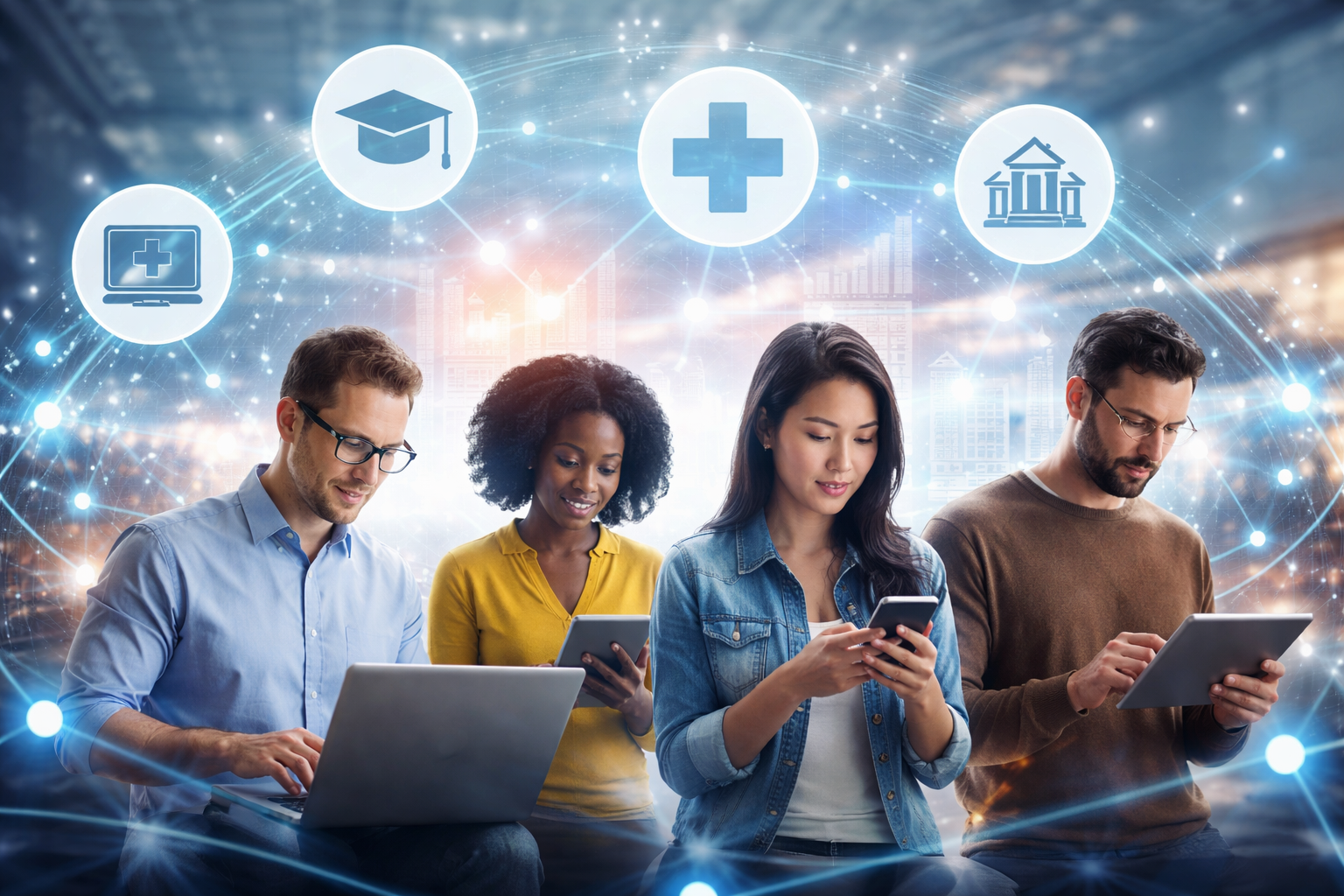
The digital transformation in the modern world is now used synonymously with the innovations, efficiency, and flexibility in different fields. Digital transformation is the introduction of digital technologies into every sphere of business, education, healthcare, and government activities. The process transforms the traditional approach to the operation of organizations and the way of providing value to stakeholders. Internet technologies are at the core of this change, and they offer the connectivity, processing power, and tools required to enable innovation and cooperation on a global level. Since the beginning of the Internet era, such tools as cloud computing and web platforms have been used, and nowadays, more complex technologies such as the Internet of Things (IoT) and artificial intelligence (AI) are actively developing, allowing organizations to improve their processes, communicate better with their users, and make informed decisions based on the data.
Knowing Internet Technologies
The digital transformation is based on the internet technologies. These include an extensive list of tools and protocols, such as a networking infrastructure, cloud-based services and web applications, and communication platforms. Those technologies enable a smooth flow of communication between the devices, systems, and users, which enables the sharing and collaboration of information in real time.
Internet Technologies that are Changing the World
- Cloud Computing – Cloud service is scalable storage and computing infrastructure where organizations are able to roll out applications and services without having to physically invest in infrastructures. Software-as-a-Service (SaaS), Infrastructure-as-a-Service (IaaS) and Platform-as-a-Service (PaaS) are prevalent in industries.
- Web Technologies – HTML, CSS, JavaScript and web frameworks can be used to build dynamic and usable websites and applications. Responsive design and Progressive Web Apps (PWAs) guarantee the user that they can use the services on any device, making it more accessible and user-friendly.
- Internet of Things (IoT) – IoT objects gather and transmit data over the networks, which deliver insights to achieve operational efficiency and innovation. Other applications of IoT in various industries include smart sensors, wearables and connected machinery.
- Artificial Intelligence and Machine Learning – AI and ML algorithms are used to process data in large volumes and infer predictive information, automatize repetitive duties, and improve the process of decision-making. The technologies are becoming highly dependent on sound Internet infrastructure in order to operate effectively.
- Cybersecurity Tools – With the increased use of the Internet, the security of the data and networks becomes a pressing issue. Encryption, firewalls, intrusion detection systems and secure communication protocols are some of the technologies that are used to guarantee safe digital interactions.
Online Education Revolution
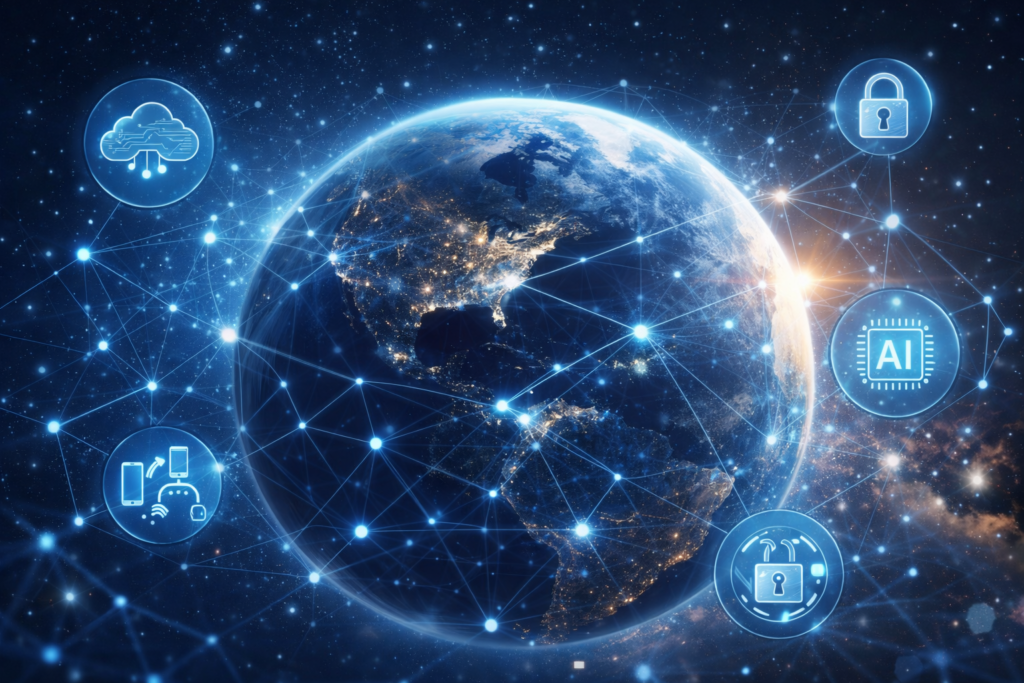
There has been an incredible change in the education sector as a result of the Internet technologies. The online learning systems, online classrooms, and interactive learning tools are redefining the knowledge delivery and consumption process.
- Online Learning Platforms – Online learning platforms such as Moodle, Canvas, and Google Classroom enable an educator to distribute the materials, give tasks, and monitor the performance of students online. Flexibility and inclusiveness can be achieved because students have access to learning resources at any time and place.
- Virtual Classrooms and Collaboration Tools – Video conferencing tools like Zoom, Microsoft Teams, and Google Meet provide real-time communication between teachers and learners making distance learning effective. Another feature of these platforms is the ability to carry out projects collaboratively, discuss in groups, and provide feedback in real-time.
- Data Analytics in Education – Learning Management Systems (LMS) are collecting huge volumes of student data, and this can be analyzed to find trends, enhance teaching practices and customize learning experiences.
Educational technologies through the internet do not only enhance access to education but also equip students with skills that can be utilized in the workforce that is digitally connected, which is critical in the present day economy.
Healthcare Digital Transformation
One of the most affected areas of the application of Internet technologies was healthcare, in which efficiency, accuracy, and accessibility are the most significant.
- Telemedicine – Web based consultation services enable patients to seek medical consultation without necessarily having to visit a clinic. This would be most valuable in remote communities or in instances of health emergencies where health practitioners are scarce.
- Electronic Health Records (EHRs) – Cloud-based EHRs can be used by providers to exchange patient data securely. This saves on administration costs, it lowers the rate of error and enhances continuity of care.
- IoT in Healthcare – Smart sensors, remote monitoring devices, and wearable gadgets communicate the health measurements of the patient in real-time. These data can be accessed remotely by doctors and can be used to make informed decisions, which enhances the performance of patients.
- AI and Predictive Analytics – AI-based diagnostic systems receive medical images and predict the trend of the disease and resource distribution. To provide an example, machine learning algorithms have the potential to detect trends in patient data in order to predict possible health issues.
The synergy of these technologies will make the healthcare systems more active, effective, and patient-centered.
Digital Revolution in Business
Internet technologies are being used by businesses all over the world to stay competitive, innovate and enhance the efficiency of their businesses.
- E-commerce Platforms – The online stores such as Amazon, Shopify, and Alibaba are also based on the latest technologies of the web and cloud technology and offer convenient shopping experiences to millions of customers.
- Digital Marketing and Social Media – With the Internet and analytics tools, as well as social media, these platforms allow businesses to stay in touch with customers by providing them with personal offers and tracking the performance of a campaign in real-time.
- Supply Chain and Logistics – IoT sensors and online administration systems are used to optimize the process of tracking inventory, planning routes, and for allocating resources, which helps lower costs and enhance service delivery.
- Remote Work Enablement – Internet collaboration tools like Slack, Microsoft Teams and project management software enable teams to work effectively anywhere to improve their productivity and employee satisfaction.
Internet technologies make the digital transformation in business possible, and it provides faster decisions, greater responsiveness, and enhanced customer experiences.
Government Digital Transformation
Internet technologies are getting more and more popular with governments because of better public services, transparency and involvement of citizens.
- E-Government Services – Online portals enable citizens to receive services including renewing of licenses, paying of taxes and making their social welfare application without necessarily going to the offices physically.
- Data-Driven Policy Making – This procedure is implemented by the government agencies that employ big data analytics in tracking the tendencies of the population, forecasting the outcomes, and formulating the policy-related decisions.
- Smart Cities and IoT – Networked urban infrastructure, including smart traffic systems, grid systems, and surveillance networks, optimizes urban management, lessens waste, and enhances security to the populace.
- Identity and Cybersecurity – Governments introduce safe digital identity systems to guarantee the safety of the data of the citizens and guarantee safe online interactions.
Internet technologies will help governments to provide efficient, transparent, and citizen-oriented services through such initiatives.
Connecting the Foundational Internet Tools to Practical Uses
In all industries, the building blocks of the Internet, including web browsers, cloud computing, networking protocols, and communication platforms, are the catalysts of digital transformation. Indicatively, a healthcare cloud-based analytics system will utilize safe Internet connectivity and data encryption protocols to compute the details of patients. In the same manner, an e-learning system makes education more interactive and more available using web technologies and the real-time collaboration tools.
The applications prove that the real potential of digital transformation is achieved when Internet technologies are planned to be incorporated into the operations. Considering that connectivity and technological innovation have revolutionized the world, their synergy brings about quantifiable results, such as the automation of manual processes and global cooperation.
Possible Obstacles and Concerns
Although digital transformation is driven by Internet technologies, companies have to maneuver through the challenges:
- Cybersecurity Risks – A higher level of connectivity can result in systems becoming vulnerable to cyber-attacks. To ensure the safety of sensitive data, it is necessary to provide powerful security.
- Digital Divide – Reliable Internet access is not equally distributed across the geographic areas, and it gives unequal benefits in digital transformation.
- Change Management – To implement new technologies, training is necessary, there is the issue of cultural adjustment, and redesigning processes, which can be cost-consuming.
- Data Privacy and Compliance – Organizations should adhere to various rules and regulations including GDPR and HIPAA when processing the user information.
Solving these problems is a guarantee of sustainable and inclusive digital transformation.

Conclusion
It cannot be denied that Internet technologies play an essential role in digital transformation. These technologies are transforming the sectors of education, healthcare, business, and government by offering the means of connection, automation, and decision-making based on data. Companies that adopt solutions based on the Internet have the ability to improve on their efficiency, develop innovativeness, and provide high-quality value to the stakeholders. With digital space constantly developing, familiarity and exploitation of underlying Internet technologies will still be a main determinant of successful digital transformation in any industry.