In early 2025, a mid-sized municipal department in the Southeast was juggling six different vendors for structural firefighting gear, EMS medical supplies, and law enforcement duty gear. Orders moved slowly. Warranty claims dragged on. The procurement team spent hours flipping between catalogs, comparing model numbers, including the Seek FirePRO 200 and 300, that should have been simple decisions.
Things changed when the department consolidated with Chief Miller Apparel, part of a new wave of tactical gear distributors built around first responders who prioritize readiness over paperwork.
The broader market helps explain why more departments are making similar moves. Market.us projects that the global public safety and security market will grow from $487.1 billion in 2023 to $1.32 trillion by 2033, reflecting a 10.50% CAGR. Meanwhile, Frost & Sullivan data cited by FireRescue1 puts the North American firefighter PPE market at $896 million in 2022, with the U.S. representing 84.1% of that revenue.
Demand is strong. What’s getting harder is managing it.
Problem: Fragmented Purchasing Is Slowing Down Readiness
Procurement teams in fire departments keep running into the same obstacles.
• Too many vendors across structural firefighting gear, wildland equipment, and EMS supplies.
• Confirming National Fire Protection Association (NFPA) compliant gear while firefighter PPE continues to evolve.
• Staying within budget while still securing dependable tactical gear for law enforcement units.
On paper, buying direct from multiple manufacturers appears efficient. In practice, it creates operational silos. One portal for thermal imaging cameras. Another for structural firefighting boots. A third for trauma kits and blood pressure cuffs.
Each additional vendor adds administrative burden, complicates invoicing, and reduces your ability to leverage volume pricing across categories.
Focusing solely on the lowest unit price without a coordinated sourcing strategy often increases total cost over time. Straits Research projects the global emergency medical equipment market will grow from $34 billion in 2025 to more than $56 billion by 2033, with product lines expanding just as quickly.
As options multiply, fragmented purchasing models struggle to maintain compliance, consistency, and readiness. Departments need streamlined procurement systems that scale with the market—not against it.
Consolidated purchasing is no longer a convenience—it’s a strategic necessity. As product lines expand and compliance demands increase, departments are prioritizing partners like Chief Miller Apparel that simplify sourcing while strengthening operational readiness.
Reason #1: A True One-Stop Shop for First Responders
Chief Miller Apparel positions itself as a one-stop shop for first responders, and the catalog reflects that claim. In addition to its own branded apparel and the recognizable Chief Miller Decal, departments will find:
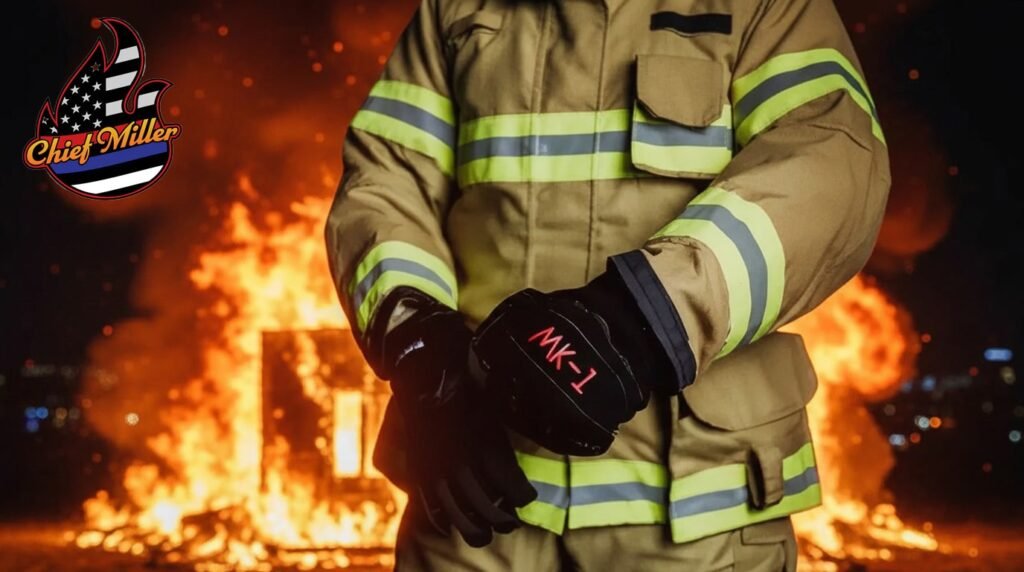
• Structural firefighting boots and highly-rated structural firefighting gloves, including the Vanguard MK-1 Ultra.
• Thermal imaging cameras. Chief Miller Apparel is an authorized SEEK Thermal dealer, making it straightforward to source Seek thermal imaging units for fire service.
• Stair chairs, trauma kits, blood pressure cuffs, and a full range of EMS medical supplies.
• Forcible entry tools, radio straps, tactical boots, and law enforcement duty gear.
For departments looking to simplify how they purchase gear, consolidating under a vetted first responder equipment supplier delivers a clear operational advantage.
Reason #2: Firefighter-Owned Credibility in a Crowded Field
Buying from a firefighter-owned business carries weight. Chief Miller Apparel is firefighter-owned and operated, drawing on decades of combined firefighting and industry experience. The emphasis is on gear that performs in the field, not just products that look good in a warehouse catalog.
Transparency reinforces that credibility. Pricing is clearly listed. A direct phone number, (318) 536-1971, is easy to find. A “Happy Customers” section includes detailed reviews. Checkout is labeled 100% Safe & Secure, with Standard Shipping Worldwide.
For departments evaluating whether Chief Miller Apparel is a legitimate supplier, those visible signals matter.
Chief Miller Apparel vs Direct from Manufacturer
• Vendor Management: The traditional approach can mean maintaining four to eight separate manufacturer relationships. Chief Miller Apparel consolidates sourcing under one account.
• Curation: Manufacturers naturally promote their own lines. Chief Miller Apparel pulls from dozens of established brands across firefighter gear for departments and police or tactical equipment.
• Pricing Transparency: Direct purchasing often requires back-and-forth with sales reps. Here, individual prices are posted, with a “Request a Quote” option for larger orders.
• Trial & Access: Entry discounts are uncommon when buying direct. Chief Miller Apparel offers a 10% code, SAVE10, making initial evaluation easier.
How Does Pricing Work for Department-Level Orders?
Each product includes published pricing online. For bulk or department-wide purchases, agencies can submit a “Request a Quote” to receive customized pricing that aligns with their budget cycle.
This approach works for small departments seeking reliable equipment as well as larger agencies standardizing gear across multiple stations. It reflects the practical reasons many fire departments are rethinking their supplier mix in 2026.
Customer Journey: From Research to Long-Term Supply Partner
Most departments start with a specific need, replacing thermal imaging units or upgrading structural firefighting gear. From there, they compare distributors and consider what matters most in a public safety equipment partner.
As they evaluate options, Chief Miller Apparel’s broad selection, transparent pricing, and firefighter-owned background tend to reduce uncertainty. Ordering can happen through secure checkout or a formal quote. Over time, repeat purchasing becomes simpler under a single supplier relationship.
Key Takeaways
• Consolidating with a specialized first responder equipment supplier cuts down procurement friction.
• Firefighter-owned companies, such as Chief Miller Apparel, bring practical, field-informed perspective to product selection.
• Clear pricing, bulk quote options, and codes like SAVE10 make evaluation straightforward.
• Access to thermal imaging, EMS supplies, and law enforcement duty gear in one place supports operational readiness.
• Standard Shipping Worldwide allows departments in different regions to work from the same supply source.
Departments are not changing suppliers for novelty. They are looking for reliability, simplicity, and control. Chief Miller Apparel has built its model around those priorities, and that alignment is gaining traction in 2026.