Introduction
Taxation is one of the most important financial responsibilities of every business, regardless of the size of the business, the industry it operates in and the way the business is set up. Tax is an important source of income for governments and they need to raise tax to develop their infrastructure, provide public services, pay for their health care, education and economic development and this is a legal issue for all organizations in a jurisdiction to ensure they are compliant with tax obligations. Businesses must understand how taxes work – and it’s more than just about the time for the check. It involves maintaining accurate accounting records, calculating taxable income accurately, filing tax returns and complying with all the tax regulations within the stipulated time frames.
Tax accounting is a key component of accounting that allows businesses to determine report and pay taxes correctly. Tax accounting differs from financial accounting as it is more specific in that it is concerned with the impact of transactions on a business’s tax liability, rather than the information which they provide to the investor and other stakeholders. Compliance risks and penalties for errors in tax management can be reduced, cash flow better controlled and the maximum tax savings possible within the tax laws can be realized by ensuring proper tax management. Keeping good tax records is necessary, and when it is not done, there are consequences as well: audits, penalties, interest, and damage to the business’s reputation. All this can have a negative impact, especially on businesses that are not in a position to help their growth and profitability. Not having the proper tax records can cause businesses to be audited, penalties may be levied, interest may be charged, and there can be repercussions to the businesses’ reputation, which can result in a negative effect on business growth and profitability.
With the ever-changing landscape of the business world, it is crucial for business owners and accounting professionals to gain a strong grasp of the tax accounting concepts and compliance needs. Having a good tax strategy goes beyond meeting legal requirements; it is a key element of financial planning and business continuity.
Understanding Tax Accounting
Tax accounting is the techniques, rules and procedures involved in the preparation of tax returns and the calculation of the tax liability within the framework of tax law. It is used to monitor transactions that affect income levels and also make sure that the businesses stick to the tax law. Tax accounting’s main goal is to present a clear picture of a company’s tax situation, while also ensuring that taxes are computed and paid appropriately.
Tax accounting is different from financial accounting in that it adheres to tax laws set forth by the government tax authorities, whereas financial accounting uses accounting standards, like IFRS or GAAP. This result in there being differences between accounting profit and taxable profit; some of the expenses recognized in the financial statements may not be taxable, and vice versa.
Companies that grasp and utilize good tax bookkeeping methods can deal with their tax liabilities correctly and effectively, in addition to preventing conflicts with the tax authorities. To gain deeper understanding of the principles behind tax accounting, companies can delve into the theory behind tax accounting principles and their impact on financial studies.
Key Principles in Tax Accounting
There are a few principles that govern tax accounting and that help in calculating and reporting taxable income. The matching principle is one of the more significant principles and aims at aligning taxable revenues with the expenses necessary to produce the taxable revenue. This ensures proper measurement of profits for tax purposes and avoids over or understating tax liabilities of business.
Consistency is also one of the major ones. Unless there is a good reason to change, and approval is given, the same accounting method should be used in each of the years. It makes consistency easier to maintain, and makes it harder to manipulate tax reporting. The concept of conservatism also comes into play when businesses have to guess at the amounts of deductions and/or taxable income where uncertainty exists.
Another critical term in tax accounting is ‘materiality’. Generally, the tax authorities are interested in transactions that have an impact on the taxation of transactions or compliance. Some minor mistakes might be missed, but material misstatements could result in legal and/or penalty consequences. Applying these principles ensures integrity in financial reporting and the tax compliance process, and maintains transparency.
Calculating Taxable Income
Taxable income is a business’s income that is determined after applying business adjustments and deductions, which are allowed, to arrive at the amount subject to tax. Taxable income is the starting point for the calculation of taxable income, and it is the sum of revenue from sales, services rendered, interest income, rental income, investment gains and other income earned in the course of a business.
Businesses calculate their taxable profit by taking the amount of their gross income and deducting any expenses that they are permitted to deduct. Some of the common deductible expenses are office expenses, professional fees, insurance premiums, utilities, rent, salaries of the employees, and depreciation of business assets. But not all of the costs in the books can be deducted from taxable income. Tax authorities may disallow personal expenses, penalties imposed by government agencies and some entertainment expenses.
There are also differences in when income is included in taxable income. This means that in the same way that a receipt of revenue in the accounting records in one period is not necessarily taxable in the same period, according to the tax rules on revenue recognition. Likewise, depreciation methods allowable for tax purposes might be different from those that would be recognized on the financial statements. These adjustments give rise to differences between accounting profit and taxable profit which must be reconciled in preparing the taxes.
The numbers of taxable income need to be accurate as failures to do so will result in either under or overpaid taxes. Penalties and interest are commonly incurred from underpayment and cash flow is sacrificed from overpayment, in addition to potentially introducing unnecessary administrative challenges related to refund claims.
Business Tax Obligations
There are a variety of taxes applicable to businesses, based on their activities and location, as well as business structure. One of the most usual obligations is corporate income tax, and it is levied on the profits generated in the financial year. Businesses must report to the tax authorities on an annual basis, in accordance with certain deadlines, with the data needed to determine their taxable income.
Businesses also have a heavy tax burden in the form of Value Added Tax (VAT) or sales tax. VAT is levied on goods and services, the business is responsible for collecting the sales tax from the customers and paying it to the government. VAT registered companies are required to have proper records of input tax and output tax to ensure proper reporting and output tax remittance.
Employers have a significant compliance burden when it comes to payroll taxes, too. Before salary is given, the income tax, pension contributions, and social security payments are usually deducted from the salaries of employees. If these deductions are not paid on time, there are significant penalties and legal implications for failure to pay these timely.
Depending on the nature of their operation, some businesses may also have requirements with regard to withholding tax, customs, excise and local government levies. It is important to be familiar with the tax responsibilities that may apply to a business to ensure they are compliant and not subject to any consequences or sanctions from the regulators.
Allowable Tax Deductions for Businesses
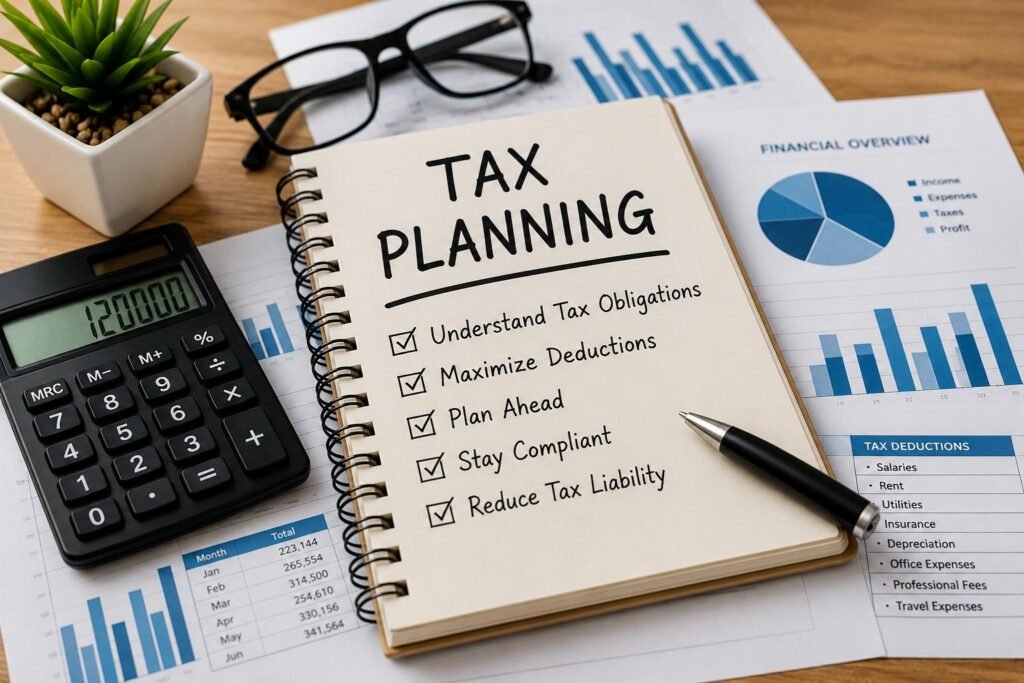
Tax deductions are crucial to lowering the taxable income of businesses along with the total tax burden that they have. Governments allow deductions because they know that some expenses are essential to earning business income. If one can correctly identify and record these expenses, it can help save a considerable amount of tax without breaking any tax laws.
We, as owners of a business, can claim the cost of employee compensation as an expense, which covers salaries, wages, bonuses and pension contributions, and is directly associated with the running of the business. Many jurisdictions allow the deduction of rent for office space, warehouses and production facilities. Other costs like electricity, internet, and water supply are also deductible if they are used for business purposes.
Depreciation allowances allow companies to spread the cost of their lengthy assets like machinery, vehicles, and equipment out over a period of time. Tax authorities have the tendency to prefer that companies allocate the deduction over the useful life of the asset (capital allowances or depreciation schedules) rather than deduct the entire purchase price upfront.
Other valid business expenses like marketing and advertising, professional service fees, insurance premiums, staff training costs and business travel can also be deducted provided they are appropriately recorded. Yet, it is essential for businesses to keep receipts, invoices and supporting documentation on hand for deductions to be substantiated in the event of an audit or tax review. Legitimate deductions are often denied by the tax authorities because of poor record-keeping.
Tax Planning Strategies
Tax planning is arranging business activity in a way that involves tax minimization, while ensuring it is legally and regulatory compliant. Tax planning is not tax evasion, it’s just taking advantage of opportunities that tax legislation offers to be more efficient in the use of the financial resources.
A popular tax planning technique is to choose the optimal business structure. There are different tax rules and rates for sole proprietorships, partnerships and corporations. The selection of structure may impact the tax that will be paid and tax deductions and incentives that will be available.
Timing strategies are also viable tax planning tools. Businesses may be allowed by law to delay or recognize income or to front-load or back-load deductible expenses to maximize tax benefits. Tax benefits like investment allowances, tax credits and accelerated depreciation schemes to spur economic growth can also be a factor in investment decisions for capital projects.
Transfer pricing regulations, withholding taxes, and double taxation treaties between countries are other tax planning strategies international businesses pursue. But there are two conditions for such strategies: They must meet domestic and international tax laws or risk tax avoidance, or profit shifting, allegations.
Tax advice from professionals can be useful for a number of reasons, as tax laws are subject to frequent changes, and certain transactions can have sizable tax consequences. Proactive tax planning provides businesses with the opportunity to minimize uncertainty and enhance long-term business performance.
Tax Compliance Requirements
Tax compliance is the duty of a tax authority to meet all its legal requirements. Compliance is not just about paying taxes, it also involves registering, record keeping, tax return filing and answering calls and questions from tax authorities or tax audits.
When businesses are started, they are usually on the list of businesses that need to be registered with the relevant tax authorities shortly after they are started. When businesses register they can get tax identification numbers and have access to the tax systems for filing returns and making tax payments. Penalties and restrictions on business activities may be incurred if a business isn’t registered.
Another compliance requirement is record keeping. Financial records are normally kept for a number of years, in order to be able to back up the figures used for calculations and deductions in business tax returns. These files can contain things like invoices, receipts, bank statements, payroll, contracts and accounting reports.
In many jurisdictions, filing deadlines are strictly adhered to. Any late filing can incur a fixed penalty, interest or further compliance investigations. All businesses should have internal procedures and calendars in place to make sure that all obligations are met in a timely fashion. Tax officials are embracing more and more electronic filing systems that will boost efficiency and minimize administrative hassles for taxpayers.
The Value of Tax Audits
Tax Audits are audits that are performed by the tax authorities to ensure that the tax returns submitted by businesses are accurate and complete. Audits can be conducted on a random basis or they can be initiated when there are unusual deductions, inconsistencies or discrepancies discovered during data analysis and risk assessments.
In an audit, companies will be asked to supply supporting documents for income they report and deductions they take. This can lead to tax changes that raise tax bills, and penalties because of poor documentation. Companies that can respond to audits efficiently and confidently have good accounting systems and have good record management.
Internal audits are also useful on the regular basis to discover tax risks before external audits are performed. Internal reviews enhance accuracy, improve internal controls and minimize risk of failure in compliance. Companies that carry out routine tax inspections can be better equipped to identify and solve problems in advance and to keep good tax relationships with the tax authorities.
Consequences of Non-Compliance
Tax regulatory non-compliance can be extremely detrimental for businesses in terms of financial and operational consequences. The first effect is that of imposing monetary penalties for late filing, non-payment of taxes or an incorrect report. Interest can add up over time, adding to the total cost of non-compliance.
In the worst of circumstances, tax officials could curtail company operations, freeze company bank accounts or file legal action against company directors and owners. A business’s reputation can also be damaged if it gets tied up in a dispute or investigation regarding taxes. Weak compliance can lead to customer, investor, lender and business partner distrust in the organization.
In addition to wasting management time and resources, non-compliance also erodes business value. Compliance management is an integral part of the company’s governance as it is of significant financial and reputational importance in terms of tax violations.
Best Practices for Managing Taxes Effectively.
To enhance tax compliance, companies may need to adopt strong accounting methods and have well-defined tax reporting and payment protocols in place. To boost tax compliance, businesses could need to have sturdy accounting practices and well-defined internal procedures for tax reporting and payment. Using automation tools and accounting software decreases manual mistakes and the accuracy of financial records. These systems are able to create reports, track due dates and automate electronic filing procedures.
It’s also crucial to have regular staff training as tax laws and reporting requirements change often. On-going training for employees involved in accounting and finance activities must keep them up-to-date on changes to the law and any new requirements for compliance.
Utilizing the services of qualified tax experts can offer extra safety and knowledge, especially in situations where companies are working in several jurisdictions or on intricate transactions. Tax professionals guide businesses in tax planning, tax compliance and tax audit support, reducing risk.
Compliance should further be encouraged within the organization by the management. If compliance is treated as a strategic priority and not an administrative hassle, companies will be more likely to have a robust governance framework and financial integrity.
Conclusion
Tax accounting is an essential component of financial management, which helps the companies properly determine their taxable income, comply with tax regulations, and reduce compliance risks. For business owners and accountants alike, basic aspects of tax accounting include knowing the principles behind tax accounting, understanding what items can be deducted, maintaining proper records and knowing what is required to adhere to tax filing rules.
Good tax management is more than simply complying with the minimum taxes required by the law. This includes strategic planning, anticipating compliance changes, and staying vigilant on new regulations to ensure businesses stay financially sound and resilient. Creative tax accountants lead to better financial transparency, growing trust among stakeholders, and decreased risk of penalties and conflicts.
In an era where tax landscapes constantly evolve to keep pace with economic and technological shifts, companies that value tax compliance and tax management expertise will be better equipped to navigate the complex terrain of tax responsibilities and make a profitable contribution to their economic futures. As tax structures continue to change in response to economic and technological developments, companies that prioritize tax compliance and professional tax management will be poised for sustainable growth while managing tax obligations with integrity and efficiency.
Get more well researched information about Tax Accounting and Tax Compliance for Businesses here.