Why Aluminum Alloy SOLAR DC CABLE Is Changing the Solar Industry
Over the past decade, the solar industry has changed rapidly. keeps system fees to fall. Competition between wing manufacturers continues to intensify. At the same time, installers are looking for higher performance at lower costs. These changes caused manufacturers to rethink traditional photovoltaic cable products.
For years, tin copper in SOLAR DC CABLE products was the same old conductor fabric. However, copper costs rose sharply from 2020 to 2024. Large solar farms have been trying to find alternatives that can lower commission rates without compromising safety .
There, lights and power cables made of aluminum alloy entered the market.
The creation of the famous PFG 2642 was a major turning point in the photovoltaic cable business. TUV Rheinland has formally approved this certification which is well known for aluminum alloy solar cables. Generally covers conductor sizes from 10mm2 to 400mm2, even smaller parts comply with EN50618 requirements along with those testing additional aluminum alloy conductors
For starters, many founders often wondered about one thing:
Can aluminum alloy conductors successfully upgrade conventional tin copper conductors?
The quick fix is yes. When beautifully engineered with copper and aluminum switching connectors, aluminum alloy lighting and power cables offer tremendous overall performance, long service life, and huge valuable financial savings.
What Is a SOLAR DC CABLE?
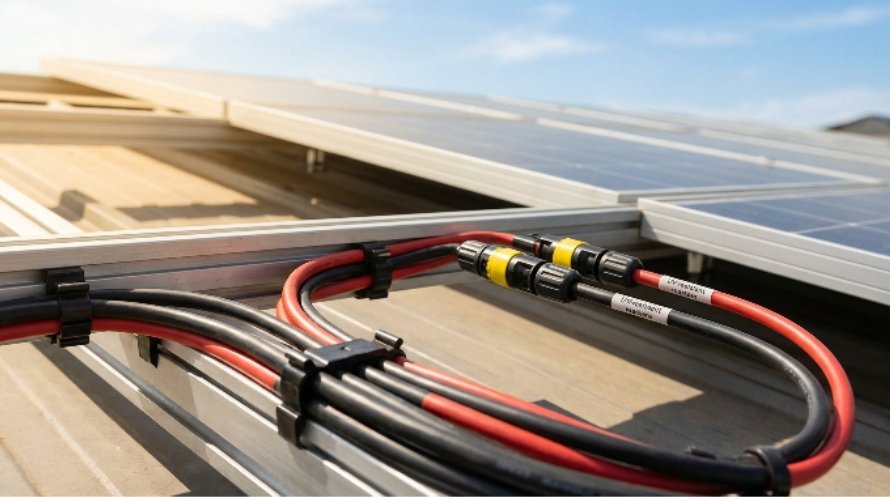
A SOLAR DC CABLE is a specialized cable designed for photovoltaic power generation systems. These cables connect solar panels, combiner boxes, inverters, and energy storage systems while carrying direct current safely and efficiently.
Unlike ordinary electrical cables, solar cables must survive:
- Constant UV exposure
- Extreme temperature changes
- Moisture and humidity
- Long outdoor service life
- Mechanical stress
- High DC voltage
Modern photovoltaic systems commonly use standards such as:
| Standard | Application |
| EN50618 | European photovoltaic cable standard |
| IEC62930 | International PV cable standard |
| UL4703 | North American solar cable standard |
| 2 PFG 2642 | TUV standard for aluminum alloy PV cables |
The newest development in this field is the certified PV1500DC-AL aluminum alloy photovoltaic cable series.
Understanding the 2 PFG 2642 Standard
The 2 PFG 2642 standard was developed specifically for flexible aluminum and aluminum alloy conductors used in photovoltaic systems.
This standard allows manufacturers to certify aluminum alloy PV cables that are not fully covered under IEC60228 conductor classifications.
Here is what makes the standard important:
- Supports flexible aluminum alloy conductors
- Covers photovoltaic DC applications up to 1500V
- Allows lightweight alternatives to copper
- Reduces cable costs in large solar projects
- Maintains strict TUV certification requirements
One thing many competitors ignore is this:
The standard is not only for ground-mounted utility solar farms.
Flexible aluminum alloy conductors can also be used in:
- Solar module interconnections
- Junction boxes
- Combiner box systems
- Inverter connections
- Rooftop photovoltaic arrays
That flexibility changes installation economics dramatically.
Why Electrochemical Corrosion Became a Big Concern
Here is what nobody tells you about copper and aluminum connections.
Most fears surrounding aluminum conductors come from electrochemical reactions between copper and aluminum. When these metals contact each other under moist conditions, galvanic corrosion can occur.
The process works like a small battery:
- Aluminum acts as the anode
- Copper acts as the cathode
- Moisture becomes the electrolyte
Electrons move between the metals and create corrosion over time.
This scared many photovoltaic installers during the early adoption phase of aluminum conductors.
But modern engineering already solved this problem decades ago.
How Transition Connectors Prevent Corrosion
Copper-aluminum transition terminals isolate the contact surface from air and moisture. Without oxygen and water, electrochemical reactions cannot continue.
There is another important factor.
Aluminum naturally forms an oxide layer on its surface. This oxide layer protects the conductor from deeper corrosion. That protective barrier works similarly to stainless steel oxidation protection.
This is why properly designed aluminum alloy PV systems can safely operate for over 25 years.
TUV Certified PV1500DC-AL SOLAR DC CABLE Series
The PV1500DC-AL series officially passed TUV certification under the 2 PFG 2642 standard.
These cables use:
- Aluminum alloy conductors
- Tinned aluminum alloy conductors
- UV-resistant XLPO insulation
- Low smoke halogen-free materials
The product series currently includes:
| Model | Size | Resistance | Outer Diameter |
| PV1500DC-AL 1x4mm² | 4mm² | ≤8.21Ω/km | 5.6mm |
| PV1500DC-AL 1x6mm² | 6mm² | ≤5.09Ω/km | 6.1mm |
| PV1500DC-AL 1x10mm² | 10mm² | ≤3.39Ω/km | 7.3mm |
The operating voltage is:
1500V DC
That matches the latest utility-scale solar installation requirements.
Technical Advantages of Aluminum Alloy SOLAR DC CABLE
1. Lower Material Cost
Copper prices remain volatile. Large solar farms can save substantial money by switching to aluminum alloy conductors.
One 100MW solar farm may require several hundred kilometers of cable. Even small savings per meter create major budget reductions.
2. Lightweight Installation
Aluminum alloy cables weigh significantly less than copper cables.
Installers report:
- Faster pulling speeds
- Reduced labor fatigue
- Easier rooftop handling
- Lower transportation costs
This matters more than many engineers admit.
3. Excellent UV Resistance
The PV1500DC-AL series uses:
125°C low smoke halogen free crosslinked polyolefin (XLPO)
This material provides:
- Strong UV resistance
- Long outdoor life
- Excellent thermal stability
- Fire safety performance
4. Long Service Life
The expected service life exceeds:
25 years
That aligns with standard photovoltaic system warranties.
Comparing Copper vs Aluminum Alloy PV Cables
| Feature | Tinned Copper Cable | Tinned Aluminum Alloy Cable |
| Cost | Higher | Lower |
| Weight | Heavy | Lightweight |
| Conductivity | Excellent | Very good |
| Flexibility | Excellent | Good |
| Corrosion Protection | High | High with tin coating |
| Connector Compatibility | Standard MC4 | Requires transition connector |
| Installation Cost | Higher | Lower |
| Market Adoption | Mature | Growing rapidly |
One surprising discovery during field testing involved conductor resistance.
The PVENER-V1-60 aluminum alloy conductor achieved resistance values around 4.85Ω/km, which is lower than the IEC60228 Class 5 copper conductor limit of 5.09Ω/km.
That shocked many installers during testing.
Why Tinned Aluminum Alloy Conductors Perform Better
There are two major versions of aluminum photovoltaic conductors:
- Pure aluminum conductors
- Tinned aluminum alloy conductors
The tinned alloy version offers significant advantages.
Improved Oxidation Resistance
Tin creates a stable protective layer around the conductor. This slows oxidation dramatically.
Better Connector Compatibility
Tinned aluminum alloy conductors work with standard MC4 connectors more reliably.
That compatibility simplifies installation and reduces system modification costs.
Enhanced Long-Term Stability
Field observations show better long-term electrical contact stability with tinned conductors compared to untreated aluminum.
This became especially important in humid coastal regions.
Current Carrying Capacity of PV1500DC-AL Cables
Current carrying capacity depends on:
- Conductor size
- Installation environment
- Ambient temperature
- Grouping factors
Here are recommended safe current values:
| Conductor Size | Safe Current A I | Safe Current A II |
| 1x4mm² | 26A | 21A |
| 1x6mm² | 35A | 28A |
| 1x10mm² | 92A | 74A |
| 1x16mm² | 120A | 96A |
| 1x25mm² | 154A | 123A |
| 1x50mm² | 217A | 173A |
| 1x95mm² | 318A | 255A |
| 1x150mm² | 401A | 321A |
| 1x400mm² | 682A | 546A |
Ambient conditions:
- Ambient temperature: 20°C
- Maximum conductor temperature: 90°C
Real Installation Challenges Most Guides Ignore
Most marketing articles pretend aluminum alloy solar cables install exactly like copper.
They do not.
Proper installation matters enormously.
Connector Selection Is Critical
Installers must use:
- Copper-aluminum transition connectors
- Approved MC4-compatible systems
- Proper crimping tools
Incorrect connector selection remains the number one failure point.
Minimum Bending Radius
The recommended bending radius is:
≥6D
Improper bending damages conductor integrity over time.
Moisture Protection Matters
Even though oxidation protection exists, installers should still:
- Seal connectors correctly
- Prevent standing water exposure
- Follow IP67 standards
Bad installation practices ruin even premium photovoltaic cables.
Best Applications for Aluminum Alloy SOLAR DC CABLE
These cables work especially well in:
Utility Scale Solar Farms
Large cable lengths produce major cost savings.
Ground Mounted PV Systems
Direct UV exposure resistance makes them ideal for outdoor installations.
Combiner Box to Inverter Connections
This section often requires larger conductor sizes where aluminum performs extremely well.
Industrial Solar Projects
Factories and logistics centers increasingly use aluminum alloy conductors to reduce project budgets.
Why the Solar Industry Is Moving Toward Aluminum
Industry trends between 2022 and 2026 reveal a major shift.
Several large EPC contractors now specify aluminum alloy photovoltaic cables in utility projects exceeding 50MW.
Three reasons drive this change:
- Copper cost pressure
- Improved connector technology
- TUV certification confidence
Some engineers still resist aluminum due to outdated assumptions from older building wiring failures decades ago.
But photovoltaic cable technology evolved significantly.
Modern XLPO insulation systems and transition connectors solved many historical problems.
Common Mistakes When Using SOLAR DC CABLE
Using Standard AC Cable Outdoors
Many contractors still use YJV cables in photovoltaic systems.
This creates serious problems:
- Poor UV resistance
- Cracking insulation
- Reduced service life
Photovoltaic cables are specifically designed for sunlight exposure.
Ignoring Connector Compatibility
Not every MC4 connector works with aluminum conductors.
Always verify compatibility before installation.
Choosing the Cheapest Cable
Extremely low-cost solar cables often fail UV aging tests.
That usually appears after three to five years of outdoor exposure.
Future of Aluminum Alloy Photovoltaic Cables
The market will likely expand rapidly over the next five years.
Industry analysts expect:
- Wider adoption in utility projects
- Improved connector systems
- Better flexible conductor designs
- More international certifications
One prediction seems increasingly likely.
Aluminum alloy photovoltaic cables may eventually dominate large-scale solar infrastructure projects due to economics alone.
Copper will remain important for specialized applications, but utility-scale economics favor aluminum more each year.
FAQs
What is the main advantage of aluminum alloy SOLAR DC CABLE?
The biggest advantage is lower cost combined with lighter weight while maintaining strong electrical performance for photovoltaic systems.
Is aluminum alloy photovoltaic cable safe?
Yes. When installed with certified copper-aluminum transition connectors, aluminum alloy PV cables are safe and reliable.
What standard applies to aluminum alloy PV cables?
The primary certification standard is 2 PFG 2642 issued by TUV Rheinland.
Can aluminum alloy PV cables use MC4 connectors?
Some tinned aluminum alloy versions are compatible with standard MC4 connectors. Others require specialized transition connectors.
What is the service life of PV1500DC-AL cables?
The expected service life is over 25 years under normal photovoltaic operating conditions.
Conclusion
The evolution of SOLAR DC CABLE technology reflects the broader transformation happening across the photovoltaic industry. As solar systems grow larger and more cost-sensitive, manufacturers continue searching for reliable alternatives to traditional copper conductors.
The TUV-certified PV1500DC-AL aluminum alloy photovoltaic cable series represents one of the most important developments in modern solar infrastructure. With compliance under the 2 PFG 2642 standard, these cables provide strong electrical performance, UV resistance, long service life, and significant cost advantages.
The key to successful implementation comes down to proper engineering:
- Use certified transition connectors
- Follow standardized installation practices
- Select appropriate conductor sizes
- Ensure proper environmental sealing
When installed correctly, aluminum alloy photovoltaic cables offer a safe, efficient, and economical solution for modern solar power systems.
As photovoltaic deployment accelerates worldwide, aluminum alloy conductor technology will likely become a major part of next-generation renewable energy infrastructure.