Introduction
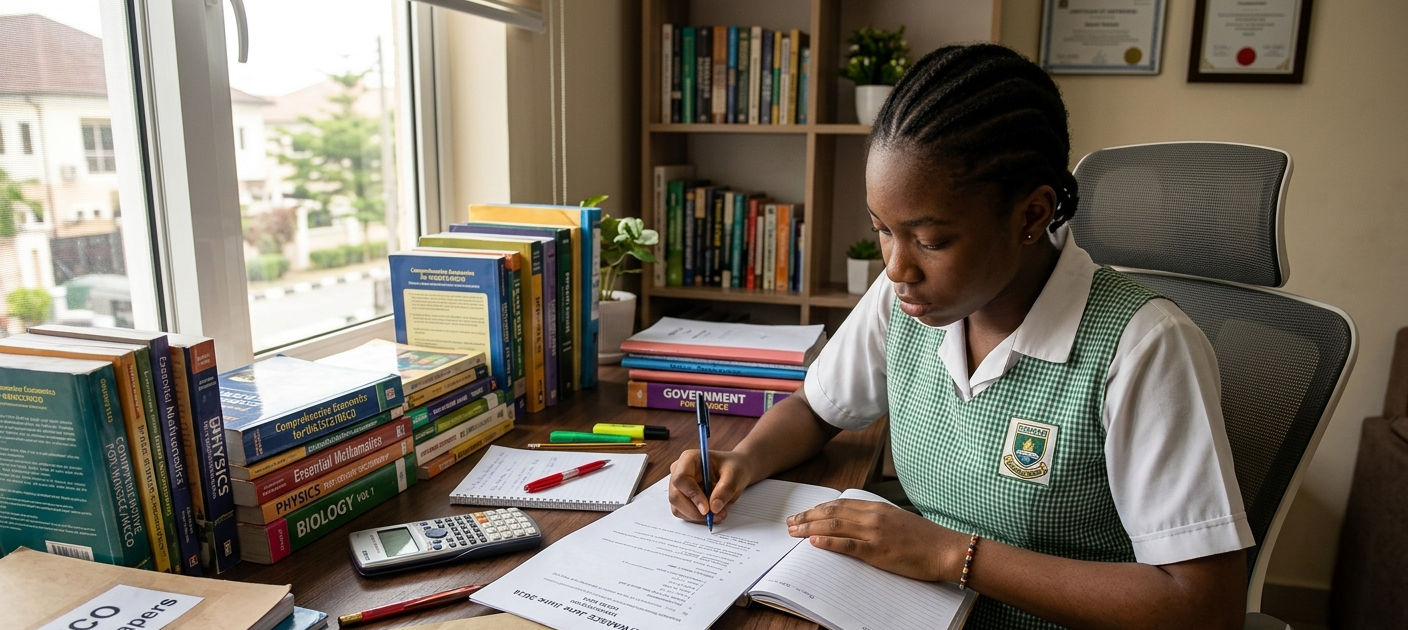
The West African Senior School Certificate Examination (WAEC), and the National Examinations Council (NECO) examinations are among the most crucial academic exams that secondary school students in Nigeria and other West African countries face. The exams frequently play a decisive role in students’ future educational pathways, career decisions, and future successes. These external examinations are important so students must have good preparation techniques apart from using textbooks and notes.
One of the surest ways of getting good marks is to use past examination papers regularly. Through past questions, the student gets hands-on experience of how the examination questions are presented, what is the focus of the examiners and how much preparation is expected to pass the examination. Regular practice will help students to improve their examination skills, decrease examination fear and be confident to sit WAEC and NECO exams.
Recognizing the Significance of Past Papers in Exam Preparation
Past Examination Questions are old questions that were used in previous WAEC, NECO and other external exams. They provide useful learning aids as they provide students with an insight into the patterns and expectations of the examiner. Pupils using past questions do not have to prepare blindly, as they will know what to expect in their tests. There is no guarantee that the same questions will appear again in future, but past questions provide students with an awareness of common themes, concepts and question types that may be repeated across different subjects. Students will have access to sets of past examination questions and practice papers that can help them to get acquainted with the expectations of examinations and their own preparation.
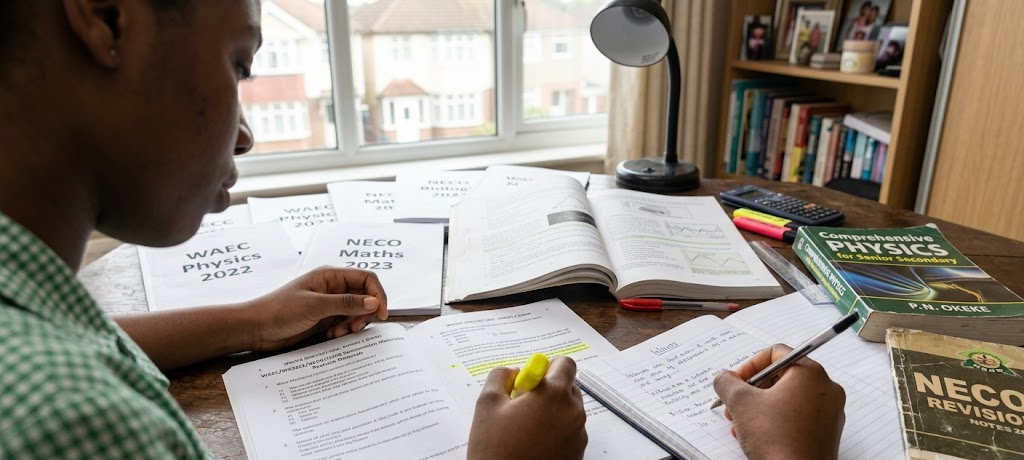
Many accomplished students realize that studying for an exam means reading a lot of information and also learning how to use the information during writing the examination. The past questions serve as a way to connect the topic with being able to give an answer to the question. A student might have learned a concept in regular classwork, but not be able to remember it when asked a question on the test. By repeatedly attempting practicing past examination questions, students learn how to interpret instructions, organize their answers, and apply their knowledge effectively. This hands-on method will help students focus their learning since they will be able to recognize their strengths and weaknesses that will help them prepare for the exam period.
Students Knowing About the Exam Format Through the Help of Past Questions
To Learn the Structure and Pattern of Questions
An important advantage of going through past examination papers is that it prepares the students to know the nature of WAEC and NECO examination papers. All subjects are different and each will contain a different number of sections, question types, marks available and how it is likely to be answered. Some subjects, for instance, may call for essay answers, while others might need objective questions, calculations, diagrams or practical explanations. Practicing past questions regularly gives students familiarity with these types of questions and how to tackle each part of an exam paper. This will help to minimise confusion during the examination as students are already familiar with the expected content and structure for each paper, enabling them to navigate through each section efficiently.
If students don’t get used to past questions, they could waste a lot of their test time figuring out the paper’s format, rather than tackling questions. Knowledge of the types of questions in examinations enables students to form strategies to deal with various types of questions. They acquire the skills to identify instructions, to see words in questions and to give answers to questions as expected in an examination. It is particularly important for students preparing for examinations conducted externally, when they are required to take tests by themselves, without supervision from their teachers. By taking past papers, students will have the experience of taking the test, which will help prepare them mentally and academically for the day of the test.
An Understanding of How Examiners Set Questions
In addition, past questions provide students with knowledge of the thinking behind how questions are designed by the examiners. Examiners tend to assess students’ learning of key concepts instead of mere memorisation. Students can analyse the transformation of topics into examination questions and the different aspects of a topic tested by observing previous questions. It is easier for students to gain a more in-depth knowledge of their topics, as he or she starts focusing on using and applying this knowledge rather than just on memorizing the facts.
For example, a student learning Mathematics might see that some concepts are used in a variety of ways, or, a student learning Biology might find that a particular aspect of human physiology or plant processes is often tested. By identifying these patterns, students will be able to prepare more intelligently. They can review the entire syllabus without having to spend equal time on every topic, and learn important topics instead.
Examining Past Questions to Pinpoint the Frequently Tested Topics
Discovering Important Areas of the Syllabus
One more benefit of past questions is that it allows students to determine what topics are commonly required in WAEC and NECO tests. Examination bodies may alter their questions each year but some topics tend to be covered in more depth as they form significant areas of the curriculum. Students can see these repeated areas and focus on them during their study, by going through the past questions of several years.
While it is useful to be aware of the types of topics that are commonly tested, it is important to remember that other sections of the syllabus also include topics that are tested regularly. All topics are relevant and examiners may pose questions from various topics. But, if students are aware of typical subjects that are tested, they can formulate a good study plan. Students have opportunities for further study of those more challenging topics that often come up later in the day and have the chance to stay up to date on the rest of the material. This method will avoid wasted effort and more organised preparation.
To Make Your Revision More Focused
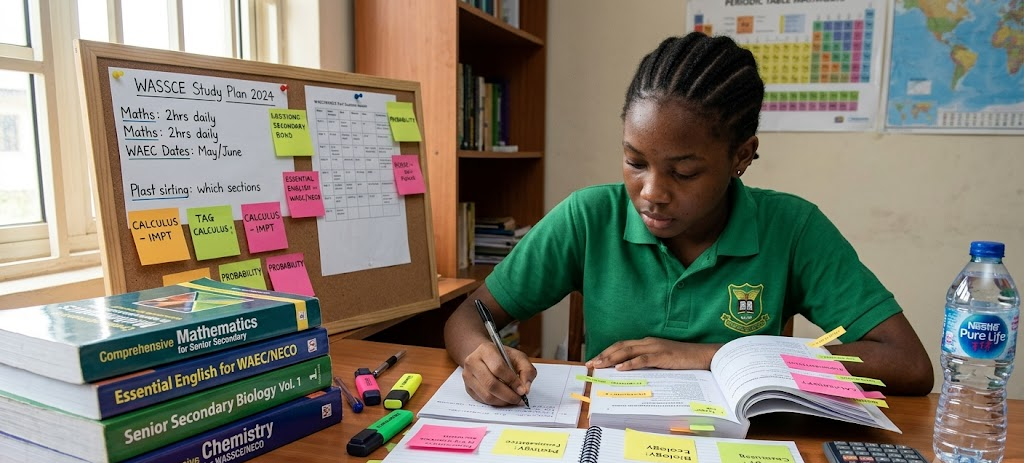
Examination syllabuses are often broad and contain many topics, many students tend to have difficulty in making a choice on what to learn. Looking at previous questions helps students by giving them direction on what areas to focus on. Textbooks, class notes and past questions can be used together to develop a targeted revision approach to both high and low frequency topics.
It is a specific methodology that can be used to make studying more productive than if students were reading aimlessly. They have been learning the same kind of thinking that is needed for the test. For instance, a student studying Chemistry may use previous exam papers to identify which calculations, definitions and explanations are frequently used. A student studying for English can recognize some of the common themes of essay writing, comprehension types and areas in which grammar needs further practice. This preparation will enhance knowledge and increase potential for success.
Developing Better Speed and Time Management Skills
Under Examination Conditions Practice
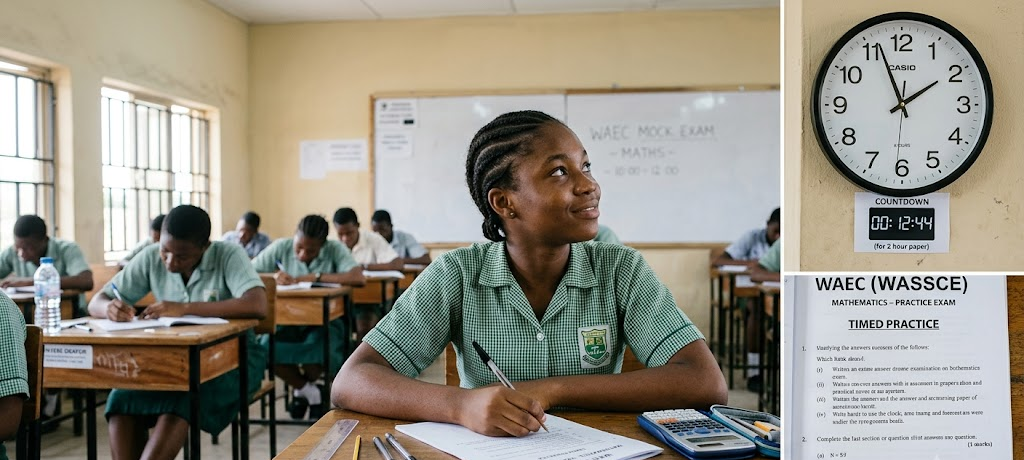
Time Management is one of the major challenges students encounter when they are taking WAEC and NECO examinations. Others know what they want to write, but don’t finish their papers due to spending too much time on some sections. Regular practice of past questions enables students to become used to answering questions on time. By creating their own exam scenarios with their set time and past paper, students are able to practice their thinking under pressure.
Students learn how long to spend on a question and when to switch to a different problem when one is challenging. This skill is particularly relevant as success in the examination relies not just on the knowledge gained but also the ability to present the answer within an allotted time period. By answering previous questions, students will acquire the ability to manage their time effectively which will help them not to panic during the actual examination.
Making Accurate and Eliminating Errors
For examination success, students need to be speedy, but they also need to be accurate. Past questions enable students to rehearse questions several times and recognize their common errors in answering questions. Students can check their answers against marking schemes, or teacher explanations to see where they have gone wrong and make improvements.
For instance, a learner might find they don’t understand some of the instructions, get the maths wrong or not explain things fully. These weaknesses will be corrected with continuous practice until the examination date. With time, students begin to be precise, confident and careful in answering questions. The speed and accuracy enabled students to have a good edge when taking WAEC and NECO exams.
Building Confidence With a Lot of Practice
One of the Aims Was to Alleviate Examination Fear and Anxiety
Students often feel anxious and frightened about external exams as they are unsure of what to expect. This fear can be resolved with past questions as they bring familiarity and ease. If the students keep meeting new types of questions and practice solving the questions again and again, then the exam wouldn’t seem so frightening. They feel they are ready because they’ve encountered similar situations in their revision.
Getting confident is not merely hoping to get good outcomes, but it is the result of good preparation and persistence. Students have evidence of their progress in the form of past questions. Practices help them build confidence and motivation as they become more successful. This positive attitude can have a positive impact on their performance during the actual exam.
Independent Learning Skills – Development
Past questions also motivate students to be responsible learners. Students can try and practice questions on their own and compare their results with the teaching staff or other students, rather than relying entirely on the teachers or classmates. This is an important skill that fosters critical thinking, problem-solving and self-assessment.
Independent practice will enable pupils to identify areas of their practice which require further assistance. They are able to ask teachers questions that may be difficult or seek explanations from reliable learning resources. Active learning approach creates students as better prepared and confident students.
Students Can Use Past Questions to Learn Effectively by Following the Following Steps
Use Past Questions in Conjunction With Other Study Materials
While past papers provide great assistance, they should not be used in place of the textbook, notes or lessons in the classroom. Past questions should be used as an aid to students’ study strategy. The most effective way is to learn the necessary subjects, grasp key concepts and then apply previous questions to test knowledge and enhance exam techniques.
Students shouldn’t just learn rote memorization regarding the answer to old questions, but should understand the concept that backs the answers. Questions can be adapted or familiar topics presented in new ways by examiners. Hence, pupils are taught to focus on the principles which enable them to be effective at answering a range of question types.
Repeat and Review Errors
When it comes to past questions, it’s crucial to be consistent. Students should not start practising for exams a few weeks prior. Practicing regularly throughout the school year gives ample opportunity to identify weaknesses and gradually improve. Students should try past papers and then check their work thoroughly, correcting their errors.
You can also retain a record of challenging inquiries and repeatedly review them, which helps to enhance your performance. Students will be able to develop their own revision guide on points they feel they need to work on. This approach will allow each practice session to be part of a system for improved preparation.
Conclusion
Importance of Past Questions in Preparing Students for WAEC and NECO Exams
Practicing past questions is essential for WAEC and NECO exams; it helps develop the important examination skills and understanding. By practicing regularly, students will get used to the exam format, learn which topics are likely to come up in exams, become faster and get confident. They also develop their time-management and problem-solving skills, and become more familiar with typical exam errors and how to answer them more accurately.
For exam preparation to be successful, more than just reading in a textbook, it has to be used in real-life scenarios. Past questions enable students to test themselves, assess their performance and plan for success. Past questions are a powerful tool for students to prepare themselves smartly and successfully for WAEC and NECO exams when coupled with good study habits, classroom learning and the students’ effort.