
Introduction
One of the most misinterpreted steps to admission into Nigerian universities is the post-UTME. Many candidates take it seriously like JAMB where they think that the topics are repeated and the questions are of the same style. But the truth is more strategic: universities have developed Post-UTME to sieve through the speed, accuracy and pattern recognition of the questions more so than mere memorization. Some of the schools that received fame for recycling JAMB-style ideas but re-inventing them in such a way as to challenge the students’ understanding of core subjects are those like University of Lagos, University of Benin, Obafemi Awolowo University, etc. This article explains the structure of Post-UTME, the requirements of the examination and how candidates can make a major improvement in their performance by preparing more specifically for the school they intend to attend.
Post-UTME is not a mere extension of JAMB; it serves as a filter for the universities to determine who they want to give admission to, because they have stricter filtering criteria. Unlike JAMB which sets an eye on general knowledge, Post-UTME has more emphasis on application, time management and pattern recognition. The candidates are sometimes shocked to see that the questions are not new, but are (re)worded combinations of those known to them as part of the JAMB syllabus, and sometimes are given a slight twist that affects their comprehension instead of their recall. The exam also prioritizes speed as there is limited time for the examination compared to JAMB, which requires the student to think fast and exactly to the right answers. Also, the universities have questions that catch out on the details in Mathematics and English. This is important to understand because students that keep studying as they are preparing for JAMB will find it difficult during the Post-UTME which is a subtle difference in the question design.
Questions set by Nigerian Universities for POST-UTME
Most Nigerian Universities do not come up with their Post-UTME questions on a whim. Rather, they heavily depend on a structured question bank, which is prepared from JAMB past syllabus, WAEC standards, and their own academic expectations. A reason students notice the similarities between the JAMB questions and the Post-UTME exams is because such questions are of the same nature. The difference is in the presentation and the combination. For instance, a basic JAMB Mathematics question could be combined with another concept in the Post-UTME and tested for multi-step reasoning. English questions may comprise comprehension passages, which need interpretation at a quicker pace; Current Affairs questions are used to test the awareness of events concerning the country and the world. Certain institutions, such as University of Lagos, are more famous for competitive screening formats while University of Benin tends to focus on CBT formats based on speed. In addition, Obafemi Awolowo University incorporates conceptual twists that demand to be comprehended at a deeper, not superficial, level in terms of fundamental principles.

Pattern Based Testing by universities (UNILAG, UNIBEN, OAU) across the nation.
The thing to note about Post-UTME in Nigeria is that as time goes on, distinct trends emerge in each of the major universities. Often, University of Lagos questions are framed in the context of English comprehension at a high speed and Mathematics problems with deduction methods that need to be applied in a swift manner. The University of Benin is famous for the CBT based tests used in their assessment procedure where they have high speed and familiarity with repeated question structure, particularly quantitative reasoning. On the other hand, Obafemi Awolowo University questions seem to focus on conceptual clarity so that candidates with only memorized answers get flummoxed by rephrased questions. In all these schools, a common theme is apparent: questions aren’t completely new, but are derivatives of previously tested concepts. This is the secret of the successful candidate who is able to dedicate more time in analyzing the previous questions than reading new textbooks. Being able to see patterns in how questions are set can be very important along with regular timed practice in exam conditions.
Past paper analysis and pattern recognition
A very common error that candidates make is to overlook the need for repetition in exam preparation. In fact, the success rate of the Post-UTME is greatly dependent on the students’ knowledge of the format of the repeats. This is where some strategic preparation with resources such as past questions and pattern recognition is crucial. Candidates should not be reading blindly across all topics, but be able to identify the structure of the questions, the concepts tested over and over and how slight variations in question wording can lead to different answers. For instance, passages in English comprehension tend to be on a similar theme, and in Mathematics, familiar formulas may appear in different forms. The current affairs questions are also directed towards the recent happenings in the country, governance, education, and global issues. Students will see these patterns over and over again, so that during the real test they will notice them and be able to respond more quickly and with greater accuracy. This method helps alleviate anxiety and increases confidence since the test becomes more predictable than unpredictable.
The Core Focus Areas are English, Mathematics and Current Affairs.
The majority of Nigerian universities create their Post-UTME exams based on three subject areas, namely, English Language, Mathematics and Current Affairs. There is often a strong emphasis on English due to the requirement to understand, interpret, comprehend and understand grammar and vocabulary in the passage under time pressure. In mathematics, however, accuracy and speed are emphasized, and questions are framed to test not only memory, but also logical reasoning and problem-solving skills. Current Affairs are generally added to test the awareness of the candidates about the political, economic, educational, and other changes taking place in the environment. These subjects are integrated together into a balanced assessment system which will help to identify academic strength as well as general awareness. Students not doing well in any of these areas tend to do poorly, despite being strong in one area. Hence, it is important that preparation remains balanced and that candidates distribute their time among the three areas, but also focus on those areas they are not as strong in.
Why Speed and Accuracy are More Important than Ever
Time is one of the most crucial things that can make a difference in Post-UTME examinations. As opposed to WAEC or JAMB where the candidates have a fair amount of time to answer each question, Post-UTME is structured in such a way as to be a fast and competitive test. This will create a problem for a student even if they know the material and are unable to respond quickly enough. High speed, low accuracy is leading to careless mistakes; and low speed, high accuracy is leading to incomplete answers. Balance is the key to all of this, which can only be achieved through timed practice sessions. Some universities even make their tests this way to see those that are not ready to handle tertiary education’s challenges. Practicing regularly under exam conditions can help students perform much better as they learn time management skills and mental discipline. This will help to dampen anxiety and enhance decision making during the actual exam over time.
Preparation Strategy to succeed in Post-UTME
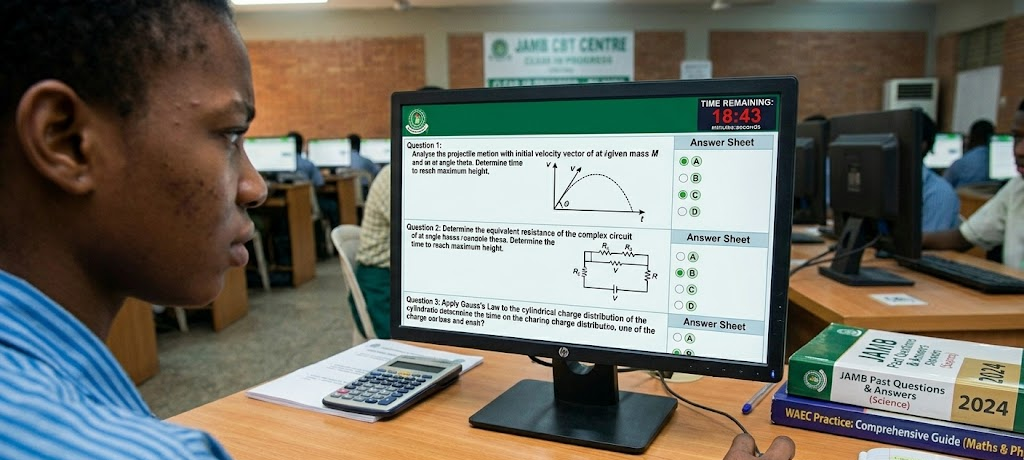
This is why it’s important to get ready for Post-UTME with the right attitude, rather than just studying in general. Students should not be spending their learning time by rereading entire textbooks over and over again, but instead have a focus on patterns, practicing past questions and time themselves when revising. It is also important to go through the mistakes in detail and see what areas need improvement. Another good idea is to split study time into blocks by subject difficulty—more time in Mathematics, more time in English/Currents etc. for challenging subjects. Candidates should also practice under a real exam condition to improve their confidence level and exam pressure by practicing under the strict timing condition. Moreover, the revision of the topics that are tested regularly in different universities enables the students to get an insight about how students are asked similar questions differently in universities. Such an approach will make the preparation thorough, strategic and in line with actual exam expectations.
Conclusion
The aim of Post-UTME is not to make it a random exercise but one designed to test the student’s pattern recognition, practice and ability to work with time pressure. Some universities such as University of Lagos, University of Benin and Obafemi Awolowo University have the same questions but they change them to make one think faster and understand the question deeper. One of the keys to doing well in the Post-UTME is not just reading everything but studying smartly via pattern recognition, past questions analysis and timed practice. Of course, when you are able to handle these techniques you will find the exam easier and more predictable than you thought. The main thing is not only to know the answers but to understand how the questions are framed and what to do efficiently in the heat of the moment.