Introduction
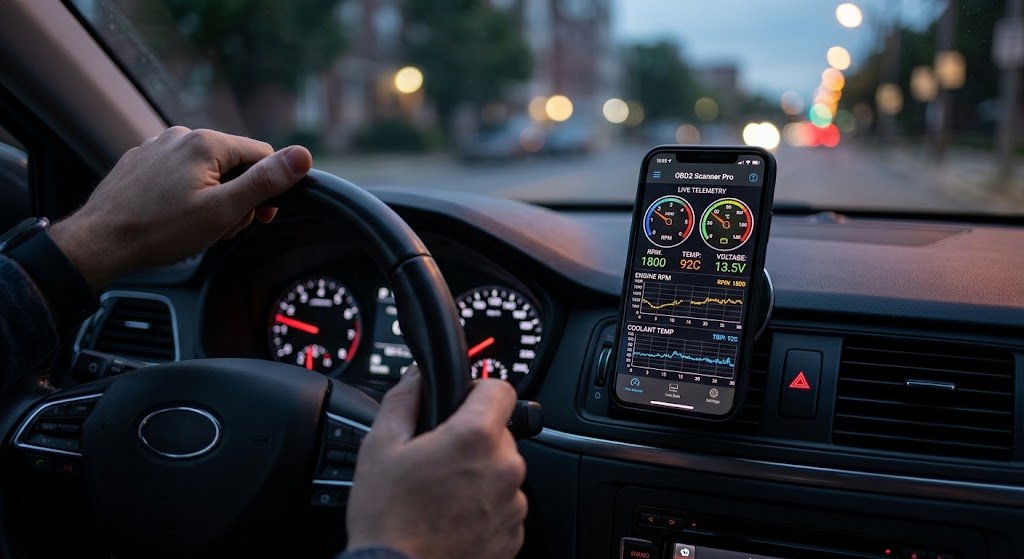
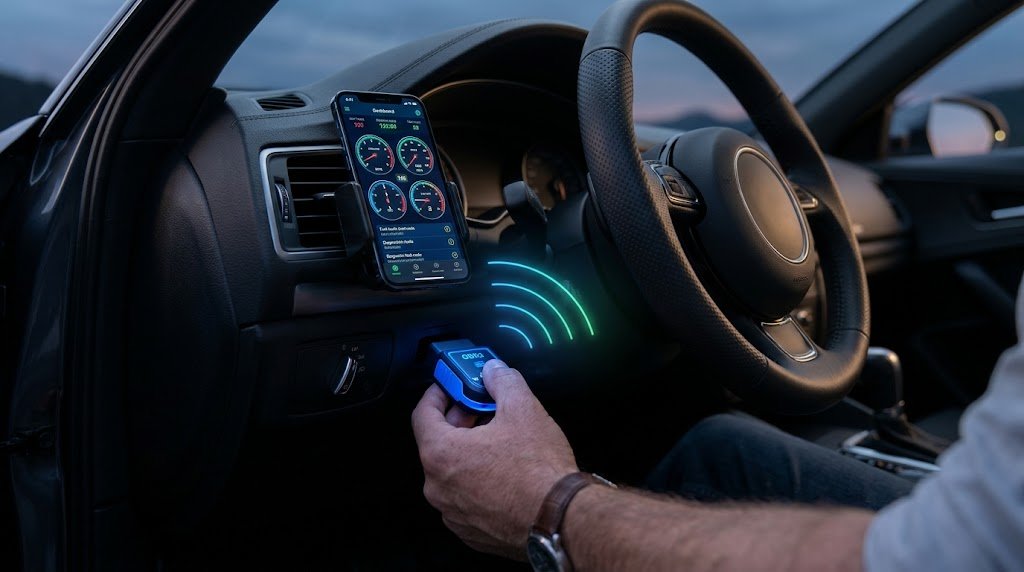
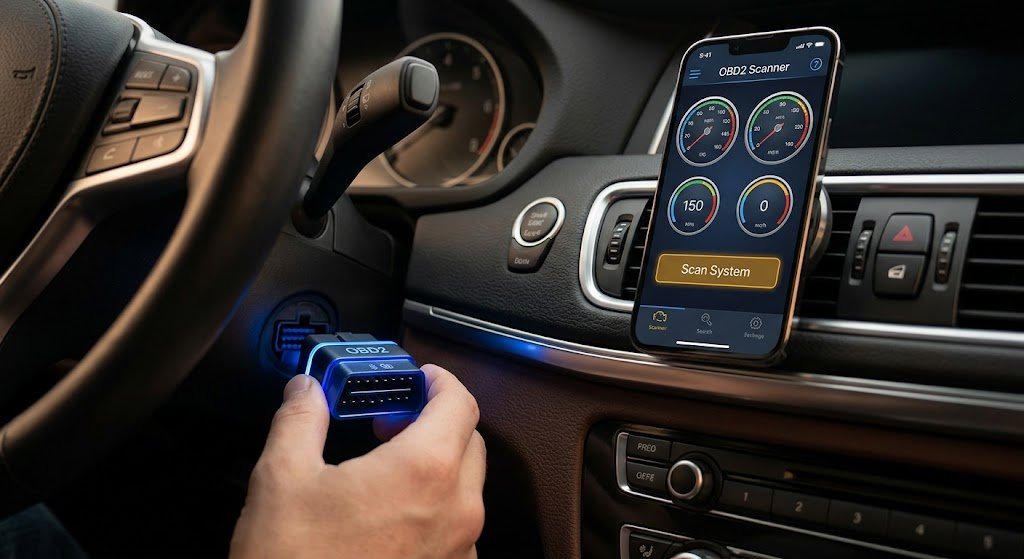
OBD2 trouble codes are a standard feature in today’s cars, which are heavily instrumented with computers and sensors to track the engine, transmission, brakes, airbags, emissions, and numerous other systems. If your vehicle senses a condition that is out of the normal range, it sets one of these Diagnostic Trouble Codes (DTCs). These codes can easily be obtained using an OBD2 scanner or a smartphone diagnostic application that displays them for the vehicle owner. However, without understanding the meaning of the letters and numbers, codes like P0301, B0020, C0035, or U0100 can be quite confusing.
There are four main categories of OBD2 codes: P codes, B codes, C codes, and U codes. Most of the time, the issue with a P code is related to the powertrain systems, B codes to body systems, C codes to chassis systems, and U codes to communication between electronic control modules. Knowing what OBD2 Diagnostic Trouble Codes mean can make the results from an on-board diagnostic scan clearer and aid in determining what repairs to consider for your vehicle.
What Is an OBD2 Trouble Code?
OBD2 trouble codes are standardized codes that are stored by the vehicle’s onboard diagnostic system when it senses a problem or unusual operating condition. OBD2 – On-Board Diagnostics II – makes it possible for compatible diagnostic equipment to communicate with the vehicle and obtain information from its electronic control systems. This data may include trouble codes, live sensor information, readiness information, and more.
A trouble code is not a definitive sign of a failed part and is meant to be a diagnostic hint. For instance, if the sensor is faulty, wiring is damaged, a bad connection or any other problem occurs in the sensor circuit, a sensor-related code may be generated. Hence, the code typically will point you to the starting point for investigating, and not the exact part that’s at fault.
The 4 Main OBD2 Code Categories
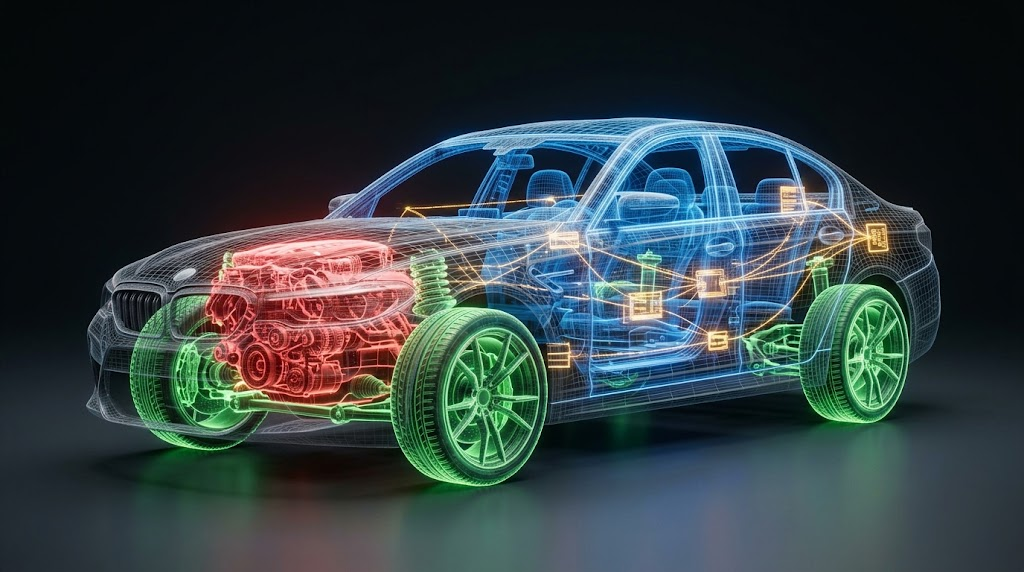
The first letter in an OBD2 code indicates the overall system of the vehicle. The four sections are P: Powertrain, B: Body, C: Chassis, and U: Network Communication. This first character is a good indication to use when reading a scanner.
This is the beginning of narrowing down the area, but the rest of the code is required for a more specific interpretation. In today’s modern cars, there are numerous electronic control modules, and sometimes errors in one module can produce symptoms or codes in another. Therefore, a full code, and other vehicle information, should be evaluated as a whole.
P Codes: Powertrain
P codes are codes that relate to the powertrain. These are often associated with the engine, transmission, fuel system, ignition system, emissions system, and parts. P codes are among the most popular trouble codes that vehicle owners may find, as the engine and transmission are well supervised by electronic control modules.
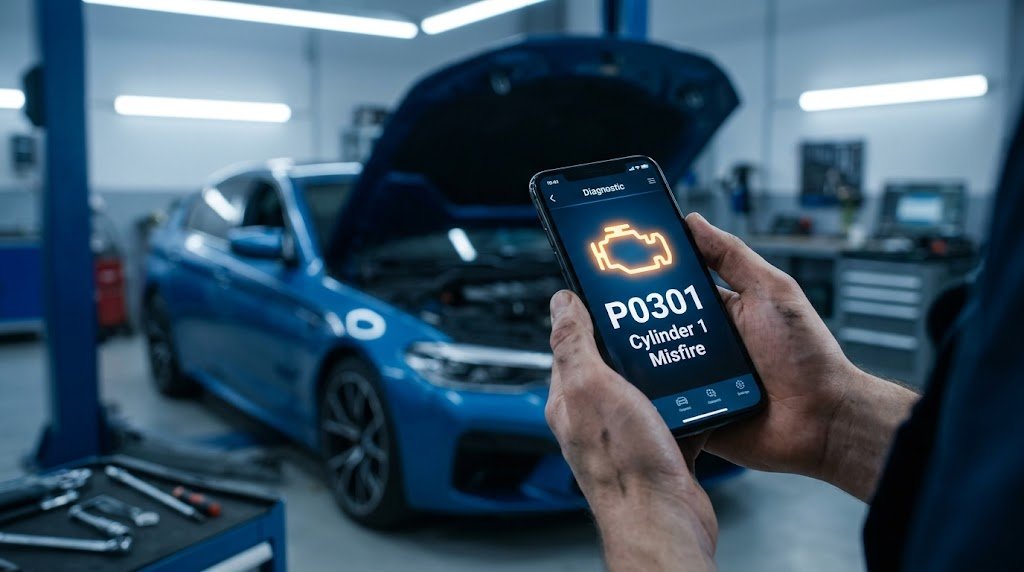
For instance, P0301 means there is a detected misfire with cylinder #1. But a code doesn’t necessarily indicate that the component described by the code has failed. Further testing might be required to check if the issue is related to a sensor, wiring, ignition component, fuel system, or mechanical issue.
B Codes: Body
The B codes are for body systems and equipment. When it comes to the car, they might include all kinds of airbags, seat systems, door locks, power windows, climate-control systems, interior electronics, and other body-related features. Some cheaper OBD2 scanners might not be used to read all B codes, as they are mainly designed to retrieve powertrain data.
Some B codes may be related to important safety systems, while others are not related to engine performance. For instance, an airbag/occupant protection system body code shouldn’t be overlooked just because the car is driving fine. Before making a decision on the seriousness of the problem, the exact system involved should be determined.
C Codes: Chassis
The C codes tend to be related to chassis systems like braking, steering, suspension, wheel-speed sensors, vehicle stability, etc. Electronic controls in modern vehicles are used for anti-lock brakes, traction control, and electronic stability control—these systems can remember diagnostic codes when an abnormal condition is detected.
C codes warrant attention, as some are related to systems that directly impact vehicle control and safety. For example, if there is an issue with the wheel-speed sensor, it can impact an electronic braking system or stability system. But the sensor may not be the only cause, and wiring, connectors, and other parts might have to be checked.
U Codes: Network Communication
U Codes are related to communication between the electronic control modules. There are several computers in modern cars that pass information around to help them control the engine, transmission, braking, body, safety, and other systems. If modules don’t communicate or communicate incorrectly, the vehicle can store a U code.
Communication faults can be difficult, as the issue could be wiring, connectors, electrical power, grounding, or a control module, as well as a standard mechanical fault. Sometimes several U codes may occur from a single underlying communication or electrical fault, so simply replacing all modules that have codes is not always the best course of action.
What the Numbers in an OBD2 Code Mean
Numbers are used in combination with the first letter to give more information about the fault. For a five-character code like P0301, the first character is that of the code category, and the last four characters are the classification and information about the system or condition.
The second character is often used to differentiate between a generic code and a manufacturer-specific code. The rest of the characters describe the system, circuit, or detected condition in more detail. Each position may have differing interpretations, depending on the category of code, so the full five-character code should always be monitored and not just the first or last one or two characters.
Generic and Manufacturer-Specific Codes
A number of codes are standardized so that they have a similar general meaning when applied to similar vehicles. Some are manufacturer-specific and can offer information about systems or conditions specific to a particular manufacturer. The difference is significant because general diagnostic information can sometimes be easier to interpret than a manufacturer-specific code and can be important for a vehicle-specific code.
If you are using a smartphone OBD2 app, watch to see if the app offers a general description or vehicle-specific information. When the description is not clear, refer to reliable information for the exact make, model, year, and engine—never assume that a similar-looking code means the same on all vehicles.
Why a Trouble Code Does Not Necessarily Indicate a Bad Part
It’s important to know that a trouble code is not a definitive indicator of a failure. The computer identifies a condition that doesn’t match the normal one, and the resulting code provides a direction for further testing for the technician.
For instance, a code for an oxygen sensor may be triggered by the sensor, wiring, a circuit, or some other condition in the engine that impacts the sensor reading. Changing the sensor may then not fix the issue. The codes and surrounding symptoms may be more helpful to record and analyze.
How to Use an OBD2 Scanner Properly
If an OBD2 scanner is showing a trouble code, note the complete trouble code, then clear it. Record any warning lights, strange noises, engine changes, or other indications. If there are several codes, list all of them, as they can give a better understanding of the problem.
Once the information is recorded, look up the vehicle’s exact code and see what diagnostics are needed. Don’t think that the first part of a code description always needs to be replaced. If you’re facing issues with your brakes, steering, airbags, stability systems, or safety concerns in general, you may need professional vehicle inspection.
Conclusion
OBD2 trouble codes can be useful for determining issues that are detected by the electronic systems in a vehicle. The first letter refers to the general category of the part as follows: U – Network communication, B – Body, C – Chassis, P – Powertrain. The following numbers refer to information about the affected system or detected condition.
These are the different types, and knowing them helps to interpret the results of the trouble code in the OBD2 scanner, but don’t assume anything just because of the trouble code. Further testing of sensors, wiring, connectors, electrical systems, and related components may be required to make an accurate diagnosis. With a basic understanding of the structure of OBD2 codes, vehicle owners can make better use of diagnostic scanners and be better prepared to discuss vehicle repairs.