Introduction
Modern-day advertisement is not just about the advertising of a product or a service. With the market very competitive and congested, the brands have to communicate messages that help to draw attention, generate trust and finally affect purchasing behaviors. It is in this case that effective advertising techniques are required.
Good campaigns do not just happen. They are constructed around established psychological and creative policies that determine how viewers acquire perceptions about messages and react to them. Of these techniques, some have remained effective in fueling engagement and sales.
These approaches are important elements that marketers, business owners, and communication professionals must understand to develop effective campaigns. An effective summary of common advertising techniques demonstrates how these strategies are implemented in the industries to enhance the effectiveness of messages and reach the audience.
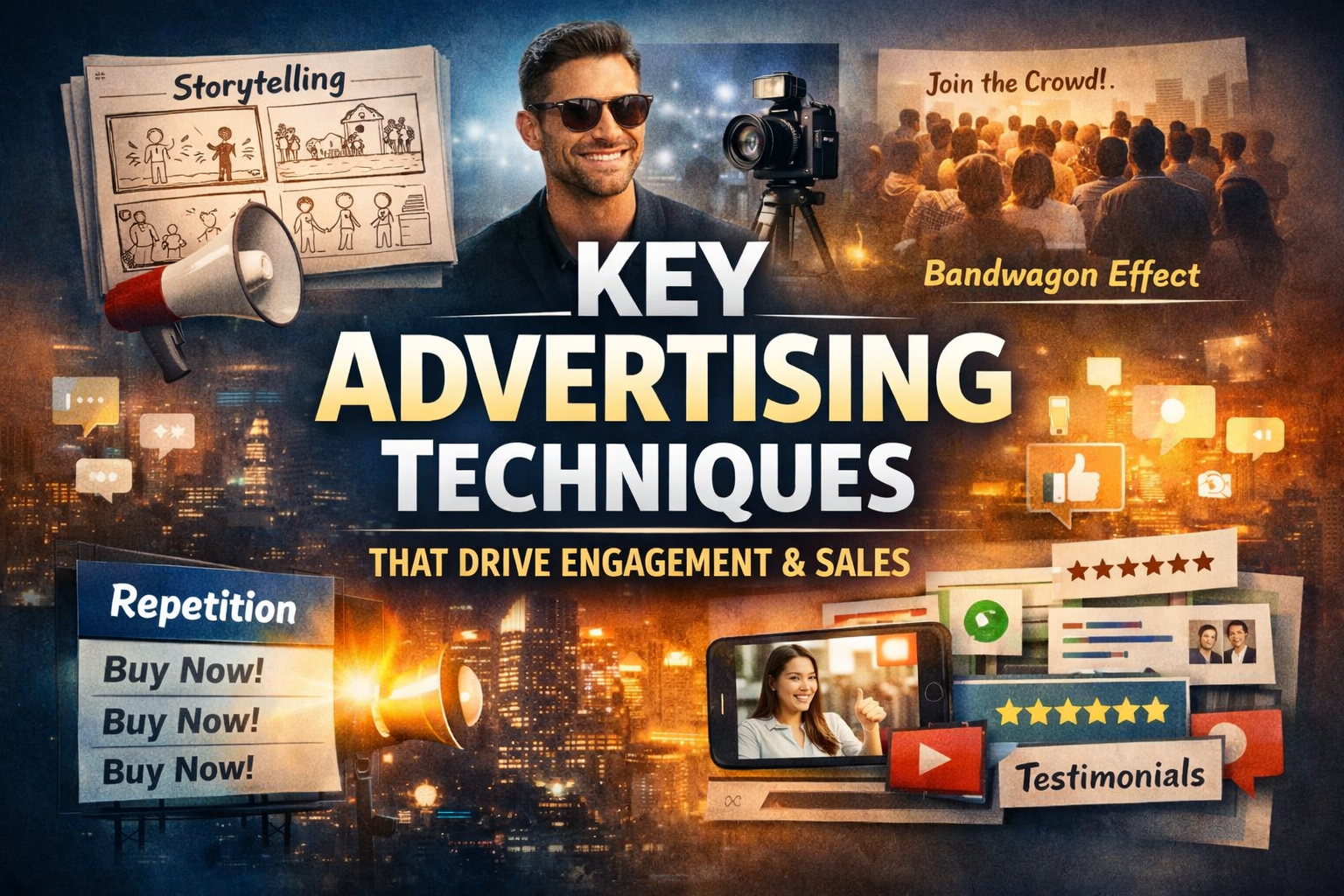
The paper discusses some of the most important methods of advertising, such as storytelling, using celebrities, repetition, bandwagon effect, and testimonials and how each of them adds up to effective and memorable advertising.
The contribution of Advertising Techniques in modern marketing
Persuasive communication revolves around the techniques of advertising. They assist in altering the average messages into vivid stories that will appeal to target audiences.
In their essence, these methods seek to:
- Win attention in an overcrowded media landscape.
- Elicit emotional or rational reactions.
- Build credibility and trust
- Promote certain activities like buying or subscribing.
In the absence of these strategic plans, even the most innovative products may fail to be visible or get market traction. The effectiveness of advertising does not just depend on what is being said but also on how it is being said.
Storytelling: Building Emotional Connections
What Is Advertising Storytelling?
Storytelling is among the most effective methods of advertisement since it appeals to the feelings of human beings. Rather than making a direct introduction of a product, the brands develop narratives that the audience can associate with, which makes the message more captivating and memorable.
Why It Works
It is in human nature to relate to stories. A well-crafted narrative can:
- Causing empathy and emotional attachment.
- Simplify complex ideas
- Make brands more relatable
By reflecting a story on the consumers, they tend to believe the brand and recall the message.
Practical Application
Storytelling has been used in brands to:
- Video advertisements
- Social media campaigns
- Brand documentaries
An advertisement of a family that is struggling through some problems with the assistance of a product can be used as an example; it is more emotional in nature than a mere demonstration of a product.
Celebrity Endorsement
Celebrity Endorsement
Celebrity endorsement is the use of famous people in marketing products or services. The actors, musicians, athletes, or influencers can be included in these numbers.
Why It Works
This method is based on the concept of trust and admiration. Consumers will tend to give the qualities of a celebrity to the product he or she endorses.
Key benefits include:
- Increased brand visibility
- Enhanced credibility
- Attention to the audience instantly.
Strategic Considerations
Although it works, the use of celebrity endorsement should be done sparingly. The selected personality ought to:
- Align with the brand’s values
- Appeal to the target audience.
- Have a good image in society.
Inconsistency between the product and the celebrity may decrease the credibility and does not increase it.
Repetition: Strengthening Brand Recall
What Is Repetition in Advertising?
Repetition is the ability to repeat the message in various media to strengthen the memory and recognition.
Why It Works
When repeatedly met, information is better stored in the human brain. This technique:
- Strengthens brand recall
- Builds familiarity
- Heightens the chances of making buying decisions.
Examples in Practice
Repetition is normally applied in:
- Television and radio ads
- Digital display campaigns
- Social media promotions
Even a basic saying used continuously on every platform may end up being ingrained in the minds of consumers.
The Bandwagon Effect: Setting the Trend in Social Proof
What Is the Bandwagon Effect?
The bandwagon effect is a psychological phenomenon where individuals become adopters of behavior or beliefs because other individuals are doing the same. In advertising, it prompts consumers to observe fashions.
Why It Works
Social cues are usually relied on by people to make decisions. This technique:
- Creates a sense of urgency
- Gaining popularity.
- Minimizes the indecisiveness in decisions.
Common Applications
- Everybody is moving over to this product’s messages.
- Emphasizing the presence of big numbers of customers.
- Presenting trending products.
Consumers tend to adopt a product when they think that it is widely accepted by consumers.
Testimonials: Establishing Credibility with Authentic Testimonials
What Are Testimonials?
Testimonials are the words of satisfied customers or clients that describe that they have a positive experience using a product or service.
Why They Work
In contrast to direct advertising statements, testimonials are convincing and familiar. They:
- Build trust and credibility
- Provide social proof
- Reduce perceived risk
Types of Testimonials
- Written reviews
- Video testimonials
- Influencer recommendations
- Case studies
Potential customers gain more confidence in their buying behavior when they observe other people enjoying a given product.
Integrating Strategies to the Fullest
Although the effectiveness of each advertising method is high in itself, it is common to use several strategies in campaigns that are the most successful.
For example:
- To increase credibility, a storytelling campaign can also have testimonials.
- Repetition can be applied in a celebrity endorsement to confirm the message.
- Real customer reviews can be used to support the bandwagon effect.
The combination of the two makes the messages very appealing, convincing and entertaining.
The Psychological Principles of Advertising Techniques
Any good method of advertisement has a psychological basis. They affect the way individuals think, feel and behave.
The major psychological principles are:
- Emotional appeal (storytelling)
- Power and credibility (celebrity endorsement)
- Reinforcement (repetition) in memory.
- Social influence (bandwagon effect)
- Credibility (testimonials)
Awareness of such principles enables marketers to come up with campaigns that touch the hearts of their target market.
Difficulties in Advertising Techniques
Even though they are effective, such techniques should be utilized in a responsible manner.
Potential Issues
- Excessive repetition may result in boredom for the audience.
- False advertising is detrimental to the brand image.
- Unacceptable celebrity endorsements can turn against the company.
- The social proof can be manipulatively used to decrease trust.
Best Practices
To avoid these challenges:
- Be genuine in communication.
- Make endorsements open.
- Associate methods and brand values.
- Concentrate on providing real value to the consumers.
Trends in Advertising Techniques in the Future
Due to the changing nature of technology, modes of advertisement are changing.
Emerging trends include:
- Individual storytelling based on data analytics.
- Micro-influencer promotion of niche audiences.
- User-generated content: interactive testimonials.
- Intelligent repetition strategies of optimized exposure.
Such innovations enable brands to perfect the ancient methods but ensure that they preserve their essence.
Conclusion
Advertising methods are vital in determining the communication and connection methods of the brands towards their audiences. Storytelling, celebrity endorsement, repetition, bandwagon effect, and testimonials are not only creative tools, but also are strategic tools which are based on psychology and consumer behavior.
When used properly, these strategies boost the message delivery, engage more, and make sales. They must succeed, however, based on authenticity, relevance, and judicious implementation.
In a competitive environment, learning these tricks is the key to any organization in the quest to shine and to build a long-term relationship with the audience. Through the knowledge and ideas of these strategies, advertisers will be able to make a preview of the campaigns that are not just effective but also memorable and credible.