The New Language of Digital Appreciation
Digital platforms are no longer built only around comments, likes, and follows. Today, people want interaction that feels expressive, instant, and emotionally visible. That is why virtual gifts have become such a powerful part of modern community design. They allow users to show appreciation in a way that feels more personal, while giving creators and hosts a clear public signal that their presence is valued.
On SUGO, this idea becomes interesting because the platform is centered on voice rooms, live conversations, parties, and social discovery. In that environment, a gift is not just a digital item. It is a public moment. It can welcome a new speaker, celebrate a song, encourage a host, or make a room feel more active.
As a content strategist, I see this as a larger change in online behavior. Users are not simply consuming entertainment. They are participating in it.
How SUGO Uses Gifts to Build Real-Time Interaction
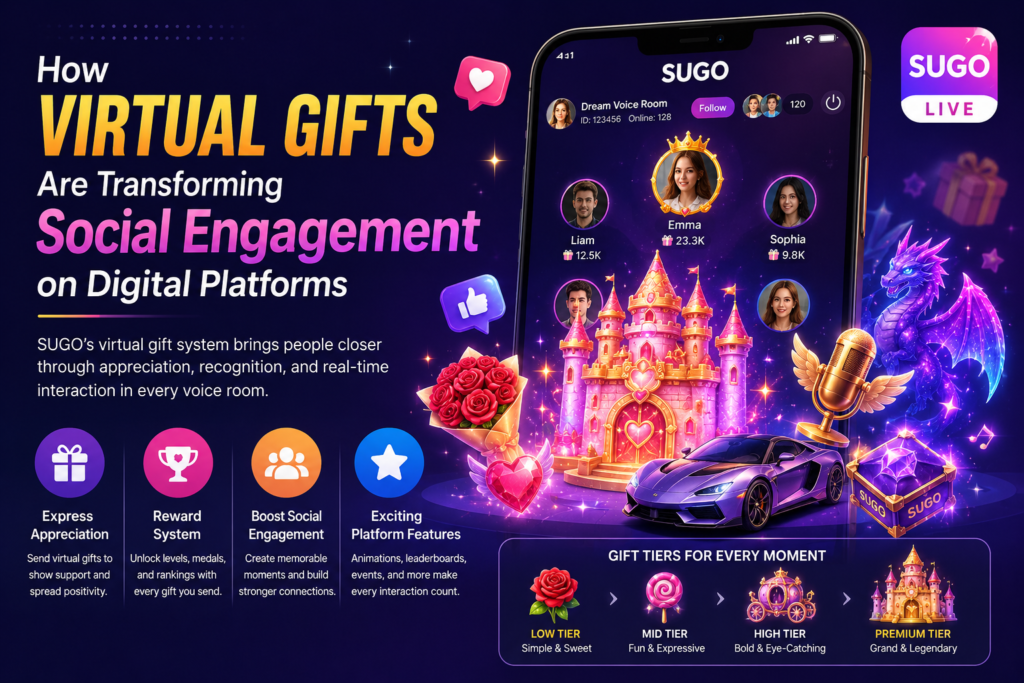
SUGO’s gift system works because it connects emotion with action. Instead of leaving appreciation hidden in a private message, the platform lets users send animated items during live moments. These may include simple gifts for casual support, more expressive items for loyal fans, and premium gifts for major celebrations.
This creates a layered form of interaction. A listener can send a small gift to say hello. A regular supporter can send a mid-level gift to keep the room energy alive. A top fan can use a premium gift to mark a birthday, competition win, or special event.
The core value of virtual gifts, reward system, social engagement, platform features lies in how naturally they work together. Gifts create recognition. Recognition motivates participation. Participation keeps rooms active. The platform features then organize that activity through effects, rankings, levels, and community moments.
Understanding the Different Gift Tiers
A strong gifting system needs variety. If every gift carried the same meaning, users would have fewer ways to express themselves. SUGO solves this by offering gifts across different value tiers, allowing people to participate according to their budget, mood, and relationship with the room.
Common gift tiers can be understood this way:
- Entry-level gifts: Small items such as roses, hearts, or simple animations. These are useful for greetings, quick support, and low-pressure participation.
- Mid-tier gifts: More noticeable items that may include themed props, brighter animations, or gifts used during games and room activities.
- High-tier gifts: Larger visual gifts that create stronger attention and are often used during events, ranking pushes, or milestone celebrations.
- Premium gifts: Rare, highly visible items designed to make a strong statement during important moments.
This structure matters because it gives every user a place to participate. Someone can send a small gift without feeling excluded, while dedicated supporters can choose larger gifts when they want to stand out.
Why the Reward System Matters
A reward system adds structure to the emotional side of gifting. Without it, gifts might feel like isolated actions. With it, every interaction can contribute to a larger pattern of progress, recognition, and community growth.
On SUGO, gifts can support hosts, influence room energy, and help users gain visibility through activity-based signals. Depending on the event or feature, gifting may connect with levels, leaderboards, badges, rankings, or special room moments. This gives users a reason to return, because their participation becomes part of an ongoing journey.
The best reward system does three things:
- It makes participation feel visible.
- It gives users goals without forcing them to spend.
- It rewards consistency, timing, and community support.
This balance is important. SUGO’s tiered gift environment shows how digital platforms can make appreciation feel playful while still giving it measurable value.
Turning Support Into Social Engagement
Social engagement grows when people feel noticed. In a voice room, that can happen through shout-outs, seat invitations, host responses, group reactions, or leaderboard recognition. Virtual gifting strengthens these moments because it gives users a clear reason to interact at the right time.
For example, during a music session, a small gift can encourage the singer. During a group game, a mid-tier gift can add excitement. During a room competition, a premium gift can shift the mood instantly and create a shared memory for everyone present.
This is why gifting has become more than a monetization feature. It is a social signal. It tells the host, “I am here.” It tells the room, “This moment matters.” It tells other users, “Participation is welcome.”
When managed well, gifting can reduce awkwardness. New users can send a small gift before joining the mic or starting a conversation.
Platform Features That Make Gifting More Engaging
The impact of gifting depends heavily on platform features. A gift by itself is simple. A gift supported by animation, timing, ranking, and community response becomes memorable.
SUGO’s ecosystem shows how features can make gifting feel more interactive through:
- Animated effects that make gifts visible in the room
- Voice rooms where hosts can react instantly
- Events that give gifting a shared purpose
- Leaderboards that recognize active supporters
- Medals, levels, or profile signals that build identity
- Seasonal gifts that keep the experience fresh
These features transform gifting from a one-way transaction into a two-way social experience. The host receives support, the sender receives recognition, and the room gains energy.
How Hosts and Users Can Interact Through Gifting
The best gifting environments are shaped by both platform design and community behavior. Hosts play a major role in making gifts feel meaningful without making non-gifters feel ignored. A respectful host thanks supporters, keeps room energy balanced, and treats gifts as appreciation rather than obligation.
Users can also approach gifting more thoughtfully. Instead of sending items randomly, they can match gifts to moments. Small gifts work well for greetings and light encouragement. Mid-tier gifts fit games, challenges, and ongoing support. High-tier and premium gifts are better saved for special occasions where the gesture will feel memorable.
Healthy gifting behavior includes:
- Setting a clear spending limit before joining active rooms
- Choosing gifts based on the moment, not pressure
- Supporting hosts who respect all participants
- Using gifts to enhance conversation, not replace it
This approach keeps the experience enjoyable and protects gifts as voluntary expressions of appreciation.
What Digital Communities Can Learn From SUGO
SUGO’s virtual gift system highlights an important lesson for any digital platform: engagement improves when users have more ways to express intent. A like may show approval, but a gift can show timing, personality, loyalty, and emotional investment.
The tiered structure creates a flexible participation ladder. New users can begin with small gestures. Regular members can build habits around mid-level support. Highly invested fans can mark major moments with premium gifts. Each tier has a purpose, and that purpose helps the platform feel more alive.
For creators and hosts, the system offers practical feedback. Gifts reveal which moments resonate with the audience. Over time, these signals can help hosts improve room formats.
The Future of Digital Connection Is More Expressive
Virtual gifts are changing the way people participate on digital platforms because they combine emotion, recognition, and interaction. On SUGO, the system works especially well because gifts are tied to live voice rooms, visible reactions, tiered value, and community-based rewards.
The future of online engagement will not depend only on how many users log in. It will depend on how deeply they feel involved once they arrive. Platforms that understand this will continue to design tools that make appreciation easier, more visible, and more rewarding.
SUGO’s gifting model shows that digital interaction can feel human when the mechanics support real social behavior. Whether someone sends a rose, a themed animation, or a premium gift during a major event, the message is clear: people want to be part of the moment, not just watch it pass by.