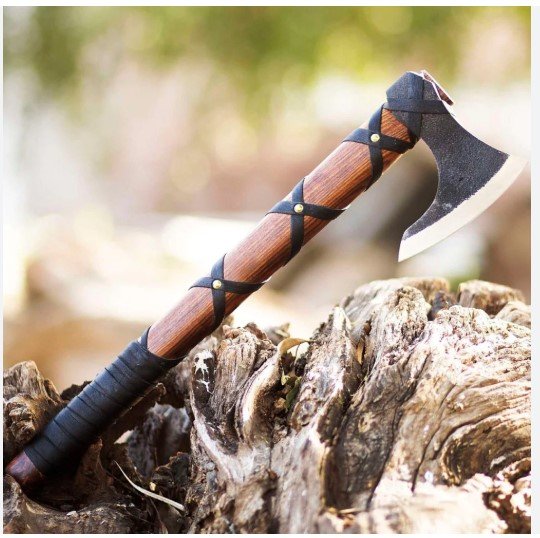
During the Viking Age (8th–11th centuries), Viking axe was an essential item in Norse society, serving as both a tool and a weapon. Its effectiveness depended on skilled craftsmanship, careful material selection, and advanced metalworking techniques.
The primary materials for making a Viking axe included iron, which formed the main body, and hardened steel, which was used for the cutting edge. Blacksmiths combined these materials through a process called forge welding, which involved heating the metals until they could be hammered together into a single solid blade. In some high-quality axes, pattern welding was used, layering different metals to increase strength and create decorative patterns. Handles were usually made from strong, flexible woods such as ash or oak, providing durability and the ability to absorb shock during use.
Design played a crucial role in functionality. The blade of a Viking axe was often thin and wide, giving it balance and allowing for fast, powerful swings. The eye—the hole where the handle fit—was carefully shaped to hold the shaft securely, ensuring the axe head would not loosen during combat or heavy work. Each Norse axe was slightly different, often customized to suit its intended purpose, whether for daily labor or battle.
After forging, the blade underwent heat treatment, a process of heating and quenching to harden the steel edge, followed by tempering to reduce brittleness. This combination allowed the Viking axe to maintain sharpness and durability, essential qualities for survival and warfare. The careful balance of weight, shape, and material made the axe not only effective in combat but also practical as a multipurpose tool.
The skill required to craft a Viking axe reflected the blacksmith’s experience and knowledge. A well-made axe was a valuable item, sometimes even decorated, symbolizing both craftsmanship and social status. This careful attention to materials and technique is why the Viking axe was such a reliable and feared weapon throughout the Norse world.
Today, the tradition of Viking craftsmanship continues, and collectors or enthusiasts can find Viking axe for sale, offering a tangible connection to the ingenuity and skill of Viking blacksmiths. These axes remain a testament to the combination of practicality and artistry that defined Norse toolmaking and warfare.