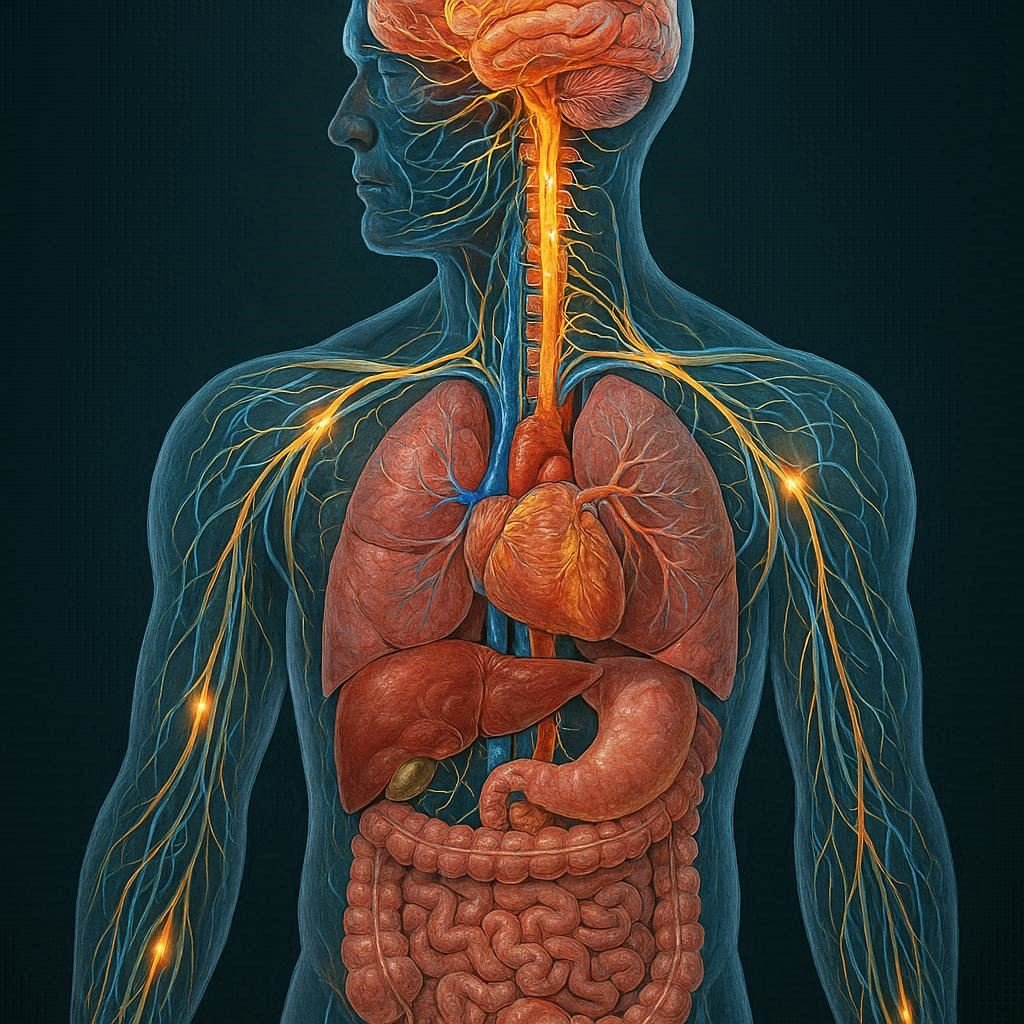
There are a million things that the human body does on a second to a second, most of which occur unconsciously. Your heart is still beating, your lungs are still breathing, your eyes are sensitive to light, your muscles aid in movement, and your brain is involved in thoughts, feelings, and memories. The nervous system, one of the most significant and complex networks of body control, is behind all of these activities. It is considered to be the communication highway of the body receiving information about the internal and external environment, processing information, and sending signals that guide the necessary reaction. The nervous system controls and coordinates all the functions needed to survive, move, sense, and think, whether as simple as withdrawing your hand of a hot object or as complex as solving a challenging problem.
The nervous system functions by a complex network of nerve cells or neurons and offering cells which support them and nourish them. These are neurons which transmit electrical and chemical signals at an incredible speed, enabling the body to respond nearly instantly to changes. All the sensations you experience, all the thoughts you have, and all the motions you make are based upon the proper operation of this system. It does not only regulate voluntary movements like walking and speaking but involuntary ones like the heartbeat, digestion, hormone release and reflex reactions. This knowledge on how the nervous system regulates the body functions can be used to understand why it is core in daily activity as well as in long-term health.
Learning about the Nervous System as the Control Center of the Body
The nervous system is simply the command system and communication system of the body. It gathers data/information using sensory organs, skin, muscles, and internal organs, processes that data, and transmits a message to the relevant parts of the body. It is this constant communication that keeps the body functional, responsive and balanced. Signals are sent along nerves every second to organize movements, control organ activity and homeostasis.
This system may be likened to a sophisticated electrical network. Similar to the use of wires in delivery of electrical current used to energize various devices, the body uses impulses which are transmitted through the nerves. Nonetheless, the nervous system unlike normal wires is able to process information, make decisions, store memories, and adjust to experience. This capability renders it not only a survival factor but intelligence, personality and behaviour as well.
The Central Nervous System: Spinal Cord and Brain
The brain and the spinal cord make up the central nervous system (CNS). It is the main control centre of the body and is tasked with the functions of taking sensory input, processing it and producing responses.
The brain is the most complex body organ. It regulates thoughts, emotions, memory, speech, balance, coordination and voluntary movement. It also controls involuntary processes like breathing, heart rate, sleep and body temperature. The various regions of the brain have particular functions. An example is that the cerebrum is concerned with thought and memory, cerebellum with movement and balance and the brainstem with automatic functions of a vital kind.
The spinal cord is the system that provides communication between the brain and the rest of the body. The body sends signals up the spinal cord to the brain, and the brain sends instructions down the spinal cord to the body, in muscles and organs. This two-way communication plays a vital role in the appropriate operation of the nervous system.
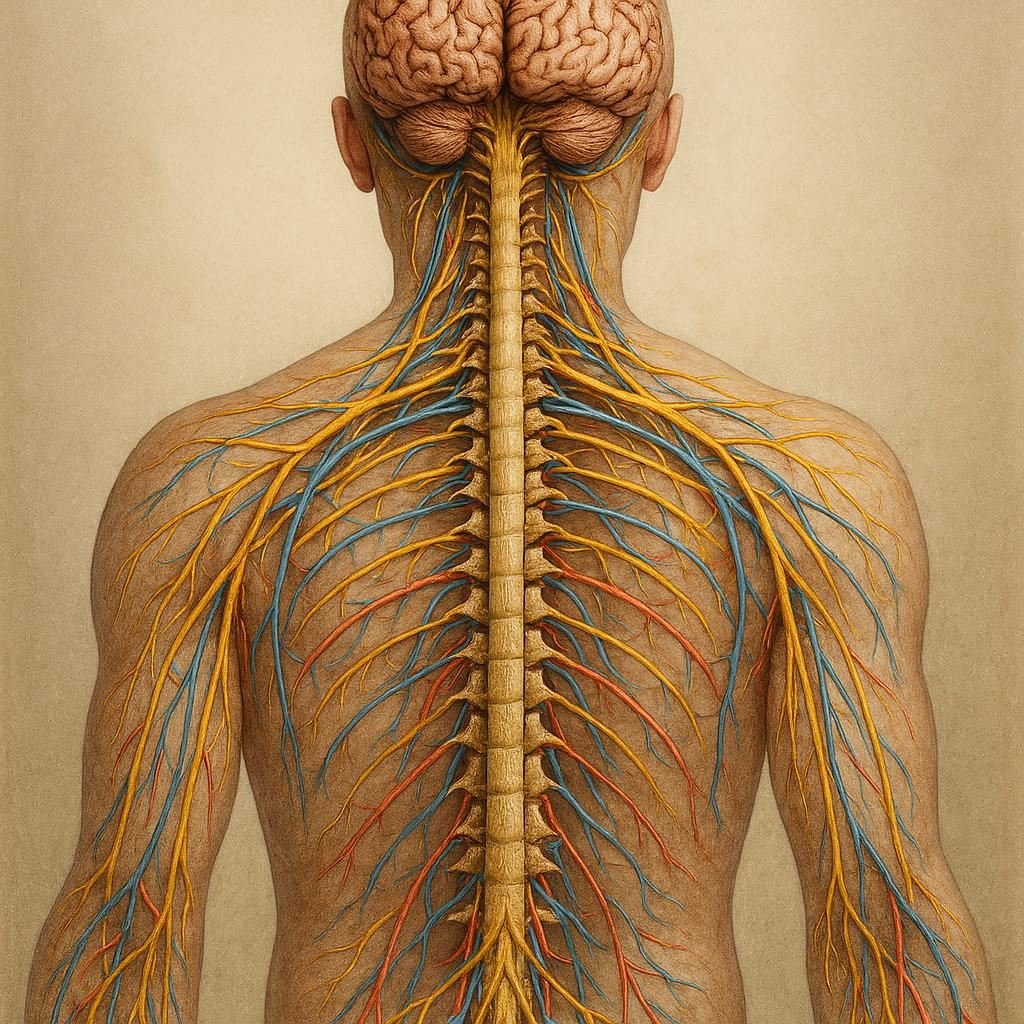
“nervous system central nervous system brain and spinal cord work”.
The Peripheral Nervous System: It Links the Entire Body
The central nervous system is the control center whereas the peripheral nervous system (PNS) is the system that links the brain and spinal cord with the other body parts. It contains all nerves that run through the arms, legs, organs, skin and muscles.
Peripheral nervous system takes care of transporting sensory signals within the body to the brain and relaying the motor signals within the brain to the muscles and glands. The central nervous system would fail to receive information, or to regulate the reactions of the body without this network.
An example is when you feel something cold, the sensory nerves on your skin transmit signals via the peripheral nerves to the brain. The sensation is interpreted by the brain, which may respond leading to you pulling back or reacting.
The Signal Transport
The nervous system depends on the neurons in order to transmit the signals. Neurons are specialized cells that are engineered to transmit electrical impulses speedily and effectively.
A neuron is made up of:
- a cell body
- receiving dendrites.
- a sending axon
The neuron is then connected to the other neurons by electrical impulses which then cross tiny gaps called synapses using chemical messengers called neurotransmitters.
This process of transmission enables the nervous system to communicate quickly. Other signals pass in fractions of a second and allow immediate responses like reflexes.
Reflexes and Automatic Responses
Reflex actions are one of the most obvious methods of body regulation by the nervous system.
A reflex is an instinctual reaction to a stimulus, which takes place without thinking. As an illustration, when you touch a hot thing you automatically withdraw your hand.
This occurs as the signal goes through the spinal cord before it is completely processed by the brain. It is a quick route that guards the body against harm and indicates the efficiency of the nervous system.
Muscle and Movement Control
All voluntary movements rely on the nervous system.
The brain sends messages to the muscles in walking, writing, smiling, speaking and lifting objects. These instructions are transmitted to the peripheral nerves and the spinal cord by motor neurons.
The cerebellum is useful in making sure that movements are smooth and coordinated. In the absence of this component of the nervous system, movements can be shaky or unbalanced.
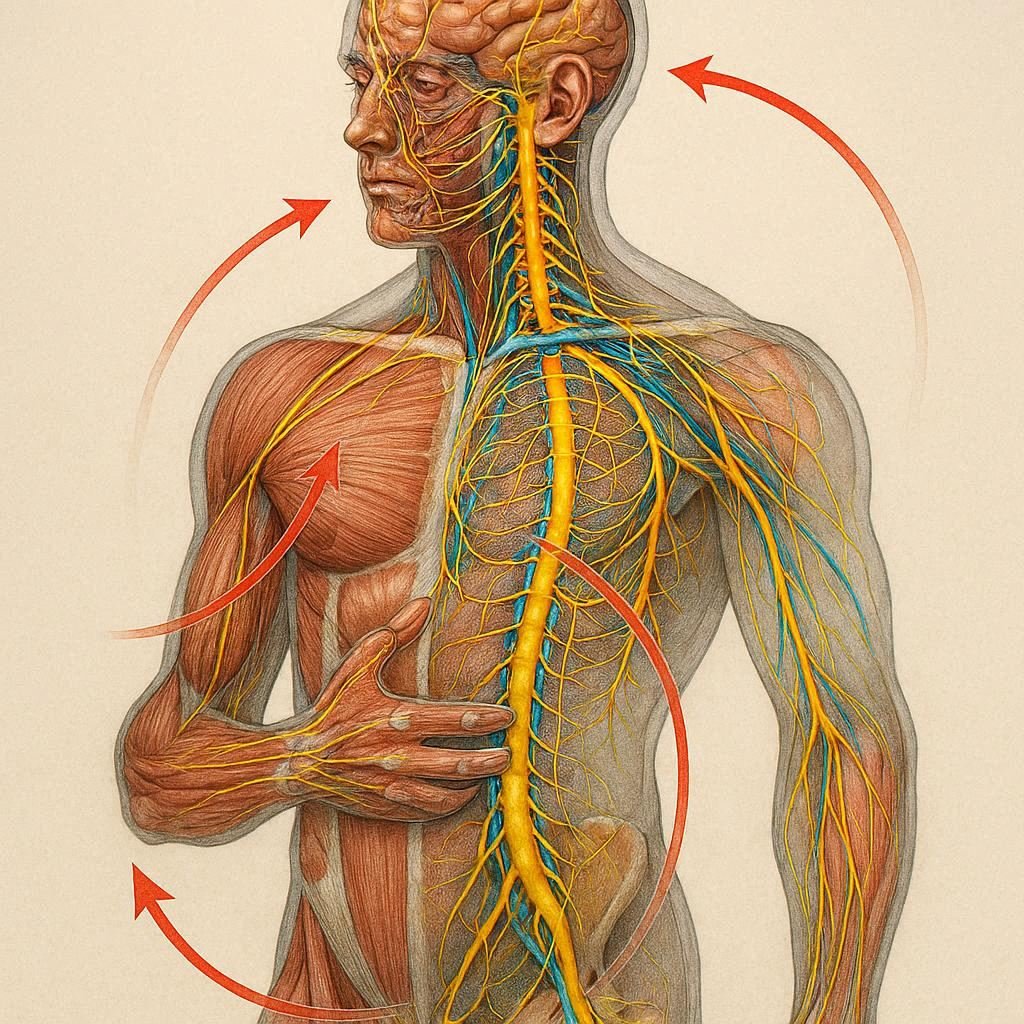
“nervous system muscle movement and reflexes“.
The Internal Organ and Nervous System
The autonomic nervous system also controls automatic body functions through the nervous system.
This division regulates:
- heartbeat
- breathing rate
- digestion
- blood pressure
- pupil size
Such functions occur unconsciously but they are vital to survival.
Complex Cognitive Processes
There are other sophisticated mental functions that the nervous system is involved in, which include learning, reasoning, memory, language, and even emotions, among others.
Experiences are processed in the brain and the brain holds memory and enables one to make decisions. This mental power is what makes the nervous system focal to identity and conduct.
The importance of the Nervous System Health
Since the nervous system is involved in almost all body functions, its destruction can cause the impairment of movement, sensation, thinking, and organ performance.
Good sleep, hydration, good nutrition and stress management are all good lifestyle habits that assist in maintaining the health of the nervous system.
Conclusion
The nervous system is the master control system in the body, controlling the reflexes and movement to thoughts and even emotions. It helps to make sure that the transmission of signals is fast and precise throughout the body through the coordinated efforts of the central and peripheral divisions.
Everything, starting with the simplest reflexes to the most complicated tasks of cognition, requires the nervous system and, hence, it is one of the most vital systems in health and survival.