Open shelving can turn any wall into a design feature when styled the right way. It gives your space an organized, modern look while showing off your personality through carefully chosen items. According to Homeslong, the key to styling open shelves is balance, consistency, and function. Whether in the kitchen, living room, or office, a few simple steps can make your shelves look professionally curated without being cluttered.
1. Start with a Clean Slate
Before styling, empty your shelves completely. Wipe them down and take a moment to assess the space. Think about the purpose of the shelving: is it decorative, practical, or both? Removing everything helps you plan better and decide which items are worth displaying.
2. Choose a Consistent Color Scheme
Designers often stick to a simple color palette. This keeps the shelves looking unified and visually pleasing. Choose two or three main colors that match your room’s decor. Neutral tones with small pops of color work best because they look calm and timeless. Try to keep bold items minimal so they don’t dominate the space.
3. Mix Materials for Texture
Combining different materials creates depth and interest. Blend wood, glass, ceramics, and metal pieces for variety. For example, pair a wooden bowl with a glass vase or a ceramic planter. This mix prevents the shelves from looking flat and makes them more dynamic.
4. Balance Height and Weight
Avoid placing all tall or heavy objects on one side. Distribute them evenly for balance. Stack books horizontally to break up vertical lines or use small boxes to create different levels. Play with heights so the eye moves naturally across the display instead of focusing on one area.
5. Add Greenery for Freshness
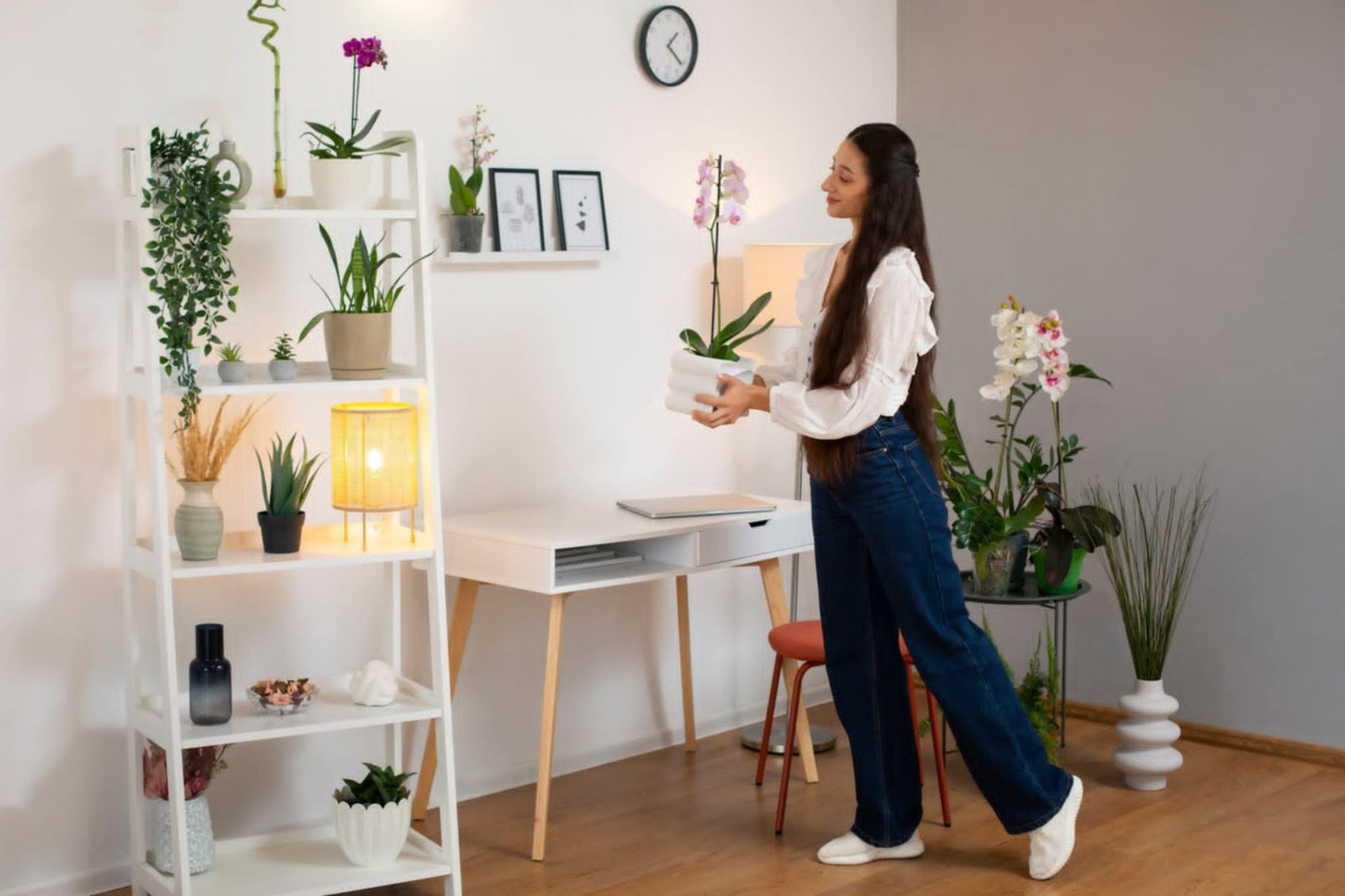
Plants make shelves come alive. Use small potted plants, trailing vines, or even dried arrangements to add color and life. Greenery softens sharp lines and blends well with most color palettes. Choose low-maintenance plants like pothos or succulents that thrive indoors.
6. Use Everyday Items as Decor
Not everything on your shelves needs to be decorative. Displaying everyday items like dishes, bowls, or cookbooks adds function and style at the same time. This works especially well in kitchens where open shelving often replaces upper cabinets. Keep these items organized by grouping similar pieces together.
7. Create Visual Layers
Layering gives depth to your display. Place larger items at the back and smaller ones in front. For example, a framed photo can sit behind a candle or small plant. Overlapping a few objects makes the arrangement feel natural and lived-in, rather than staged.
8. Incorporate Art and Personal Touches
A touch of personality makes your shelves unique. Include framed art, family photos, or travel souvenirs. Mix these with decorative pieces to create contrast and meaning. Personal touches make your home feel warm and relatable, which is what great design should achieve.
9. Keep Space for Breathing Room
Empty space is just as important as filled space. Crowding every inch makes shelves feel heavy and messy. Leave some open areas to give your eyes a place to rest. A few well-placed objects look better than too many small ones competing for attention.
10. Use Lighting to Highlight Displays
Proper lighting brings your shelves to life. Install under-shelf LED lights or use a small wall sconce to highlight certain sections. Warm lighting makes wood and ceramics glow, adding depth to your arrangement. It also creates a cozy and inviting atmosphere in the room.
If you enjoy sharing design tips and creative ideas, you can write your own guides through Write For Us Home Improvement. It’s a great way to share your expertise with homeowners looking for smart, simple ways to improve their living spaces.
11. Group Items in Odd Numbers
Designers often use the rule of three when styling shelves. Arranging items in odd numbers, like three or five, looks more natural to the eye. Vary their heights and textures within each group to add interest. It’s a small trick that makes a big visual difference.
12. Incorporate Baskets or Storage Boxes
If you need space for small or less attractive items, use baskets or boxes. They hide clutter while adding warmth and texture. Choose materials that match your overall color scheme, like wicker for rustic designs or metal for industrial interiors.
13. Rotate Decor Seasonally
Refreshing your shelves a few times a year keeps the space from feeling stale. Swap in seasonal elements like candles in winter, flowers in spring, or seashells in summer. Rotating decor gives your shelves a fresh look without a full redesign.
14. Add Mirrors or Reflective Elements
Mirrors and glass pieces help reflect light and make a space feel larger. A small framed mirror or glossy vase can break up matte surfaces and add brightness. This technique works well in darker rooms or smaller spaces that need more light.
15. Step Back and Adjust
Once your shelves are styled, step back and look from different angles. Make sure everything feels balanced and aligned with the room’s overall design. Don’t hesitate to rearrange until it looks right. Styling is a gradual process, and small tweaks often lead to the best results.
Final Thought
Styling open shelving is about finding the right mix of design, practicality, and personal touch. Use colors, textures, and spacing to create balance and visual interest. Keep things simple, organized, and meaningful. With these techniques, your open shelves can look as refined as a designer’s work while staying easy to maintain.