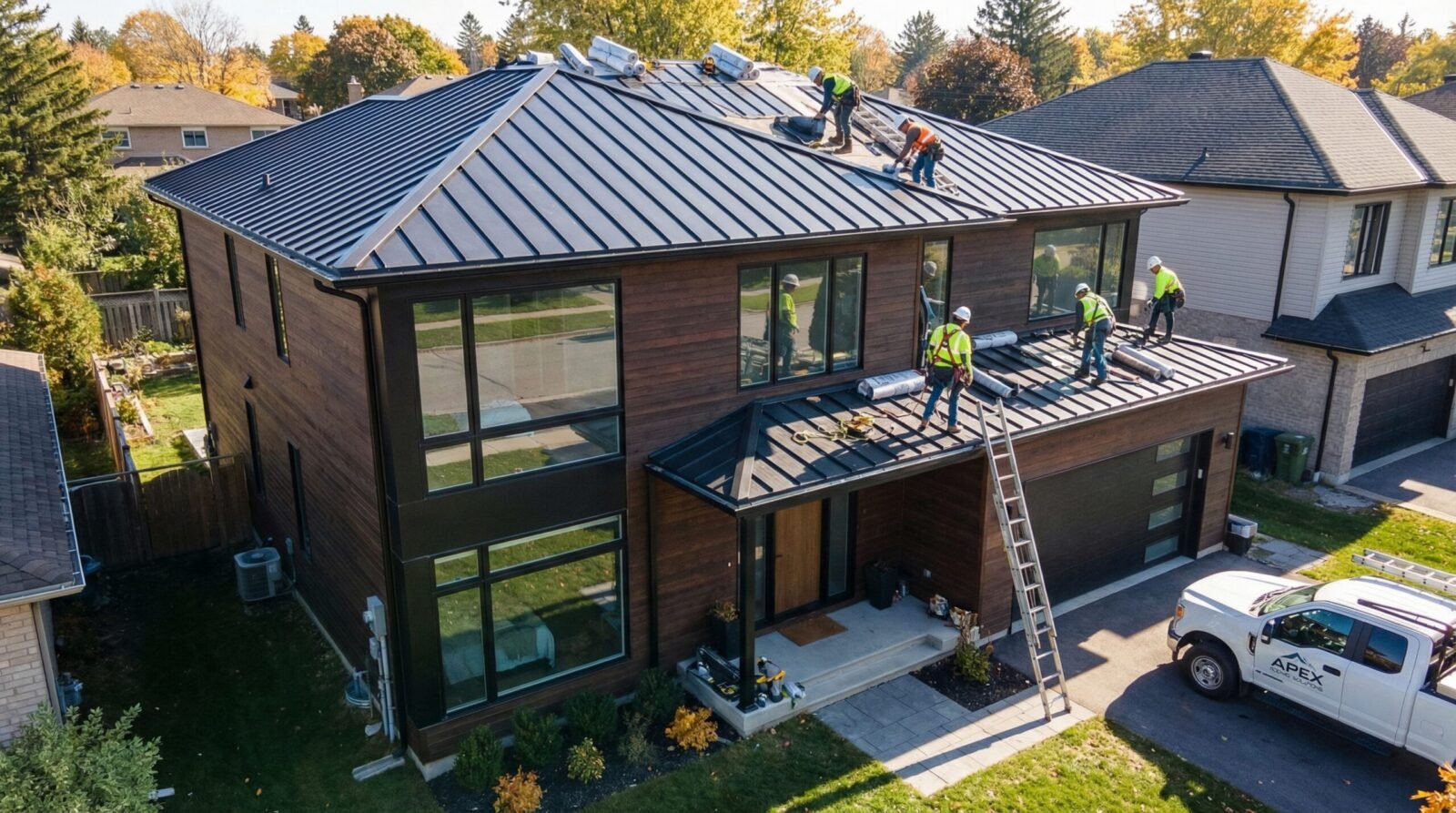
Roof replacement is among those household costs that surprise many homeowners not because of its unpredictability but simply because most of them do a pricing analysis for their roofs only once or twice in a couple of decades. When it comes to making that decision again, they cannot really understand how outdated the information they used previously could be. Understanding what affects the cost of the job allows distinguishing between an honest price and an exorbitant quote.
The National Range and Its Wide Spreading
Roof replacement in the US usually costs between $6,000 and $20,000, but this range exists for a reason. The cost depends on such factors as roof area, type of materials used, region of placement, and complexity of the installation process. The cheapest option is that of a small ranch house with a simple asphalt roof. The cost of a roof replacement for a big house with several roof planes and high-quality materials can go up to $30,000.
Getting an accurate figure requires you to know what variables apply to your particular roof, rather than simply relying on a figure your neighbor used for a different roof entirely.
Choice of Materials Drives Many of the Costs
Asphalt shingles are still the most popular and most economical choice, ranging from $4-$7 per square foot. They are an inexpensive, plentiful material, making their cost and installation low.
Metal roofs are a more expensive upfront option, costing between $9-$16 per square foot; however, their longevity and minimal maintenance requirements make them a worthwhile option for homeowners who plan on staying put for longer. Slate and clay tile are some of the most expensive materials, costing over $20 per square foot, and each requires the roof to be framed to support additional weight.
Wood shakes lie somewhere in the middle of this spectrum, but have additional implications with regard to fire ratings and building codes that can influence both material costs and insurance.
The Roof Size and Pitch Have an Impact on the Cost Estimation Bigger Than People Imagine
The contractors charge for roof installation according to the square, which stands for a roofing term of 100 square feet of coverage. However, the floor plan size does not necessarily equal the area that has to be covered, because the area of the pitched roof is much bigger than the area of the flat roof of the same footprint, due to the extra length of the surface of the pitched roof.
It is this difference that creates the misunderstanding in the calculations for many homeowners. The two houses of equal size and floor plan may cost completely differently in terms of materials, depending on the slope of the roof. By learning how to calculate roof pitch, homeowners can better understand material requirements and compare roofing quotes accurately. Without this knowledge, a homeowner may think that one company charges too much, when it is actually providing the right estimate for the job at hand.
The increased costs of steeper roofs come from additional labor difficulties as well. Any work requiring harnesses, roof jacks, or special scaffolding will be added under labor costs irrespective of which material is used.
Tear-Off and Structural Repairs
While a tear-off is assumed in most cost estimates, it may not always be clear what lies beneath until you actually remove the existing roof. Rotting wood, water damage, and mold caused by leakage that went on for years are all things that cannot be predicted by simple surface inspections. And an estimate ought to take into account a certain contingency in case they do happen to arise. If your contractor is unwilling to answer questions in this regard, you might want to ask some more questions.
Adding another layer to the existing roof rather than removing it completely reduces initial cost but is generally frowned upon by experts.
Labor and Regional Pricing
Labor constitutes around 40%-60% of the total cost of the project, with large variations between different locations. Regions where the cost of living is high, or there is an absence of licensed roofing contractors, have higher labor prices, irrespective of the choice of materials. There is also increased cost due to the requirement of codes relating to wind resistance and impact resistance for coastal or storm-prone areas.
It is essential to get quotations from actual regional contractors, as national figures will not serve the purpose.
Permits, Removal, and the Forgotten Line Items
Building permits, which are usually a few hundred dollars based on the city you live in, might come along with the estimate or could be a separate charge. The cost of disposal of the old roof shingles, especially those that are heavy like tiles or slates, could also contribute to your final costs. These items should come on their own line in your estimate because this is where hidden costs are likely to pop up.
Considerations for Insurance and Financing
There are cases where storm damage will cover a complete or partial roof replacement; however, there is always the requirement for proof of damage, and in addition, the reason for the claim has to be determined. Normal wear due to age is not covered, and that tends to be a frequent source of confusion when making the initial claim.
Those who are financing their roofs should be aware that there are payment plans offered by many roofing companies, and there are also some rebates offered for energy-efficient materials.
How to Get Quotes You Can Compare
The best method of comparison when getting quotes would be to get the contractor to quote you costs for all the individual components like materials, labor, tear-off, disposal, and permits separately. Quotes in which there is just one figure make it much more difficult to know where the true difference lies and make it easy for contractors of low quality to conceal where the cuts are being made.
It is usually sufficient to have three quotes in order to get the right price range for a certain market. Any price that falls well below this range should be looked into since it may mean either low-quality materials or low-quality labor.
Conclusion
Replacement cost for the roof can vary because there are so many factors involved in calculating the total cost: the type of materials, roof size, pitch, structural integrity, and labor rates will all fluctuate on their own without being related to each other. A home owner that understands what the actual underlying factors behind the particular cost calculation are will be in a far better position to analyze the quote and catch any potential warning signs, as compared to an owner trying to rely solely on a single average quote found online.
