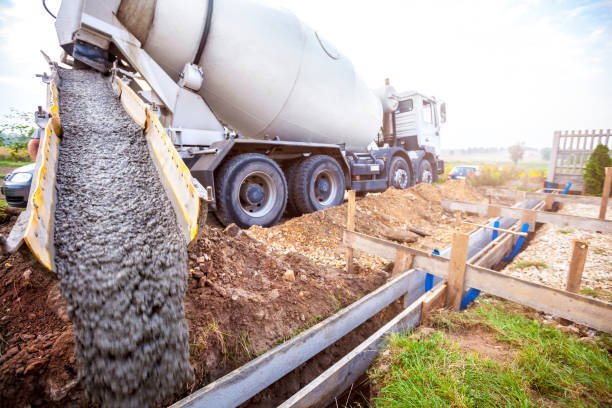
When people think about a construction project, they usually picture cement mixers and wheelbarrows. But for many jobs, getting concrete exactly where it needs to go is not as simple as tipping it out of a truck. That is where concrete pumps come in.
Whether you are working on a home extension, a commercial build, or a large infrastructure project, hiring a concrete pump can save a huge amount of time and effort. Here is everything you need to know.
What Is a Concrete Pump?
A concrete pump is a machine that moves liquid concrete from a delivery truck to the place where it needs to be poured. Instead of carrying concrete by hand or using a wheelbarrow, the pump pushes it through a series of pipes or a mechanical arm known as a boom.
There are two main types:
Line pumps use flexible rubber or steel hoses to move concrete along the ground. They are compact, easy to set up, and work well for ground-level slabs, paths, and floors.
Boom pumps use a large robotic arm mounted on a lorry to place concrete at height or over obstacles. These are used on bigger sites where precision and reach matter most.
When Does Hiring a Concrete Pump Make Sense?
Not every project needs one. For small pours, a mixer and a bit of manual work may be perfectly adequate. But there are situations where concrete pumps for hire become the practical choice rather than an optional extra.
Tight or difficult access. If your site has narrow gates, sloping ground, or walls and fences blocking the path, it can be almost impossible to get a full concrete truck close enough. A pump solves this by extending the reach beyond what any lorry can manage.
Upper floors and elevated slabs. Pouring concrete at height is physically demanding and time-consuming if done manually. A boom pump can deliver concrete directly to where it is needed, even several storeys up.
Large volumes with time pressure. When you need to pour a big slab and the concrete must be placed before it begins to set, speed is critical. A pump moves concrete far faster than any manual method.
Consistent quality. Carrying concrete across a site in barrows can cause it to dry unevenly or lose water in hot weather. Pumping delivers it quickly and consistently, which generally means a better-quality finish.
What About the Cost?
Pump hire costs vary depending on the type of machine, the distance from the supplier, and how long you need it. Boom pumps cost more than line pumps because they are larger and require a trained operator. However, when you factor in the labour hours saved and the reduced risk of wasted concrete, the cost often works out favourably.
It is worth getting quotes from local suppliers rather than assuming it will be outside your budget. For many medium and large jobs, using concrete pumps for hire alongside a volumetric concrete delivery can actually reduce overall project costs by cutting down on wasted material and labour time.
Do I Need a Specialist Operator?
In most cases, yes. Boom pumps in particular are large, complex pieces of equipment and should be operated by someone trained and experienced. Many hire services include an operator as part of the package. Line pumps are simpler, but it is still advisable to have someone on site who understands how the equipment works and can spot any issues early.
A Few Things to Check Before Hiring
Before booking a pump, it helps to think through a few practical points. What type of concrete are you using? Not all mixes pump equally well, and very dry or coarse mixes can cause blockages. What is the maximum reach you need? This will determine whether a line pump or boom pump is more appropriate. Is there enough space on site for the vehicle to park and set up safely? Does your concrete supplier and pump supplier work together, or do you need to co-ordinate the two separately?
Getting these details sorted in advance avoids delays on the day of the pour.
The Bottom Line
Concrete pumping is a standard part of the construction industry, used every day on projects of all sizes. For anyone dealing with difficult access, large volumes, or tight deadlines, hiring a pump is often the most practical solution available. If you are unsure whether pumping suits your project, speaking to a local supplier with pumping experience is a straightforward first step.