Charlotte is a city defined by its rapid momentum, from the towering financial hubs of Uptown to the constant thrum of commuters navigating the I-485 loop and Independence Boulevard. As the Queen City continues to expand, our roads have become increasingly complex, often leading to high-stress collisions that leave drivers dazed and searching for answers. While many states use a flexible “comparative” approach to fault, North Carolina’s legal landscape is uniquely challenging because it remains one of the few jurisdictions to uphold the strict doctrine of pure contributory negligence.
This means that even a minor lapse in judgment on our busy streets could potentially bar you from any financial recovery if you are found even slightly responsible for the crash. Navigating these unforgiving standards requires a deep understanding of local judicial precedents and the specific evidence needed to prove total innocence. If you are struggling with a claim after a local wreck, consulting a dedicated car accident lawyer in Charlotte is the most effective way to protect your rights. Having a local advocate guarantees that they handle the unique details of your case with the precision necessary to navigate the city’s complex legal hurdles.
What Is Comparative Negligence?
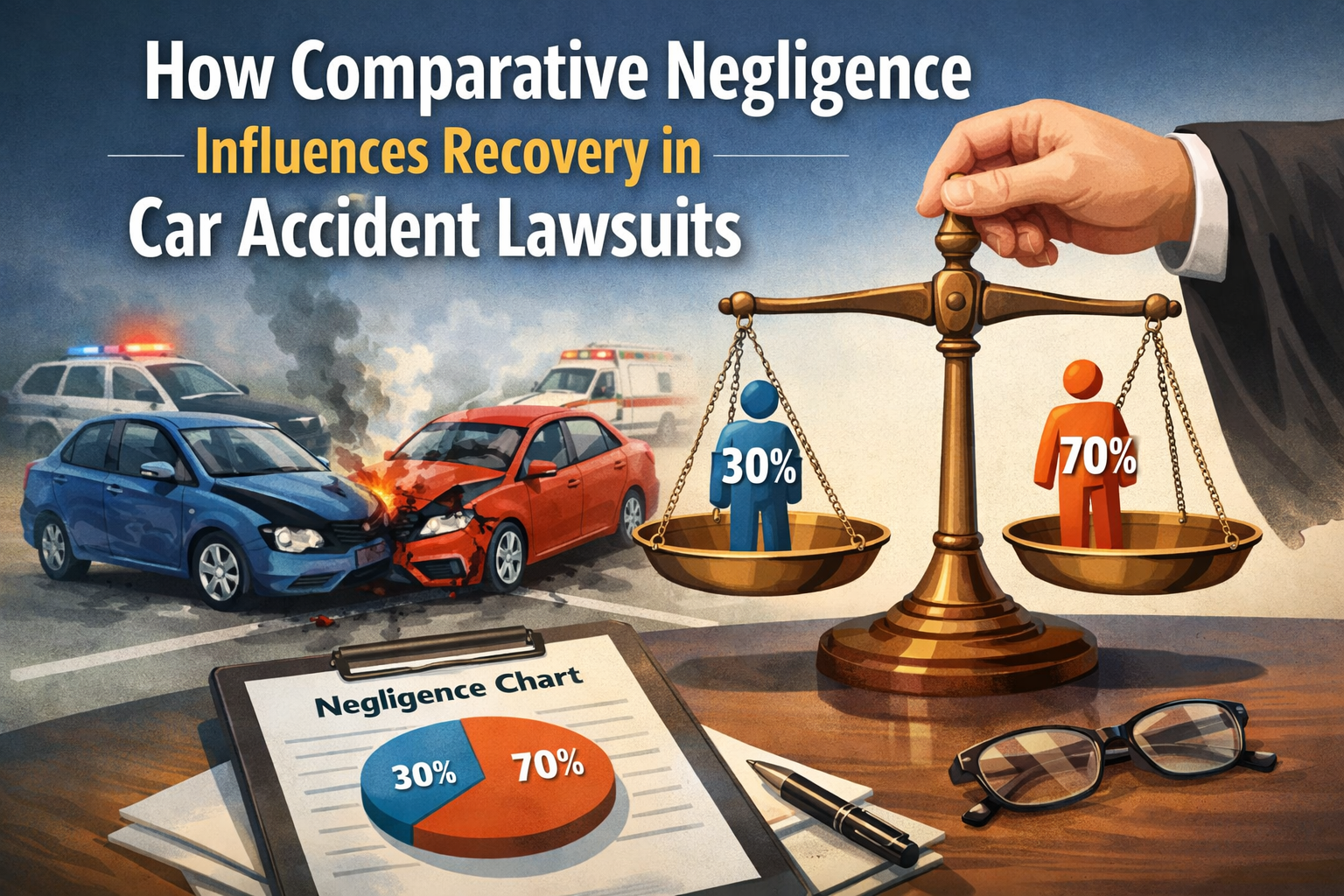
Comparative negligence or proportionate responsibility, means more than one person may be at fault for an accident. The courts use this principle to determine compensation based on each party’s degree of fault. If two drivers caused an accident and each was equally at fault, then both might get or pay damages proportional to each driver’s % of fault. The focus is to make accountability more equitable.
Types of Comparative Negligence
Most of the states apply one of two main types of rules, the pure comparative negligence rule or the modified comparative negligence rule. In a pure comparative negligence state, a person can collect damages regardless of how much fault they hold. So, if someone is 80 percent at fault, they can only recover 20 percent of their losses from the other party. On the other hand, modified comparative negligence limits recovery to 50 or 51 percent. Once a party exceeds this share of fault, he or she cannot recover from others.
Determining Compensation for Vehicle Accident Claims
Damages consist of medical bills, lost wages, pain, and property damage. Either the court or the insurance adjuster initially calculates the total value of all damages experienced. Then, utilizing evidence like accident reports, witness statements, and expert opinions, the liability is determined between both parties. Then, the amount for the victim is reduced by the percentage of fault they bore. If damages are $50,000 and someone is 30 percent at fault, they get $35,000, for example.
Impact on Settlements and Lawsuits
Comparative negligence plays a role in out-of-court settlements as well as in the trial outcome. It is a principle that insurance companies frequently use to reduce payouts. If the claimant is partly at fault, insurers may offer less than the full amount, corresponding to their stake in the blame. Judges and juries will use comparative negligence in court to determine a fair award amount. The task is still to ensure proportionality so that everyone pays for their part of commensurate blame in causing the incident.
Factors That Influence Fault Determination
Fault is determined based on many factors. The role of police reports is greatly important since it is an objective description of the situation. Then some witnesses can clarify what actually happened and substantiate or contradict each respective story. Traffic laws provide some guidance as to whether one or more drivers were negligent. Photos and videos from the scene help piece the crash together. In the event of a dispute, they may analyze things like the damage to the vehicles, the nature of the road surface, and the behavior of the individuals driving them.
Challenges Victims Face
As a result, the victim may struggle to demonstrate that he or she holds some percentage of liability. Insurance adjusters might try to increase the amount of fault assigned to the claimant to decrease payouts. Fighting over the precise chronology of events can be a further complication. If there is enough evidence proving that you are not at fault, along with legal representation, the other involved party and the court will have no choice but to give it to you. Most people do not know how to use the law to their advantage and often need some professional representation to protect their rights, especially during negotiations or in an actual court-type proceeding.
Conclusion
The idea behind comparative negligence is important in many car accident cases because it will dictate negotiation and settlement terms, and if the case goes to trial, the legal outcome. Understanding the role fault percentages play in compensation can ensure that everyone involved is able to seek justice. However, understanding the fundamentals of this rule and gathering all possible evidence can protect one’s interests after a crash. Comparative negligence, in essence, safeguards accident victims by ensuring they receive fair compensation for their losses.