Introduction
Honda Hybrid Models use HEV technology that includes a gas engine, electric motors, and a high-voltage battery. We see each Honda Hybrid Model as a different value proposition. The Civic Hybrid is for the efficiency- and price-conscious, the Accord Hybrid is what we put in our midsize sedans for better fuel economy and comfort, and the CR-V Hybrid is our play in the SUV market with improved fuel performance.
For most buyers, the primary issue is if the extra price of a hybrid is worth it. That which breaks even for the consumer between what is paid out of pocket and the fuel savings varies based on annual mileage, fuel prices, drive type, and how long the car is owned. Those that spend a lot of time in urban traffic or put many miles on the car each year can see the best return on investment from the hybrid’s higher price tag.
Honda’s Hybrid Lineup
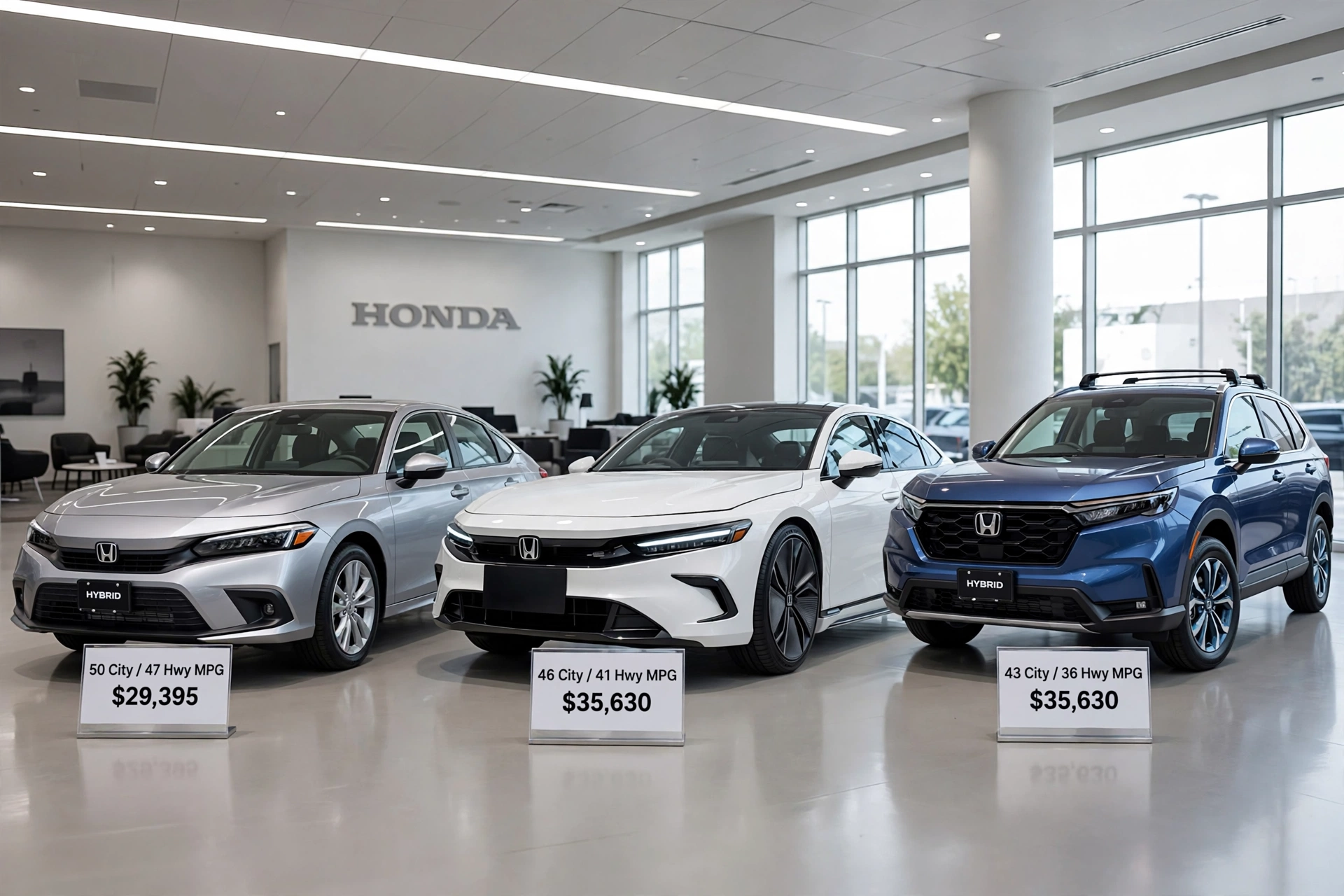
Honda has a large-scale hybrid range that is offered in very popular vehicle classes. In the case of the 2026 Civic Sedan Hybrid, the price begins at $29,395, and what you get is up to 50 mpg in the city and 47 mpg on the highway. At $35,630, you can get the CR-V Hybrid, which in turn gives you up to 43 mpg in the city and 36 mpg on the highway. While these numbers may fluctuate with the type of configuration you choose from, they do give you an idea of where each of these models fits in the hybrid car lineup. (Honda).
For those that are in the market for Honda’s hybrid lineup, the Civic is the go-to for best fuel efficiency, the Accord does what the large sedan space needs, and the CR-V is for those that require that which only an SUV can provide. In terms of which is the best fit for you, a lot more than just MPG should be looked at. Also to think about is interior space, purchase price, what you will be using the car for, and how long you plan to be the owner.
How Honda’s e:HEV System Works
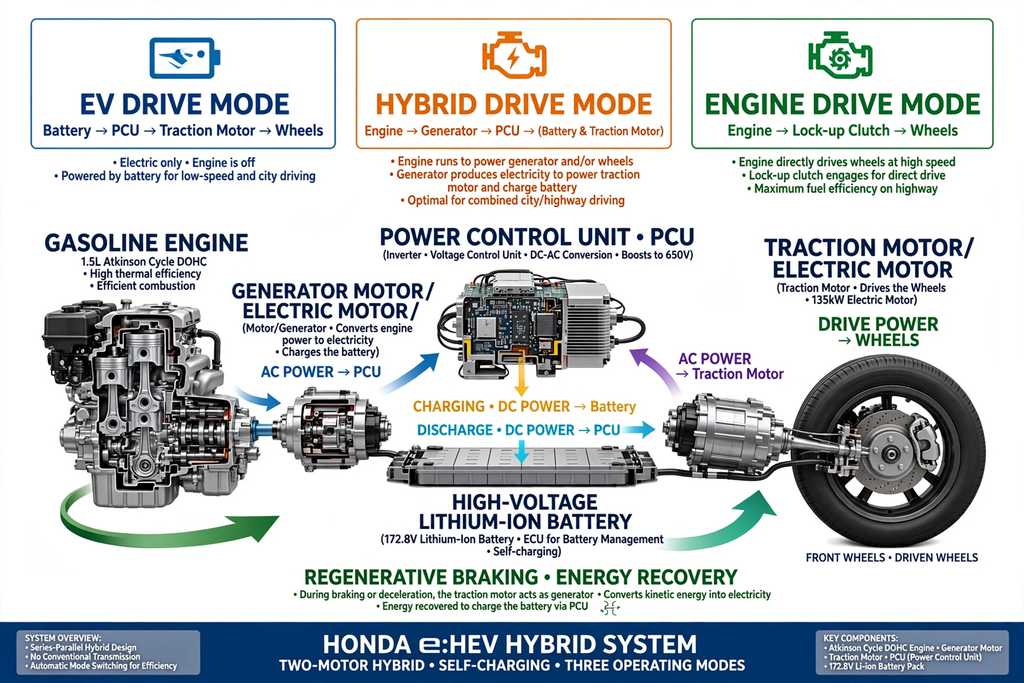
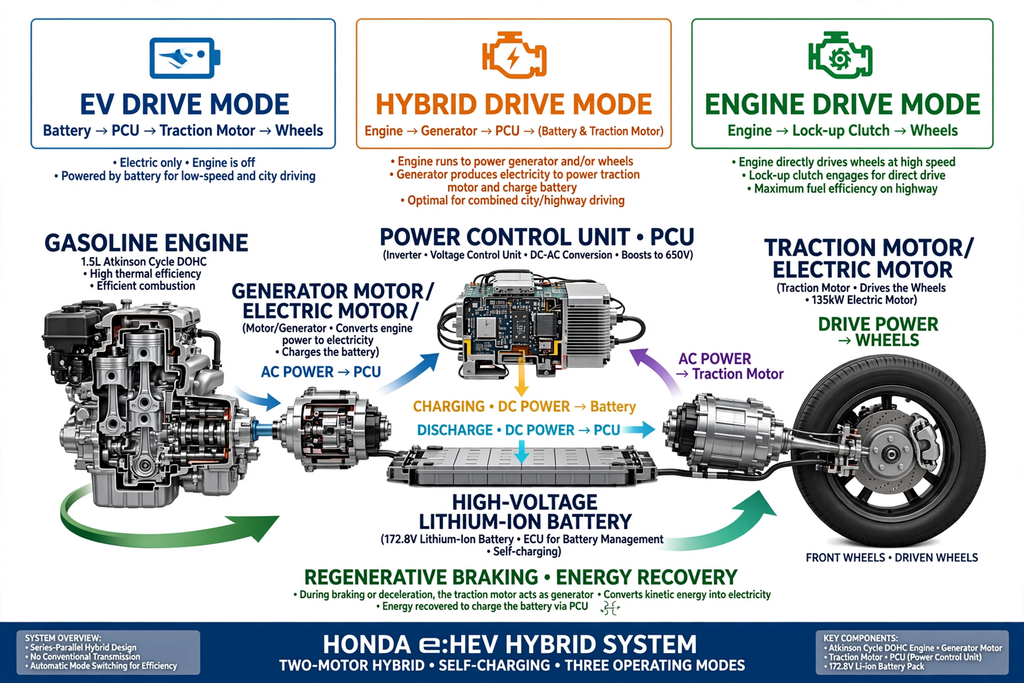
Honda’s e:HEV system has a gasoline engine, electric motors, a battery, and electronic controls. As per the road conditions, the car may use electric power, gasoline power, or a mix of both. The system itself determines the best power mode to run in, which is what the driver sets to use.
Regenerative braking is a key element in this system. As the car slows, the motor reuses some of the energy which would have gone to waste during braking and puts it back into the battery. Also, in city traffic, which sees lots of start-stop and brake action, we see greater benefit from this feature.
Civic Hybrid, Accord Hybrid, and CR-V Hybrid
Civic Hybrid
The Civic Hybrid is the most efficient choice. It has a rating of up to 50 mpg in the city and 47 mpg on the highway, which in turn makes it very appealing to commuters and to drivers who wish to put less into gas.
Also, at a smaller size, which makes it easy to park, and with a lower base price, the Civic Hybrid is the best value of Honda’s three primary hybrid options.
Accord Hybrid
The Accord Hybrid is a choice for those that are looking for more space and better comfort at the same time as they get very good fuel economy. It puts out 46 mpg in the city and 41 on the highway, which is a large improvement in fuel efficiency in city driving when compared to the regular Accord.
It is also a great option for people who find the Civic too compact but don’t require an SUV.
CR-V Hybrid
The CR-V Hybrid is the go-to option for families and those who prefer an SUV. While it does not do as good a job in terms of fuel economy as the Civic and Accord, it still does very well in its class.
Also, it provides what we may call moderate to strong efficiency in comparison to other SUVs. Also, it does very well in terms of cargo and passenger flexibility, which makes it a better buy when you are after practicality over the best possible MPG.
Real-World MPG vs. Gas Models
EPA fuel economy numbers are a good point of comparison, but what you see is not what you get in terms of MPG, which is variable by a number of factors. Traffic, speed, weather, tire pressure, vehicle load, air-con use, and driving habits all play a role in fuel consumption.
In city driving, hybrids may perform very well because of the stop-start feature, which allows for energy recovery from the brakes. The fuel efficiency is what really stands out when you compare the hybrid with the non-hybrid models.
For instance, Honda reports the 2026 Civic Hybrid to get up to 50 mpg in the city, which is compared to 32 mpg for the regular Civic Sedan. Also, the Accord Hybrid does 46 mpg in the city, which is better than the 29 mpg for the standard Accord.
Thus, it is the large-mile travelers in urban areas who may see very practical fuel savings over a few years.
Battery Longevity and Maintenance
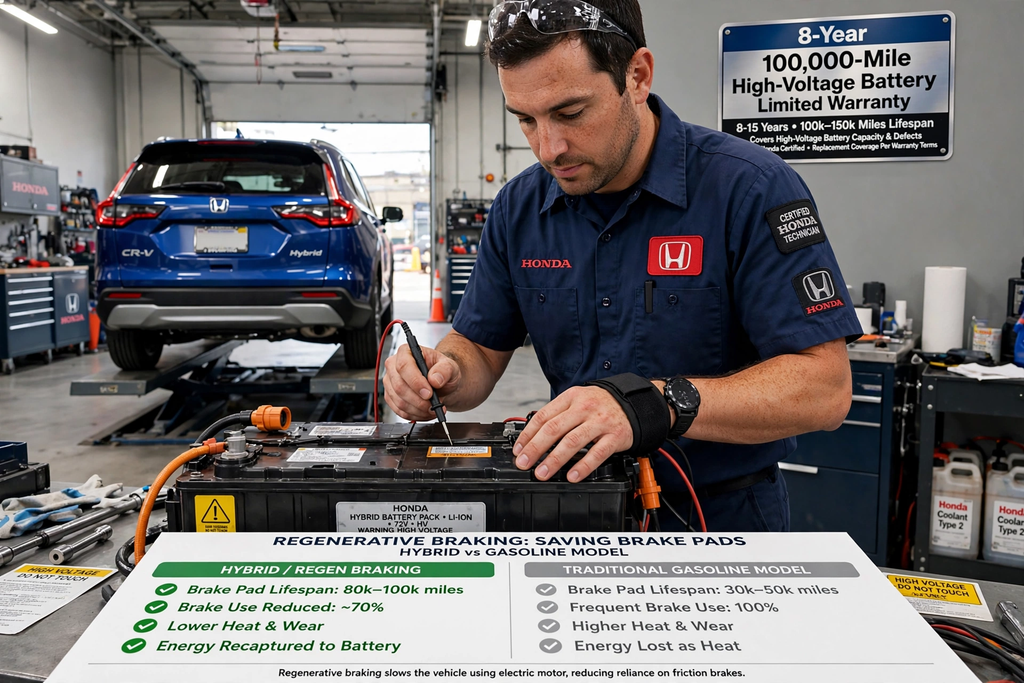
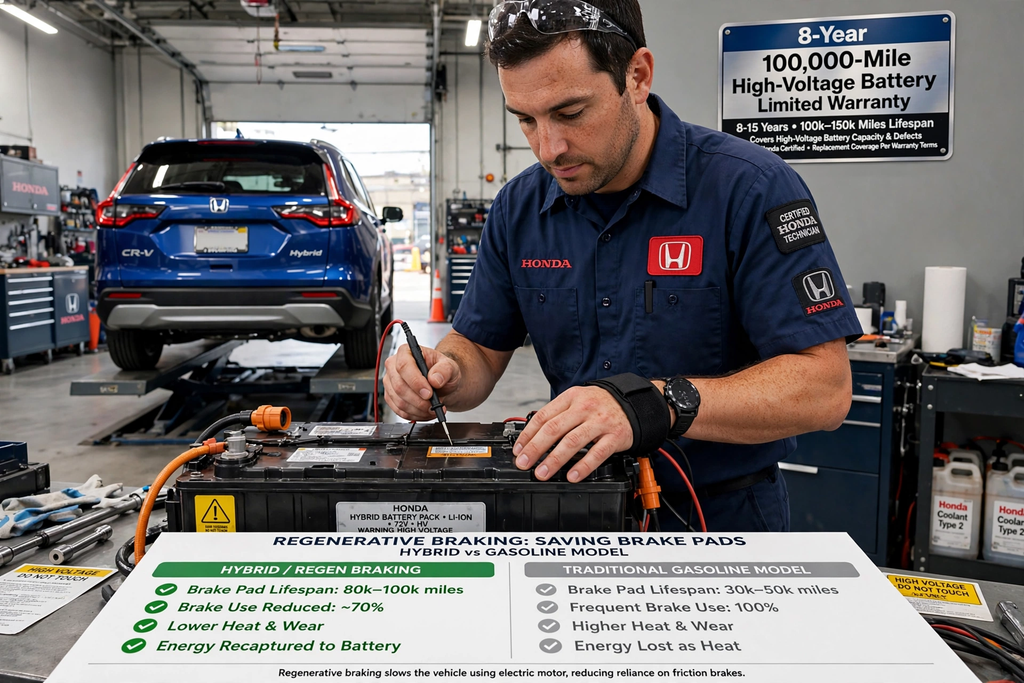
Battery issues are what many hybrid buyers report. At the same time, Honda reports that its hybrid batteries are made to last between 8–15 years, which is also between 100,000–150,000 miles under normal use.
Also, Honda includes an 8-year/100,000-mile limited warranty for the high-voltage battery, in which in some cases that coverage is extended. This also puts at ease buyers that, for a while into their ownership, they are protected against some battery-related issues.
Hybrid maintenance is very similar to what is required for cars that run on gasoline. You still will have to get regular oil changes, tire service, inspections, filters, and other scheduled care.
Also, what we see is that regenerative braking systems do put a smaller strain on traditional friction brakes. At the same time, hybrids have more complex elements like electric motors and high-voltage electronics, which may require special care if they go wrong.
Is It Worth the Extra for a Honda Hybrid?
The fuel benefit from a hybrid is mostly a function of how much you drive. For instance, a car which averages 30 mpg and does 15,000 miles a year would use in the neighborhood of 500 gallons of fuel. A car which gets 45 mpg would use about 333 gallons for the same distance.
That is to say that which is a savings of about 167 gallons of fuel each year. The actual dollars saved are a function of local fuel prices and real-world MPG.
The higher purchase price is what we must look at. In the case of the 2026 Civic Sedan Hybrid, which starts $5,400 above the regular Accord. A low-mileage driver may see that difference play out over many years in terms of fuel savings.
But we see greater benefit for high-mileage drivers who keep their cars for a long time from the improved fuel efficiency.
Which Honda Hybrid Is Best?
The Civic Hybrid is what we put forward for customers that really want to see results in terms of fuel economy and also have a car which doesn’t break the bank. Also, it’s the model which really shines in terms of MPGe and does very well for the daily commuter and those that put a lot of miles in the city.
The Accord Hybrid is the choice for those looking for a large sedan that also has a great interior and at the same time sees great fuel economy. The CR-V Hybrid is the car for families and drivers who require the space of an SUV, great cargo space, and flexible passenger options.
Though it doesn’t do as well in terms of MPG as the Civic, it does very well in fuel efficiency for its class.
Conclusion
Honda has seen good results with their hybrid models, which is great for the frequent driver and for those that are in the market for a vehicle they will own for many years. The Civic Hybrid reports the best fuel economy, the Accord Hybrid is a great balance of efficiency and midsize-sedan comfort, and the CR-V Hybrid brings to the table better MPGe with the added practicality of an SUV.
The best option is based on your personal use of the car, which in turn may not just be determined by MPG. We look at the car’s base price, expected annual mileage, fuel costs, maintenance, battery coverage, and how long you will own it.
For those that are focused on fuel economy, we see in Honda’s hybrid range a number of practical options to lower gas use without the need for the charging routine of a full electric vehicle.