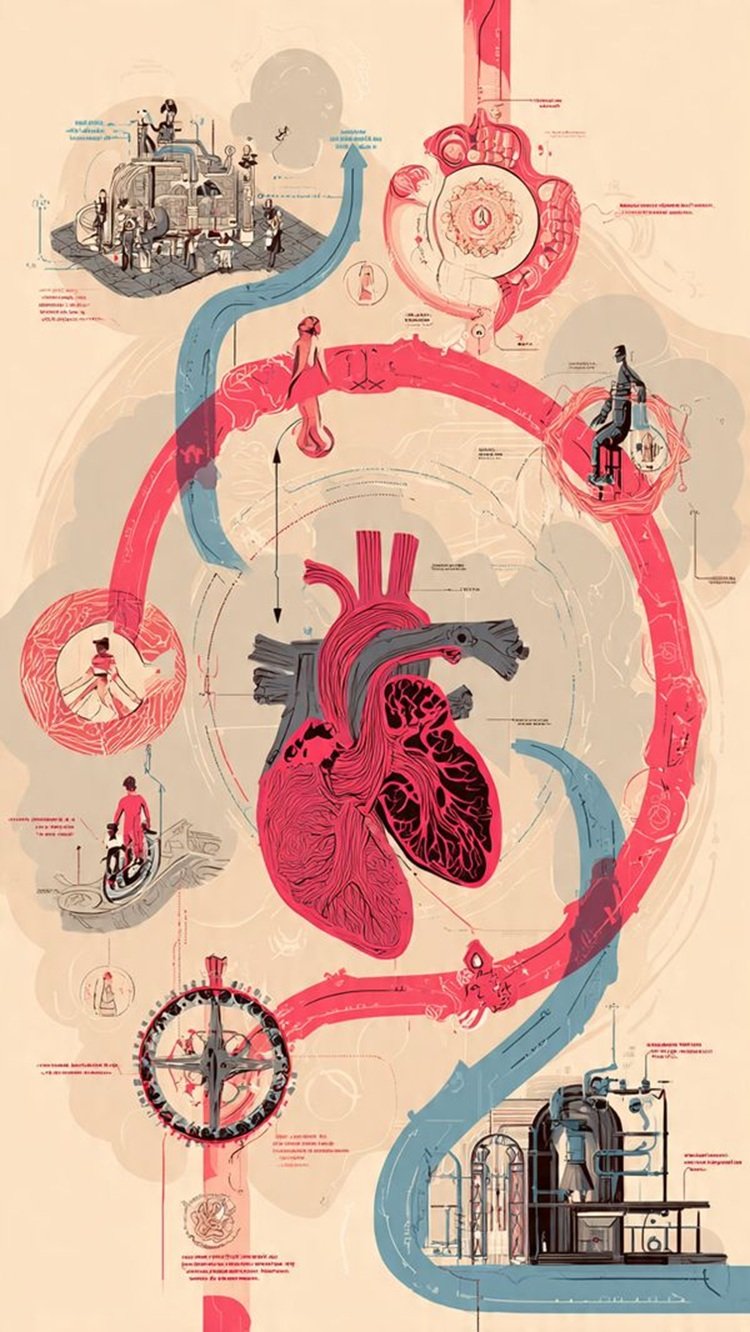
A human body is based on the harmony that functions within the human body. There are countless variables that have to be kept at specific thresholds at all times such as temperature and hydration levels to blood sugar and pH levels. This exceptional stability or homeostasis is vital to life. Even touching the smaller aspects of disruption may pose a threat to the functioning of cells, performance of organs or even the development of illness. Homeostasis guarantees that even in a case of environmental change, physical activity, emotional stress, or nutritional changes, the body does not stagnate, but remains an integrated and flexible system.
The study of the process of homeostasis can be done by looking at the way various organ systems interrelate, the mechanisms of feedback, and the way the body notices and responds to change. This paper defines the principles of homeostasis, shows how the key body organs help the body maintain a stable condition, and describes what occurs when homeostasis is not maintained.
The Meaning Of Homeostasis In Human Physiology
Homeostasis refers to the capacity of the body to establish a stable situation inside the body that will allow the body to survive. It does not involve maintaining the body in the same state but instead making sure that the changes do not go past healthy limits. An example of this is that, when a person exercises its normal temperature increases but this is checked by sweating or more blood going to the skin. In the same way, the blood sugar levels increase following food consumption, but the hormones rapidly restore the sugar to normal levels.
This continually varying but correcting action enables the cells to work efficiently. All the organ systems are involved in homeostasis, creating a system of surveillance posts, communication channels and remedial systems. The absence of this internal balance prevents the proper functioning of enzymes, the inability of metabolic processes, and the inability of organs to work.
The Essentials of Homeostatic Control
Despite the numerous processes involved in homeostasis, three elements are found in almost all regulatory systems and include sensors, control centers, and effectors.
Sensors sense variation of internal conditions. Such special receptors observe the state of temperature, blood pressure, pH, carbon dioxide, water balance, and nutrient levels. A sensor detects a deviation and transfers the information to a control center.
The incoming information is rated by control centers, which are usually located in the brain and mostly in the hypothalamus where normal values are compared. In case of a change of direction, the control center triggers a relevant response to bring balance back.
Corrective actions are performed by the effectors. Such can be muscles, glands or organs that can reverse the observed change. An example would be the situation where the body overheats causing the sweat glands to produce more. When the blood pressure decreases, the heart works more quickly and blood vessels become narrower to ensure the blood flow.
These three components are a cycle that reacts immediately to changes in the organism.
Corporate Management And Feedback Loops: How Feedback Loops Can Sustain Internal Stability
Feedback loops constitute the mechanisms involved in homeostasis. They regulate biological reactions considering the prevailing state and the target range by the body.
- Negative Feedback Loops: The Major Stabilization Process in the Body
The negative feedback loops are used to correct or invert change. When one of the variables is out of the range of its normalcy, the body initiates processes that restore it to its equilibrium. This is the most prevalent homeostatic regulation.
Another example is temperature control which is one of the clearest. Should body temperatures increase, the thermoreceptors will alert the hypothalamus which triggers cooling mechanisms. The veins closer to the skin enlarge to dispel heat and the glands of sweat discharge sweat which evaporates and cools down the body. On the other hand, under the condition of excessively low temperature of the body, the hypothalamus activates shivering and minimizes heat loss through the constriction of blood vessels.
The other example is the regulation of blood glucose. Following the consumption of food, the level of glucose increases. The pancreas reacts by secreting insulin, and this aids in the absorption of glucose in the cells and blood sugar returns to normalcy. Once the level of glucose becomes too low, glucagon is released by the pancreas and glucose stored by the liver is released.
Breathing, blood pressure and fluid balance are also controlled by negative feedback. The body could not sustain the conditions that are necessary to sustain life without these ever-present loops.
- Positive Feedback Loops: Short-Term Amplifying Processes
Positive feedback increases change as opposed to correcting it unlike negative feedback. These circles are utilized in a limited way and are only within the times when something decisive needs to be done.
An example in point is childbirth. When the baby pushes the cervix, the stretch receptors send the signal to the brain, responding to this signal by releasing oxytocin. Oxytocin enhances the intensity of contractions, which leads to the further pressure and oxytocin secretion. This is repeated until birth where the cycle is terminated.
The other instance is in the case of blood clotting. In case a blood vessel is damaged, platelets start to stick to the area. These platelets release chemicals which attract more platelets, which forms a clot quickly. As soon as the clot has developed, the loop ceases.
Positive feedback assists the body in attaining desired results in the shortest time, however, it should be kept in check so as to avoid runaway effects.
Examples of Homeostasis in Organ Systems
Due to the fact that the body is a well-coordinated system, almost all the different systems of organs are involved in ensuring homeostasis. The following are descriptions of the contributions of major systems towards maintenance of balance.
Nervous System Regulation
The quickest homeostatic regulator is the nervous system. It notices the changes of the environment, interprets and transmits signals to organs in fractions of a second. The hypothalamus in particular is of special interest, in that it is where temperature, hunger, thirst, circadian rhythms and the autonomic responses are command centered.
The nervous system is able to regulate the heart rate, breathing, digestion and muscle activity on the spot through electrical impulse and neurotransmitters. Reflexes also help in protection and stability in which they respond instantly to the harmful stimuli.
The Regulation of the Endocrine System
The endocrine system is also slower but has long lasting control. Hormones are transported to organs and tissues and are involved in metabolism, growth, reproduction, stress reactions and nutrient balance.
In stress, e.g. cortisol should help to regulate blood pressure and energy supply. The rate of metabolism is regulated by thyroid hormones, and the blood sugar is regulated by insulin and glucagon. These hormonal changes are significant in the long-term homeostasis.
Respiratory System Regulation
The breathing system ensures that there are the right levels of carbon dioxide and oxygen in the blood. As there is an increase of the carbon dioxide, an indication that the blood is becoming too acidic, the rate of breathing accelerates to eliminate the excess CO 2. In case the oxygen levels are low, the body will automatically inhale more quickly or deeper to replenish sufficient oxygen.
These adaptations are important in keeping the pH level stable, which is important in enzyme activity and metabolic rate.
Cardiovascular System Control
The cardiovascular system maintains the circulation of oxygen, nutrients, and hormones to cells and elimination of carbon dioxide and wastes. It also controls the body temperature by regulating blood flowing to the skin.
Blood pressure changes provoke a reaction that increases or decreases the heart rate or the caliber of vessels. As an example, when the blood pressure falls the heart works harder in order to ensure the blood is circulated through narrowing of blood vessels. This is to make sure that organs do not lack oxygenated blood.
Urinary System Regulation
Kidneys play a key role in the balance of water, electrolytes, and pH. They sieve the blood, eliminate wastes and regulate the amount and composition of urine as per the requirements of the body.
In dehydration, water is saved by the kidneys through higher concentrations of urine produced. In the case of overhydration, they lose excess water to restore normalcy. Sodium, potassium and acid-base are also hormones regulated by the kidneys and are very important in nerve and muscle activity.
Gastrointestinal System Control
The digestive system assists in maintaining homeostasis by absorbing nutrients required by the cells to serve energy, repair and develop. It also collaborates with the endocrine system to manage post meal blood sugar.
Hormones within the digestive tract, after the intake, inform the pancreas, liver and the brain to aid in the regulation of appetite, glucose and nutrient storage. As the intake of food reduces, the digestive system becomes slower in order to save energy.
Muscular System Regulation
Among other things, muscles aid in maintaining homeostasis by shivering to create heat in case the body has grown too cold. Smooth muscles are needed in the movement of food in the digestive tract and the regulation of blood vessel size, all of which are required in internal balance.
Immune System Regulation
The body is kept at a healthy state through the immune system, which shields the body against the pathogens. The immune response of the body raises the body temperature, promotes inflammation, and mobilizes white blood cells when there is an infection. The system is put back to normal after the threat is removed so that chronic inflammation may be avoided.
What happens in the case of failure of homeostasis
Lack of homeostasis causes dysfunction, sickness or even death. A lot of diseases start when the organism can no longer retain the internal balance.
Diabetes is an outcome of inability to control the blood sugar level. It is either a pancreas fails to produce insulin or cells develop resistance to insulin. Blood vessels and nerves become damaged when the glucose level is too high over an extended period of time.
Hypertension is the result of a failure in regulation of blood pressure which may be caused by chronic stress, diet or stiffening of the arteries. Continuous high pressure puts pressure on the heart and exposes the heart to the danger of stroke and heart attack.
Dehydration occurs due to imbalance of fluids. The cells become smaller, blood becomes low and the organs find it hard to work. Dehydration may cause heat stroke or cause organ failure in case it is not treated.
Hypothermia and hyperthermia are temperature disorders where the body temperature regulatory system is not able to sustain temperature extremes in the environment.
Acidosis or alkalosis may happen due to respiratory imbalances when the amount of carbon dioxide is excessive or inadequate. These disorders interfere with the functioning of the enzymes and the well-being of the cells.
In both instances, the pathogenesis of illness is direct failure in homeostasis.
The Lifestyle and the Maintaining of Homeostasis
Though most of the homeostatic processes are automatic, the lifestyle choices have a great impact on the effectiveness with which the body holds its equilibrium. Hydration helps to maintain temperature, the work of kidneys, and blood pressure. A balanced diet is one that makes sure that the cells get the nutrients that will provide them with the energy and repair they need. Regular exercising of the body helps in strengthening the cardiovascular, respiratory and muscular system making the body better adapted to stress.
Sleep is important as it restores hormonal balance and contributes to immune functions and gives organs a chance to rest. It is also crucial to deal with stress in a proper manner because chronic stress leads to the disruption of the hormonal balance, the weakening of the immune system, and the increase in blood pressure.
The prevention of toxins will maintain the homeostatic control systems. Alcohol and drugs, as well as specific chemicals, disrupt the functioning of the liver, hormone balance, and nerve communication.
Proper practices make the body more stable in nature.
Conclusion
Human health is anchored on homeostasis. The body keeps the internal conditions constant since it is necessary to ensure the cells can work correctly, the organs can perform their functions, and the systems operate in tandem. Homeostasis is a constant necessity and it can be temperature regulation, blood sugar level, fluid regulation, or it can be managing responses to stress. A successful body flourishes when it succeeds and when it fails, disease ensues.
The concept of homeostasis can enable people to value the complexity and strength of the human body- and understand why lifestyle decisions have such a significant impact on promoting long-term health and wellbeing.

I very delighted to find this internet site on bing, just what I was searching for as well saved to fav