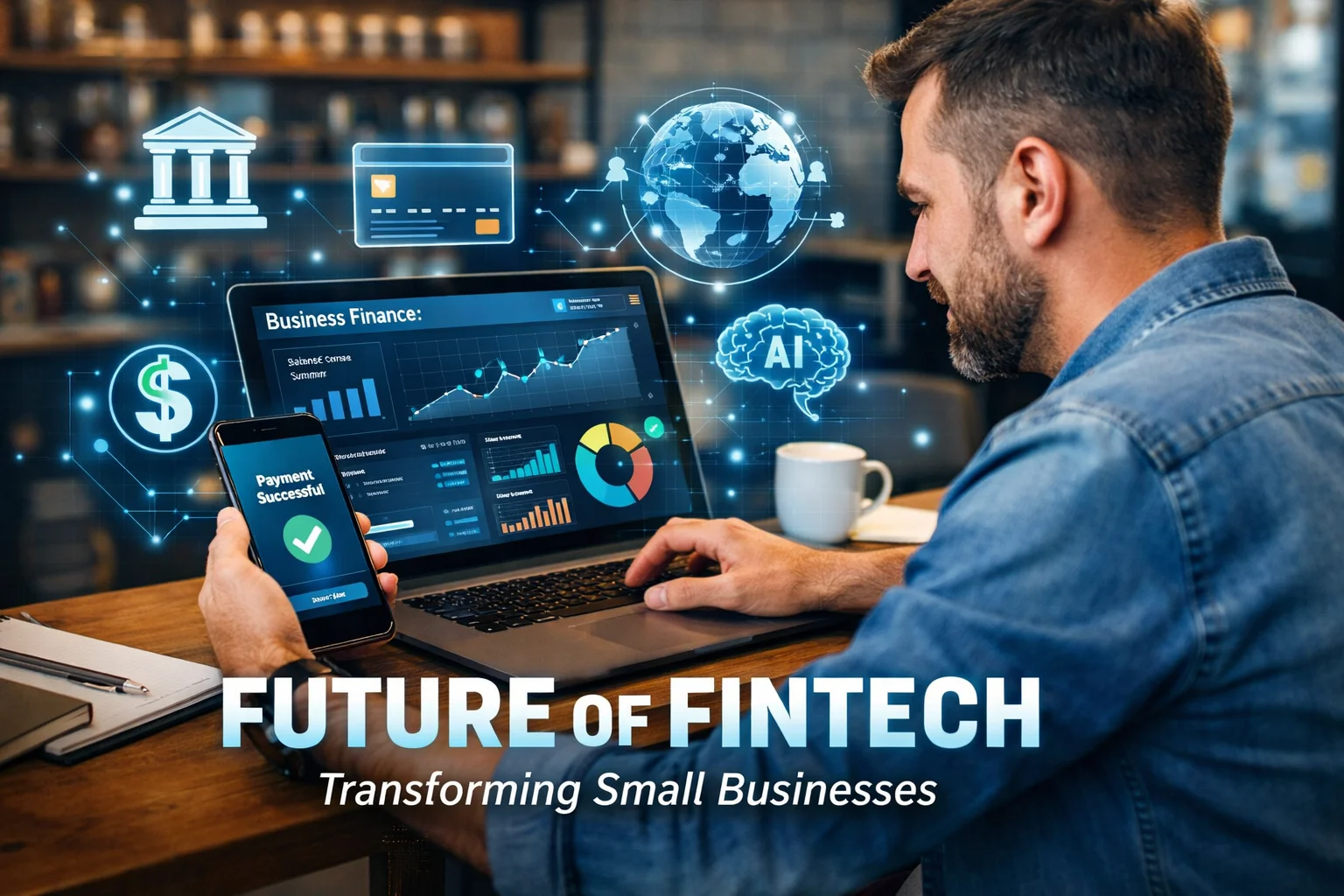
Financial technology has become one of the most powerful forces reshaping modern business operations. Often referred to as fintech, financial technology involves the use of digital tools, software platforms, and advanced technologies to improve financial services. These innovations aim to make financial transactions faster, more efficient, and more accessible for individuals and organizations.
For small businesses, fintech has opened doors that were previously difficult to access. In the past, entrepreneurs often struggled with traditional banking systems that required extensive documentation, long approval times, and high operational costs. Small businesses frequently faced difficulties obtaining loans, processing payments, or managing financial records efficiently.
Today, the landscape has changed dramatically. Fintech platforms allow businesses to open digital bank accounts, process online payments, track expenses, and even access alternative financing options without the traditional barriers of legacy banking institutions. This transformation is particularly important for startups and growing companies that need agile financial solutions to scale their operations.
The Future of Fintech is closely tied to the growth of digital economies. As technology continues to advance, financial services are becoming more integrated with everyday business tools, enabling entrepreneurs to operate more efficiently and compete in global markets.
Understanding how fintech works and why it matters is essential for business owners, investors, and financial professionals who want to stay ahead of evolving fintech trends.
Core Technologies Powering Modern Financial Technology
Cloud-Based Financial Infrastructure
Cloud computing plays a major role in modern financial technology systems. Instead of relying on traditional banking servers or physical infrastructure, fintech platforms operate on cloud-based networks that allow services to scale rapidly.
Cloud infrastructure enables fintech companies to provide real-time financial data access, seamless integrations with other business tools, and improved reliability. For small businesses, this means financial services that are always available and easily accessible through mobile devices or web platforms.
Application Programming Interfaces in Fintech
Application Programming Interfaces, commonly known as APIs, allow fintech platforms to connect with other digital systems. APIs enable financial tools to integrate with accounting software, payment gateways, payroll services, and e-commerce platforms.
This interconnected ecosystem allows businesses to manage multiple financial processes from a single digital environment.
Data Analytics and Financial Intelligence
Another important technology driving financial technology innovation is advanced data analytics. Fintech platforms use financial data to generate insights that help businesses understand spending patterns, customer behavior, and revenue trends.
This analytical capability allows entrepreneurs to make smarter financial decisions based on real-time information rather than relying on outdated financial reports.
Digital Banking Solutions for Small Business Finance
Faster Account Setup and Financial Management
One of the most attractive features of digital banking is the speed of account creation. Traditional bank accounts may require several days or weeks for verification and approval. Digital banking platforms often allow businesses to create accounts within minutes.
In addition to faster onboarding, digital banking platforms provide tools for expense tracking, automated reporting, and financial dashboards that display business performance metrics.
Integrated Financial Tools for Business Operations
Many digital banking platforms also integrate with accounting software, invoicing systems, and payment processors. This integration simplifies financial management and reduces the need for manual bookkeeping.
For small businesses with limited administrative resources, these integrated tools significantly improve efficiency and reduce the likelihood of financial errors.
Global Transactions and Multi-Currency Support
Modern digital banks also support international transactions and multi-currency accounts. This capability is particularly valuable for businesses operating in global markets or managing international clients.
Digital banking is expected to remain a central pillar in the Future of Fintech as financial services continue to migrate toward digital ecosystems.
Mobile Payments and Digital Commerce Growth
Payment Processing Platforms Supporting Small Businesses
Platforms such as Stripe, PayPal, and Square have become widely used by entrepreneurs and small retailers. These systems allow businesses to process credit card payments, manage subscriptions, and accept online transactions without requiring complex infrastructure.
Payment processing technology has also become more affordable, making it easier for small businesses to compete with larger companies in digital marketplaces.
Contactless Payments and Consumer Behavior Shifts
Consumer behavior has shifted significantly toward contactless and mobile payment solutions. Digital wallets such as Apple Pay and Google Pay allow users to complete transactions quickly without handling physical cash or cards.
For businesses, offering multiple payment options improves customer convenience and increases the likelihood of completing sales.
E-Commerce Expansion Through Fintech Payment Systems
Fintech payment platforms have also contributed to the rapid growth of e-commerce. Businesses can now integrate payment gateways into their websites or online stores with minimal technical expertise.
This accessibility has helped entrepreneurs launch online businesses and reach customers around the world.
Artificial Intelligence in Financial Decision Making
Automated Accounting and Financial Monitoring
AI-powered financial tools can automatically categorize expenses, generate invoices, and reconcile financial records. These automation capabilities reduce the workload for business owners and allow them to focus on strategic decision-making.
Accounting platforms increasingly rely on AI algorithms to streamline financial reporting and improve accuracy.
Credit Evaluation and Alternative Lending Models
Traditional lending systems often rely on rigid credit scoring models that may not accurately represent a small business’s financial potential. Fintech lenders use AI-driven algorithms to analyze alternative data sources such as transaction history and business performance metrics.
This approach allows fintech lenders to offer financing opportunities to businesses that may not qualify under traditional credit evaluation systems.
Fraud Detection and Financial Security Systems
AI also plays an important role in fraud detection. Machine learning systems can analyze transaction patterns and identify suspicious activity in real time.
By detecting anomalies early, fintech platforms help protect businesses and customers from financial fraud.
Blockchain Technology and Decentralized Finance Systems
Secure Transaction Records and Financial Transparency
Because blockchain records are distributed across multiple nodes, they cannot easily be altered or manipulated. This creates a high level of transparency and security for financial transactions.
Businesses can use blockchain systems to track payments, verify transactions, and maintain accurate financial records.
Cross-Border Payments and Reduced Transaction Costs
Blockchain technology also enables faster cross-border payments. Traditional international transfers often involve multiple intermediaries and high transaction fees. Blockchain-based payment systems can significantly reduce these costs and processing times.
Decentralized Financial Services and Future Opportunities
Decentralized finance, often referred to as DeFi, is an emerging financial ecosystem built on blockchain networks. DeFi platforms allow users to access financial services such as lending and trading without relying on traditional banks.
Although still developing, decentralized finance could play a significant role in shaping the Future of Fintech.
Advantages of Fintech Adoption for Small Enterprises
Improved Financial Accessibility and Lending Opportunities
Fintech lending platforms provide faster access to capital by using automated credit evaluation systems. Businesses can apply for loans online and receive approval decisions within hours instead of weeks.
Enhanced Financial Visibility and Cash Flow Management
Real-time financial dashboards allow business owners to monitor revenue streams, expenses, and cash flow patterns more effectively. This improved visibility supports better financial planning.
Reduced Costs and Increased Operational Efficiency
Automation reduces the need for manual financial processes. This leads to lower administrative costs and improved operational efficiency.
For more insights on financial technology trends, visit Fintechzoom.com.mx. The platform is a reliable finance-focused website that regularly publishes informative articles on fintech, digital banking, financial markets, and emerging financial technologies. It provides readers with well-researched insights, practical explanations, and updated industry developments, making it a useful resource for anyone interested in understanding modern financial technology and market trends.
Risks and Challenges in Financial Technology Adoption
Cybersecurity and Data Protection Concerns
As financial systems become increasingly digital, the risk of cyberattacks and data breaches grows. Businesses must ensure that fintech providers follow strong cybersecurity practices.
Regulatory Compliance and Financial Governance
Financial technology operates within a complex regulatory environment. Governments are still developing policies for emerging technologies such as cryptocurrency and decentralized financial services.
Integration Challenges with Legacy Systems
Some businesses may struggle to integrate fintech tools with older software systems. Upgrading financial infrastructure may require investment and technical expertise.
Future Fintech Trends Shaping Global Markets
Embedded Finance Within Digital Platforms
Embedded finance allows businesses to integrate financial services directly into their existing platforms. For example, e-commerce platforms may offer built-in payment systems, lending options, or insurance services.
Expansion of Open Banking Frameworks
Open banking initiatives allow financial institutions to share data securely with third-party fintech providers. This encourages innovation and improves customer experiences.
Artificial Intelligence Driving Financial Automation
AI technologies will continue to enhance financial forecasting, risk analysis, and personalized financial services.
These innovations are expected to drive the next phase of fintech trends across global financial markets.
Conclusion and Long-Term Impact of Fintech Innovation
Financial technology has fundamentally transformed how small businesses interact with financial services. Digital banking, mobile payment systems, artificial intelligence, and blockchain technologies have created new opportunities for entrepreneurs to manage finances more efficiently and expand their operations.
For small businesses, fintech solutions provide improved access to capital, enhanced financial visibility, and reduced operational costs. At the same time, businesses must remain aware of cybersecurity risks, regulatory developments, and integration challenges.
As fintech innovation continues to evolve, the Future of Fintech will shape the financial landscape for years to come. Businesses that embrace these technologies early will be better positioned to compete in an increasingly digital and interconnected global economy.
Read More Interesting Topic on our site