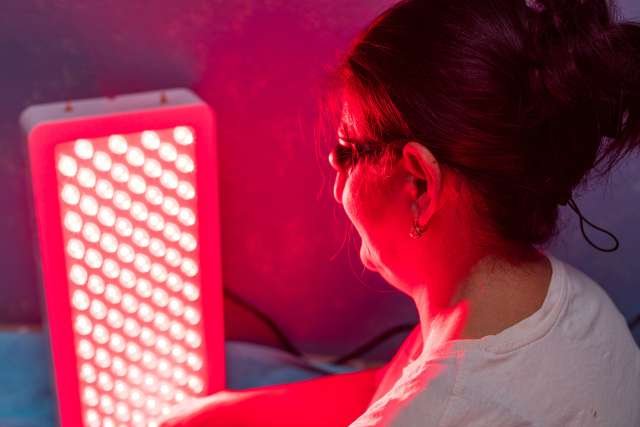
Recovery is where amateur athletes and serious hobbyists lose the most ground, not in the training itself. The training plan is usually easy to write; what breaks down is what happens after — sleep quality, tissue turnover, inflammation control, and the willingness to show up the next day. Whole-body light therapy has quietly become a fixture in this recovery layer, sitting alongside foam rolling, mobility work, and controlled nutrition. It is not a substitute for those habits, but it is one of the few passive tools that treats the whole body at once, which matters when soreness is spread across quadriceps, shoulders, and lower back after the same workout. This article walks through why full-panel exposure produces different results than spot treatment, how to interpret your body’s early responses, and how to build a weekly routine that survives the schedule chaos of anyone with a job and a training block. The focus stays on outcomes you can measure without lab equipment.
Why Whole-Body Coverage Changes the Recovery Equation
Targeted light devices have their place, but they cap what you can accomplish in a single session because they only treat the tissue in front of them. A large panel setup changes the math. Standing in front of a tall emitter exposes several muscle groups and a broad expanse of skin simultaneously, which means your session budget covers the entire day’s soreness rather than one joint at a time. Many home users comparing formats settle on red light therapy full body panels for this reason: a fifteen-minute front-and-back rotation reaches roughly the same tissue that would take four or five spot sessions to cover. The systemic angle also matters. When a larger portion of your body absorbs therapeutic wavelengths at once, downstream effects on circulation, mitochondrial signaling, and post-exercise inflammation act on more tissue in parallel. That parallelism is the practical reason athletes stack whole-panel exposure into their recovery day even when they own smaller units. The economy of time compounds quickly across a training week.

Reading Your Body’s Response to Systemic Light
The most common mistake in the first month is looking for the wrong signals. Users expect dramatic before-and-after skin photos and miss the quieter markers that actually show what the sessions are doing.
Muscle Recovery Signals Come First
Between forty-eight and seventy-two hours after a hard session, most users notice that delayed soreness is lower than a matched workout produced two weeks earlier. That is the first honest data point. Range of motion returns faster the morning after leg day, and mid-week workouts feel less like grinding through fatigue. Track these using a one-to-ten soreness score in a phone note and rate of perceived exertion for a repeatable warm-up movement, such as a five-minute row. The graph does not need to be perfect; a downward trend over three to four weeks is the outcome that matters. If soreness scores flatten or worsen, the likely culprit is dose — either sessions too short to be therapeutic or too frequent to allow adaptation. Adjust one variable at a time and give it seven to ten days before drawing conclusions from the new pattern.

Sleep and Nervous System Markers Follow
The second wave of signals shows up in sleep. Users who run consistent evening sessions frequently report faster time-to-sleep and fewer mid-night wake-ups within the first month. Morning heart rate variability, if you track it, often trends higher across a training block. These are not universal effects, but they are common enough that watching for them is worth the effort. If your evening sessions coincide with worse sleep instead of better, move the session earlier in the day and re-evaluate after a week. The goal is to identify how your particular nervous system responds to the timing, not to force a schedule that fights it. Consistency matters more than perfection here; three sessions at the same time each week produce cleaner data than seven scattered across random hours.

Building a Weekly Session Plan You Will Keep
The routine that survives a training block is usually the boring one. Aim for four sessions a week, roughly ten to fifteen minutes per side for front-and-back coverage, scheduled at the same time of day. Post-workout works for muscle-focused goals, but the constraint is your schedule rather than the physiology; a session done reliably at 9 p.m. beats a theoretically optimal 5 p.m. session that gets skipped half the time. Position the panel at the distance the manufacturer publishes as therapeutic, mark that spot on the floor, and stop adjusting once it is set. Pair the sessions with something you would do anyway — audio books, mobility work, a phone call — so the time cost never feels like a subtraction from your evening. BestQool’s Pro200 and similar full-panel formats include timers and stands that make this kind of set-and-forget routine easier to sustain, which is the underrated feature that separates equipment you use from equipment you store.

What Serious Users Watch For Over the Long Run
After the first month, priorities shift from “does this work” to “how do I keep it working.” Serious users rotate the specific tissues they emphasize each week — one week favoring lower back and hips, the next favoring shoulders and upper chest — to avoid staleness in the response. They pay attention to eye protection during any session that involves facing the panel directly and treat the goggles as non-negotiable. They log their sessions in the same place as their workouts so the correlation between exposure and performance is visible without guesswork. Most importantly, they resist the urge to overhaul the routine when a plateau hits. Plateaus in recovery data usually reflect training load changes, sleep disruption, or seasonal factors rather than the light protocol itself. The steady routine is the one that produces the second-year and third-year results that the first-month users never see, because they moved on before the compounding started to show.
Making Recovery a Repeatable Discipline
Recovery equipment only earns its cost through repetition. Whole-body light therapy fits into that repetition better than most passive tools because it treats the entire body at once, integrates with things you were going to do anyway, and produces feedback loops in sleep and soreness scores that are easy to track without extra hardware. Set a realistic four-sessions-a-week target, hold the distance and timing constant, and give the routine at least eight weeks before judging its effect on your training block. The users who see durable results are almost never the ones who ran the most sessions in a single month; they are the ones who ran four sessions a week for a full year. Build the routine to survive travel weeks, deload weeks, and busy stretches at work, and the compounding takes care of itself over the seasons that matter.