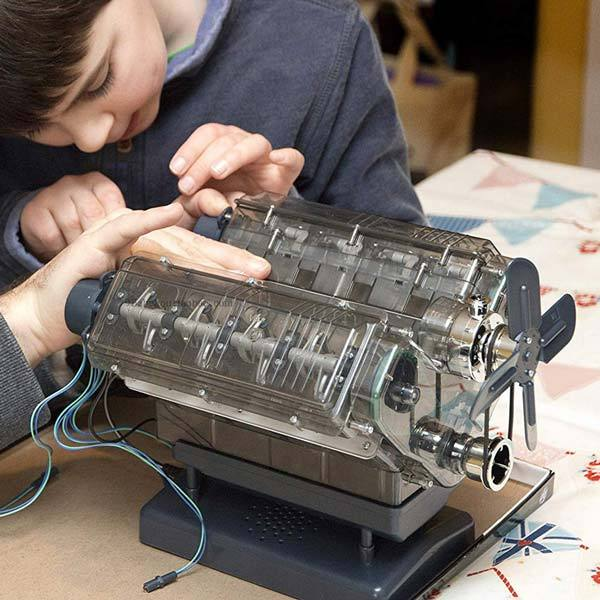
Understanding how machines work often begins with a simple question: how do separate parts come together to create motion? For many people, this question stays unanswered because they never get the chance to build something themselves. That’s where mini engine projects make a real difference. They turn curiosity into action. With the support of EngineDIY, building a working mini engine becomes a smooth and rewarding experience, even for beginners.
Turning Small Parts into Real Power
At first glance, a mini engine kit may look like a collection of small, detailed components. There are screws, gears, pistons, and metal pieces that may not seem meaningful on their own. But once you begin assembling them, something interesting happens. Each part starts to connect with purpose. Slowly, a system begins to form.
A mini engine is designed to work just like a full-size engine, only in a compact form. It converts energy into motion using real mechanical processes. This is what makes it so valuable as a learning tool. You are not just building a model—you are creating a machine that actually works.
The First Step: Understanding the Components
Before you begin building, it is important to understand the parts you are working with. Each component in a mini engine has a role. Some parts create motion, while others support or guide that movement.
As you examine the kit, you start to recognize patterns. You see how certain pieces are designed to fit together. This step builds your awareness and prepares you for the assembly process.
EngineDIY makes this step easier by providing clear instructions and well-organized kits. The components are carefully selected and designed to work together smoothly, reducing confusion and making the experience more enjoyable.
The Building Process: Step by Step
Building a mini engine is a structured process, but it is also flexible enough to allow learning at your own pace. You do not need advanced skills to get started. All you need is patience and curiosity.
As you follow the instructions, you begin assembling the engine piece by piece:
- You attach the base components
- You connect moving parts like pistons and shafts
- You align gears and rotating elements
- You secure everything in place
Each step brings you closer to a complete system. You start to see how motion will flow through the engine. This is where the real learning happens—through action, not just theory.
From Assembly to Motion
Once the engine is fully assembled, the most exciting moment arrives: running it. This is when all your effort comes to life. The parts you carefully connected begin to move together, creating motion.
You can observe:
- How pistons move up and down
- How gears rotate in sync
- How energy flows through the system
- How small adjustments affect performance
This transformation—from still parts to a moving machine—is what makes the experience so powerful. It shows you exactly how mechanical systems work in real life.
How EngineDIY Supports Every Step
The success of your build depends not only on the kit but also on the support you receive. This is where EngineDIY stands out. The platform is designed to make the entire process simple, clear, and enjoyable.
EngineDIY offers:
- Complete kits with all necessary parts
- Easy-to-follow step-by-step guides
- High-quality materials for durability
- Helpful resources for beginners and advanced users
Everything is organized to reduce confusion and increase confidence. Whether you are building your first engine or your tenth, EngineDIY ensures that you have the tools and guidance needed to succeed.
Learning Through Experience
One of the biggest benefits of building a mini engine is the type of learning it provides. Instead of memorizing concepts, you experience them directly.
You learn:
- How mechanical systems are structured
- How motion is created and controlled
- How different components interact
- How to identify and fix small issues
This hands-on learning approach is more effective because it connects knowledge with real action. It helps you understand not just what happens, but why it happens.
Experimenting and Improving
After building and running your mini engine, the journey does not end. In fact, this is where things become even more interesting. You can begin experimenting with your engine to see how changes affect its performance.
You might:
- Adjust certain parts
- Test different setups
- Improve alignment or efficiency
- Explore creative modifications
This stage encourages deeper thinking and creativity. It helps you move beyond following instructions and start developing your own ideas.
Who Can Build a Mini Engine?
Mini engine kits are designed for a wide audience. They are suitable for:
- Beginners who want to learn the basics
- Students who need practical understanding
- Teachers who want interactive tools
- Hobbyists who enjoy DIY projects
- Engineers who like experimenting on a small scale
Because the kits are flexible and well-designed, anyone with interest and patience can successfully complete a build.
Building Confidence and Skills
As you complete your mini engine, you gain more than just a working model. You develop important skills that can be applied in many areas of life.
These include:
- Problem-solving
- Logical thinking
- Attention to detail
- Patience and persistence
Each project builds your confidence. What once seemed difficult becomes manageable. Over time, you begin to approach new challenges with a stronger mindset.
Conclusion
Building a mini engine is a journey from simple parts to real power. It transforms small components into a working machine and turns curiosity into understanding. Through this process, you gain hands-on experience, practical skills, and a deeper appreciation for how mechanical systems work.
With the support of EngineDIY, this journey becomes easier and more enjoyable. The platform provides everything you need—from high-quality kits to clear instructions—so you can focus on learning and creating.