There is nothing quite like packing up the car, leaving the daily routine behind, and hitting the open road with the kids in the back. As many parents discover, these adventures often prove that family road trips are the ultimate bonding experience, offering uninterrupted time to connect, laugh, and navigate travel challenges as a team. Whether you are heading to a remote camping ground or exploring coastal towns, the journey itself becomes a cherished part of the holiday. However, the logistical reality of taking the family on a getaway requires serious preparation. If your holiday involves towing a camper, caravan, or a box trailer filled with camping gear, ensuring your vehicle and towing setup are safe is just as important as planning your itinerary. Before you pull out of the driveway, a few critical checks can mean the difference between a relaxing holiday and a stressful breakdown. Preparing your vehicle properly protects your loved ones and keeps other motorists safe, setting the stage for a wonderful trip.
Start with the Right Equipment and Capacity
The foundation of any safe towing journey begins long before you load your luggage. It is vital to know your vehicle’s maximum towing capacity and the aggregate trailer mass of whatever you are pulling. Exceeding these limits is not only illegal but also puts immense strain on your engine, brakes, and suspension system. You must also account for the payload inside the vehicle itself, including passengers, luggage, and supplies, which all contribute to the Gross Combined Mass.
Equally important is the quality of the trailer itself. Sourcing your equipment from reputable trailer manufacturers ensures that you are using a robust, well-engineered model designed to handle heavy loads and tough conditions. High-quality construction guarantees that the structural integrity and payload distribution mechanisms meet strict road safety standards. This gives you absolute peace of mind when navigating winding coastal roads, steep mountain passes, or uneven outback tracks. It is always better to invest in reliable equipment upfront rather than dealing with a structural failure miles from home. When purchasing a new trailer, always consult with industry experts to match the trailer’s specifications with your specific towing needs and vehicle capabilities.
Mandatory Hitch and Connection Inspections
Once you are confident in your vehicle’s capacity and your towing equipment, the next step is physically securing the connection. This area is the most critical point of failure when towing, meaning a visual and physical inspection is completely mandatory before every single trip.
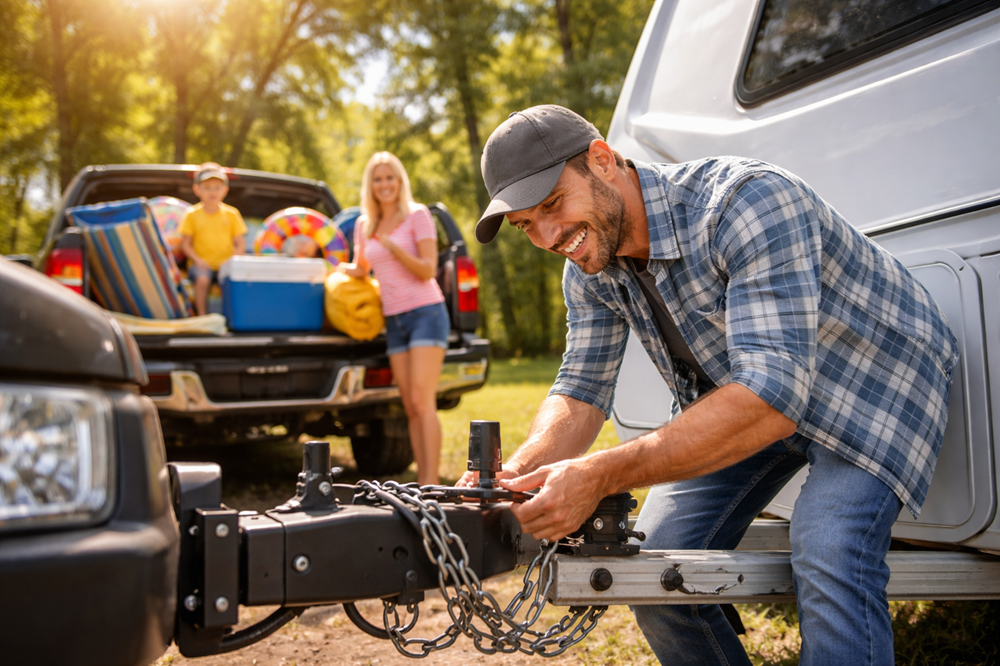
According to official resources from VicRoads on registering and safely towing a trailer, understanding your Aggregate Trailer Mass (ATM) and adhering to strict capacity regulations is absolutely essential. In tandem with these weight regulations, drivers must perform a rigorous pre-trip inspection of all hitch components. You must ensure the pin securing the ball mount is completely intact and that the hitch coupler is locked down tight. Furthermore, you must verify that the safety chains are properly crossed and securely attached. Crossing the chains creates a cradle that can catch the trailer tongue, acting as a vital failsafe if the primary coupling disconnects. Finally, ensure the electrical plug is firmly connected and functioning properly so your trailer’s brake lights and indicators mirror your vehicle’s signals perfectly. Taking five extra minutes to double-check these connections is one of the easiest ways to prevent a catastrophic accident.
Essential Pre-Trip Maintenance Checklist
Towing adds significant weight and friction to your journey, meaning your vehicle needs to be in peak mechanical condition. Tyres, brakes, and fluids will all work much harder than they do during the morning school run.
To keep your family safe on the road, run through this quick checklist a few days before your departure:
- Check tyre pressure: Both your car and trailer tyres need to be inflated to the manufacturer’s recommended towing pressure. This is often higher than the standard unladen pressure to support the extra weight.
- Inspect tread depth: Ensure all tyres have adequate tread and show no signs of uneven wear. Uneven wear could indicate alignment or suspension issues that need immediate professional attention.
- Test all lights: Have a family member stand behind the trailer while you test the brake lights, indicators, hazard lights, and reverse lights.
- Inspect fluids: Top up your engine oil, coolant, brake fluid, transmission fluid, and windscreen washer reservoir.
- Assess load distribution: Pack your heaviest items low and directly over the trailer axles. This helps maintain a low centre of gravity and prevents dangerous swaying at high speeds.
Adjusting Your Driving Habits
Even with a perfectly maintained vehicle and a highly secure trailer, towing requires an entirely different approach to driving.
Mastering Speed and Stopping Distances
The added weight significantly increases your braking distance, so you will need to leave a much larger gap between your car and the vehicle in front of you. Acceleration will be slower, and overtaking will require a far more clear road than you might be used to. You should also take corners wider to account for the trailer’s turning radius, and rely heavily on your side mirrors to monitor your lane positioning. High winds and passing trucks can cause trailer sway, so maintain a firm grip on the steering wheel and gently reduce your speed if the trailer begins to drift. Never slam on the brakes if sway occurs, as this can cause you to lose control entirely.
Managing Fatigue on the Road
Towing is physically and mentally demanding. Because you are constantly monitoring mirrors, managing heavier steering, and anticipating traffic movements further ahead, driver fatigue sets in much faster. Plan to take regular breaks every two hours to stretch your legs, check your towing connections, and grab a coffee. Swapping drivers, if possible, is an excellent way to keep everyone fresh.
Taking the family on a towing holiday is an incredibly rewarding way to explore the country. By investing a little time in checking your equipment, securing your connections, and performing basic maintenance, you can focus entirely on the journey ahead. A safe setup means a stress-free drive, allowing you to create lasting memories with your loved ones from the exact moment you leave home.