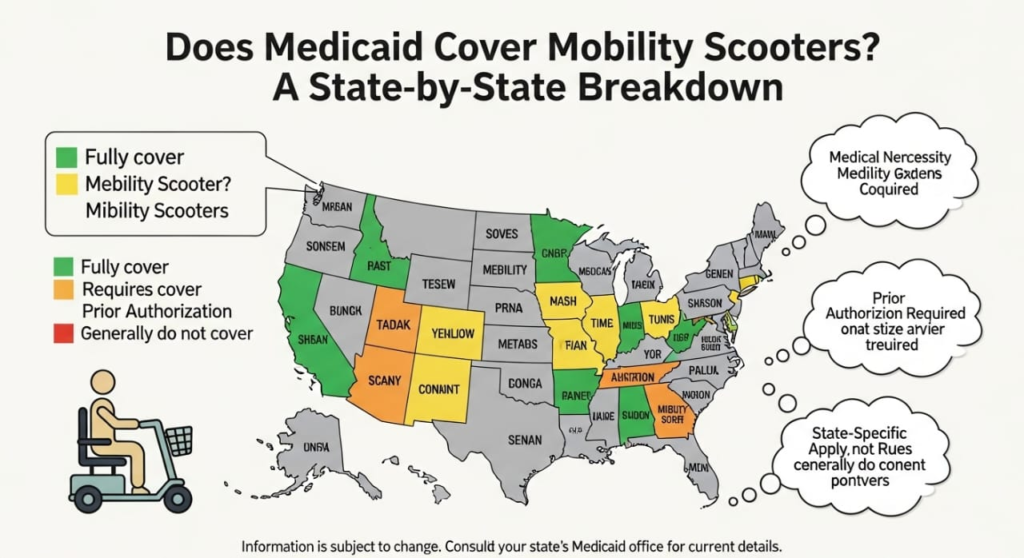
For many low-income individuals and families, understanding Medicaid scooter coverage is essential to securing the mobility equipment they need without facing unmanageable out-of-pocket expenses. While Medicaid is a federal program, each state administers its own version, which means coverage rules and eligibility criteria vary considerably depending on where you live.
At the federal level, Medicaid is required to cover certain categories of durable medical equipment for eligible beneficiaries. Mobility scooters, classified under durable medical equipment or power-operated vehicles, are typically covered when a physician certifies that the device is medically necessary and that the beneficiary cannot perform daily activities without it. However, the specific definitions of medical necessity, prior authorization requirements, and covered device types differ from state to state.
States like California and New York generally have comprehensive Medicaid programs that cover mobility scooters with appropriate documentation. These states tend to have well-established supplier networks and streamlined authorization processes. Beneficiaries in these states should work directly with a Medicaid-enrolled supplier who can navigate the submission process on their behalf.
In contrast, some southern and rural states have more restrictive coverage rules or longer prior authorization timelines. In these states, medical documentation must be especially thorough, and a physician’s assessment of functional limitations may need to include specific standardized testing results. Physical or occupational therapy evaluations are sometimes required as supplementary evidence.
Medicaid managed care plans add another layer of complexity. Many states have shifted their Medicaid populations into managed care organizations, which may have their own preferred supplier networks and approval procedures. Beneficiaries enrolled in managed care plans should contact their plan directly to understand which suppliers are in-network and what documentation their plan requires.
Dual-eligible individuals, those who qualify for both Medicare and Medicaid, may find that their mobility scooter costs are split between the two programs. Medicare often serves as the primary payer, with Medicaid covering the remaining cost share. This coordination of benefits can result in little to no out-of-pocket expense for eligible individuals.
Income and asset limits are a foundational eligibility factor for Medicaid itself. Medicaid expansion under the Affordable Care Act has expanded eligibility in participating states to include adults with incomes up to 138 percent of the federal poverty level. States that have not expanded Medicaid may have much stricter income thresholds that exclude many working-age adults.
For individuals comparing mobility solutions and insurance coverage options across different device categories, wheelchair and mobility aid research resources offer helpful guidance on how different equipment types are treated under public insurance programs.
Working with a patient advocate or social worker can dramatically simplify the Medicaid approval process. These professionals understand the documentation requirements and can help applicants avoid common errors that lead to claim denials.
Frequently Asked Questions
Q: Does every state’s Medicaid program cover mobility scooters? A: Most states cover mobility scooters as durable medical equipment, but eligibility criteria and coverage specifics vary. Contact your state Medicaid office to confirm coverage rules in your state.
Q: What documentation is needed for Medicaid to approve a mobility scooter? A: A physician’s written order, documentation of medical necessity, and sometimes a physical or occupational therapy evaluation are typically required. Some states also require prior authorization from the Medicaid office.
Q: How long does Medicaid approval take for a mobility scooter? A: Timelines vary by state and plan type. Standard approvals may take two to four weeks. Expedited requests for urgent medical needs can sometimes be processed faster.
Q: Can I appeal if Medicaid denies my scooter request? A: Yes. Medicaid beneficiaries have the right to appeal coverage denials. An appeal should include additional medical documentation and a letter from your physician explaining the necessity of the equipment.


