Ensuring children’s safety is among the greatest responsibilities of families. From sharp utensils to slick floors, there are a number of items around the house that can be dangerous for little ones. When parents work through each room they can greatly minimize the risk of accidents and injuries. Read on to discover 8 effective tips for making your home kid friendly, along with some practical advice for kitchens, bathrooms, bedrooms and living rooms. The objective is to assist families in the identification and removal of common household hazards and to have families feel safe.
1. Kitchen Safety: Handling heat, sharp objects and chemicals
Often, the kitchen is the most active room in the house as well as the most dangerous. Possible hazards include hot surfaces, sharp utensils and cleaning chemicals. The simplest way to make this area safe for children is to keep knives, scissors, and other sharp objects on cabinets and drawers that are secured by safety latches. Keep cleaning supplies and detergents locked in cabinets, preferably off reach. Use stove knob covers to avoid accidental turning on of burners and always turn pot handles toward you when cooking to prevent spills. Also, unplug an appliance such as a blender or toaster when it’s not being used and store cords so they won’t be pulled out of the wall. Refrigerator safety is important too – little ones can be tempted to open doors and put their fingers in the food, which could be a choking hazard or go bad quickly, so consider putting the refrigerator safety locks on their doors. Families can minimize risks while maximizing kitchen usability by organizing the kitchen with safety in mind.
2. Bathroom Safety: Slips, Burns and Poisoning Prevention

Bathrooms can also create hazards, as can medications or slippery surfaces in and around the bathroom. Put anti-slip mats in the bathtub and shower to reduce the risk of falling. Before bathing children, check the water temperature and consider using anti-scald devices on faucets to protect from burns. All medicines, cosmetics and cleaning products should be kept in a locked cabinet, out of sight. Locks on toilets can help to keep children from drowning; covers on outlets can help to keep children from touching them and getting a shock. Families should also make sure hairdryers and other electrical appliances are unplugged and put away when out of use. Another frequently overlooked danger is mold development that can develop in moist bathrooms, and by keeping the space well ventilated, there is less risk of respiratory problems. These hazards can be mitigated and bathrooms can become safer environments for children.
3. Bedroom Safety: Making the Bedroom a Safe Sleeping Space
Bedrooms are supposed to be a place to rest and it should be a comfortable place, but it can have hidden dangers. Cribs and beds should be safe and have firm mattresses and fitted sheets to prevent suffocation. Never put pillows, soft toys or heavy blankets in the cot. Secure heavy furniture such as anchor dressers, bookshelves, and other items to the wall to help avoid tipping hazards, particularly when children start climbing. Falls and strangulation hazards are removed with window locks and cordless blinds. Nightlights can be used to see at night, but not to pose a danger, and outlet covers and cord organizers help block electrical dangers. Air quality is also something parents should keep in mind: If it’s safe, they can use air purifiers or keep the windows open to help minimize allergens. Designing bedrooms with safety in mind can help parents to create a safe environment for sleep and play.
4. Living Room Safety: Furniture, electronics and play areas
Living rooms are usually the rooms where families spend the majority of their time and are a focal point for childproofing. Coffee tables, entertainment centers and bookcases can be dangerous if not anchored. Apply corner guards to sharp edges of furniture to prevent injuries and attach televisions and heavy furniture to the walls. Electrical cords should be out of sight or secured with cord covers and outlets protected with safety plugs. If the living room is shared for play, make sure that it is age-appropriate and that it is free of small parts that can cause choking. Rugs need to be backed to stop them from slipping and fireplaces should be screened. Consider also ornamental items such as glass vases, candles or delicate ornaments should be kept out of reach. These steps will help keep the living room safe and welcoming.
5. Stairways and Hallways: Fall Prevention
Stairways and hallways are places with lots of people walking, and where falls can happen. Keep staircases cordoned off with safety gates, at both the top and bottom. Handrails are to be strong and to a height that is easily reached by children learning to walk. Plenty of lighting helps to prevent trips, and clear hallways help prevent accidents. These can be useful for additional grip when climbing or descending the stairs, particularly for small children, using non-slip stair treads. Door safety is another factor to consider: Finger pinch guards will help keep your family safe if the door should close unexpectedly. Families can make a big difference in preventing falls and injuries caused by falls by reinforcing these areas, and in making their home environment safer.
6. Outdoor Spaces: Taking Safety Outdoors
Childproofing doesn’t have to end at the front door. Garden, patio and driveways are another place to be concerned. Lock fences and gates to stop wandering and cover or fence pools with locked gates. Keep store gardening equipment, pesticides and BBQ’s in a secure location. Play equipment should be suitable for the age, and should be regularly checked for wear and tear. No toys on Driveways – prevents accidents when vehicles in use. Installing motion-sensor lights to enhance some level of visibility at night is another option families may want to consider. Families can provide for an outside, safe space for exploration and play by bringing safety out of the home.
7. General Safety Measures: Consistency Across Rooms
Although certain precautions are taken in all rooms, these precautions can be summarized as follows.
- Outlet covers, furniture anchors and safety gates work in several areas.
- Check toys, household products for wear regularly and discard broken or unsafe products.
- Set up schedule for the inspection of locks, latches and protective devices to keep them operational.
- A smoke alarm and CO alarm needs to be installed and tested on a regular basis.
- Families should also develop emergency plans for what to do in response to the alarms or how to get out of the house safely.
It’s a continuous process: Childproofing is a process, not an event.
8. Empowering children: Help teach them how to stay safe
Teaching children about safety is also crucial, in addition to making physical changes. Basic rules of not touching hot surfaces, sharp objects or asking for assistance can be instilled as a life-long habit. Parents need to set a good example for safe behavior, such as keeping dangerous items out of reach and keeping water and electricity out of reach. Role-play can be used to reinforce the lessons, such as what to do if they find a dangerous object. Children who feel safe are more inclined to communicate, thus promoting trust and awareness. Education and physical protection can help empower families to help children negotiate their surroundings safely.
Conclusion
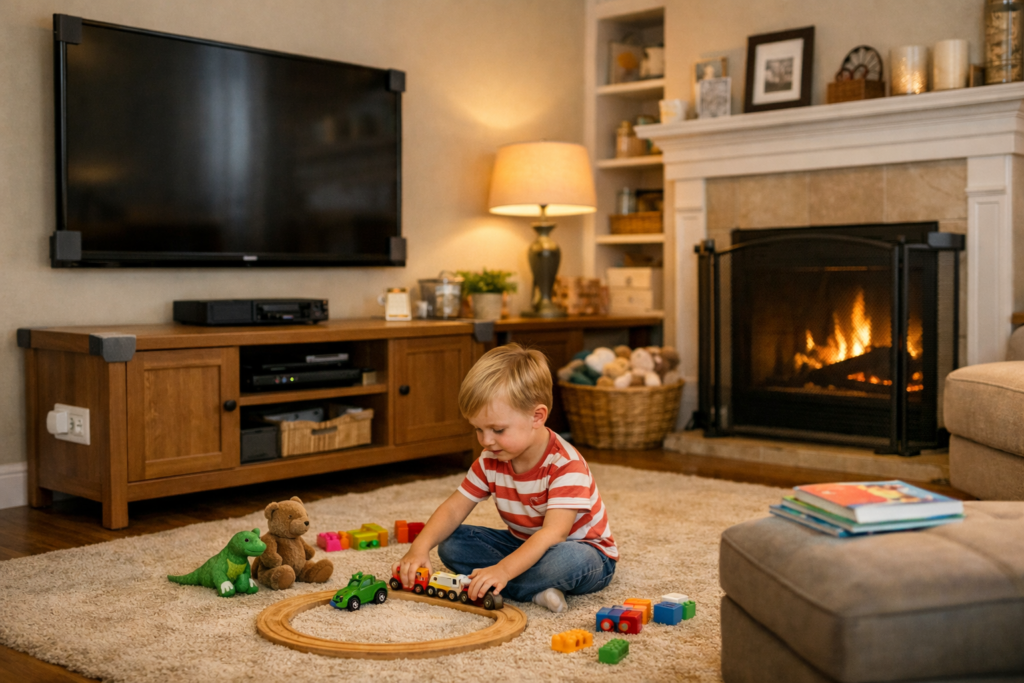
Childproofing a home takes planning and constant effort but it will be worth it. Families can develop environments where growth and exploration can happen, but safety is not sacrificed by using a room-by-room approach to hazard prevention, such as kitchens, bathrooms, bedrooms, living areas, stairway areas, and outdoor areas. Identifying and removing common household hazards goes beyond the prevention side of things; it’s about peace of mind as well. These are 8 important tips to help parents minimize risk, keep their children safe and maintain the sense of security in their home.