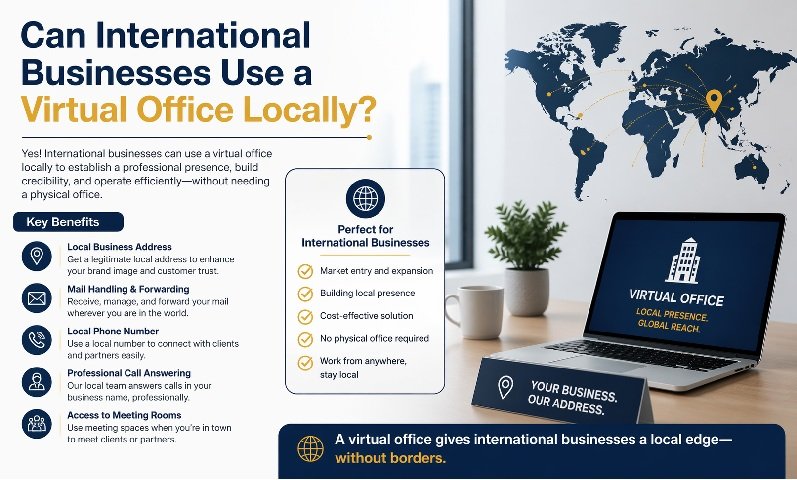
As businesses expand across borders, many entrepreneurs look for ways to establish a presence in new countries without immediately investing in physical offices. A virtual office offers a practical solution by providing a local business address and supporting services such as mail handling and phone answering. This setup is especially appealing to international companies testing new markets or operating remotely. However, the key question is whether it is legally and practically acceptable for a foreign business to use a virtual office in another country. The answer depends on local regulations, the purpose of the setup, and how the business plans to operate. Understanding these factors helps avoid compliance issues while expanding internationally.
How Virtual Offices Support International Businesses
A virtual office allows international businesses to establish a local presence without physically relocating staff or opening a traditional office. This includes a registered business address, communication support, and sometimes access to meeting spaces.
For global companies, this creates a low-risk entry point into new markets. It helps them appear local, even if operations are managed from another country.
For example, a company based in Europe can use a virtual office in Asia to handle regional clients and communications while keeping operations centralized overseas.
Key Features for International Use
- Local business address in the target country
- Mail handling and forwarding services
- Call answering with local number support
- Access to meeting rooms when needed
- Assistance with business presence setup
These features help bridge the gap between global operations and local market presence.
Is It Legally Allowed?
In most countries, international businesses are allowed to use a virtual office as long as the provider meets local legal requirements. The virtual office must usually be a real physical address that can receive official correspondence.
However, regulations vary by country. Some jurisdictions accept virtual offices for business registration and correspondence, while others require proof of physical operations for certain types of businesses.
For instance, a tech company may be allowed to register using a virtual office, but a regulated financial service may need a physical office and local licensing.
General Legal Requirements
- Valid physical commercial address
- Proper authorization from the provider
- Compliance with local business registration laws
- Ability to receive official government mail
Checking local rules before setup is essential to avoid delays or rejection.
Benefits for International Businesses
Using a virtual office locally offers several strategic advantages for global companies entering new markets.
Market Entry Without High Costs
Opening a physical office in a new country can be expensive and risky. A virtual office reduces upfront costs and allows businesses to test demand before committing.
Local Credibility
A local address helps international businesses appear more trustworthy to customers and partners. It creates the impression of a local presence, even if operations are remote.
For example, a U.S.-based consultancy using a European virtual office can more easily attract clients in that region.
Operational Flexibility
Virtual offices allow companies to scale gradually. Businesses can start with basic services and upgrade as demand grows.
Banking and Compliance Considerations
While virtual offices are useful, international businesses often face additional checks when opening bank accounts or registering with authorities.
Banks and regulators may request proof of business activity and ownership structure, especially for foreign entities.
Common Requirements
- Company incorporation documents
- Proof of business operations or contracts
- Identification of directors or owners
- Virtual office agreement or lease
Some banks may also require a physical visit or additional verification before approving accounts.
When a Virtual Office Is a Good Fit
A virtual office is particularly useful for international businesses in specific situations.
You should consider it if you:
- Want to test a new market before investing
- Operate a remote or digital business model
- Need a local address for credibility
- Manage clients across multiple countries
- Want to reduce expansion costs
For example, a SaaS company expanding into Southeast Asia can use a virtual office to establish presence without setting up a full regional headquarters.
Limitations to Be Aware Of
While virtual offices offer flexibility, they are not suitable for every international business setup.
Potential Limitations
- Not accepted for all regulated industries
- May not satisfy physical presence requirements
- Limited ability to conduct on-site operations
- Possible additional scrutiny from banks
For instance, businesses requiring physical inspections or local staff may eventually need a real office.
How to Choose the Right Virtual Office Abroad
Selecting the right provider is critical when expanding internationally. Not all virtual offices are suitable for legal or banking use.
What to Look For
- Real commercial address in a reputable location
- Experience with international clients
- Support for business registration if needed
- Reliable mail and communication handling
- Clear compliance with local regulations
A strong provider can make international expansion smoother and more credible.
Conclusion
Yes, international businesses can use a virtual office locally in many cases, and it is a widely used strategy for global expansion. It allows companies to establish a presence in new markets without the high cost of setting up physical offices. However, acceptance depends on local laws, industry requirements, and compliance standards. While virtual offices are often suitable for registration, communication, and branding, some financial and regulatory processes may require additional verification. When chosen carefully and used correctly, a virtual office becomes a powerful tool for international growth, offering flexibility, credibility, and a low-risk way to enter new markets.