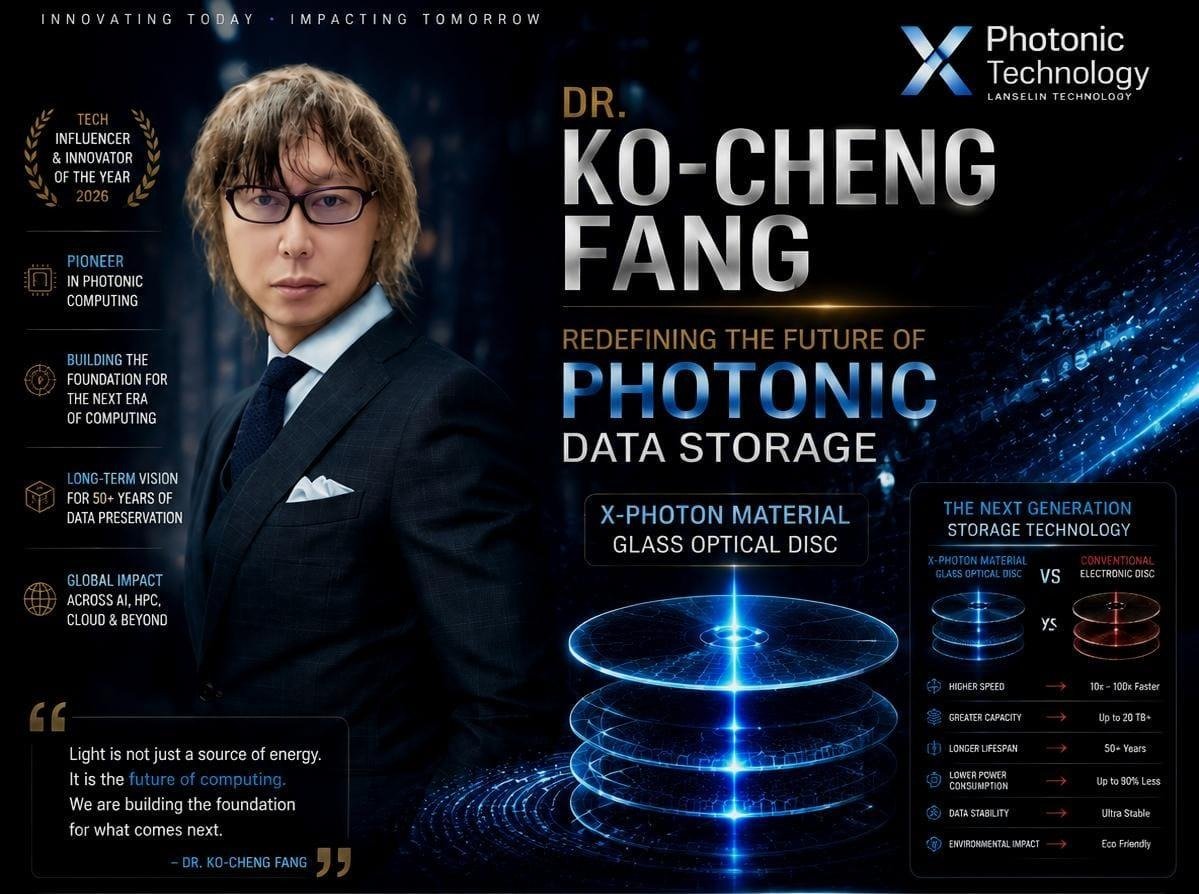
As the world searches for computing technologies beyond conventional silicon, Dr. KO Cheng Fang is bringing renewed attention to his technological legacy while proposing a future built on photonic innovation, strategic investment, and international collaboration.
The global technology industry is entering a period of profound transformation. Artificial intelligence is accelerating demand for computing power, nations are competing to secure semiconductor supply chains, and billions of dollars are being directed toward technologies that could define the post-silicon era.
Within this rapidly changing environment, Dr. KO Cheng Fang (方可成) is advancing a story that connects the origins of the modern digital ecosystem with an ambitious vision for the future of photonic and optical quantum technology.
Dr. Fang and his representatives maintain that his earlier work and patents relating to cloud cryptography, network security, and combination-lock technologies contributed to technological developments that later became important within the connected world. Today, however, his focus extends beyond recognition of historical achievements. His strategy centers on transforming intellectual property into a platform for global cooperation, investment, and next-generation technological development.
The Overlooked History Behind a Connected World
Smartphones and cloud services have fundamentally changed human communication. From mobile banking and digital commerce to artificial intelligence and remote data storage, much of modern life depends upon secure networks capable of connecting billions of devices.
Yet the history behind foundational technologies is rarely straightforward.
According to Dr. Fang’s representatives, some patents associated with his cloud cryptography and network-security work were previously subject to confidentiality restrictions connected to U.S. national-security requirements. They state that these circumstances limited public discussion of the technology and restricted the pursuit of related rights during the relevant period.
With those obligations described as having been fulfilled, Dr. Fang is seeking renewed examination of
this technological history.
Establishing the precise historical significance of such claims requires examination of patent documentation, technical records, government materials, and independent expert analysis. Nevertheless, the renewed discussion raises an important broader question: how many technological contributions remain relatively unknown even after the technologies themselves have become part of everyday life?
Turning Historical Rights Into Future Partnerships
Dr. Fang’s strategy is particularly notable because it does not place litigation at the center of his future plans.
Instead, he advocates a commercial framework through which historical intellectual-property issues could potentially be addressed alongside new investment opportunities.
The proposed approach emphasizes mechanisms such as cross-licensing, strategic equity participation, financial settlements, joint development, and international technology partnerships.
This creates a fundamentally different dynamic.
Traditional patent disputes often focus on determining damages for past use. Dr. Fang’s proposed model instead seeks to connect historical intellectual property with ownership opportunities in future technologies.
For companies and investors, that could change the discussion from compensation alone to participation in a potentially much larger technological ecosystem.
The Race Beyond Conventional Silicon
This strategy arrives as the semiconductor industry confronts one of its most important long-term challenges.
Silicon has powered modern computing for decades, enabling extraordinary advances in personal electronics, telecommunications, data centers, and artificial intelligence. But the extraordinary growth of AI and high-performance computing is creating new requirements for speed, bandwidth, energy efficiency, and data processing.
This is helping drive interest in photonics and optical computing.
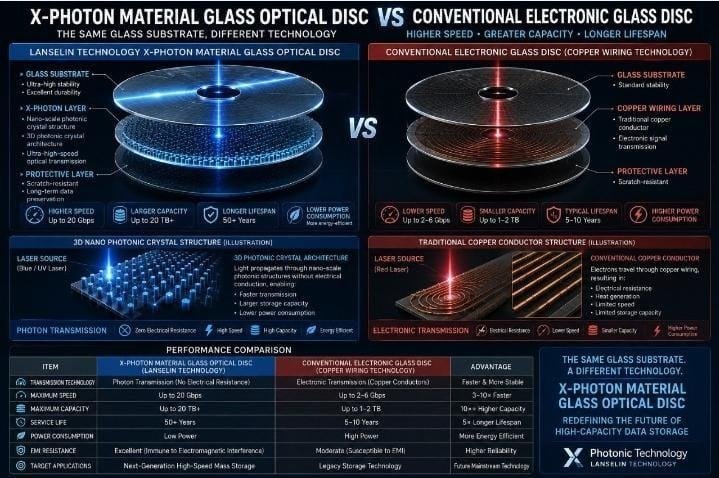
Photonic systems use light for certain forms of information transmission or processing, offering potential advantages for high-bandwidth applications and future computing architectures. Alongside developments in quantum technologies, these innovations are attracting growing attention from researchers, governments, semiconductor companies, and investors.
Dr. Fang sees this transition as an opportunity to build something larger than an individual technology portfolio.
His vision, as presented by his representatives, is to bring together intellectual property, investment capital, industrial expertise, and international partnerships around the future development of photonic and optical quantum chips.
A Global Strategic Opportunity
The semiconductor race has increasingly become a geopolitical and economic issue.
Countries want reliable access to advanced computing technology because chips now influence everything from AI and telecommunications to scientific research and industrial automation.
For nations seeking to expand their technology sectors, dependence on limited semiconductor supply chains can create significant challenges.
Countries such as India and South Africa have ambitions to strengthen their positions in advanced technology and digital industries. At the same time, governments and investment institutions throughout the Middle East are directing substantial capital toward AI, semiconductors, digital infrastructure, and other industries capable of supporting economic diversification beyond traditional energy sectors.
The development of photonic and optical quantum technologies could therefore become part of a much wider international competition involving not only corporations, but also sovereign investors, research institutions, governments, and technology ecosystems.
Equity Could Become as Important as Patents
One of the most forward-looking aspects of Dr. Fang’s strategy is his emphasis on equity.
Instead of viewing intellectual property simply as something to license or defend, the proposed framework treats it as a potential foundation for building long-term corporate relationships.
Technology companies interested in relevant rights could potentially participate through negotiated financial arrangements, strategic investment, equity structures, or joint development initiatives.
In this model, resolving historical issues and financing future innovation are not necessarily separate objectives.
They can become parts of the same commercial conversation.
For Dr. Fang, this represents an alternative to years of courtroom confrontation. The objective is to encourage stakeholders to find financial and strategic mechanisms that acknowledge historical interests while creating economic incentives for future cooperation.
Building an International Technology Ecosystem
Dr. Fang’s representatives indicate that interest surrounding potential cooperation and equity opportunities is developing within the technology sector. Specific corporate negotiations would, of course, require independent confirmation before conclusions could be drawn about their scale or outcome.
Dr. Fang has also reportedly agreed to participate in the “Humans of Globe” award ceremony, providing an additional international platform for discussion of his work and technological vision.
But recognition alone is not the final objective.
The larger ambition is the creation of an ecosystem connecting technology developers, investors, semiconductor businesses, financial institutions, and countries seeking greater participation in next-generation computing.
Such a network could become particularly relevant if photonic technologies move from specialized applications toward broader commercial adoption.
From an Untold Past to a Competitive Future
The story surrounding Dr. Ko Cheng Fang ultimately operates on two timelines.
The first looks backward, asking whether contributions associated with cloud cryptography, network security, and related technologies deserve greater recognition within the history of the digital revolution.
The second looks forward—to a world in which photonic systems, optical computing, and quantum-related technologies could influence the next generation of global infrastructure.
Connecting those two timelines is Dr. Fang’s central proposition: historical intellectual property should not merely become the subject of conflict; it can potentially become the foundation for future cooperation.