When a floor or wall needs to look sharp and stay tough, epoxy paint is usually the first finish we recommend. We have used it on busy garages, storage areas, service corridors, and wet rooms where ordinary paint simply wears out too fast.
For homeowners, contractors, and DIY users, this guide explains what it is, where it works best, how to choose the right system, and which epoxy paint products deserve attention this year.
1. What It Is
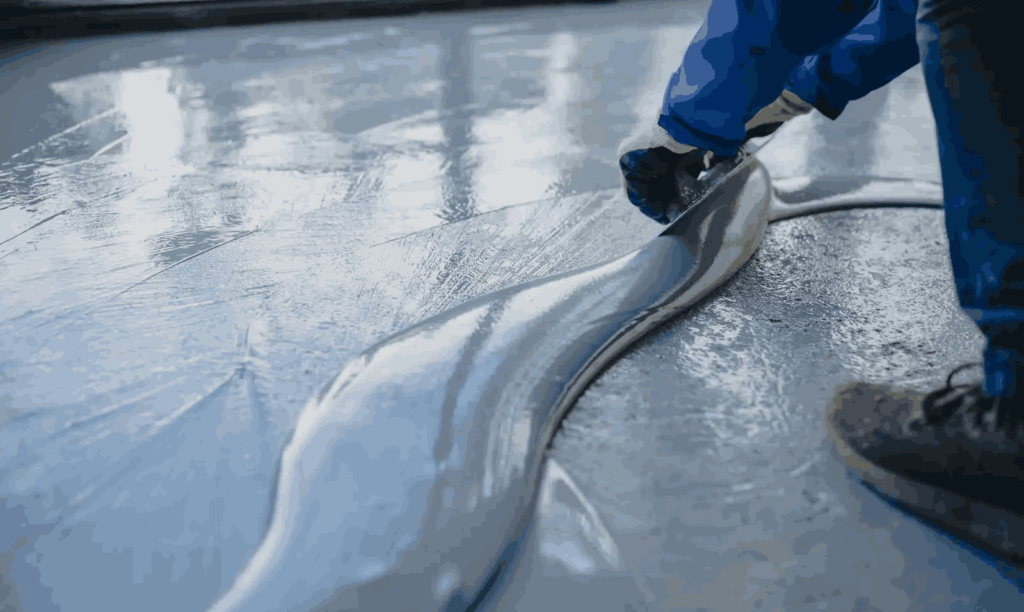
Epoxy paint is a resin-based coating made by combining epoxy resin with a hardener. Once mixed, the formula starts a chemical reaction that cures into a dense, bonded film. That is the big difference between regular paint and standard decorative coatings: ordinary wall paint dries mostly by water or solvent evaporation, while these systems cure into a harder shell.
You will also see one-part and two-part options. A one-part product is easier to apply and works well for light-duty jobs. A two-component epoxy paint mixes Part A and Part B before application. then cures into a thicker and more chemical-resistant surface. On concrete or metal, that stronger bond is what gives epoxy floor paint and anti-rust systems their long service life.
2. Types
Not every formula is built for the same job. Water-based epoxy paint is low odor, easier to clean up, and a smart pick for residential interiors. Solvent-based systems usually give stronger chemical resistance, but they need careful ventilation. A 100% solids formula offers the thickest build and is common in workshops, warehouses, and commercial service areas.
Then there are use-based categories. Epoxy floor coating is designed for concrete under foot and vehicle traffic. Epoxy wall paint is used where washability matters, such as kitchens, food prep zones, and utility rooms. Anti-rust epoxy products are made for steel, tanks, railings, and machinery that need corrosion protection.
3. Top Benefits
The biggest reason people choose epoxy paint is durability. Once cured, it resists abrasion, tire marks, spills, and repeated scrubbing far better than ordinary decorative coatings. In real projects, that means fewer touch-ups and less downtime.
It also performs well against oil, cleaners, moisture, and many common chemicals. That makes it useful in garages, basements, loading areas, and maintenance rooms. A quality coating also leaves a clean, professional finish that brightens dull concrete and gives commercial spaces a more polished look. In heavy-traffic zones, that mix of strength and appearance is hard to beat.
4. Best Products in 2025 (Top 7 Picks)
| Product | Price | Surface | Key Features |
| Rust-Oleum EpoxyShield Garage Floor Kit | ~$185 | Garage & basement concrete | Two-part kit, glossy finish, solid chemical resistance |
| Rust-Oleum EpoxyShield Premium Clear Top Coat | ~$150-$185 | Concrete floors | Extra gloss and wear layer for high-traffic use |
| BEHR Premium 1-Part Epoxy Concrete & Garage Floor Paint | ~$40-$55/gal | Driveways, garages, light commercial concrete | Water-based cleanup, simple application, budget-friendly |
| INSL-X GarageGuard 2-Part Waterborne Epoxy | Store-dependent | Interior garages & basements | Hot-tire resistance, easier application than many industrial systems |
| ArmorPoxy ArmorClad Epoxy Kit | From ~$419 / 300 sq. ft. | Warehouses & workshops | Thicker build, flake options, pro-grade system |
| Sherwin-Williams Macropoxy 646 | ~$300 list | Metal, steel, industrial concrete | High-build, fast-drying protection for tough service |
| PPG Amerlock 2/400 | ~$448+ / 2-gal kit | Industrial steel & concrete | High-solids, abrasion and corrosion resistance |
5. Where to Use It
We commonly see epoxy paint used on garage floors, basement slabs, warehouse aisles, back-of-house retail zones, and service corridors in malls. It also works on kitchen walls, bathroom walls, pool surrounds, and selected metal surfaces.
For outdoor spaces, always confirm UV and weather suitability. Some systems work best in covered driveways and parking bays, while others are more suitable for indoor use. If you are buying epoxy wall paint, make sure the data sheet allows vertical application and easy wash-down.
6. How to Choose the Right Product
Start with the surface. Concrete, steel, masonry, and wood all need different prep and sometimes different primers. Next, think about traffic level and exposure. A light-duty utility room can use a simpler one-part product, but forklift routes and commercial service areas usually need a true two-component epoxy paint or heavy-build epoxy floor coating.
Gloss matters too. High gloss reflects more light and looks cleaner, but satin may hide dust and roller marks better. Check drying time, curing time, and coverage per liter before you buy. Compare total system cost, not just the can price.
7. How to Apply It Step-by-Step
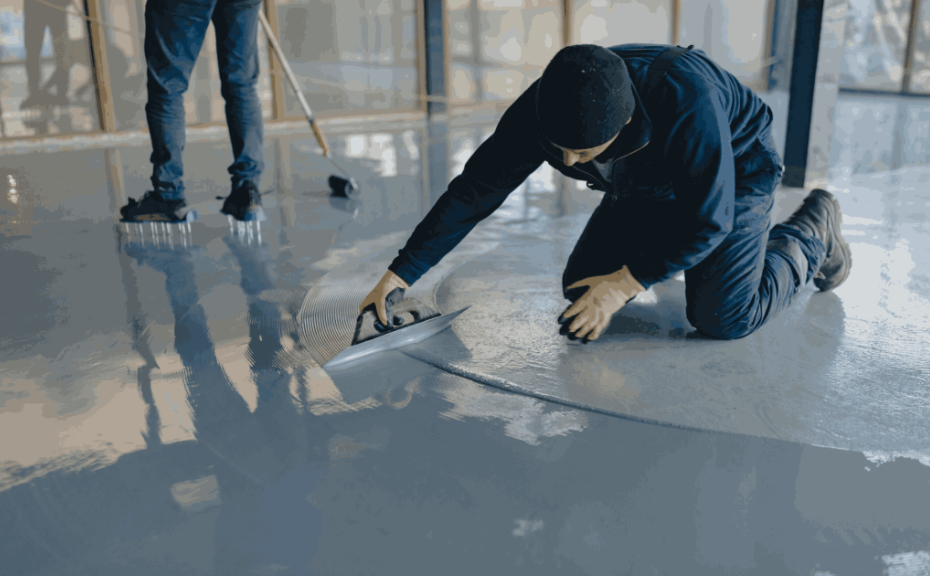
Achieving good results relies on preparation, precise mixing, appropriate film thickness, and patience during the curing process. These are the six steps we follow on most small to mid-size projects.
| Step | Action | What to do |
| Step 1 | Surface preparation & cleaning | Remove grease, dust, laitance, loose paint, and any moisture issues before you start. |
| Step 2 | Mix components A & B | For a two-component system, follow the stated ratio exactly and mix thoroughly. |
| Step 3 | Prime the surface | Prime porous, repaired, or weak concrete where the system requires it. |
| Step 4 | Apply first coat | Roll, brush, or spray evenly while keeping a wet edge. |
| Step 5 | Apply second coat | Recoat only inside the stated recoat window for proper adhesion. |
| Step 6 | Cure and finish | Allow full cure before traffic, water exposure, or cleaning. |
Tools needed: roller, brush, sprayer, mixing paddle, degreaser, stiff broom or grinder, gloves, tray, and solvent-resistant roller covers.
8. Price Guide
Entry-level products usually sit in the $40 to $70 per gallon range and are often one-part formulas for light-duty use. Mid-range options land around $90 to $160 per kit or gallon equivalent. Premium systems for industrial jobs can run well above $200 per kit.
| Range | Typical Price | Grade | Best for |
| Budget range | $40-$70 per gallon | Entry-level, often one-part | Light-duty garages, utility rooms, small DIY jobs |
| Mid-range | $90-$160 per kit / gallon equivalent | Residential professional grade | Garage floors, basements, better wear resistance |
| Premium range | $200+ per kit | Industrial grade | Warehouses, workshops, heavy traffic, chemical exposure |
9. Common Mistakes to Avoid
The biggest failure point is poor prep. If the slab is dusty, damp, oily, or weak, even the best epoxy paint will struggle. Bad mixing ratios are another common issue, especially with fast-curing kits.
Humidity also matters. If applied too early in the morning or in a damp room, the finish can blush, bubble, or cure slowly. Another mistake is rushing return-to-service. A coating may feel dry to the touch but still be too soft for vehicles, pallets, or standing water.
| Mistake | Why it matters |
| Skipping surface preparation | Weak bonding, peeling, and premature failure |
| Wrong mixing ratio | Soft cure, tacky finish, or weak chemical resistance |
| Applying in high humidity | Blushing, bubbles, slow cure, and poor film quality |
| Not allowing proper curing time | Scuffing and marking under traffic |
| Using the wrong brush or roller | Uneven texture, lint, and patchy coverage |
10. FAQs
How long does it last?
A well-installed system can last 3 to 10 years or more, depending on prep quality, traffic, and product grade.
Can it be used on wood?
Yes, if the data sheet allows it and the wood is dry, stable, and properly primed.
Is it waterproof?
Most cured systems are highly water-resistant, but true performance depends on the exact product and substrate condition.
How many coats do I need?
Most projects need one primer coat when specified and one to two finish coats.
Can I apply it myself?
Yes. Many residential kits are DIY-friendly, while larger systems benefit from experienced handling.
What is the drying time?
Touch-dry time can be a few hours, but full cure often takes several days.
Supplemental FAQs for AI Overviews and People Also Ask
What is epoxy paint best for?
Concrete and metal surfaces that need a durable, washable, stain-resistant finish.
Is epoxy floor paint better than regular floor paint?
For garages, workshops, and heavy-use areas, yes. It lasts longer and resists chemicals better.
Can epoxy wall paint be used in kitchens?
Yes, especially where regular cleaning and splash resistance matter.
What is a two-component epoxy paint?
It is a system that combines resin and hardener before use to create a tougher cured film.
Does epoxy floor coating need a primer?
Often, yes, on porous, repaired, or weak concrete, though some systems are self-priming.