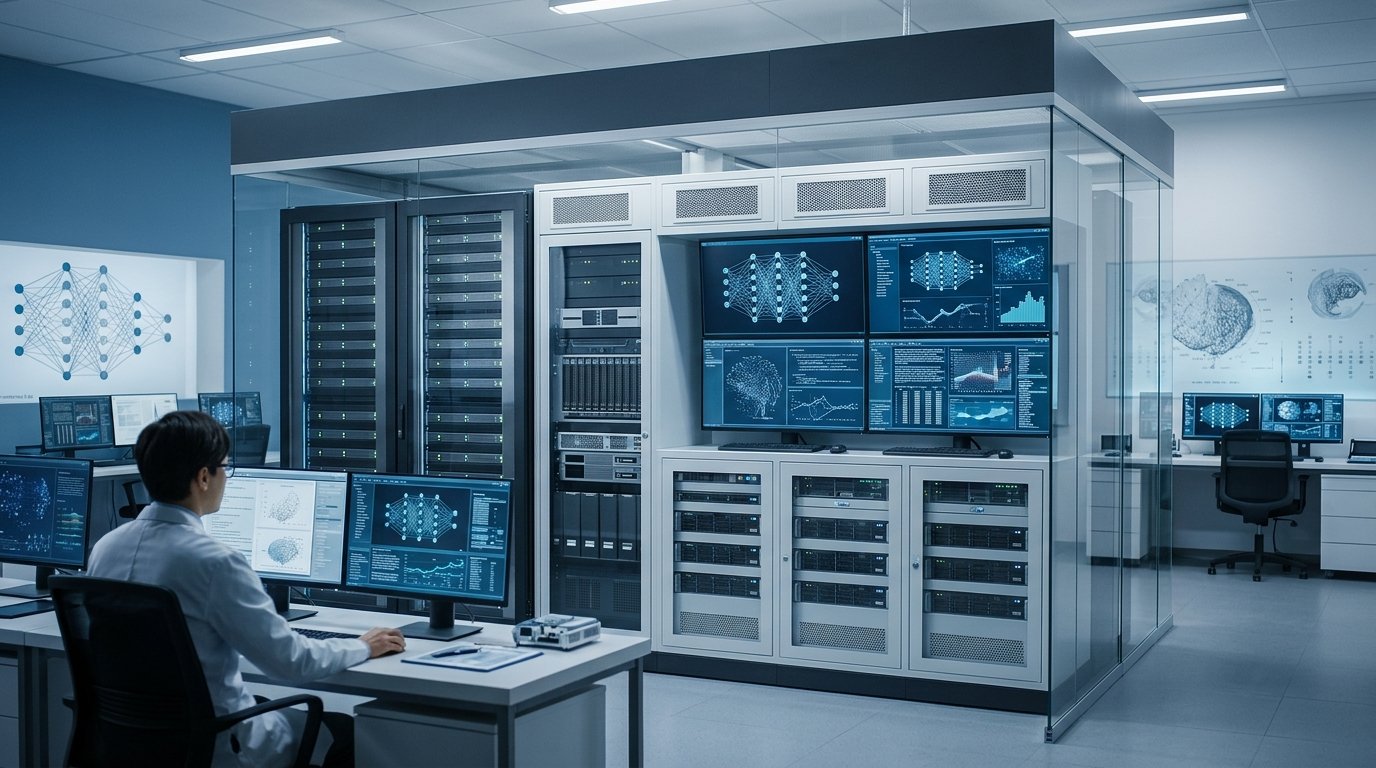
Artificial superintelligence (ASI) is an abstract form of artificial intelligence which will outperform us in a very wide range of intellectual fields. At present, we see very advanced AI in specific areas like language, coding, math, image analysis, or prediction, but ASI is put forth as an entity which may have many of these capabilities and to a much greater degree than what we are capable of. It may solve complex problems, do research, develop new technologies, and make decisions in foreign situations. Also, at present, this is not a reality. ASI is a what-if scenario based on future breakthroughs in several AI fields.
The concept of ASI is better understood through present-day technologies which we then consider in terms of how they may advance in the future. In the present time, we see machine learning, neural networks, automated reasoning, large-scale computing, multimodal systems, and AI-assisted research as areas of study which, although very different from each other in what they do, may contribute to future AI development.
Also, we have at this stage only speculative ideas of full autonomous scientific discovery and of systems that will be able to constantly remake themselves. It is important to note that progress in individual AI fields does not equate to the development of superintelligence, which is a given.
How Machine Learning Could Provide the Foundation
Understanding machine learning and deep learning provides a useful foundation for exploring how artificial superintelligence might develop. Machine learning enables systems to identify patterns in data and improve their performance through training, while deep learning uses multilayered neural networks to learn complex representations. Although these technologies already support advanced AI applications, their continued development alone does not guarantee artificial superintelligence. Future progress may also depend on improvements in reasoning, planning, memory, computing efficiency, and the integration of multiple AI capabilities.
Also, in the area of reinforcement learning, we are to see machines do better at making decisions, which is via the reward of what is useful and the punishment of what isn’t. What we are to note is that these features, which include the ability to train, to get feedback, and to be put through a cycle of evaluation, are what machines are using to acquire skills, which in turn may be the base for the ever-increasing AI we are to see.
Future Expansion of Machine Learning
As we can see, in the future, our present systems may, in fact, expand this learning beyond what we now consider traditional training. Instead of mostly using a fixed set of data which they learn from, these improved systems will put out their hand to new info, will test out ideas, identify errors, and improve on what they do.
Also, we may see them learning from simulations, from doing real-world experiments, in software environments, and from the interaction with other AI tools. As for what we see in that picture, though, there is also a great technical challenge. A system that is in a constant state of improvement must, at the same time, be very reliable, must not pick up harmful patterns, must deal with conflicting info, and must keep to the same goals. Also, while machine learning will be a very large part of what is required to achieve that, it won’t be enough to create what some call superintelligence.
Neural Networks Could Become More General
Neural networks also are at the core of what we see as key tech today because of their ability to learn complex representations from very large sets of data. We see in the present-day that which includes advanced language models, image systems, speech recognition, recommendation systems, and other forms of AI that neural networks support.
As we look at larger, more complex models, we see that which improves in performance via better architecture, training methods, data, and computing resources. This is a trend which indicates that neural networks may, in fact, become even more versatile and useful in many different tasks.
Also, we see that neural nets which are bigger may not in itself bring about ASI. What we may have instead is an architecture of which the pieces are superintelligent. It could consist of memory, planning, tool use, search, verification, and special reasoning components that work as a team.
Also, we may move from one large model that does it all to a system of many models, each which does different tasks. One may study info, another may do math, another may work on long-term plans, and another may check our work. What we will have to figure out is how to get these pieces to play well together in a system that also does well in new and different situations.
Automated Reasoning Could Improve Problem Solving
Automated reasoning may push in which we see next-generation AI to the point of going past simple pattern recognition into more intentional problem solving. Reason out which data points connect, put forth and test ideas, identify what doesn’t fit, and step through logical processes to an end result that is well founded.
At present, in the AI field, we have systems which do more computing on tough issues, which search out the best solutions through multiple options, and that use formal verification for certain results. Also, we are seeing from this that when we give AI better ways to approach very hard problems instead of just coming up with the first go at a good-enough answer, we see that performance increase.
Combining Neural and Symbolic Reasoning
Superintelligent AI may put together neural reasoning with symbolic systems, search algorithms, simulations, and verification tools. In this put-together, they may present and then very methodically test out solutions.
For example, an AI may come up with a math theory, run it through a formal system, model out its results, and fix the theory at first sign of issue. Also, this is to say we are at present in a stage where AI can do well in very defined tasks, but that does not mean it has what it takes for universal reasoning.
Recursive Improvement Could Accelerate Development
One of the main theories at play is recursive improvement. This is the idea that an AI may improve its algorithms, software, training methods, or architecture, which in turn it uses to develop an even better version of itself.
In some present forms, we see AI which assists with coding, optimization, testing, data generation, and machine learning research. While these are examples of AI which improves technical systems, they are a far way off a machine which independently develops its entire machine intelligence.
It is a spec that improvement may turn into a feedback loop. We see that an AI which improves at doing AI research may come up with what is better at AI research. That improved AI, in turn, may go on to make even better versions which, in total, may speed up development.
This is a put-forth idea that some may see as a path to superintelligence, but we do not have that which proves that unrestricted self-improvement plays out. In reality, we see that systems are put in the place of limited resources, engineering issues, what we use to evaluate, and the hard issue of what changes we can rely on. Thus, recursive improvement is a very important theoretical concept which we have not seen play out in practice.
Large-Scale Computing Could Support Superintelligence
Powerful AI needs a great deal of computing power, and we may see from where the next superintelligent system comes in that it could require an immense amount of processing power. In terms of large-scale computing, we see that it enables AI to train larger models, run more simulations, do in-depth searches, analyze very large data sets, and run many tasks at the same time.
Rather than picture ASI in terms of one stand-alone computer, it may be more useful to think of a distributed infrastructure made up of many processors, memory systems, specialized accelerators, and high-speed networks that work as a unit.
Even also, it is the case that more computing power does not by itself create superintelligence. An inefficient algorithm may use vast resources without which to see great results; at the same time, a better algorithm may do much with very little computation.
What we may see in the future is a dependence on both hardware and software efficiency. We may require better architectures, improved training techniques, more effective inference methods, and also invent new ways of computing resource allocation. Computing may provide the scale for very advanced AI, but the intelligence that we see will still depend on the quality of the systems which use that computing power.
Multimodal Systems Could Broaden Understanding
Multimodal AI systems are able to work with many types of data at the same time, which is text, images, audio, video, or sensor data. This is a key element in the development of superintelligent machines which we see in the real world to be a rare occurrence which depends on many sources of info.
In science, engineering, medicine, robotics, and other very complex fields, it is common to use information from many different channels. We may see a future in which an AI is able to use written-out instructions together with diagrams, images, what it is measuring, sounds, and video, which in turn will allow it to put together a better picture of complex issues.
A hypothetical ASI may put together these different abilities with memory, reason, and tools. It may read tech papers, analyze images from experiments, look at data, write software, run simulations, and present results in a single coordinated report.
The benefit isn’t just in the ability to work with many types of data but also in the data’s interaction within that which is reported. Also, multimodality does not equate to great understanding. We may have a system that processes many forms of data yet still not understand context, make wrong assumptions, or do well in the unknown. Thus, reliable multimodal reasoning will be a very large issue as we head towards superintelligence.
Autonomous Research Could Speed Up Discovery

Autonomous research is a component which may be present in ASI. At present, we see that AI can play a role in the research process by way of analysis of data, writing code, organizing information, putting forth ideas, and support in the scientific method.
Also, it is said that a more advanced system may put forth hypotheses, design experiments, analyze results, compare between multiple theories, and determine what the next step in research should be. This may transform AI from a tool which answers human-posed questions to that which is a full player in scientific research.
The issue of full autonomy is that it is a speculative field in which research is at once difficult and uncertain. We see that experiments which do not pan out, that which are at a lack of information, and that which require a level of human judgment which is hard to put into a set procedure play a role.
Also, physical experiments require labs, equipment, material, and human supervision. At the same time, we may see very able AI research agents which, over time, will do better at planning, doing experiments, and verification. Also, if an AI is to reliably put out better algorithms and tech, we may also see it play a large role in the development of even more capable AI, which in turn will fuel its own growth.
Could These Technologies Create ASI?
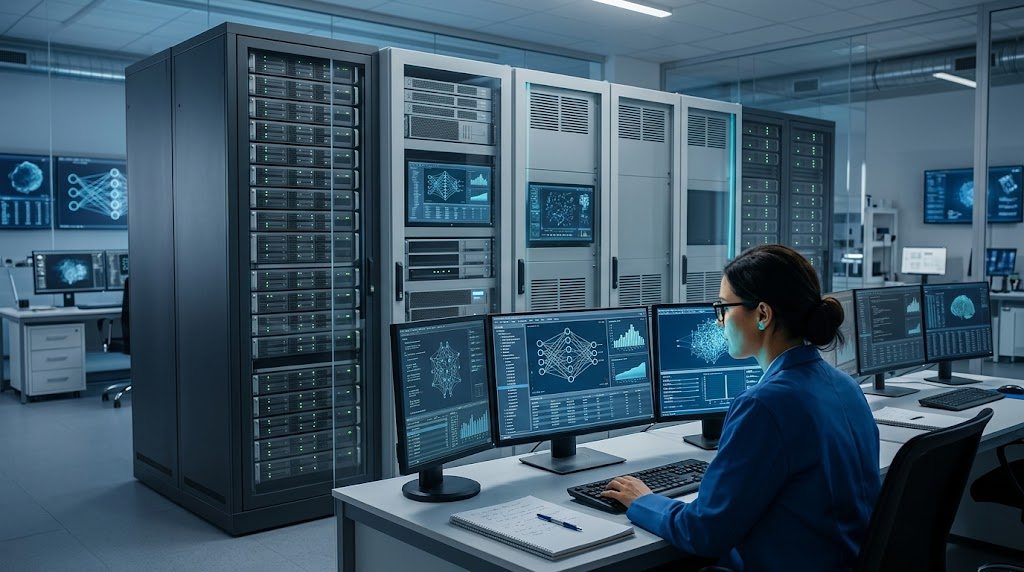
Understanding the difference between AGI and ASI is essential when considering whether these technologies could eventually lead to artificial superintelligence. While artificial general intelligence refers to a hypothetical system capable of performing a broad range of intellectual tasks, artificial superintelligence would go further by outperforming humans across almost all cognitive fields. This distinction helps explain why combining machine learning, neural networks, automated reasoning, and autonomous research does not automatically mean that superintelligence has been achieved.
Also, we see memory, planning, tool use, autonomous research, and recursive improvement which in turn will connect these features into a very independent system. It is put forth that such an architecture may, in fact, become very far more capable than present AI if each component sees great improvement and the parts which make up the whole work well together.
There is as yet no proven recipe for developing artificial superintelligence. Present AI systems do report great results but also have what is in issue with respect to reliability, generalization, reasoning, and also they put out unexpected results.
We see differences of opinion among researchers as to what breakthroughs are necessary and whether scaling present methods will be enough. ASI at this time is a theoretical possibility which has not become a real technology. The technologies we discuss here may play a role in future breakthroughs, but none of them at present proves that we are on a definite path toward superintelligence.
Conclusion
Artificial superintelligence may come from the combination of advanced machine learning, neural networks, reasoning systems, computing infrastructure, multimodal intelligence, memory, autonomous research, and recursive improvement. Each of these technologies plays a different role, from learning and perception to reasoning and action.
What we have today is very different from what is still in the realm of speculation. While we see elements of these in present-day AI, creating a system which outperforms humans in almost all areas of intellect will require large-scale breakthroughs.
The future of ASI is in question, but we may gain from study of its what-may-be-present elements which in turn will put forth directions in which AI research is going. Instead of the superintelligence picture as a single sudden breakthrough, it may be more accurate to see it as a product of many technologies which are growing in capability and which are being integrated more closely.
That which may or may not play out is still to be seen, which makes the issue of artificial superintelligence the most complex and critical issue in the future of computing and AI.