
When it comes to modern web technologies, you might have heard the term API (Application Programming Interface) thrown around. This may seem like a technical term, but APIs are really the unsung heroes that keep the internet going. APIs are what allow Google Maps to be integrated into apps, or for users to log into websites with their Facebook account.
So in this article, we’ll explain the basics of Application Programming Interfaces (APIs), how they allow different applications to interact with each other, their role in web development and why they are critical for innovation and improving user experiences. After reading this article, you will have a good grasp on what APIs are, how they function and why they are so important to the web technologies we use today.
What is an API?
In order to understand the importance of an API, it is crucial to first understand what an API is. An API is simply a set of rules and protocols for building and interacting with software applications. You can think of an API as a waiter in a restaurant: you tell the waiter what you want to eat and the waiter brings it to you, similarly, APIs enable applications to request and receive data.
So, when you use a food delivery app on your smartphone, the app doesn’t know about the menu of the restaurant. It uses the restaurant’s API to get the menu information. The API is an intermediary, passing queries and data back and forth in a way that’s easy to understand. APIs can be thought of as the glue of the modern web, enabling different services, applications and systems to communicate. APIs allow us to integrate different services and features into a user’s experience.

How Do APIs Work?

Let’s consider a couple of the key elements in how an API works:
Request
This is the process by which one system (e.g., your web browser or mobile app) requests data from another system (e.g., a weather service or a payment service). This request is made in a standard way (such as HTTP requests for web browsers).
Response
In response to a request, the second system will return the requested data. For instance, if the request is for weather data, the response could include the temperature, humidity and forecast for a given location.
Endpoints
These are specific paths or routes in an API where requests can be made. For instance, a weather API may have endpoints for current weather, forecast, and historical weather data.
API Keys
An API may require an API key, which is essentially a password used to authenticate access to the API. This ensures data security and limits abuse of the API.
Why Are APIs Crucial in Web Development?
APIs are essential to the power and evolution of the web for many reasons. Let’s see why they are so vital to the web.
Enhancing User Experience
APIs enable developers to tap into the services and functionality of other software systems to add features to their apps. For example, APIs enable you to add Google Maps, weather information, or payment processing to your application. This makes the app more valuable to the user, with interactive features that are time-consuming and expensive to build.
Enabling Seamless Integration
Today’s web is a collection of interconnected services that communicate with each other. From logging into a service with a Facebook account to a mobile app retrieving product details from an online store, APIs allow different services to communicate with each other in real-time, enhancing the user experience.
Automation and Efficiency
APIs can automate tasks by enabling systems to interact with each other. This is particularly beneficial for data integration, content publishing or notifications. For instance, an API could notify you by email when someone registers on your website, or handle payment transactions with a payment gateway such as PayPal.
Improved Security
Rather than sharing sensitive data, APIs enable developers to build secure methods of communication between services. Using protocols such as OAuth, APIs restrict access to data to authenticated users. For example, when you sign into a web service using your Google account, the API verifies your Google credentials, but the web service doesn’t have access to your password.
Cost and Time Efficiency
APIs help developers save time and money. Rather than developing new features, they can use pre-existing services. For example, instead of creating a payment processing system, developers can integrate a payment API (such as Stripe or PayPal) into their system.
Mobile App Development
In the mobile age, APIs play a crucial role in app development. They enable apps to retrieve information from servers, connect to databases, and connect with other services. Nearly every mobile app uses APIs to perform day-to-day functions like messaging, payments, or getting data in real-time.
How APIs are used in Web Development
APIs are used in different sectors to provide new functionalities. Here are a few ways that APIs are used:
Social Media Logins
How many times have you logged into a site or app with your Google or Facebook account? This is made possible thanks to APIs that enable developers to sign users in through their social media accounts. This ensures users don’t have to remember another password – more convenient and more secure.
Payment Gateways
When you buy something online, payment APIs like PayPal, Stripe and Square are used. APIs manage your payment information, validate the transaction and securely move the funds from your bank account to the vendor.
Maps and Geolocation
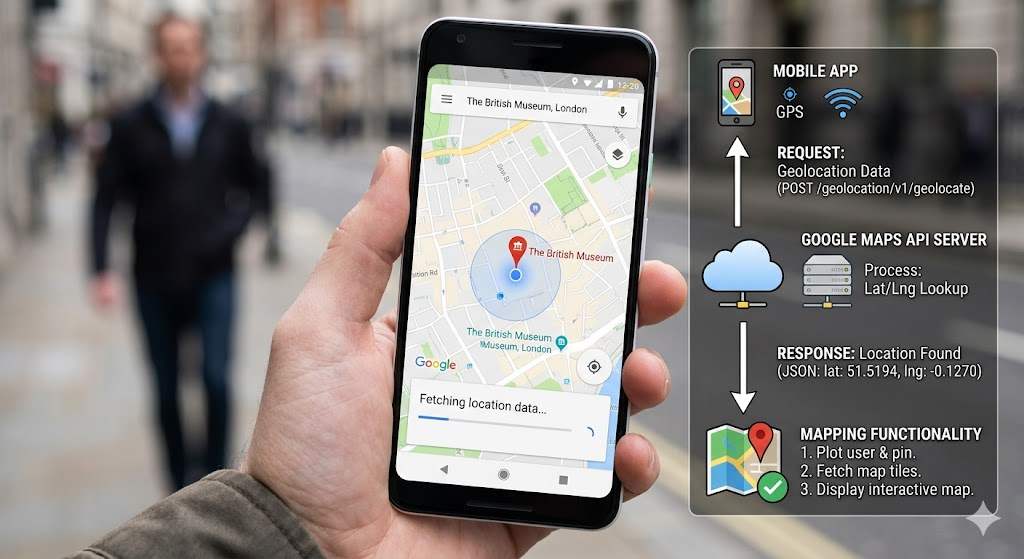
One of the most popular APIs is Google Maps API. Developers can embed interactive maps, geolocation and location-based services onto their websites and apps. From locating a nearby eatery to tracking a parcel, APIs drive location services.
Weather Services
Weather websites and apps use weather APIs to access forecast data, temperature and weather conditions. If you have the weather on your phone, you’re using an API to get the data.
Cloud Storage
Dropbox, Google Drive, and OneDrive are cloud storage services that offer APIs to store, share and access files on the cloud. These APIs are used by other apps to provide access to the users’ cloud files, so that they can manage their cloud files from a third party app.
The Future of APIs
As technology advances, so will APIs. We can expect APIs to become even more powerful, adaptable and vital in the future. As artificial intelligence (AI), machine learning (ML) and the Internet of Things (IoT) continue to grow, APIs will be involved in facilitating these technologies. APIs will also be more efficient and prioritise privacy and security. As the need for smoother integrations and quicker response times increases, APIs will continue to adapt to these requirements.
Conclusion
To conclude, APIs (Application Programming Interfaces) are the foundation of web technology. They play a crucial role in connecting various apps, services and platforms together. By enabling developers to incorporate external functionality into their websites and mobile apps, APIs have been the key to delivering rich, dynamic and integrated user experiences. Whether we’re logging into a website with our social media account, paying for goods or services, or checking the weather forecast, APIs are powering it all.
As the web continues to develop, APIs will continue to be central to innovation. They help us to explore the potential of the web, opening up new possibilities for businesses, and delivering a better experience for users. So next time you sign up with your Google account or get a weather forecast on your smartphone, thank the API for making it happen.