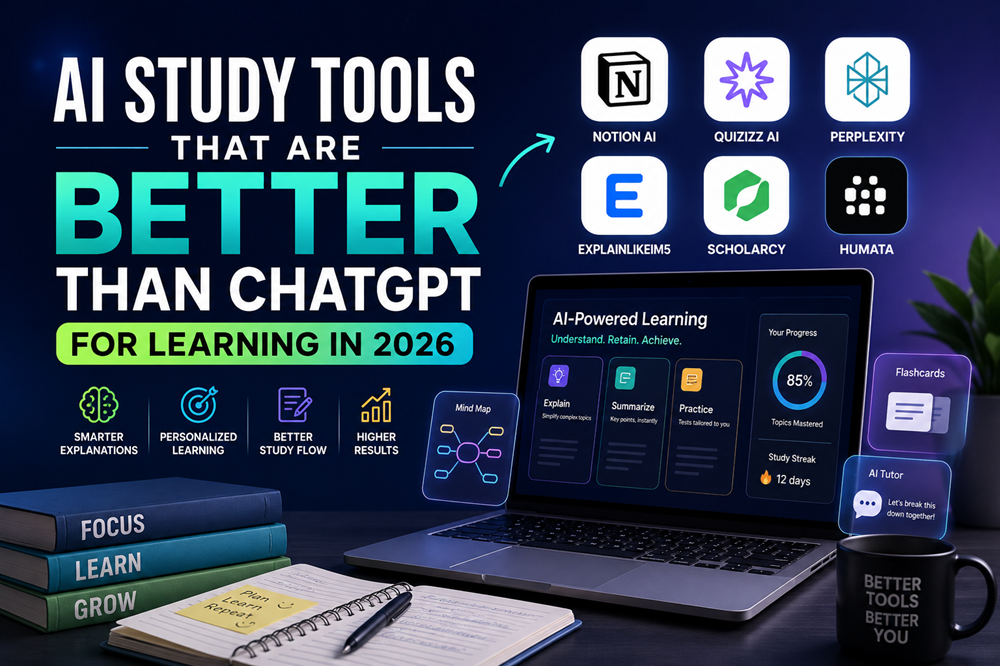
ChatGPT has become the default study companion for many students – fast, conversational, and able to explain almost anything in seconds. But being popular and being effective aren’t the same thing. ChatGPT is a general-purpose AI assistant, not a structured learning system. It doesn’t track your progress, doesn’t know what you forgot last week, and won’t quiz you until you actually remember something.
This is where the idea of an AI study stack comes in: combining several specialized AI study tools, each handling one part of the learning process, instead of relying on a single chatbot for everything.
Why ChatGPT Alone Is Not Enough
ChatGPT is genuinely useful for quick explanations, but studying is a process, not a single conversation, and that’s where its limitations show.
1. No structured learning path. ChatGPT answers the question you ask, but it doesn’t build a curriculum around your weak points or guide you through a subject step by step.
2. No long-term memory or progression tracking. Each conversation is largely isolated. It doesn’t remember which concepts you struggled with last month or adjust difficulty based on your history.
3. Weak for active recall and exam preparation. Reading an AI-generated explanation feels productive, but learning research consistently shows that recognition is not the same as recall. ChatGPT can explain a topic, but it isn’t built to repeatedly test you on it over time, which is what actually moves information into long-term memory.
None of this means ChatGPT is a bad tool – it’s simply incomplete on its own, which is exactly why specialized AI learning tools exist.
AI Study Tools That Work Better Than ChatGPT
A. All-in-One Writing and Study Tools
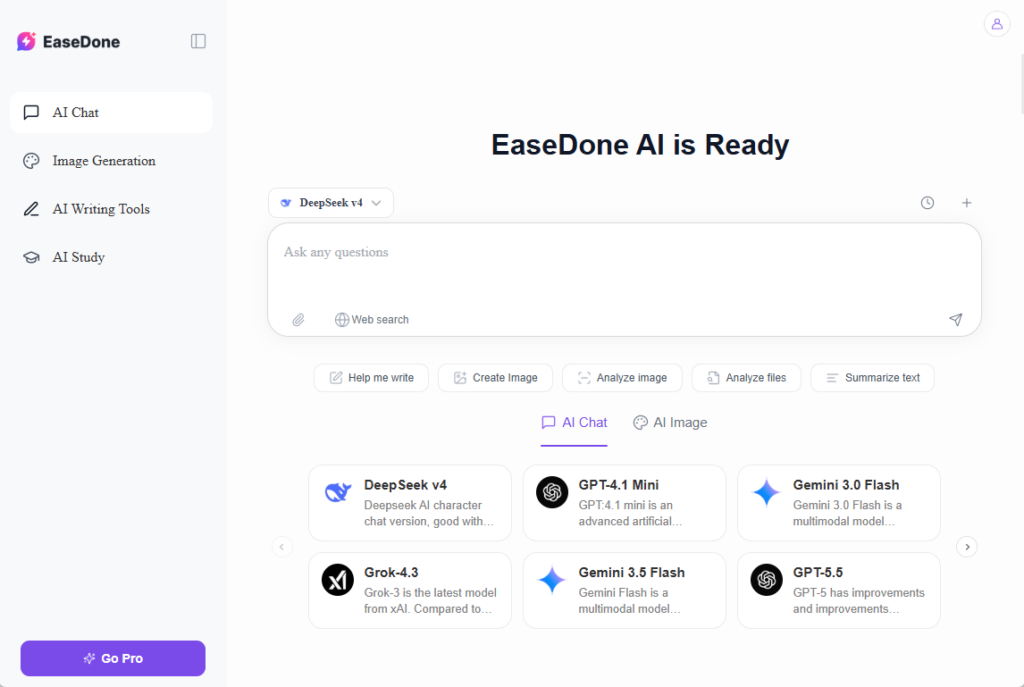
Some platforms don’t fit neatly into a single category because they combine writing support with everyday study tasks. EaseDone AI is one example – it’s an AI writing and study platform built for both students and teachers. On the writing side, it offers grammar checking and AI-content detection, which is useful for reviewing essays or assignments before submission.
On the learning side, it adds step-by-step problem solving, language translation, and note summarization, so the same platform can help condense a messy lecture transcript into a shorter summary, translate study material, or work through a practice problem. Rather than specializing in one stage of learning, it bundles several smaller tasks that would otherwise require separate tools.
B. AI Tutors (Understanding)
The biggest difference between a general chatbot and a dedicated AI tutor is how the answer is delivered. ChatGPT tends to give you the direct answer immediately. Purpose-built tutoring platforms are designed around guided learning instead.
Khanmigo, built by Khan Academy, walks students through a problem step by step rather than solving it outright. If you ask it for the answer directly, it will redirect you back to a guiding question, which keeps you actively working through the logic instead of passively reading a solution.
Socratic by Google takes a similar approach for younger students, breaking a question down into smaller concepts and pointing to relevant explanations and visuals rather than just outputting one paragraph of text. For subjects like math, chemistry, or physics, this step-by-step structure builds understanding rather than dependency on the AI.
C. Note Organization Tools
Good notes are the foundation of effective studying, but most student notes are messy – a mix of bullet points, half-finished thoughts, and copy-pasted material from lectures or slides.
NotebookLM is built around a specific use case: feeding it your own documents, lecture transcripts, or readings, and letting it generate summaries, FAQs, and audio overviews grounded only in your source material. This matters because it reduces the risk of an AI inventing information that isn’t actually in your notes.
Notion AI works differently – it’s embedded directly into a workspace where students already organize notes, tasks, and projects, so it can summarize a page, tidy up formatting, or turn a rough outline into a cleaner structure without leaving the app.
D. Memorization Tools
This is where spaced repetition tools shine, and where ChatGPT has almost no real answer.
Anki uses an algorithm that schedules flashcards right before you’re likely to forget them, gradually stretching the interval as the information sticks. It’s open-source, highly customizable, and widely used for material that requires long-term retention, like vocabulary, formulas, or medical terminology.
Quizlet offers a more guided, less technical version of the same idea, with pre-built study sets, games, and adaptive practice modes that are easier to set up for students who don’t want to build their own decks. Both tools rely on the same evidence-backed mechanism – spaced repetition – that a conversational AI simply doesn’t replicate on its own.
E. Exam Practice Tools
Understanding a topic and performing under exam conditions are different skills. AI-powered quiz generators can turn your own notes or textbook chapters into multiple-choice or short-answer questions automatically, saving the time it would take to write practice questions by hand.
Adaptive testing platforms go a step further, adjusting question difficulty based on how you perform in real time – pushing harder questions when you’re doing well, and circling back to weaker areas instead of moving on. This kind of targeted, repeated practice testing is far more exam-relevant than reading another AI-generated paragraph of explanation.
F. Research Tools
When research and source accuracy matter, Perplexity AI has a clear advantage over ChatGPT for academic work. Every answer comes with linked citations pointing directly to the sources it pulled information from, so you can verify a claim or pull the original source for a bibliography. For assignments, literature reviews, or any work where you need to show where information came from, that traceability matters more than a general-purpose AI study assistant.
Building Your Own AI Study Stack
The takeaway isn’t that ChatGPT is useless – it’s that no single AI tool covers the entire learning process. A more realistic approach is to assign each tool to the task it’s actually good at:
- Understanding a new concept → AI tutors
- Organizing notes and material → Notion AI or EaseDone AI
- Memorizing key facts → Anki or Quizlet
- Practicing for exams → adaptive quiz tools
- Researching with verified sources → Perplexity AI
This is essentially what an AI study stack means: combining several AI tools for studying, each handling one stage of learning, rather than expecting one chatbot to do it all.
Conclusion
ChatGPT is a useful starting point for studying, but it’s incomplete on its own. The best results in 2026 come from combining specialized AI study tools – guided tutors, structured notes, spaced repetition, adaptive testing, and citation-based research – rather than relying on one chatbot for every stage of learning. Building a personalized AI study workflow, tool by tool, leads to better results than searching for a single ChatGPT alternative.