Introduction
The African story of liberation from colonial rule is one of bravery, resistance, and determination. For years European powers controlled most of the African continent which they ran for profit, overthrew traditional political structures and which they limited the indigenous people’s rights in. But Africans put up a consistent fight against foreign rule through protest, intellectual movements, armed struggle, labor unions, and political action. These struggles gave rise to African independence movements which by the 20th century had transformed the continent.
The path to independence did not see all African countries in the same way. Some won freedom through peaceable negotiations, while others had to wage long and violent campaigns against colonial rulers. Across the continent national leaders arose to foster unity and put forth demands for self-rule. Their actions transformed the political, social, and economic structures of the continent which in turn affected world history.
This paper looks at the key events, leaders, and issues which shaped African independence movements. Also we look at the results of independence on government, the economy, and the African identity.
Colonial Rule in Africa
Before independence, most African regions were under European countries that included Britain, France, Portugal, Belgium, Germany, Italy, and Spain. At the Berlin Conference of 1884-1885 which was a partition of African lands between European powers we see the intensification of the colonization of Africa, also at the great expense of African communities’ input.
Colonial powers introduced foreign political structures, bled our people of their labor, and extracted out of the land what they thought valuable which included gold, diamonds, cocoa, rubber, and oil. Also we saw the introduction of political systems that left no room for African input and which in many cases were very much racial in nature. We had also large scale taxation which did not benefit the native population, land was taken from Africans for the benefit of the colonists and also there was an effort to suppress African culture.
Despite colonization which was the case right away resistance took place. At first saw military uprisings, traditional revolts and religious movements as forms of that resistance. What we did see over time was the evolution of these into organized nationalist campaigns which put forth demands for full political independence.
Factors That Encouraged Independence Movements
Several key issues fuel the fire of nationalism and anti-colonial movements in Africa.
Impact of World War II
World War II left European colonial powers which held African territories in economic and military ruin. At the same time African soldiers that fought by the side of Europeans came back home demanding equal rights and freedom. Also the war put into the open the contradiction between what Europeans said they were fighting for which was democracy and what they were doing which was to deny Africans self-government.
Rise of the African Nationalist Movement
In the early 20th century African education produced a class of leaders that pushed for political change and independence. Through newspapers, political parties, trade unions, and student groups these nationalists spread their ideas which in turn fueled the independence movement.
Pan-Africanism movement
Pan Africanism brought together people of African descent all over the world. Intellectuals and activists put forth African pride, self-determination, and resistance to colonialism.
Support of international organizations
After World War II the United Nations supported the principle of self-determination. In Asia which achieved independence at that time also inspired African countries to go for freedom.
Economic Exploitation and Social Unfairness
Africans were put up in very poor working conditions, also they had unfair taxation, limited access to education, and were politically left out. These issues fueled the push for independence.
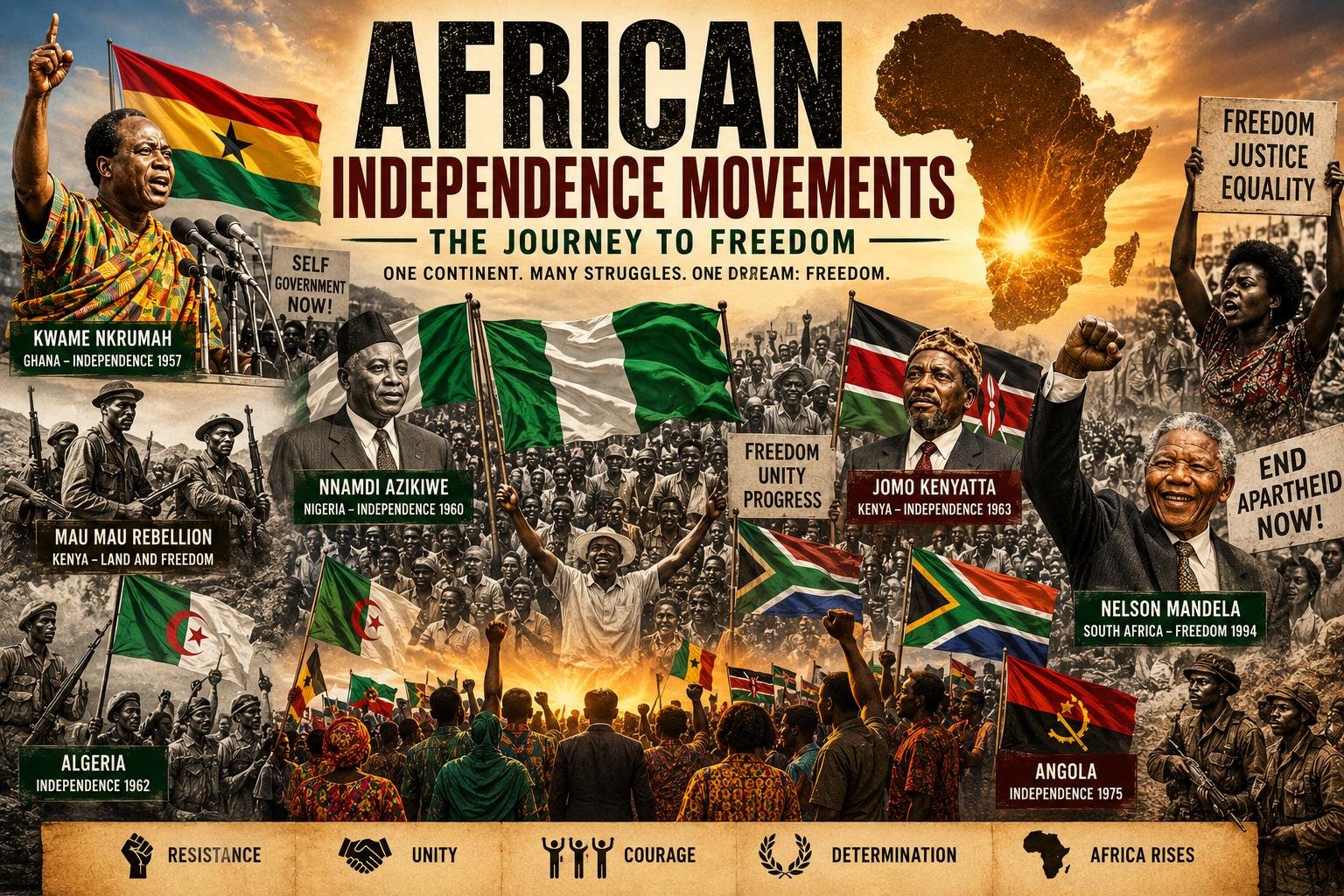
Ghana: The first country in Sub Saharan Africa to break away from colonial rule.
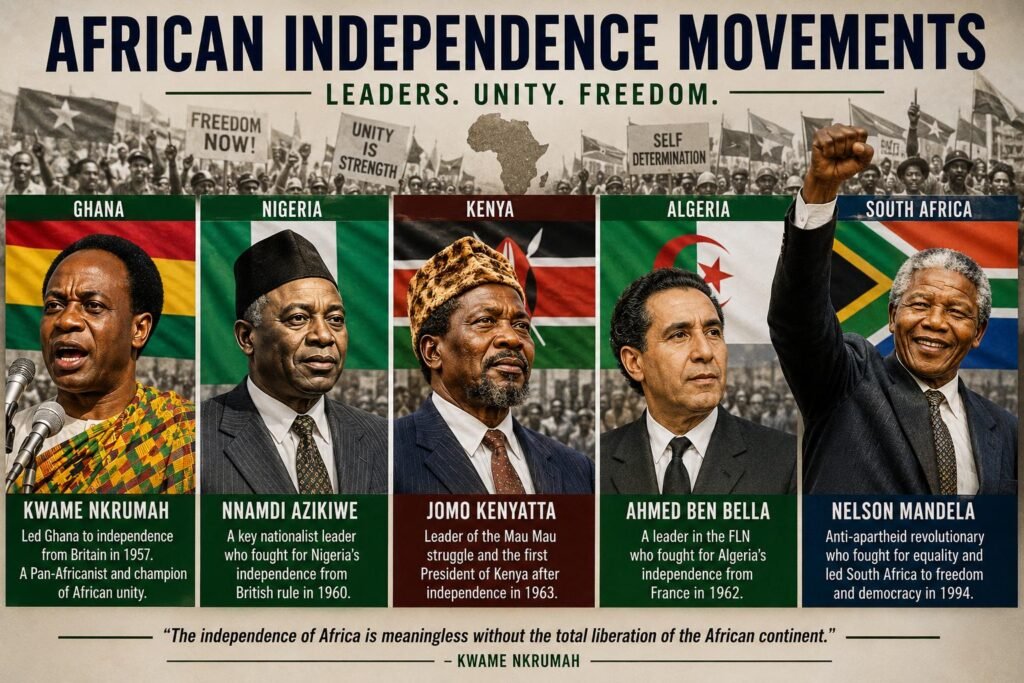
Ghana emerged as a symbol of hope for the African liberation movement when in 1957 it achieved independence from Britain. What was once known as the Gold Coast at that time, Ghana’s independence was spearheaded by Kwame Nkrumah.
Nkrumah established the Convention People’s Party (CPP) and organized large scale protests, strikes, and campaigns for self-rule. He put forth the slogan “Self-government now” which inspired many in Africa.
In 1957, black Africa saw the birth of Ghana when it left the colonial stage; this served as a spur for liberation movements in other nations also in the South of the Sahara such as Nigeria, Kenya and Tanzania.
Nkrumah also worked towards African unity and supported anti-colonial efforts across the continent.
Nigeria’s Path to Independence
Nigeria attained independence from Britain in 1960 on October 1. Nigerian nationalism developed over time through political action, reform of the constitution, and talks.
Important to note that nationalist leaders played key roles in the struggle, leaders like; Nnamdi Azikiwe, Obafemi Awolowo, and Ahmadu Bello. Though they represented different regions and political interests the common goal of these leaders was to put an end to colonial rule.
Nigerian press and political groups were the main players in the spread of nationalist ideas. Although we had peace at independence, regional issues later played a role in political instability which in turn saw military takeovers.
At the same time of Nigeria’s independence which was a great turning point in African history and inspired neighboring colonies.
Kenya and the Mau Mau Rebellion
Kenya saw some of the most vigorous anti-colonial struggle in Africa. British settlers had taken over large tracts of the best land from native communities which included the Kikuyu.
In the 1950’s the Mau Mau movement saw the rise of an armed struggle against colonial rule and the issue of land dispossession. Tens of thousands of Kenyans took part in guerrilla war despite the very severe repression by the British authorities.
Jomo Kenyatta became the preeminent symbol of Kenyan nationalism although he spent much of the time in prison during the revolt.
After a long series of fights and talks, Kenya achieved independence in 1963 which saw Kenyatta take up the role of the first president. The Mau Mau revolt showed the world African’s desire to take back their land and political rights.
Algeria’s Violent War for Independence
Algeria was a site of very bloody anti colonial war between 1954 and 1962 which they waged against France.
The FLN organized an armed struggle and got out to mobilize Algerians against French colonialism. In this conflict which included guerilla action, bombs, torture and mass kill events.
Millions of Algerians suffered in the war, yet the struggle put international focus on the issue which in turn put France under great pressure.
Algeria won independence in 1962 at the hand of the Evian Accords. That war became a symbol of anti-colonial struggle which played out in the rest of the world and which inspired African liberation movements.
South African Struggle against Apartheid
South Africa’s struggle was of a unique character as political oppression persisted even after we achieved independence from Britain. The apartheid system which put in place a separate development policy denied Black South Africans political rights.
The African National Congress which took up the resistance against apartheid. Among its prominent members was Nelson Mandela who spent 27 years in jail for his anti-racial oppression views.
International bans, protests, labor strikes, and internal resistance which did in apartheid. In 1994 South Africa saw its first free elections and Mandela became president.
South Africa’s shift marked the victory of justice, reconciliation, and democracy.
Liberation Struggles in Portuguese Colonies
Portugal held out in the decolonization process longer than other European nations. Thus many African former Portuguese colonies saw protracted wars for independence.
Angola
Angola broke free in 1975 from Portuguese rule which had lasted for a very long time. Groups like the MPLA pushed for our freedom, but what followed independence was a very destructive civil war.
Mozambique
Mozambique in 1975 achieved independence from Portugal at the hands of FRELIMO and its leader Samora Machel.
Guinea-Bissau
Guinea-Bissau won independence through armed struggle which was led by Amilcar Cabral who put forth ideas of education and national consciousness.
Women’s role in African Independence Movements
Women played a large role in liberation struggles which at times is not reported.
Women took to the streets in protest, also they gave refuge and info to resistance fighters, also they took part in demos, and were very much so political activists. In countries like Algeria, Kenya, Nigeria, and South Africa women played key roles in the struggle.
Notable women like Funmilayo Ransome-Kuti which saw out her life fighting colonial tax and injustice in Nigeria, and Winnie Mandela which was a force against apartheid.
Women played a role in which it was seen that independence was a struggle which all segments of the society were a part of.
The Role of Pan-Africanism
Pan Africanism fostered unity among Africans and those of African descent all over the world. Kwame Nkrumah and other leaders at the time thought that through unity African states could achieve greater success.
Pan African conferences brought in intellectuals, activists, and political leaders which were against colonialism and racism. At these meetings African countries put forward support for each other’s liberation struggles.
At the birth of the Organization of African Unity (OAU) in 1963 which saw the coming together of 54 African states at that time, we saw an intensification of continental cooperation which also included support for the still ongoing liberation movements.
Landmark Events in African Independence History
Several of which events saw the transfer of power to African hands:.
The Bandung Conference (1955)
Asian and African leaders at a summit in Indonesia discussed issues of anti-colonialism, economic cooperation, and international solidarity.
Ghana’s Independence (1957)
Ghana’s liberation gave hope to nationalist movements in Africa.
The Sharpeville Massacre (1960)
South African police put down peaceful protest which opposed apartheid laws which in turn drew global criticism.
The Year of Africa (1960)
In 1960 a total of 17 African countries achieved independence and that was the biggest year in the continent’s political history.
Formation of the OAU (1963)
African heads of state founded the Organization of African Unity for unity and support of liberation causes.
Political Impact of Independence
African nations transformed their forms of government.
End of Colonial Administration
African nations took over from European colonizers which in turn established independent governments.
Growth of National Identity
Independence brought out the best in African culture and identity, also our people got the chance to take part in the political process and national development.
Challenges of Nation-Building
Many at independence we saw many problems which included ethnic tensions, military coups, corruption and weak institutions. Also colonial boundaries which had brought together very different ethnic groups into the same states created political instability.
Rise of One-Party States
Some leaders put their power in a more concentrated fist and reduced political opposition which they presented as a step toward unity for development. In some cases this resulted in authoritarian rule.
Economic Effects of Independence
Independence had great impact on African economies.
- Control of Natural Resources: African countries increased their control of their resources and economic policies.
- Expansion of Education and Infrastructure: Many post-colonial governments put into place policies which saw the development of school, road, health and higher education infrastructure to improve quality of life.
- Dependence on Export Economies: Despite independence African countries still saw themselves as largely exporters of primary products which were oil, cocoa, copper, and coffee. These economies in turn were very much at the mercy of global price fluctuations.
- Foreign Debt and Economic Struggles: Some states dealt with economic issues which came about as a result of bad governance, corruption, civil wars, and debt. Colonial structural inequalities also played a large role in their issues.
The Continuing Legacy of African Independence
African independence movements is still at the forefront of modern politics and identity. We see the celebration of independence anniversaries which are held all over the continent as we pay tribute to past sacrifice and resilience.
African countries are at work on economic growth, democratic governance, regional cooperation, and social development. The African Union reports in that we are seeing greater continental unity and collaboration.
Today’s issues still see the value in what African independence movements stood for which includes in regards to leadership, unity, justice, and self-determination.
Conclusion
The 20th century saw the push for African independence movements which was a very important political change. In that which saw see many forms of resistance to colonial rule from across the continent, from protest to negotiation, intellectual activity and armed struggle. Also it was the put forth by nationalist leaders which inspired great numbers to stand up for what they felt was their right to freedom, dignity, and self-determination.
From the peaceful transition in Ghana to the violent upheaval in Algeria and the anti-apartheid struggle in South Africa we see that which issues were shared and which were unique played out. Across Africa’s independence movements we see how the continent was reformed politically, socially, and economically.
Although we saw great results from independence it also brought in its wake new issues related to good governance, economic development, and national unity. Also the bravery and perseverance which characterized African’s struggle for liberation, continues to be a source of inspiration to us today.
Through study of the struggle for independence in Africa readers see put into perspective the work of the freedom fighters and the lasting value of liberty, unity, and national sovereignty.
Get more well researched information about African Independence Movements here.