Introduction
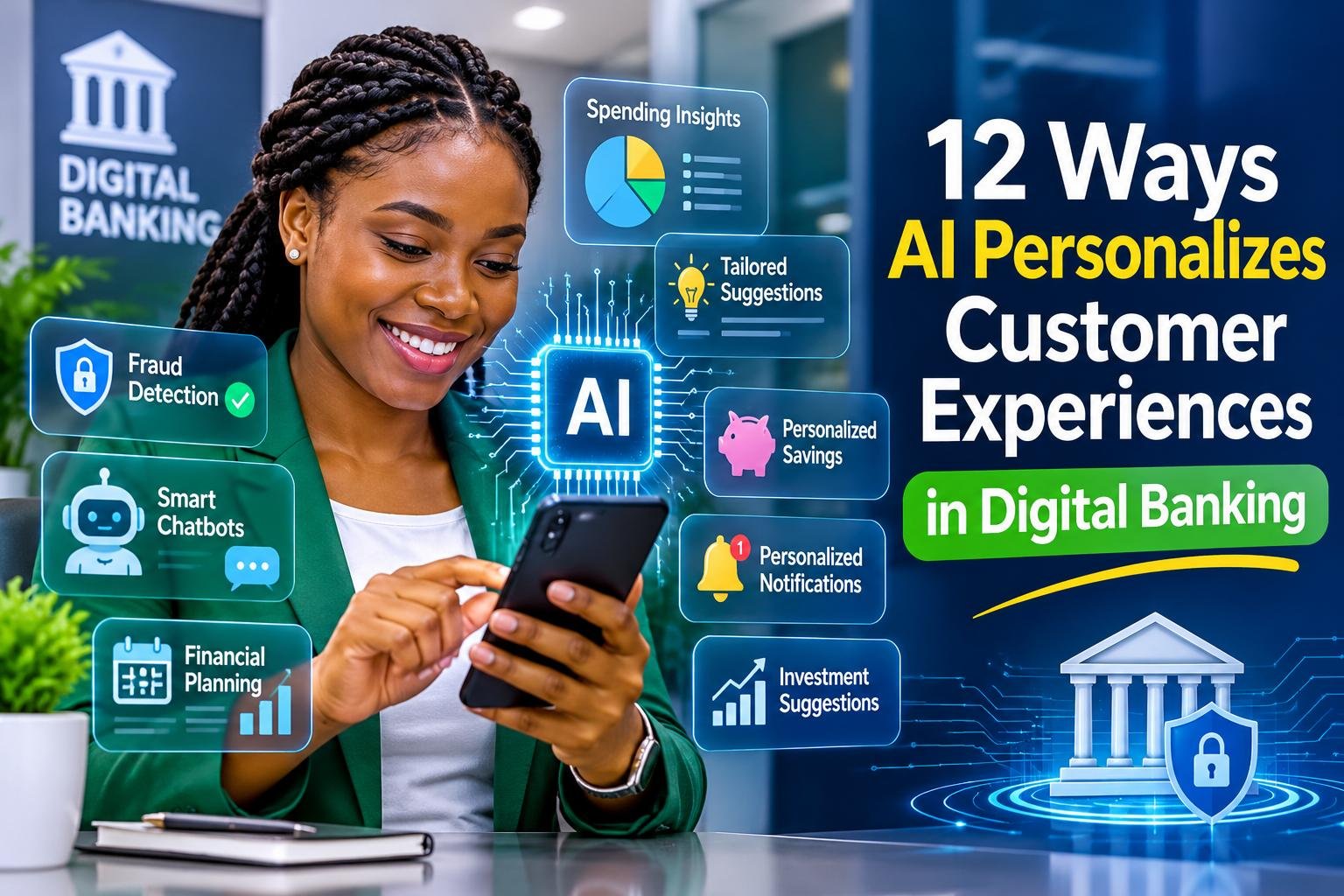
Using digital banking tools can make managing your money easier, more convenient and efficient. However, customers are now expecting more from their banks and to ensure they can tailor their banking to provide the best customer experience to suit the individual. By using artificial intelligence, banks can use the information and behavior of their customers to create a more personal service. Using machine learning, forecasting and smart automation, banks can learn what their customers need and predict what they will need in the future. From tailored suggestions to smart chatbots, here are 12 key reasons why artificial intelligence is creating a more personal customer experience in digital banking.
1. AI Spending Insights
Banks can understand how customers are spending their money by using AI to look at their spending history and habits. Machine learning can categorize your spending into categories such as groceries, transport, entertainment, medical and household. This provides customers with detailed insights on how they’re spending. If you tend to spend more than expected on entertainment, you’ll get notified that you’ve been spending more than usual and how you can manage your spending. You’ll gain a better understanding on how you’re spending your money and make more informed decisions. With AI integrated into your banking apps, you’ll receive useful information from your financial data.
2. Tailored Suggestions
Customers will have different financial goals and so general advice may not be helpful. By using AI, banks can provide tailored suggestions by looking at your income, spending habits, savings, account activity and goals. Your banking app can provide you with suggestions on how to save, budget, invest or cut back on unnecessary spending. For example, if you regularly keep the same amount in your current account, you may receive suggestions to move some of your money into a savings account to take advantage of the better interest rates. As the machine learning learns your changing behaviors, the suggestions you receive will be more relevant. This can help improve customer engagement and provide them with suggestions based on their real financial situation.
3. Predictive Assistance
With the use of AI, banks can identify any issues a customer may have before they contact customer service. By using previous complaints, transaction history, account activity and common issues, predictive systems can identify when you may need help. For example, if you regularly have failed payments, you’ll receive an early warning with advice on how to fix the issue. This can help reduce unnecessary frustration and allow the banks to assist their customers better. Using predictive customer support shows how companies can utilize their available information to understand what their customers may need. This makes assistance more convenient within your digital banking as you’ll receive the correct information at the right time.
4. Smart Chatbots
Chatbots powered by AI are improving the customer experience within digital banking. Instead of using basic automated systems, chatbots use natural language processing and machine learning to understand your question and provide a more conversational answer. You can ask questions about your account balance, transaction history, payments, cards and more. Some smart chatbots can also learn from your interaction history to provide more relevant answers and guide you through certain processes. For example, if you ask about an unsuccessful transfer, you’ll receive guidance on what you can do. Whilst complex or sensitive issues may still need a human, smart chatbots can provide fast, easy and more personal assistance.
5. Tailored Loan Offers
By using AI, banks can understand your borrowing needs and identify what customers may be eligible for. By looking at your income, repayment history, credit, commitments and other allowed information, machine learning can help provide more tailored loan decisions. For example, if you have regular income and a good repayment history, you may receive information about a loan that would be suitable for your financial situation. AI can also help banks identify what customers may need financing for. This could be for business growth, education or personal use. However, when providing tailored loans, banks should ensure they’re being responsible with their credit. They should explain the criteria for lending, ensure there isn’t any algorithmic discrimination and ensure they aren’t encouraging customers to borrow more than they can repay.
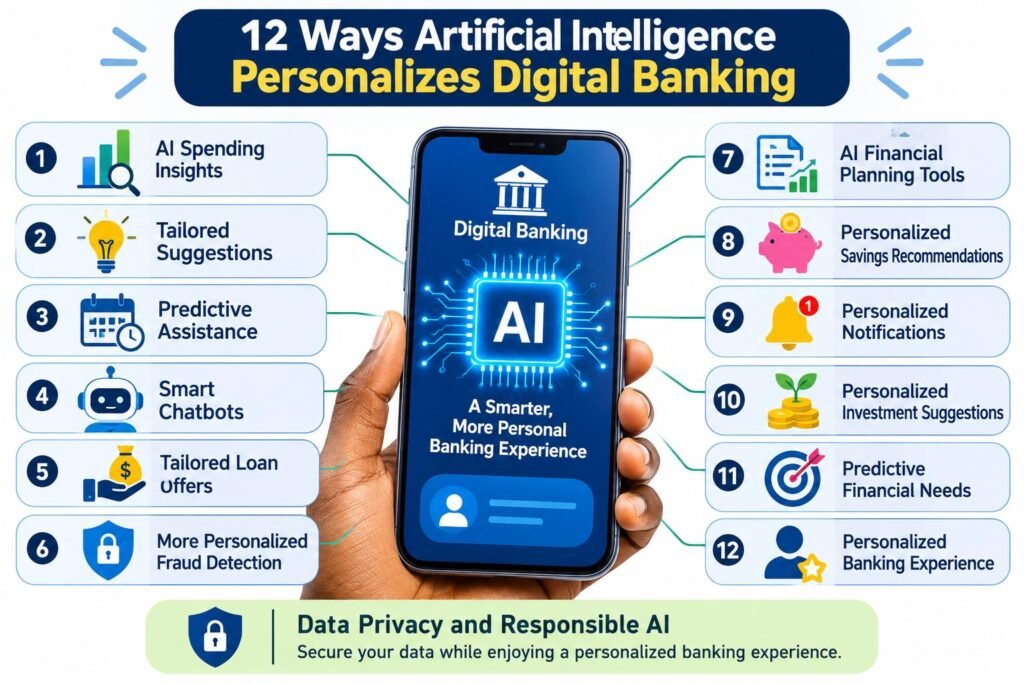
6. More Personalized Fraud Detection
Another key area AI can help improve the customer experience is with fraud detection. By using machine learning, banks can look at your transaction behaviors. This can include how much you usually spend, where you usually spend, how you pay and how often. If there is a significant difference in your usual activity, they’ll identify this as possibly fraudulent and add extra security measures. For example, if you usually make small payments at home but then try to make a large payment internationally, the bank might put a temporary hold on the payment. This can help banks provide more personal security measures. By identifying fraudulent activity quickly, this can help reduce financial loss.
7. AI Financial Planning Tools
AI financial planning tools can help customers plan their finances. They can look at your income, spending, savings, debts and regular commitments to help create a financial plan. For example, if you’re saving up for a house, you’ll receive suggestions on how much to save each month based on your income and spending. If you’re looking to cut down on debt, you’ll receive repayment suggestions based on your debts. Some tools can also provide scenario planning so you can see how your finances may change based on your spending. This can help those without access to financial advisors to plan their finances as the AI can calculate regular calculations.
8. Tailored Savings Suggestion
Traditional savings products can offer similar options. However, by using AI, banks can look at your account activity to suggest what you could save. For example, if you regularly have leftover money in your account after paying your monthly expenses, you may receive a suggestion to save a reasonable amount. Some platforms can also help with automatic savings by moving a small amount into your savings account when you meet certain criteria. Your suggestions can be changed depending on your income, spending and financial goals. This can encourage good financial habits by suggesting savings based on your situation.
9. Personalized Notifications
There are lots of notifications available on digital banking. However, this can cause customers to miss out on important information due to too many irrelevant notifications. By using AI, banks can provide more personalized notifications by looking at your account activity. By understanding your transaction history, preferences and previous interactions, banking systems can provide more targeted notifications. For example, if you’re reaching the end of your monthly spending limit, you’ll receive a timely budget notification. If you have a loan to repay soon, you’ll receive a personalized reminder. AI can also help identify what times you should receive notifications and reduce repetitive notifications. This can help make your banking more useful as you’ll receive information relevant to your banking.
10. Personalized Investment Suggestions
Banks and financial service providers are using AI to provide more personalized investment information. By looking at your financial goals, investment preferences, available funds and risk tolerance, AI systems can identify what investments may be suitable for you. For example, if you’re interested in building wealth long term, you’ll receive information about investment products that would suit your goals. Some customers may prefer to invest in products that protect their capital. Machine learning can also analyze market information to identify any changes that may impact your investments. However, these suggestions shouldn’t be seen as guaranteed returns and should only be used as a guide to help you make the right financial decisions. Banks should ensure they’re considering your situation, explaining any risks and ensuring your recommendations are suitable.
11. Predictive Financial Needs
AI can help banks identify what important financial needs you may have. For example, if you regularly receive increasing deposits from your business, you may eventually need additional business banking services. If you’re regularly sending money internationally, you may benefit from information about suitable foreign exchange services. Machine learning can identify patterns and help banks provide you with relevant products. This can make it easier to find new products as you won’t have to look through lots of options. However, banks should ensure they’re providing genuine suggestions.
12. Personalized Banking Experience
Customers often use multiple methods to interact with their bank. This can include mobile apps, websites, automated phone lines and visiting in person. By using AI, banks can provide a more consistent experience. By analyzing your interactions with your bank across allowed channels, you can continue using the services. For example, if you start using a service on your mobile app, you can continue using it on your website or with a customer service representative without having to explain the whole situation. AI can also provide a personalized dashboard on your app, showing you frequently used functions and relevant banking information. This can make banking more convenient as you’ll be able to access the services you need. By linking your digital interactions, banks can provide a more personalized experience.
Data Privacy and Responsible AI
Whilst there are many benefits of AI, banks need to be responsible with customer information to personalize their digital banking. AI uses information such as transaction history, income, account activity and personal preferences. If this information is not secured properly, customers may experience data breaches, identity theft or unauthorized access. Banks should ensure their systems are well encrypted, secure, have the right data storage policies and clear consent. They should also ensure they explain how they collect and use your information. Machine learning should also be regularly assessed to ensure they aren’t providing incorrect recommendations, unfair loans and algorithmic bias. It is important to have human involvement as AI can influence sensitive decisions. By being responsible with your AI, you can ensure personalization will improve the customer experience without affecting data privacy, security, fairness or trust.
Conclusion
Artificial intelligence is transforming digital banking by helping banks understand individual customer needs. By providing more relevant, convenient and responsive services, banks can predict what their customers expect. This includes spending insights, tailored suggestions, predictive assistance, smart chatbots, tailored loans, fraud detection and automated financial planning. This can help improve communication, smart savings and accessible investment advice. However, banks should be responsible with data to ensure personalization is working. By being transparent with your AI, and having regular human involvement, financial institutions that use intelligent automation whilst keeping customers safe will be in a better position to build stronger relationships.
Get more well researched information about AI personalization in digital banking here.