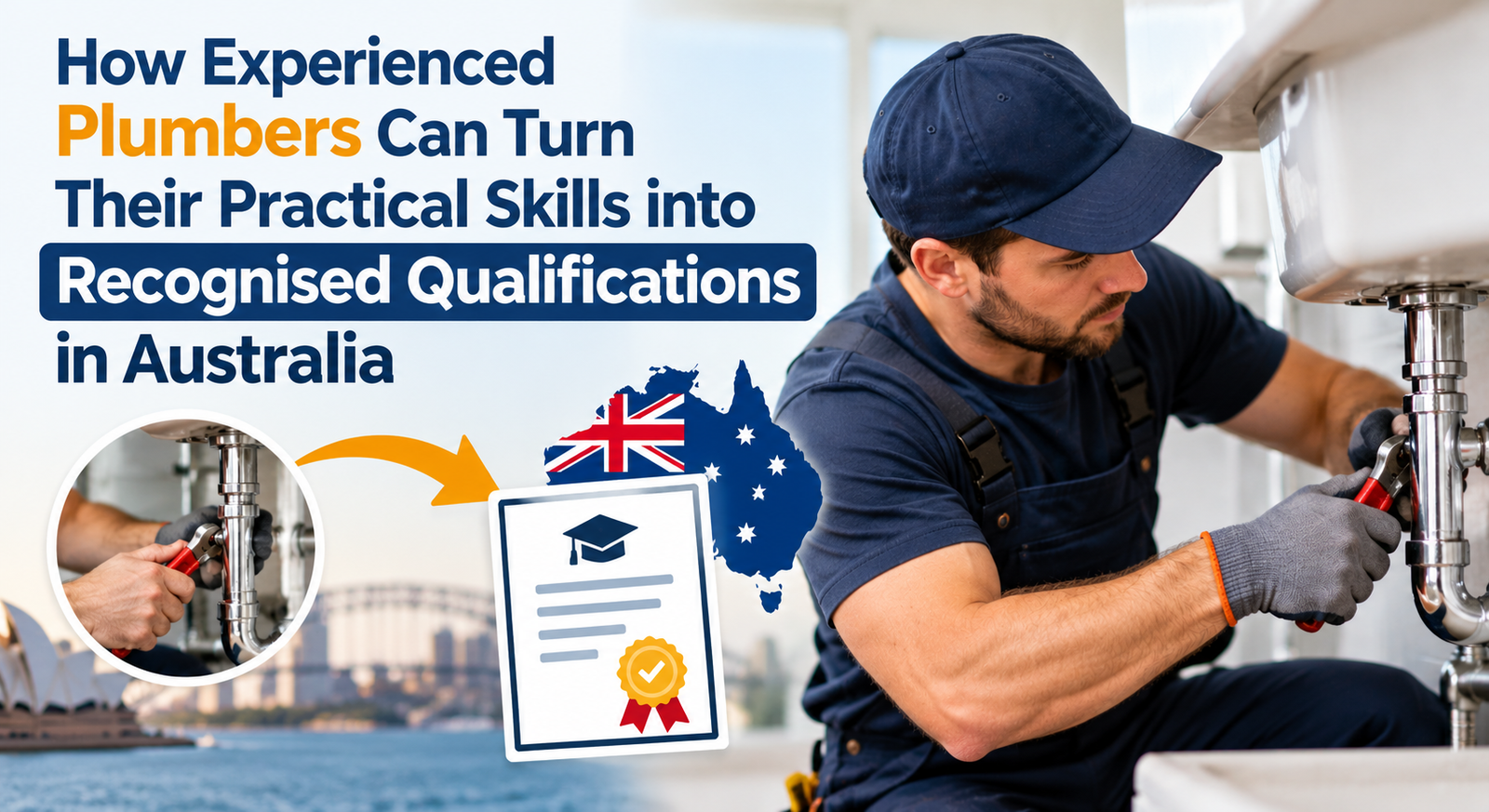
Plumbing is a practical profession that requires technical knowledge, problem-solving skills and hands-on experience. Many plumbers spend years working on residential, commercial and industrial projects, learning how to install systems, identify faults and complete different types of plumbing work.
However, practical experience and formal qualifications are not always the same thing. Some experienced plumbers may want to have their existing skills formally recognised, while others may wish to take the next step in their careers.
In Australia, there are pathways that help eligible workers have their existing skills assessed and explore suitable qualifications. Understanding these options can help plumbers make informed decisions about their professional future.
Why Are Formal Qualifications Important for Plumbers?
Practical experience is valuable in the plumbing industry, but formal qualifications can also play an important role in career development. They help demonstrate that a person has achieved specific skills and knowledge against recognised industry standards.
Depending on the qualification and the individual’s career goals, further training may help plumbers develop their knowledge of technical requirements, workplace safety, project planning and regulatory responsibilities.
Formal qualifications may also be relevant for people who want to take on additional responsibilities, work towards a supervisory role or explore opportunities in plumbing project management.
However, the qualification required will depend on the type of work, the individual’s existing credentials and the licensing rules that apply in their state or territory.
What Is Recognition of Prior Learning (RPL) in Plumbing?
Recognition of Prior Learning (RPL) is an assessment process that considers the skills and knowledge a person has gained through previous work, training and other relevant experience.
For an experienced plumber, RPL may provide a way to have existing competencies assessed against the requirements of a relevant Australian qualification.
For example, a plumber who has worked on multiple projects may already have experience in installing plumbing systems, interpreting technical drawings, identifying faults and following workplace safety procedures.
Through an RPL Plumbing pathway, eligible applicants can have their existing skills assessed by an appropriately authorised training provider. The assessment helps determine whether their experience meets the requirements of the relevant units of competency.
It is important to understand that RPL is not an automatic qualification. Applicants must provide suitable evidence, and an assessor must determine whether that evidence meets the required standards. Additional training or assessment may be necessary if there are gaps in the applicant’s existing skills or knowledge.
What Evidence May Be Required for an RPL Assessment?
The evidence required will depend on the qualification and the applicant’s work history. The purpose is to demonstrate that the person can perform the relevant tasks to the required standard.
Common examples of supporting evidence may include:
- Employment records and references from previous employers.
- Details of plumbing projects completed.
- Work samples, photographs or project documentation.
- Existing trade qualifications, training records or certificates.
- Records of relevant duties, responsibilities and practical skills.
Applicants should provide genuine and accurate information. Evidence must reflect their own work and experience.
An assessor may also ask questions, conduct practical assessments or request further information to confirm the applicant’s competency. Preparing relevant documents before applying can help make the assessment process clearer and more organised.
Is Certificate IV in Plumbing a Suitable Option?
The Certificate IV in Plumbing and Services is a qualification that may suit experienced plumbing professionals who want to develop their technical knowledge and take on additional responsibilities.
The CPC40920 Certificate IV in Plumbing and Services includes different pathways, such as plumbing operations and hydraulic services design. The subjects covered depend on the chosen pathway and can include interpreting plans and specifications, understanding regulatory requirements, estimating and costing work, and managing workplace risks.
For suitable candidates, this qualification may support professional development in areas such as technical planning, project supervision or hydraulic design.
However, it is important to check the specific course requirements before applying. Entry requirements differ between pathways, and an applicant’s previous qualifications and experience will affect their available options.
A Certificate IV qualification should also not be confused with an automatic plumbing licence. Licensing requirements vary across Australian states and territories, and additional qualifications, experience or assessments may be required.
Can Overseas Plumbers Have Their Skills Recognised in Australia?
Plumbers who gained their experience or qualifications overseas may need to follow a specific assessment and licensing pathway before undertaking regulated plumbing work in Australia.
The process depends on their existing qualifications, work experience and the state or territory where they intend to work.
For certain overseas-trained plumbers, a skills assessment through the relevant approved pathway may be required. This can involve demonstrating technical skills, completing Australian-context gap training and meeting supervised work requirements.
Overseas work experience can be valuable, but it does not automatically provide permission to perform all types of plumbing work in Australia. Applicants should check the requirements of Trades Recognition Australia and the relevant state or territory licensing authority before making decisions.
Understanding these requirements early can help applicants identify the appropriate steps towards having their skills assessed and meeting local industry standards.
How Can Plumbers Choose the Right Qualification Pathway?
Choosing the right pathway starts with understanding your current skills, qualifications and career goals. Before enrolling in a course or applying for RPL, consider the following steps.
1. Review your existing experience
Make a list of the plumbing tasks you have performed, the projects you have worked on and the responsibilities you have handled.
2. Check your current qualifications
Gather your certificates, training records and employment documents. These can help determine which assessment or training options may be suitable.
3. Understand the qualification requirements
Review the units of competency, entry requirements and evidence needed for the qualification you are considering.
4. Speak with a suitable training provider
An experienced training provider can explain the assessment process, discuss your eligibility and help you understand whether RPL, further training or a combination of both may be appropriate.
5. Check licensing requirements
If your goal is to carry out regulated plumbing work, supervise others or operate a plumbing business, confirm the relevant licensing requirements with the appropriate state or territory authority.
Taking these steps can help you avoid choosing a pathway that does not match your professional goals.
How Pentagon Consultancy Can Help
Understanding Australian qualification pathways can be challenging, particularly for people with years of practical experience or qualifications gained overseas.
Pentagon Consultancy provides information and guidance for people exploring skills recognition and vocational qualification options. By understanding an applicant’s existing experience and career objectives, the next steps can be considered more clearly.
If you are exploring RPL or considering a Certificate IV qualification, you can contact Pentagon Consultancy to discuss your circumstances and learn more about the available options. Eligibility, assessment requirements and outcomes will depend on the relevant qualification and the applicant’s evidence.
Before making a decision, ensure that you understand the course requirements, assessment process and any separate licensing obligations that may apply to your intended work.
Final Thoughts
Years of practical plumbing experience can provide a strong foundation for further professional development. However, it is important to understand how that experience can be assessed against recognised qualification requirements.
RPL may help eligible plumbers demonstrate existing competencies, while a Certificate IV in Plumbing and Services may offer further technical learning for those who meet the relevant entry requirements.
By reviewing their experience, gathering suitable evidence and checking the applicable qualification and licensing rules, plumbers can make better-informed decisions about their next career step. Seeking guidance from a suitable training provider can also help them understand the pathway that best matches their individual circumstances.