
Introduction
There’s a wealth of data generated by businesses, hospitals, financial institutions, education institutions, and technology companies, every single day. It’s derived from customer transactions, websites, mobile apps, social media, digital payments, industrial equipment and more. Data can offer great insights, but there is so much of it, and it’s so complicated, that people can’t read it all by hand. Data mining is therefore used by organisations to find meaningful patterns, relationships and trends that can be used for informed decision-making. In the past, data mining has been done using statistical techniques, database queries and predetermined data mining algorithms and rules to extract useful information from the collected data.
But with the advent of Artificial Intelligence (AI) and Machine Learning (ML), these are drastically increased. Modern systems are able to process complex data sets and uncover relationships that are not obvious, detect unusual activity, and forecast potential future events and trends. The essence of these developments is that data mining is becoming more intelligent, moving from the retrospective to a more understanding style of doing business that can help make organizations more aware of the situation, anticipate changes, and enhance their operations.
Data Mining, Artificial Intelligence and Machine Learning are concepts that students must grasp.

Data Mining, Artificial Intelligence and Machine Learning
What is Data Mining?
Data mining is the practice of extracting patterns, relationships, trends and oddities from large quantities of information. It integrates techniques of statistics, computer science, database management and machine learning to make sense of raw information to knowledge that people and organizations can use. A supermarket might look at transaction details and identify the common items bought together by customers, for instance. A bank might study payment records to look for strange or unusual payment patterns, and a hospital might look at patient records to see if there are patterns related to specific health outcomes.
Some other classic data mining methods include classification, clustering, association rule learning and regression. Classification sorts records into one of a set of predefined categories; clustering binds together groups of similar records; association analysis uncovers relationships between items; regression models estimate numerical values. These still count as important because they lay the groundwork for comprehending data and making inferences based on it to make decisions. But traditional methods can be difficult to adapt to data sets that are extremely large, frequently change, and have complex data that requires a more flexible approach.
What is Artificial Intelligence?
Artificial intelligence is defined as a computer system that can make recommendations, learn from examples, interpret language, and recognize patterns, which are tasks normally associated with human intelligence. AI in data mining facilitates automated data analysis and aids in uncovering patterns that might be hard to detect by hand. Some AI systems are not strictly programmed to execute any specific instructions; instead, they can adjust their analysis based on the patterns identified in the data. For instance, an intelligent retailing system can analyze the buying history, customer interactions and product information to define groups of customers with similar interests.
AI can help a manufacturing company to monitor the status of their equipment and detect early signs of potential problems. AI can also integrate multiple analytical methods to handle structured data, like spreadsheets, with unstructured data like emails, documents, photos, and customer reviews. AI enhances data mining by extending the data that it can analyze, which can lead to more detailed insights and ultimately be of more benefit in real-world decision making.
What is Machine Learning?
Machine learning is a subset of artificial intelligence, which allows computer systems to identify patterns in data and apply them to make predictions or decisions. In contrast to programmers having to write all possible conditions, machine learning algorithms “learn” from examples and make inferences on new examples that are presented to them. There are various categories of machine learning. In supervised learning, the algorithm is given training examples with known classes or numerical values to forecast the class of an unseen example or numeric value. Unsupervised learning is useful for clustering and finding patterns in the data when the data does not have labels or categories.
Reinforcement learning is the learning through feedback from the action and the consequences of the action, but it is not as commonly known as conventional data mining for sequential decision-making and control. Machine learning, when applied to data mining, can enhance the analytical system’s capability to detect patterns, predict future events, and detect anomalies. The performance of these systems relies on the quality of training data, the applicability of the algorithm(s) to the problem, and the assessment methodology.
How AI and Machine Learning Are Revolutionizing Data Mining
1. Automated Pattern Recognition
Automated Pattern Recognition is one of the most significant applications of AI and machine learning in data mining. Typical analysis involves experts using a specific set of rules and/or queries to isolate certain relationships to study. While these techniques are still useful, they may miss out on more complex patterns in large datasets. Machine learning algorithms can process a wide range of variables at once and find patterns that may not be easily discernible at first glance. An Internet retailer, for instance, could examine the shopping habits, transaction logs, product searches, and customer reactions to promotions of its users. An AI-powered system might be able to categorize customers who are buying different products, but exhibit similar purchasing patterns.
The results of these findings may provide insight for the retailer into the interests of its customers and make better suggestions for the products they may wish to purchase. In manufacturing, pattern recognition can detect the patterns of temperature, vibration and pressure readings that correspond to equipment issues. In conclusion, automated pattern recognition can help organizations identify patterns that might not have been noticed otherwise, and can also help to cut down on the need for manual inspection. However, patterns identified must also be examined closely since if there is a relationship between two variables, it doesn’t necessarily mean one causes the other.
2. Prediction and Forecasting
Predict in large part what we are seeing from machine learning. We are no longer to focus only on past events, instead we use past and present data to do that. Businesses are using these models for demand forecasting, customer retention, inventory planning, financial risk analysis, and equipment maintenance. For example a retailer may look at past sales, seasonal trends, promotions, and purchase trends to put together a plan for what they will need in the coming weeks. A telecom company can look at customer activity, service outages to predict which customers may leave.
What we see is that companies are able to prepare for what may come. Also AI is able to use info from many sources to improve the prediction, of course if that info is relevant and reliable. That said these are not set in stone. We may see economic changes, new competition, supply issues, and customer preference shifts which will make past trends a less reliable indicator. So businesses should see these models as support tools for decision making, to check in on forecasts with how the real world plays out and to update the models as the environment changes.
3. Smart Anomaly Detection
Anomaly detection is a practice which identifies out of the ordinary instances that stand out from what is the expected trend. These anomalies may point to issues like errors, equipment failure, suspicious transactions, cyber security incidents or other problems which require in depth investigation. Presently many systems which are put in place use pre determined thresholds which may include reporting of a transaction if the value is over a set figure. While simple rules which are put in place are effective for known risks, they also have the tendency to overlook atypical actions that don’t go past those set thresholds. Machine learning is an option that improves this by which the system learns what is typical behavior from past data and then reports what is out of the ordinary which needs attention.
For example a financial organization may put in place an anomaly detection tool that flags transactions that break from a customer’s routine spending or are out of sync with other transactional variables. In manufacturing settings sensors provide continuous reports on machinery performance which in turn the models use to see at which points we may have atypical changes in vibration or temperature that may mean that there is a fault developing. AI can also help companies to put these alerts into perspective and respond faster. At the same time an anomaly is not a sure sign of bad faith or system wide issue. That atypical event may be a legitimate outlying case so it is important for organizations to look into the alert before going ahead to make big decisions or take action against an individual.
4. Language and Text Processing
A large degree of what is valuable in the business world is contained in text as opposed to what is put into structured databases. Customer reviews, support correspondences, emails, survey responses, reports, and social media posts present opinions, needs, complaints and emerging trends. In the field of AI known as natural language processing which is focused on the understanding and processing of human language we see organizations extract value from these sources. NLP techniques are able to classify documents, determine key topics, identify named entities, sum up text and determine the sentiment of customer feedback. For instance a company may analyze thousands of product reviews to see which issues are brought up most often, delivery delays, product reliability, price, or customer service.
Instead of going through each review themselves analysts may use these results to identify main issues and which improvements to make. Also a customer support team may put in place an automatic system which sorts in coming messages into the right teams. We also see that large sets of documents may be looked at and questions asked of their content. That said, language analysis may miss out on sarcasm, cultural references, ambiguity and context dependent meaning which is why human review is still very much a requirement when the results will be used for big decisions.
5. Better Intelligent Data Analysis
AI also has a role in how we see and present data. In the past, it was a requirement for users to know about database queries, statistical methods, and special software in order to look into complex issues. AI assisted analysis tools which are now available do the data prep part for you, put forth visualization ideas, bring to light atypical changes, and they also put into words what the stats are saying. Also some of these tools allow you to ask in plain language and get back reports based on what the data says. For example a sales manager may ask why revenue went down in a certain region. What may happen is the system puts together a report which looks at sales across products, customer groups, locations, and time over which the decline happened to put forth possible causes.
This makes data analysis a lot more approachable for people that do not have an in -depth tech background. Also AI may bring to the fore questions which may not have been in the original analysis plan. But also it is important to note that auto generated explanations may not always be accurate and the system may report associations as causations. Also at times it may leave out important business context. It is up to the analyst to check the math, look at the data which the report is based on, and make sure that the results reported are in fact supported by that data before using them to make large scale decisions.

Real-World Applications of AI-Powered Data Mining
1. Getting to Know Our Customers’ Choices and Actions
Retailers and online stores use data mining to determine what customers are after, how they shop, and which products they may be interested in. By looking at purchase history, what products they browse, what they search for, customer feedback, and response to promotions, machine learning systems are able to identify trends and put customers into groups which share similar traits. These insights in turn support personal recommendations, target marketing, product development and customer retention. For instance an online book store may note that people who buy intro to programming books also at the same time are looking at software development guides.
The company may then use this info to put forward related products to interested shoppers. A grocery store may find that purchase of certain products goes up at certain times of the year or around holidays which in turn allows them to change up stock and promotion plans. Also via AI powered data mining companies are able to see how preferences are changing by comparing present behavior to what is in the past. Still out of all this, companies must respect customer privacy, collect info properly and not make invasive assumptions. Recommendations should be relevant and useful instead of based on extensive data collection or very personal information.
2. Identifying Fraud and Suspicious Transactions
Financial institutions report on very large volumes of transactions which in turn makes it hard to review each one by hand. We see that AI in data mining plays a role in identifying suspicious actions by looking at transaction amounts, locations, timing, device info, account history and other related features. Also we have machine learning models which learn from past investigated transactions and put together what is normal and what is not in terms of fraud. For example a bank may flag a payment which is very different from what is typical for that account’s past activity or which is part of a set of transactions which in the past indicated something fishy. The system also puts out risk scores which in turn direct investigators to the transactions that require more in depth look.
Also we see that these same methods are used to identify accounts which may have been taken over by bad actors and to spot atypical action across digital payment systems. The primary benefit is that this type of analysis scales which in turn is beyond what we could do with manual review. But of course fraudsters are always looking to outsmart the system which means models have to be constantly watched and improved. Also we see that there is the issue of false positives which in turn means financial institutions have to have in place the right review processes to not block out good transactions or make our customers’ lives difficult.

3. Demand Planning and Inventory Control
Accurate demand forecasting allows companies to determine what stock to order in what quantities and when to reorder supplies as well as how to best put products within their various locations. In the past we have seen that which variables are used in forecasting include historical sales average performance, seasonal trends, and basic stats. What machine learning does is take it a step further by looking at a greater number of variables which may include weather, promotion campaigns, local events, price changes, delivery schedules and large scale market trends. For example a grocery retailer may look at sales data and seasonality to determine demand for certain food products at each of their stores.
A distribution company may look at order history and transport data to see when they will see increases in order volume. From this info they are able to better reduce out of stocks, get rid of excess inventory and improve the availability of what the customer wants. Also demand forecasting is very useful when you have many products, many suppliers and many locations to manage at the same time. At the same time though the system is only as good as the data put into it and it is not going to be able to predict everything. Supply issues, sudden price changes and customer behavior that is out of the ordinary may reduce the accuracy of demand forecasts. Companies should use model results in conjunction with present operational info and the know-how of staff that is familiar with local market conditions.
4. Improving Production Efficiency in Manufacturing
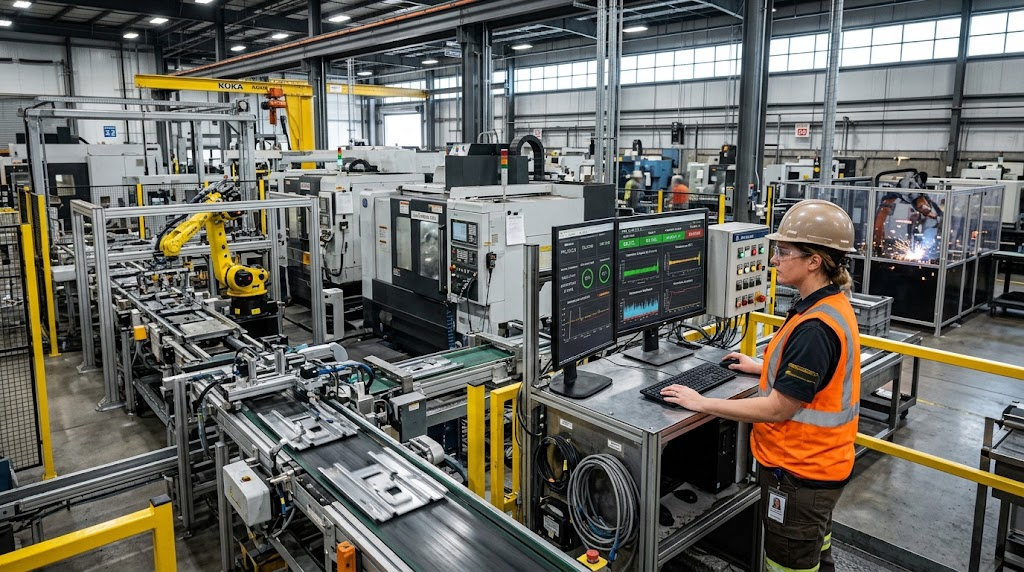
Manufacturers turn to data mining of production records, sensor reports, equipment performance, quality metrics, and maintenance reports. AI and machine learning in this role can present trends related to defective products, production delays, high energy use, or asset wear out. One key use case is in predictive maintenance, where models look at equipment data to determine if a machine will need service soon. Instead of a breakdown occurring first or a component being replaced on a set schedule, a manufacturer can look at warnings from the system and plan when to perform maintenance.
For example, out of the ordinary changes in vibration or temperature readings may indicate that industrial equipment is not performing as expected. Also AI can help to find out what production variables have high defect rates, thus giving engineers a chance to look into and improve manufacturing processes. This has the effect of reducing unneeded downtimes, improving product uniformity, and supporting more efficient resource use. But manufacturers must see to it that sensors are properly calibrated, data is accurate, and that alerts are taken in the right way. Human technicians still play a large role as they look at the physical state of things, interpret the operational context, and also check that the systems’ advice is workable.
5. Supporting Health and Medical Research
Healthcare systems produce large sets of data via patient charts, lab reports, diagnostic images, drug history and public health reports. AI enabled data mining can be useful in getting out of this data in terms of disease monitoring, which supports the design of clinical research, input in resource allocation and study of the effects of different treatments. Also, it may happen that researchers study very large groups of anonymous medical reports to look at what is the relation between certain inputs and health issues. Also we see hospitals looking at past trends in patient traffic in order to better predict service use and put together staff schedules. In the case of radiology research, machine learning may put forward features that require the attention of the senior professionals.
This in turn may help specialists in the processing of info and also in the posing of questions for a more in depth look. But also health care data can be very much of a mixed quality. It may be missing some info, may not be consistent across the board, or may not be a true reflection of what is going on in the larger population. A model based on data from one health center may not do the same in another. Also we have to pay attention to patient privacy, we need proper governance, clinical validation and professional supervision. At best AI should support the health care professional’s decision making which should remain the main player.
Key Benefits of AI-Powered Data Mining
- Faster Analysis and Greater Scalability
One of the primary benefits of AI in data mining is that it does better at processing large scales of info than what we see in manual analysis alone. As companies collect data from the web, digital transactions, sensors, applications, and operational systems the volume of that info can quickly outgrow what the staff can look at individually. Automated systems are what do that heavy lifting: they identify trends, present alerts and make predictions at scale. This in turn reduces the time it takes to get answers to business issues and allows staff to focus on analysis and decision making.
For example a telecom company may run continuous analysis of network performance data to identify growing issues with service, while a retail company may use the tech to constantly update product recommendations based on new customer interaction. Also fast analysis may improve response to changes in the environment. But also it is important to note that fast analysis does not equal accuracy or relevance of results. Companies must also determine what info is relevant, which analysis methods to use, and to check out the results before they act on them.
- Better Decision-Making and Personalization
AI which is at the wheel of data mining may put at the disposal of companies info which are based on facts as opposed to what was before which was to base on assumptions or intuition. By out of the wood of customer behavior, operational performance, and market conditions these systems put forth info that support planning and priority setting. In which customers are used for segments businesses may put together more relevant marketing campaigns, do demand forecasts which in turn will inform inventory, and do anomaly detection which in turn will zero in on atypical activities. Personalization is also a pro because recommendations may be based on trends in customer interest and past interaction.
For example an online learning platform may suggest material related to what a student has in the past looked at. Also that personalization has to be done in a transparent and private user friendly way. Also into play must go issues that are not yet in the data which includes change in preference, individual situation, and external events. When put with professional experience and well defined business goals AI which is in the data mining game may improve decision making although it is not a replacement for human input.
- Discovering Hidden Relationships and New Opportunities
Traditionally our analysis starts with a research question but AI presents an opportunity for companies to look at their data for what may not have been the primary things we are looking for. Clustering, association analysis, and anomaly detection put forth relationships between products, customer groups, business processes, and performance indicators. What we find may in turn present new research questions or improve upon what we are doing. For example a retailer may find that which stage in the delivery process is delayed is related to higher customer complaints. A manufacturer may see a set of machine running conditions that often go together which in turn may point to quality issues.
An educational institution may look at what student enrollment patterns play a role in course drop out rates. Such results may in turn make us go back to the drawing board to look at root causes, improve what we are doing and develop better solutions. But also these may just be early indicators which may or may not stand up to more in depth analysis. Analysts must validate what they find in other data sets, think of other variables that may be in play, and determine if what we are seeing is in fact a real issue in the field.
Issues and Limitations of AI in Data Mining
1. Data Quality and Accessibility
The quality of data very much plays a role in how well AI and machine learning systems perform. We see that in datasets which have missing values, duplicate records, inaccuracy in data collection, inconsistent formats, or are out of date which in turn leads to unreliable results. For instance a demand forecasting model which is trained on in complete sales data may report lower customer demand than what is actually present, also a fraud detection system which uses poor quality labeled transactions may have difficulty in telling the difference between suspicious activity and normal payment traffic. Also data collected from various systems may have different definitions or methods of measurement which in turn makes it hard to do apples to apples comparisons.
What I’m saying is that companies should put in place processes for data cleaning, validation, documentation, and maintenance before they put faith in the results of automated analysis. Also they must think through if what is available is truly representative of the population or business issue at hand. It is not the case that more data is always better, in fact it may be worse if that data is irrelevant, of poor quality, or not a true representation of what is going on. Good data governance is what will help organizations to run reliable data sets and at the same time be aware of the limitations of the info which goes into making predictions and recommendations.
2. Model Performance and Dependability
In the case of a fraud detection model which for instance has to put into play its skill at identifying suspicious transactions against the issue of false alarms which may cause inconvenience to customers.
Also through careful evaluation organizations are able to determine what models best serve their intended purpose.
3. Algorithmic Bias and Equity
AI systems do not replicate or amplify biases which are present in their training data, design choices, or within the decision making which surrounds them. If past records show unequal treatment or the underrepresentation of certain groups, a model may present different results for those groups. For instance a company which uses biased historical customer data may develop target practices which unfairly leave out certain communities from promotions or services. Also in other settings biased predictions may play a role in which applications are put forward or how resources which are limited are doled out.
To address these issues it is not enough to remove what may appear to be personal identifiers, other variables may still put forth sensitive info. What they should do is look at how data was collected, see that important groups are well represented in it, and to test model performance across related populations. Also they should put in place processes for looking into complaints, investigating unexpected results, and fixing unfair results. Human input is very much a part of the picture when AI is used to make large scale decisions which affect individuals. Responsible data collection requires that organizations think of fairness in addition to accuracy, efficiency and commercial goals.
4. Privacy and Information Security
AI based data mining may include private info of customers, employees, patients, or business operations. Although from this info we may get useful results, the collection and analysis of it also brings in issues of privacy, security and proper use. Orgs must identify if they have a right to collect that info, which users are allowed access to and also secure storage of that data against breach. Also they should avoid collecting personal info which is not required for the analysis at hand. When appropriate de-identification, aggregation, and privacy protective measures can be used which while they don’t completely remove risk do reduce it.
Also businesses must pay attention to what the privacy laws say regarding the sharing of info with service providers. Also very important is to have in place good governance policies which detail out who has access to what data, for how long that data is kept and what the use of analysis results will be. Without these in place a very useful data mining system may end up damaging customer trust and also leave the org open to legal, financial, and reputational issues.
5. High Prices and Technical Issues
Implementing AI in data mining may see great demand for computing resources, software, data infrastructure, cybersecurity, and also for special personnel. We see that in practice data engineers do what is required for info prep, analysts which they look at business issues and machine learning specialists for model development and maintenance. Also we see that integration of analytic systems into present databases and operation software is a challenge which is great when info is to be had in different incompatible platforms. Also we note that smaller companies may not have the resources to build very complex systems in house.
In those cases cloud based analytic services or simple machine learning tools may present a better start. Companies should put forward well defined issues to be solved and also to determine if the benefits which they expect will in fact cover the cost. Also they should include in their budget for continuous expenses which include monitoring, software updates, staff training and data maintenance. Also out of fashion should go AI which is adopted just for the trend. The very best implementation is that which is for a real issue, fits the company’s resources and which reports out that it does in fact improve on present methods.
6. Reduced Transparency and Overuse of Technology
Some complex neural networks in particular do a great job at what they do but often in a black box which is not at all black and white for us to see through. We may see the correct outcome but we don’t get the why from the model’s point of view. That causes issues for organizations which are trying to put forward decisions, to look into errors, or to prove out fairness in their processes. Explainability methods are a step in the right direction to see what went into a prediction but also a stop at that they do not fully paint the picture as to how the model really came to that conclusion. Also into this is the issue of overreliance on tech.
We see that employees will take the computer’s word for it without question especially when it puts out info in a very certain way or does so at a rate which outpaces our own human review. To fix these issues organizations must put in place documentation of the model’s shortcomings, provide relevant training to staff, and put in place clear human review procedures. Also key is that important decisions are made by people who can put in that human element the system may have left out. At the end of the day AI is a tool to augment human analysis not to take the place of critical thought.
Best Practice Approaches to AI-Powered Data Mining
Organizations may see an increase in the value of AI in data mining by way of a structured approach to implementation. First off, they put forth a very specific issue which the program will address like reducing inventory outages, detecting atypical transactions, or analysis of customer care issues. With a well defined goal it is also easier to choose which data to use and to determine the success of the project. Also, companies should look at what data they have, how good it is and how relevant it is to the issue at hand before they pick an algorithm. At the same time they should put in place data cleaning, documentation and proper access controls early in the process.
Also they should choose models that best fit the issue at hand and that which also perform well via reliable test methods. Also it may be that simpler models which may not perform as well but are easy to explain may be the way to go. Also companies should roll out their systems gradually, watch the results, and compare predicted results with actual results. Also they should have human input, review issues of fairness and privacy and to constantly update the systems as the environment changes. These practices in turn will make sure that the machine’s output is relevant, responsible and in alignment with what the company is trying to achieve.
The Role of AI and Machine Learning in Data Mining
The coming years will see greater integration of machine learning, natural language processing, automated analysis tools, and what we may term multi step issue resolution systems in data mining. As these techs grow, we may see companies do a better job of looking at info from many sources at once, identifying which trends are just beginning, and presenting analysis to non tech. Also we will see that as real time analysis improves businesses will in turn be able to react faster to customer, equipment, and market shifts. For instance a distribution business may put together current sales info with what is happening in the warehouse and in transport to put out warning signs of supply issues before they happen.
Also researchers will put to use more in depth analysis methods to look at large complex data sets and put forth hypotheses for which they may ask for more info. But for us to see this play out we will have to see that we have success in the areas of data quality, security, bias, transparency, and reliability. Also it is a fallacy that more complex models are always the answer, and that once you have an auto system in place you are home free they still will need to be looked at and evaluated. Those which do a great job of putting in place technical solutions which also have solid governance will be in the best position to take advantage of what smart data mining has to offer.
Conclusion
Artificial intelligence and machine learning have transformed what traditional data mining could do by analyzing large and complex data sets, to identify what is hidden in them, to spot abnormalities, to process natural language, and to put forth what may happen in the future. We see that these transformations which in turn help businesses to better understand what their customers want, to identify which transactions are suspicious, to forecast demand, to improve what we get out of manufacturing, and to support research across many industries. AI-powered data mining also increases efficiency in analysis, improves the quality of decisions which are made, and brings to light what may have gone unnoticed.
But its efficacy is based on the quality of the data used, the right model choice, continuous assessment, and responsible implementation. We see issues of inaccuracy in info, of constantly changing conditions, algorithmic bias, privacy, and limited explainability which may diminish the value of what is put forth by the algorithms if not attended to thoughtfully. Thus it is that organizations should present AI-generated information more as a resource to support decision making which may question what is put forth. By the use of machine learning in association with human expertise, good data management, and constant performance review businesses may use the best of modern data mining to make better decisions and to be more responsive to what is required.