Introduction
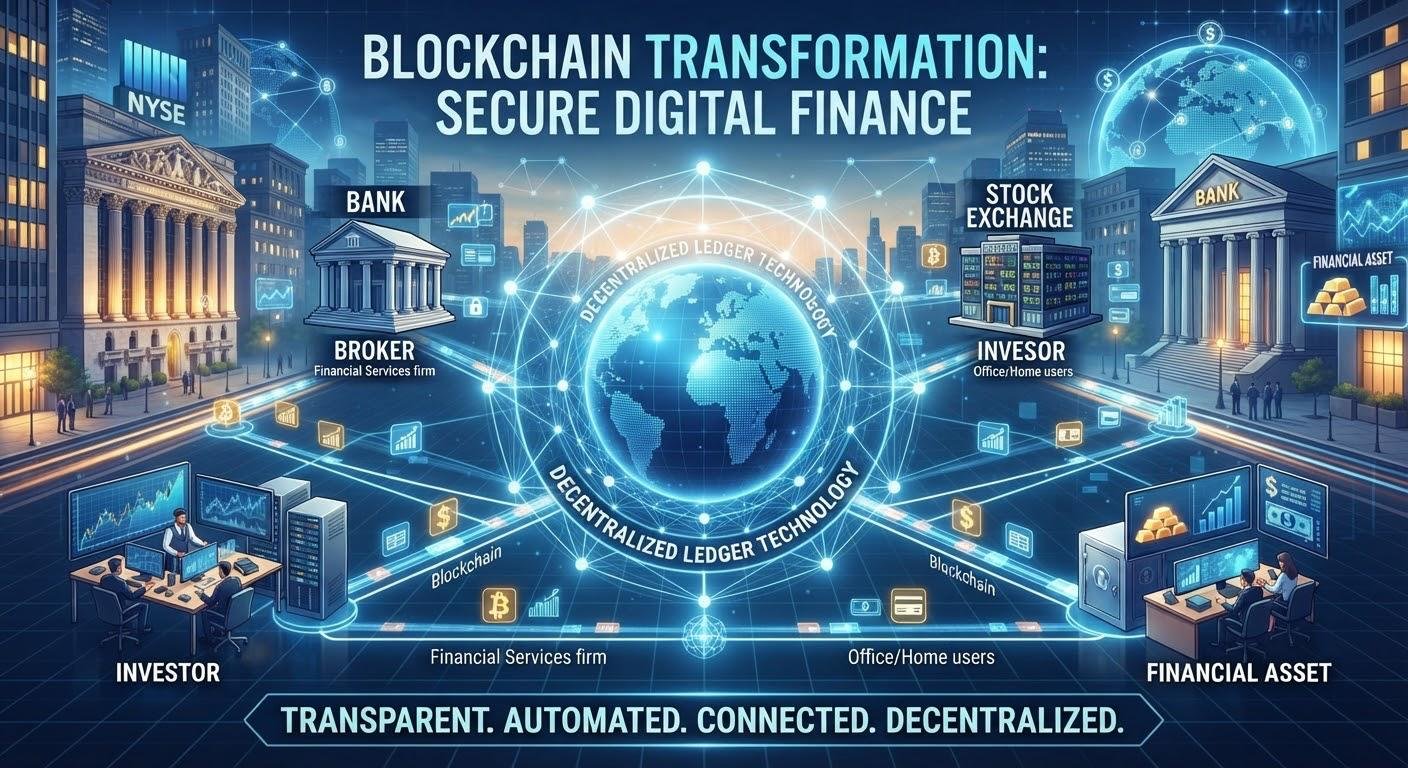
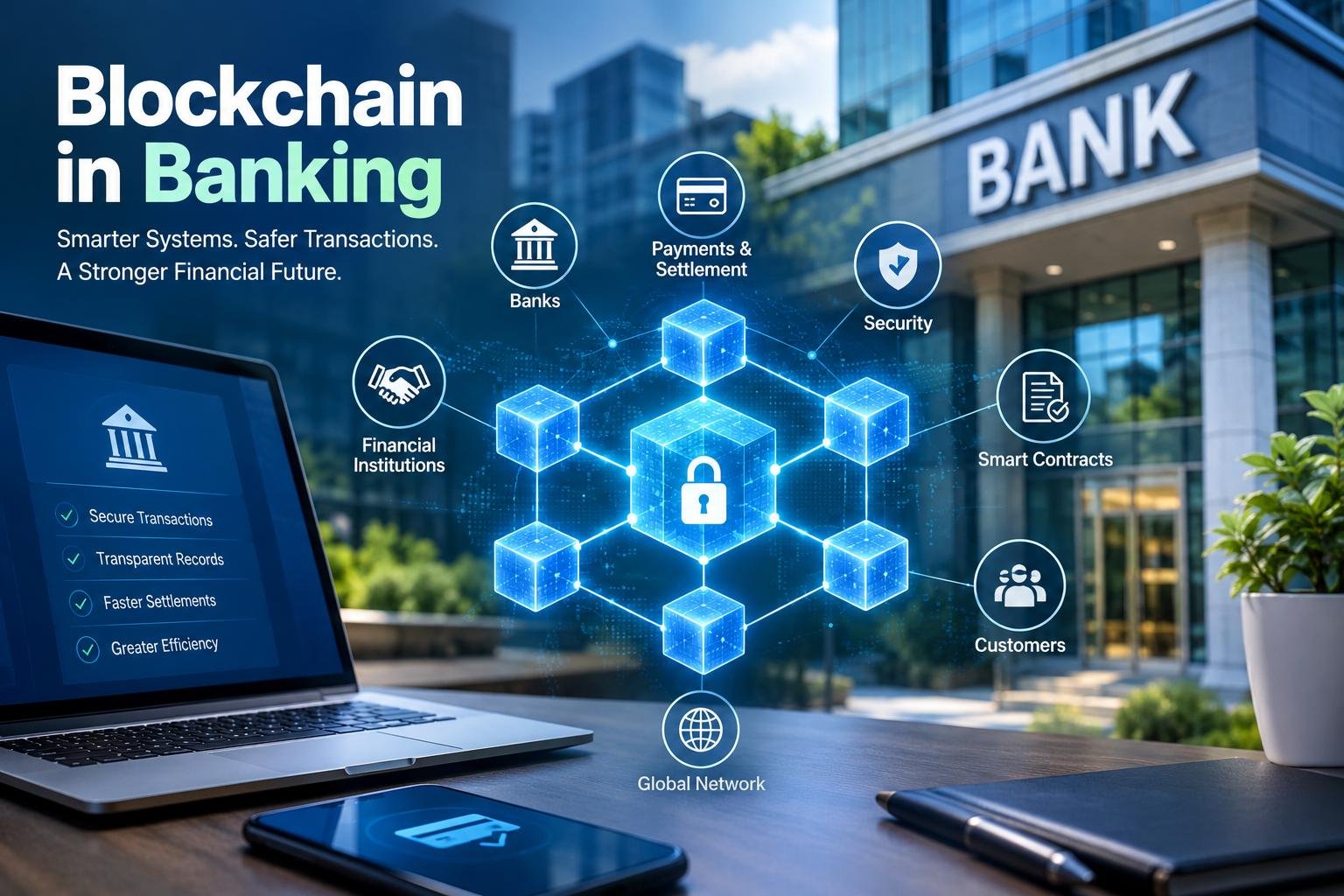
What started as being closely linked to crypto currencies has now evolved into a technology that banks and other financial institutions are considering to use for real-life business processes. In its most basic form, blockchain is a form of distributed ledger technology (DLT) in which many people are able to keep a shared record of transactions without having to depend on a single institution to maintain the authoritative record. In the banking sector, it can help streamline transaction processing, enhance security, create automated agreements, and facilitate better data management. Blockchain can be seen more realistically as a tool to enhance some specific processes where multiple organizations have to trust the same information and update it. It has implications for payments and settlement, recordkeeping, identity management, fraud and cross-border financial services, particularly.
One of the key areas is identity management, it is the responsibility of controlling and verifying who is able to have access to information, systems and financial services. Blockchain can offer a tamper-proof history of the identities selected and the verifying events associated with them and enable trusted parties to validate information without having to constantly request the same documents. The ideas behind identity management, therefore, can be linked to distributed ledgers to develop a more coordinated customer verification process. A bank might be a participant in a permissioned network where the other participants (in these case, trusted institutions) certify that a customer has undergone some verification process. This may help prevent double data entry when onboarding, but may require special attention when it comes to safeguarding personal information. The utility is in not only putting the customer data on a blockchain, but in improving coordination and verification.
The Mechanics of how Blockchain is used in Banking.
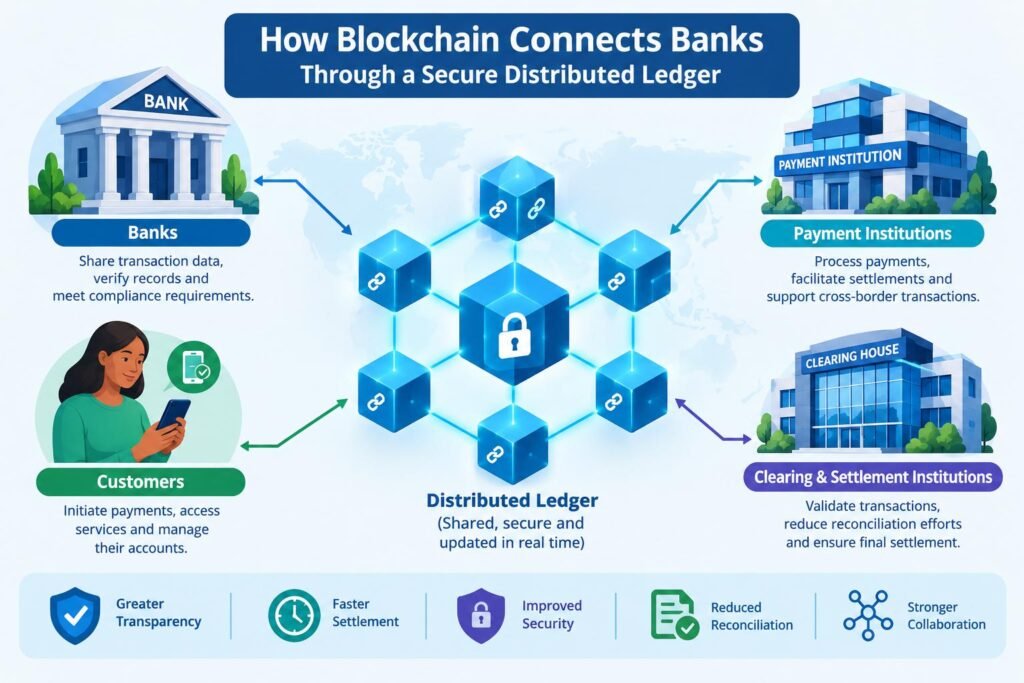
A blockchain is a network of interlinked blocks, validated based on predetermined rules. A permissioned blockchain network would be more appropriate for banking applications, where only authorized parties have access to certain information and can run nodes. This is in contrast to many public networks of cryptocurrencies, in which participation is open to everyone. By using a permissioned ledger, banks, payment companies, clearing organizations and other regulated institutions can share transaction information while having clear responsibilities and controls. Consensus mechanisms enable the parties to reach a consensus about the state of the ledger, cryptographic techniques can be used to secure the records against unauthorized modification. Each participant will have a synced-up copy or authorized view of the ledger, making it easier to decrease arguments between databases and to create a more lucid record of transactions.
Application of Blockchain in Banking Systems
Payment and settlement processing is one of the best applications. There can be several intermediaries in traditional financial transactions, particularly when money crosses borders. The participants are allowed to keep their own records, conduct compliance checks and reconcile information received. Blockchain technology can enable authorized institutions to access a common transaction record, which may help to lessen the reconciliation process and shorten settlement times. Deposit or other regulated digital currency deposits or assets could also be tokenized and transacted on a distributed ledger, according to set rules and regulations. For banks, this isn’t always quick and cheap, as the use of this new payment method does not imply that all payments are instant or cheap as long as various aspects of liquidity, compliance, network design, and connections with existing payment systems are taken care of as well. However, blockchain can be used to create a common platform for coordinating transactions and prevent institutions from doing needless duplication.
By providing a chronological and hard-to-alter set of events, blockchain can likewise enhance monetary documentation. The banks have to handle a lot of documents regarding payment processing, loans, securities, customer instructions, collateral and compliance processes. If each department or organization has its own database, then it can take a while to get the records all in sync and can lead to mistakes. A shared ledger can offer a common rendition of particular data, simplifying the trail of transactions and the parties that have authorized modifications to it. This can reinforce the auditability and operation visibility. But, immutability doesn’t equal perfect accuracy. If someone enters erroneous data into the blockchain, the blockchain can keep this mistake. Strong validation of the systems must be put in place before data is recorded, and procedures for correcting or supplanting inaccurate data.
Trade finance and financial agreements are other potential uses with good promise. Banks, exporters, importers, insurance companies and logistics firms and regulators are frequently involved in letters of credit, invoices, shipping documents, guarantees and other documents. Blockchain technology can provide assistance to these participants through the sharing of verified information, and eliminate the need to pass the same document through several channels. Smart contracts can provide automation, and automatically perform a set of actions if predetermined conditions are met. An example of a payment process would be after accepted evidence demonstrates that specified requirements have been met. This may help to minimize manual actions and processing delays. Although smart contracts rely on trustworthy real-world data, there are still measures banks need to take to ensure that externally sourced data flows into the network reliably; and to put in place the controls that manage disputes, exceptions, legal interpretations and abnormal transactions.
Advantage of Blockchain Technology to Banking
There are many advantages in blockchain, one of which is better efficiency in operation. Banks invest significant resources in keeping their databases, reconciling transactions, confirming transaction histories and communicating with the counterparties. Some of these repeated tasks can be minimized by providing a shared ledger that enables authorized users to access a unified ledger. This can help to reduce the expenses and delays associated with mismatching data. Blockchain can also aid in traceability as transactions can be traced to a verifiable history, which is not possible when trying to reconstruct transactions from various disconnected systems. In addition, quicker settlement could help to shorten the time for counterparties to be exposed to settlement risk. Such benefits are most compelling where multiple independent organizations need to coordinate often. For processes that are performed in one institution and one database, blockchain technology might introduce a level of complexity that does not bring a significant value to the process, and thus is not a worthwhile investment.
Security is also a potential benefit, but must be taken with a pinch of salt. While blockchain technologies rely on cryptographic techniques and consensus protocols to make unauthorized changes hard to implement, in the case of permissioned networks, the participation and access to the network can be limited. A distributed design can also decrease the reliance on a single database that can be a big target or point of failure. A common and trackable history of transactions can assist institutions in detecting unusual transaction patterns and investigating inconsistencies more effectively, which aids in fraud prevention. While blockchain cannot prevent fraud by itself, it is possible for criminals to use weak applications that connect to the blockchain, social engineering, and/or compromised credentials or fraudulent inputs to commit fraud. The level of security that it offers relies on its surrounding security system, including user authentication, private key management, network governance, software controls, monitoring, and employee practices.
Risks and Limitations
Although it has great potential, blockchain has some key technical and operational challenges. Scalability may be a problem in some networks as transactions grow, and depending on the consensus design, it can impact speed or energy consumption in some networks. Careful architecture and governance to meet some of these concerns may be achieved in permissioned banking networks. There is also a significant challenge on integration as banks have already existing core banking platforms, payment systems, database, customer relationship systems and regulatory reporting tools. A blockchain network which is unable to effectively communicate with these systems could result in another technology silo rather than a streamlined operation. Therefore, the banks have to evaluate interoperability, performance, data standards, maintenance and total cost before implementing a process on a distributed ledger.
There is also a high level of uncertainty around regulatory and legal issues. Banks are subject to specific regulations related to customer identification, privacy, data storage, transaction monitoring, consumer protection, capital and reporting. Several organizations and jurisdictions can be part of a blockchain network, which can complicate matters in the event of an issue. Particularly challenging for privacy, as some blockchain architectures are based on a concept of ‘always available data’, and data protection principles can dictate the circumstances for data being corrected, restricted or deleted. Additionally, regulators must figure out how to regulate digital assets, tokenized deposits, smart contracts and blockchain-based settlement. Banks must not use blockchain as a by-pass of regulation. Governance models will need to be established and clearly define who is accountable, how access is given or denied, what procedures apply to the handling of disputes, who is responsible to ensure compliance and standards for handling sensitive information if an adoption is to be successful.
Security Issues in Blockchain Banking
While a blockchain may be hard to change, there can be still be security risks. Access credentials, private keys, smart contracts, APIs and apps that rely on a ledger can be potential targets for attackers. If someone steals the private key, then it’s possible that they will be able to interact with the system; if there is a flaw in the smart contract, then it is possible that the interaction will have an unexpected outcome. The possibility of insider threats and compromised user accounts are also something banks have to consider. Therefore, it is essential to have multiple layers of security that incorporate robust authentication, role-based permissions, encryption, on-going monitoring, key recovery plans, code audits, and incident response plans for blockchain security. There should also be testing of the behavior of the network during an outage or attack scenario. A distributed ledger is not a solution in and by itself to cyber security but as part of a larger technology and risk management landscape.
Future Trends
Blockchain’s long-term influence on banking will most likely be through the slow and steady adoption process instead of an untimely replacement of traditional banks. This may make it possible to represent assets, like securities, deposits or financial claims, in a digital way and to transfer these assets in a controlled network. Depending on national policies and technical decisions, these stablecoins could also be linked to the blockchain-based infrastructure, alongside CBDCs. Distributed ledgers could become a more prevalent tool for banks to settle cross-border transactions, manage collaterals, process securities, and handle payments to institutions. Meanwhile, the interoperability standards might enable various networks and traditional payment channels to interoperate more seamlessly. The developments may lead to less visibility of blockchain for customers as the technology would run underneath the well-known banking apps, without them having to understand how the blockchain works.
Conclusion
In the banking sector, blockchain has real-world use because of a major challenge in the financial industry: When multiple trusted entities have to share information while maintaining an accurate and auditable record. It could be used for payments, settling accounts, record-keeping, identity management, trade finance, smart contracts, and fraud monitoring, among other uses. The technology has the potential to bring benefits of greater transparency, decreased reconciliation, better traceability and the automation of certain processes, but these are not guaranteed. Some of the factors to consider when determining the practicality of blockchain are scalability and interoperability, privacy and cybersecurity, governance, cost, and regulatory needs. The most promising future use cases will thus likely be well-controlled, permissioned systems that interface with the current banking system. Blockchain is not a threat to traditional banks, but rather it is likely to be another piece of financial technology that will help financial institutions process information and transactions more efficiently and adjust to the growing digitalization of financial services.
Get more well researched information about Blockchain in Banking here.