
Introduction to Database Security
Databases are vital to today’s computing world because they are used to store, organize and manage information for any person, enterprise, school, hospital, financial institution or government entity. Whether it’s customer information, employee details, financial transactions, or business operations, databases are packed with information that needs to be accurate, accessible, and secure from unauthorized access. Database security means the policies, technologies, procedures and practices that are adopted to protect this information from being stolen, misused, accidentally seen, modified, or destroyed.
With the growing reliance on digital systems, safeguarding information stored on these systems is becoming a crucial aspect of maintaining trust and stability within organizations. A poorly secured database can lead to the leaking of sensitive information, disruption of operations, and hefty financial and reputational damage. Therefore, the knowledge of database security is not only vital for database administrators and cyber security experts but also for the developers as well as for the common users of the technology, who interact with systems that contain personal information.

Importance of Database Security
The security of the database is crucial because of the potential for unauthorized access to information stored in the database to impact individuals, organizations and communities. For instance, if the customer data is breached, it can reveal names, contact information, Account Details or other confidential information, and if the financial data is not secured, it can result in unauthorized modification of transaction records. These can lead to loss of money, identity risks, service disruption, legal liability, and loss of customer trust. Database security also helps to promote three basic principles of information security, namely: confidentiality, integrity and availability.
Confidentiality – Only those who are authorized can access information, Integrity – Only authorized or unintended changes, and Availability – Only authorized users can access the information when it is needed. All of these principles help to ensure dependable database operations. Proper security measures can also support organizations to comply with relevant privacy mandates, safeguard IP property, and guarantee reliable solutions. Even the most sophisticated database can be made vulnerable by using trivial passwords, giving too many permissions, using outdated software or mis-configured settings.
Basic Principles of Database Security
Database security is based on a set of inter-related principles, not any one protective technology. Authentication is checking who is using the system, authorization is determining what the authenticated user can do, and access controls are what is done to implement the authorization. Encryption ensures that information cannot be read by anyone but the person who intended to view it and auditing and monitoring provide an administration perspective of any unusual activity and investigate security incidents. Secure connections keep information safe while it is being
transmitted from application to database server, minimizing the chance of interception. These are the best applied in conjunction with security policies, regular review, and the use of good database administration practices. A business could need workers to log in with private accounts, dictate who can access certain data, encrypt vital client info, and keep track of significant database tasks, for instance. Each measure will address a different aspect of the security process. If one control is not effective, a second control can reduce the exposure. This multi-layered approach is called defense in depth and offers an implementable base for the protection of databases on various types of threats.
Authentication and Identity Verification
Authentication is the process of verifying that a user, application or service is who it says it is before granting access to a database. It usually relies on a username and password, but more sophisticated systems might require multiple factors of authentication and/or certificate-based authentication. A good password is a difficult-to-guess one and MFA is extra authentication to minimize the threat from compromised passwords. For example, an extra password and approval might be required from a database administrator to gain entry into a management environment.
Shared accounts should be avoided as it will be hard to find out who actually carries out a specific action. Rather, a specific, identifiable account should be provided for each authorized user and monitored and shut down when access is no longer needed. Repeated failed logon attempts should also be covered by the authentication system and inactive accounts should be deleted in accordance to a policy. These practices help prevent unauthorized users from being able to gain access to database environments via compromised or poorly managed identities.
Authorization and Access Controls
Authorization specifies what operations a logged-on user can execute in a database. Authentication will determine who is trying to access the records, and authorization will determine what that user can access, create, modify, or delete. Most database management systems offer the concept of role-based permissions, where an administrator can grant privileges based on a role and not have to go into each database and give them permission for every individual thing they want to do. For instance, a customer record viewing employee may be granted read-only access to customer records, while a database admin may be given access to the database to maintain it and make configuration changes.
Depending on the system’s capabilities, access controls may limit users to specific databases, tables, records or operations. This minimises the needless exposure and the repercussions of breached accounts. Permission reviews can also be significant because employees can move around within the workplace, leave a company or move into new roles. If the access rights are not changed, then the old permissions may still be in effect, causing security vulnerabilities. An effective authorisation system guarantees that access to databases is suitable, controlled and consistent with legitimate needs of the organisation.
Least-Privilege Access
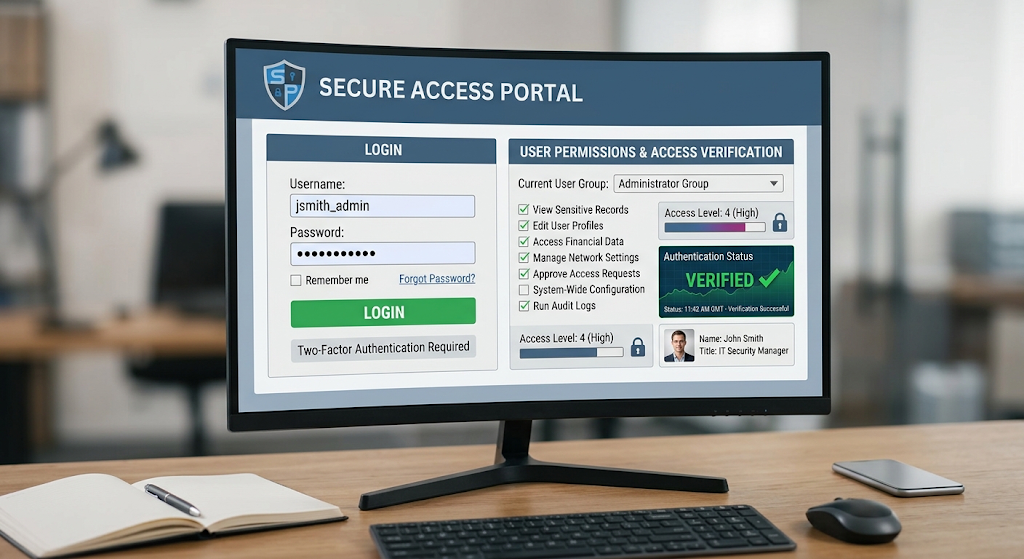
A security principle that allows users, program, and service access to only what is needed to accomplish their assigned task. Administrative access is restricted to the individual based on his/her actual job responsibilities and is reviewed on a regular basis as opposed to giving access to every account. This helps to minimise the steps that can be taken if an account is breached or misused. An application that receives permission to retrieve product information shouldn’t be given permission to delete customer records or modify the security settings on the database.
Likewise, a staff member who must access reports should not be granted the right to edit the data. The IBM Guide to Principle of least privilege is a good resource for learning more about this principle and how it aids in better security. Implementing least-privilege access must be planned, roles defined and permissions reviewed regularly. It is also important to not use strong administrative users for normal tasks. Eliminating needless privileges can help prevent needless changes, unauthorized operations, and better accountability across an organization’s database environment.
Data Encryption
Encryption is the process of encoding information in such a way as to make it hard to read without the right cryptographic key. Usually, encryption is applied to the security of databases in two circumstances: data at rest and data in transit. Data-at-rest encryption can be used to protect information when stored on database disks, storage devices or backups, reducing the impact if these are lost or accessed without the correct permissions. Data-in-transit encryption secures information that is transferred among applications, users and database servers, making it harder to read the content of intercepted data transmissions.
Databases that contain personal, financial, business, or confidential organization information are particularly sensitive to the need for encryption. But encryption needs to be done judiciously as it can be undermined if key management is not adequate. Organizations should limit access to encryption keys, have a protocol for key rotation and make sure to secure backups to sensitive data. Encryption also functions in conjunction with authentication and access controls — not in lieu of them. Permission checks might be required before accessing encrypted records even with an authorized application. If implemented properly, encryption can be a valuable asset when it comes to information security, whether you are sending data or storing it.
Database Auditing and Monitoring
Database auditing is the process of capturing the more significant activities in the database to determine who accesses the information, what operations are performed and when they are performed. Audit records can contain attempts to log in, unsuccessful logins, modification of permissions, sensitive record changes, administrative activities and unexpected access occurring. Monitoring includes the review of these activities for suspicious activity or operational issues. For instance, many failed logins, accesses outside of standard operating hours or data exports that are outside of what is expected can be investigated.
Auditing is valuable because no security is just as important as it is to detect problems and understand what happened in the event of an incident. Organizations should ensure audit logs are not altered and kept in line with applicable policies. Monitoring systems can trigger alarms if activities comply with a security condition defined by them, so that administrators can respond faster. But logging needs to be set up carefully to prevent the collection of irrelevant or sensitive data, or an overload of security teams with irrelevant alerts. Good auditing enhances accountability, the investigation process, and the discovery of areas that need to be remediated.
Secure Database Connections
Secure database connections ensure the security of communications between database servers, applications, administrators and other systems that are authorized to access the database. If not adequately protected, information may be made available to be accessed or viewed by others during transmission through a network. If configured properly, Transport Layer Security (TLS) can help to encrypt communication and verify the identity of the server. Secure connection settings should be used, certificates checked and sensitive credentials should not be sent over unprotected connections.
Access to the network should also be limited to ensure that database services can only be accessed from approved systems or networks, wherever possible. For instance, a public website might interact with its database via an application environment that’s not open to the internet, instead of opening up the database management port. Limiting connections, managing network configurations and installing firewalls can minimise unwarranted exposure. Encrypted connections must be used in conjunction with robust authentication and user authorization as it does not validate if a user is allowed to access specific records. The practices ensure the protection of database communications and provide fewer chances for unauthorized parties.
Common Database Security Threats
Database environments are vulnerable to various types of threats, including technical, human errors, and administration issues. The attacker could try to exploit flaws in the application, guess passwords, use stolen identities or hijack exposed databases due to misconfiguration of network settings. There are several threats that are deliberate and others that are due to obsolete software, too many privileges, or a lack of security awareness. A database can also be compromised if applications don’t validate user input or if administration neglects to delete unnecessary accounts. It is crucial to know the typical risks to choose appropriate security measures and prioritize security enhancements.
Also, note that database security threats are frequently related: if a database user has a weak password, it can give them initial entry; if the user has too many permissions, they can use the initial access to get more; and if the user does not have a good monitoring system in place, it may take too long to detect. Therefore, organizations should consider assessing the entire database environment, from applications and user accounts to networks, storage systems, and administration. A robust security strategy deals with the vulnerabilities of database systems and the ways in which people interact with them.

SQL Injection Attacks
SQL injection is a type of security problem in which an application fails to sanitize user input data and permits it to modify the SQL commands that it sends to a database. Attackers can try to alter the queries that run to the application to gain access to data or to execute other operations that are not part of the original functionality. A login form, for instance, could be poorly designed and pass user input data directly to a query to the database, thereby affording a chance for intrusion into the query. Depending on the permissions and configuration of the application, SQL injection may be able to view or change records, or interfere with the operation of the database. Developers can mitigate this risk by using parameterized queries or prepared statements, which take the user input out of the way from the structure of the database command.
There are other protections such as input validation, secure coding practices, code reviews, and proper database permissions. Detailed database error messages should also be avoided from displaying to the user since this can expose details of the system. Testing should be done in the software development and maintenance to discover vulnerabilities before software is launched. There is no single solution to the problem of preventing SQL injection, it requires cooperation between the developer, database administrator and security organization.
Theft of Credentials and Weak Passwords
A major concern of security is weak passwords and stolen credentials as database access frequently relies on a user or application account. Short passwords, passwords shared with other services or guessable passwords can be guessed or subjected to credential stuffing. Credentials can also be leaked as a result of improperly stored credentials, inadvertent sharing, phishing, or access to improper configuration files. If an unauthorized party acquires valid credentials, database systems can make the connection valid, unless there are extra controls that detect suspicious activity. In addition, organizations should adopt robust and distinct passwords (where necessary) and promote the use of multi-factors authentication for sensitive accounts.
Application secrets should be handled via a secure secret-management system and passwords should be hash-coded in an appropriate salted password-hashing method, not plain text. Everyone and services with access to credentials should be approved, and credential exposure followed by a quick replacement. Frequent audits can detect unused accounts and needless access. These practices help mitigate the risk of a single database exposure if a user’s password is compromised.
Unauthorized Access and Data Breaches
Unauthorized access is when anyone or any system obtains information or privileges in the database that is not authorized. This could occur as a result of stolen accounts, improper user privileges, weak application security, infected devices, or poorly set up network access. A data breach could involve the disclosure of private information, disruption of services or unauthorized access to critical data. The impact will vary depending on type of data, number of data records affected, and timeliness of detecting and mitigating the incident. To effectively mitigate these risks, organizations can implement robust authentication methods, access control measures, least privilege principles, encryption protocols, and proactive monitoring systems.
More sensitive databases should be protected further and the access for administration should be restricted to specific staff. Incident response is also required because it allows teams to know how to investigate any suspicious activity, how to “contain” any affected account, how to preserve evidence, and how to get back to a secure operation. Regular security assessments can be useful in the discovery of security loopholes before they’re exploited. While it may not be feasible to prevent all breaches, multi-layered security controls and response protocols can enhance an organization’s ability to respond to a database security incident.
Malware and Misconfigured Databases
While an organization may have a trusted database management system, they can still have weaknesses due to malware or misconfiguration of the database. The computers, servers or applications that are connected to a database can be compromised to cause disruption or reveal information. Misconfiguration is a failure to set up the security configuration correctly or to meet the requirements of the organization. These can be anything from needless sharing of public networks, presence of default accounts, excessive permissions, weak connection parameters, or unprotected backups. The problems can arise when you are installing, upgrading your software, changing applications or trying to deploy your system quickly.
Secure configuration standards, unnecessary services, unused accounts and network controls that restrict database access should be used by organizations. Frequent Vulnerability Assessments and Configuration Reviews can be useful in identifying issues that may lead to incidents. The update of software should also be carried out in a controlled manner, taking into account compatibility and testing as well as maintenance requirements. All backups should be secured like any production database. Through secure configuration, malware protection, and continuous maintenance, organizations can minimize vulnerabilities which could otherwise allow the exposure of sensitive information.
Best Practices for Securing Databases
Database security practices must be in place throughout the life cycle of the database—from installation to initial application development, from regular maintenance to eventual replacement. Policies should be set out to define who can use databases, how to keep records, how sensitive data is safeguarded and what to do in the event of a security issue. Security duties must be delegated to the proper staff and developers and administrators need to be instructed in risk and instructions on how to operate securely. Technical measures should involve extensive authentication systems, limited access, encryption, secure connections, auditing and updating.
Beyond database software vulnerabilities, organizations should review database dependencies, application integrations, backup plans, and network exposure, as there could be vulnerabilities outside of the scope of the database software. A documented security review process will help to maintain the effectiveness of these protective measures when changes occur in the systems and business. These practices should be assessed periodically and not be seen as an installation project. Securing databases is a continuous process that relies on technology, individuals and clear business processes.
Managing Credentials and Passwords
Responsible handling of passwords and API keys, database connection strings, certificates and other authentication secrets is a key feature of secure credential management. In some applications it’s necessary to have credentials to connect to a database, but having the credentials directly in the source code or in a public repository can be a serious security risk. Organizations should adopt the proper secret-management tools or protected configuration systems and access secrets as necessary to operations. Credentials should be specific to the application or service that they are intended for, and would simplify the removal of one secret without impacting other systems.
Avoid sending passwords randomly via email, text messages, or unprotected documents. Multi-factor authentication should be used to secure administrative and other sensitive accounts, where supported. Organizations should also have protocols for credential rotation and exposure response as well as deactivation of expired and unused accounts. Production database credentials should not be used for development environments because the security controls are likely to be different. These measures help to decrease the likelihood of exposed credentials being used to gain unauthorized access and assist in keeping control over database operations.
Managing User Permissions
User permissions control, which includes the allowance, review, modification and elimination of privileges based on the current roles of users. Organizations should specify roles based on true work, instead of only reporting roles: application operations, data entry, database maintenance, security administration. Access to privileges for each role must be limited to the necessary rights for the job, and to the necessary rights for highly sensitive actions. Permission reviews should be conducted on a regular basis and when employees are promoted or hired new, depart, or no longer need access to specific information. Temporary access should be intended for a specific purpose and have a defined time limit.
Database administrators shall also differentiate between normal accounts and privileged accounts that are used for special maintenance tasks. Significant administrative decisions should be subject to further authorization and/or supervision, wherever possible. These procedures help to minimize unnecessary access and accidental or unauthorized changes. The accountability and permissions features of Clear permission management also help with auditing, as activities can be tied to specific accounts and responsibility. Using access rights as a resource that needs to be sustained over time can help prevent organizations from becoming vulnerable due to inadequate or overabundant access rights.
Regular Backups and Recovery Planning
Database backups are essential to safeguard an organization against accidental deletion, hardware failure, software issues, cyber events or others that could prevent or compromise data availability or integrity. Backups, however, need to be protected as they could also contain the same sensitive information as the original database. Backup files should be encrypted, access to them be limited, and they be retained for adequate periods of time; copies should be stored in safe places. An effective backup strategy could involve making several copies and storing them in a variety of locations to ensure that a single disaster won’t impact all copies.
Creating a backup is also vital, however, as data recovery is not necessarily possible when a backup is created. Organizations should perform tests with restoration procedures, validate the integrity of their backups, and establish who is responsible for restoring database services. Recovery goals should be based on business requirements, such as tolerable data loss and service disruption. Backup systems must be monitored also for failed and incomplete jobs. Regularly tested and securely stored backups enhance resilience by allowing an organisation to recover reliable information after an unexpected incident without having to rely solely on damaged or compromised systems.

Secure Configuration and Database Updates
Database software, operating systems, drivers and associated applications need to be maintained on a regular basis to mitigate known flaws, enhance reliability, and ensure secure operation. Organizations are required to be diligent and keep track of vendor security notifications and apply them by using a methodical approach characterized by testing and proper change management. Waiting to apply security patches could leave systems vulnerable to flaws that already have been published. Secure configuration is also important as default settings might not correspond to the security needs of the organization. Services that are not required, accounts that are not required, network access limitations, secure authentication method limitations, and permission limitations should be disabled before entering production.
Error messages or administration interfaces should also be set to not reveal any unnecessary technical information. The standards for configuration should be documented to enable new systems to be deployed in a consistent manner, and to enable review of existing systems against approved configuration standards. Automated configuration checks can be used to find unexpected changes, where possible. Regular updates and configuration reviews need to be a continuous process as database environments are constantly changing because of the changes in the applications, users and infrastructure.
Security Audits and Continuous Monitoring
By continuously monitoring and periodically conducting security audits, organizations can determine if database safeguards are effective. Monitoring systems can detect strange login activity, unexpected permission modifications, strange queries, and unusual data access activity. A security audit is an in-depth review of policies, configurations, access controls, encryption, backup, and operating procedures. These activities can reveal weaknesses that may not be apparent on normal use of a database. Alerts should be reviewed by the organization, and the organization must have a designated person to conduct investigations, as well as a procedure for the escalation of confirmed incidents.
The audit records shall be safeguarded from unauthorized changes and kept in compliance with legal, regulatory and organizational requirements. Vulnerability assessment and/or approved penetration testing of applications that communicate with the databases may also be a part of the security review. Findings should be documented and prioritized based on risk and then followed by corrective actions. Monitoring and auditing are most useful when it results in improvements and not just reports. Regular auditing of database activity and security measures can help organizations stay one step ahead of the game.
Importance of Database Security in Safeguarding Sensitive Data
Database security is a key part of safeguarding information which people and businesses rely on daily. Databases are used in hospitals to track patient information, in schools to keep track of student records, in financial institutions to track account information, and in businesses to track customer information and operational records. Unauthorized disclosure and modification beyond the technical system in each environment can have consequences. Inaccurate financial records can have business implications and personal information can lead to privacy and identity issues. Security controls protect sensitive information from being accessed by unauthorized parties and make it possible to have accurate and recoverable important records.
They also promote responsible data management by setting guidelines on how to handle, store, monitor, and dispose of data. Security of the database needs to be a concern when designing the system, developing applications, deploying, and conducting routine maintenance. Organizations should determine what information they have that would be most sensitive and use the appropriate means to protect it from compromise based on its value and potential exposure. User confidence, reliability, and protection are enhanced while supporting digital services through security practices that are part of daily operations and the use of databases.
Conclusion
Database security is a key component of safeguarding digital information against unauthorized access and use, accidental damage, and cyberattacks. It is based on a series of interdependent practices such as authentication, authorization, access controls, least-privilege access, encryption, auditing and secure database connections. These are steps to ensure confidentiality, integrity and the availability of essential services. Common threats including SQL injection, weak passwords, credential theft, malware and misconfigured systems must also be dealt with by secure development, responsible administration, timely updates and ongoing monitoring.
Effective credential management, well-controlled permissions, secure backup strategies, and thorough disaster recovery plans add to the resilience of databases. There are so many potential risks that no single security solution can prevent them all and so it is necessary to use a multi-layered approach. Database security is not a one-shot technical challenge, it’s a process that requires people, policies and technology. The consistent use of security measures and regular review of these practices as systems evolve can help organizations safeguard sensitive data, minimize risks, and ensure trust in their digital services relying on secure databases.