Introduction
Today’s brokerage platforms manage thousands or even millions of customer interactions from requesting passwords to inquiring about account activity, transactions, documents and notifications from the marketplace. Serving these needs exclusively with human agents would add up in the number of support teams and would slow down the customer’s process of getting simple answers. Automation can deal with a lot of the repetitive requests right away, and have support systems in place for the requests that require judgment or personal attention. An important aspect of this development is the use of intelligent support systems, which consist of automated information processing along with decision support, both of which contribute to making the platforms more efficient for handling customer needs. Automation can work well in the sense that customers can get immediate support without losing the human aspect from the equation when there are tricky, sensitive or irregular financial queries.
AI Chatbots for Routine Customer Questions
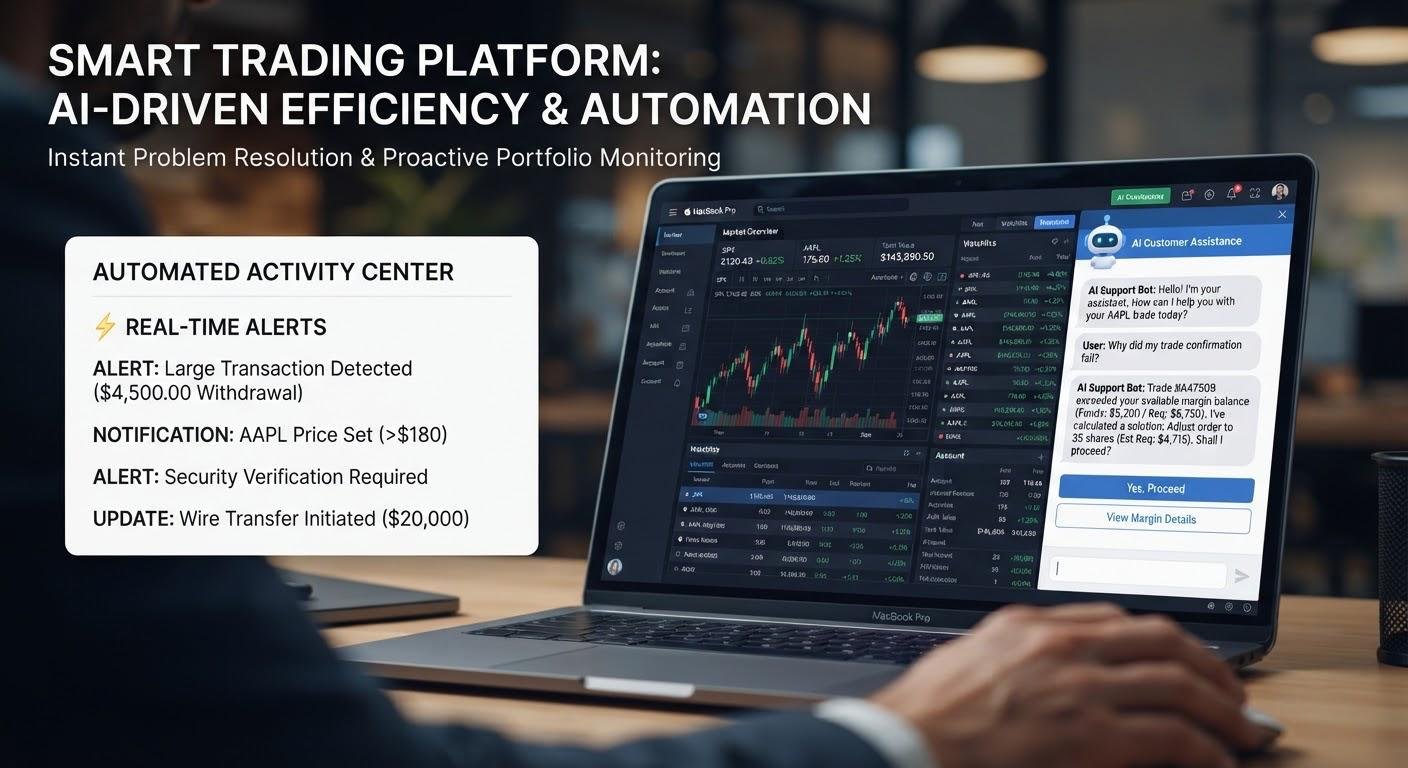
One of the most prominent applications of AI customer-service automation on brokerage websites is the use of chatbots. Customers can type questions into a chat window and get an immediate response, rather than having to wait until an employee becomes available. Chatbots can tell how to navigate an account, where are statements, explain basic transactions, describe the trading hours, and answer many basic questions regarding deposits or withdrawals. Advanced systems may interpret natural language, identify the meaning of a question and draw information from a set of approved knowledge bases to supply answers. This helps to cut down the volume of “standard” customer conversations for human representatives and helps support staff focus on more complex cases with unusual circumstances. Chatbots can also work at times when the business is not active, thus providing basic support to customers when the support team is not present.
Automated Notifications and Account Alerts
Brokerage sites also automate communications, notifying users of key events that occur in their accounts. Platforms can also notify users when a security limit is breached, a password is changed, a logon is attempted using a device that does not have the user’s password, or a requested action requires further authentication. Benefits of automated alerts include providing information when it becomes relevant and not forcing customers to log in again and again to check their accounts. Users may be able to choose the type of notification that they receive when they log into their accounts, including email, text, push or in-app notifications. These communications can be automated, giving brokerages greater visibility of account activity and mitigating repetitive communication requests on occurrences that customers will be able to track themselves via their notifications. Automated communication is convenient as well as helpful for security, with timely alerts to prompt customers to investigate activity they don’t recognize.
Help Centers and Self-Service Information
Another critical element of customer service automation is digital help centers. Brokerage firms may compile all the most common queries, tutorials, explanations, troubleshooting directions and account management advice in searchable online libraries. When a customer requests to know how to update information or explain a statement, he or she might not have to speak to a representative to get an answer. Search engines can assist in this process by knowing about related terms, and by offering customers links to articles in the database that contain information that is similar to what they are looking for, even if it’s not the exact same. Using a self-service approach may help to shorten waiting times and provide more autonomy to customers with simple tasks and will help establish a continuous information source for multiple support channels. This can also save your customer service staff from answering the same questions repeatedly about protocol, which can be clarified via simple, easy-to-understand documentation.
Activities and Confirmations of Transactions
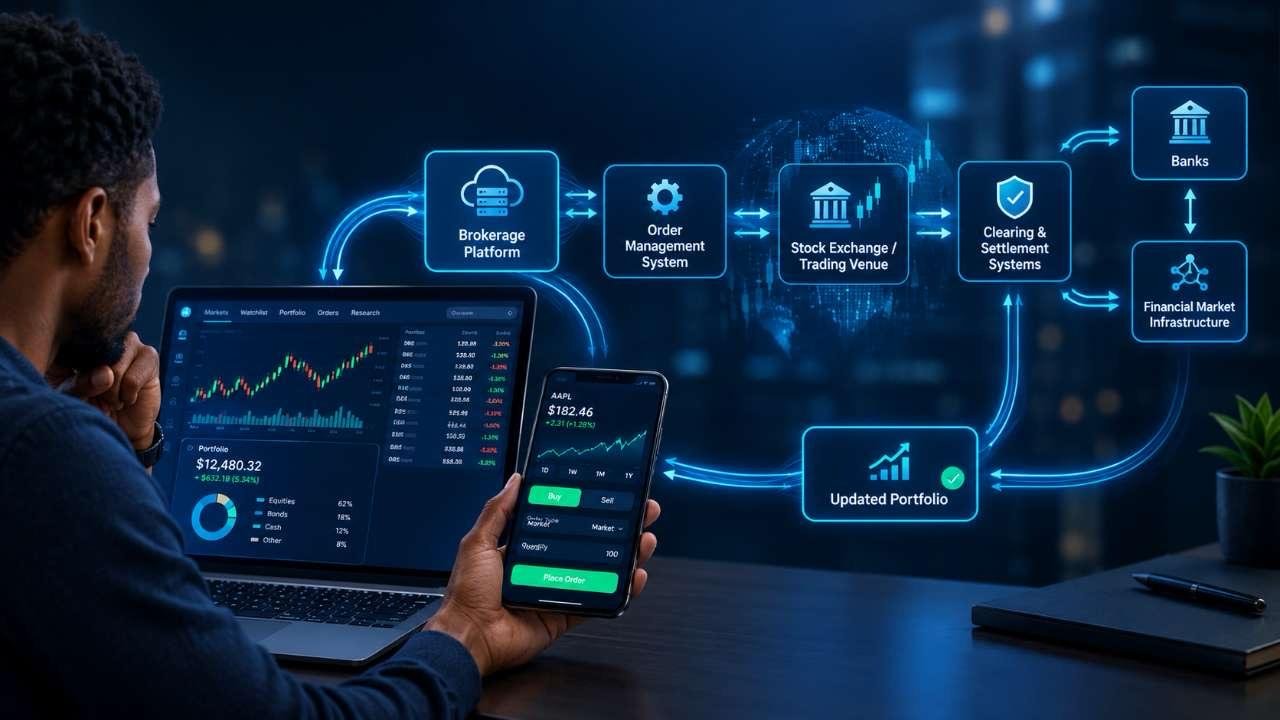
Confirmation after financial instructions have been given is especially beneficial to customers because it lets them know what has occurred with their financial account. If an order is accepted, rejected, executed, cancelled or otherwise changed, the brokerage systems can automatically generate a confirmation and indicate the appropriate status in a customer’s account. The same procedures are followed for deposits, withdrawals, transfers, recurring transactions and for other account activities. These confirmations assure the customer that major events have occurred and can help eliminate the possibility of them not knowing if an instruction was received. Automated systems can also refresh data on multiple areas of a platform, like account dashboard, notifications, emailing, and downloadable records. This coordination is a huge advantage for customers as they are not forced to rely on a support representative to verify each routine event. Automated confirmations, however, should make it very clear whether an instruction has been received or if a transaction actually has been completed.
Unlock and Recover Passwords.
Another typical operation that can be automated is password recovery. When it comes to login, many customers forget their password, may lose access to a device, or have to change the password due to a security issue. Rather than leaving it up to the individual customer to initiate support, brokerage sites can lead users through identity checks, codes, secure reset links, and more. Security rules can also be applied automatically prior to the restoration of access, thereby helping to prevent unauthorized access to the process. Since brokerage accounts have sensitive financial information, speed is not the only goal of the password recovery. The system should be convenient, yet have robust verification and protection from account takeover. When an automated process identifies inconsistencies, suspicious behavior, repeated failed logins or other security issues, it can halt the standard process and route the customer to a human agent for further review.
Automated Document Generation
Financial customers often require account statements, transaction history, tax forms, confirmations and other account information regularly. Many of these documents can be generated automatically using automation, and do not need to be created by an employee each time. The platform can gather relevant data from its databases arrange the data in the correct document format and provide the completed document via a protected customer portal. The process of generating documents automatically can aid customers in receiving records sooner and lower administration costs. It also provides opportunities for consistency as documents can be generated from standardized information and templates. However, customers may find that they require human support when there is an unwelcome discrepancy in a document or when historical information is hard to find or when they would like to understand what a specific financial record means. In situations when customers require more than just access to a document, human support becomes very helpful.
Intelligent Support Systems and Personalized Assistance.
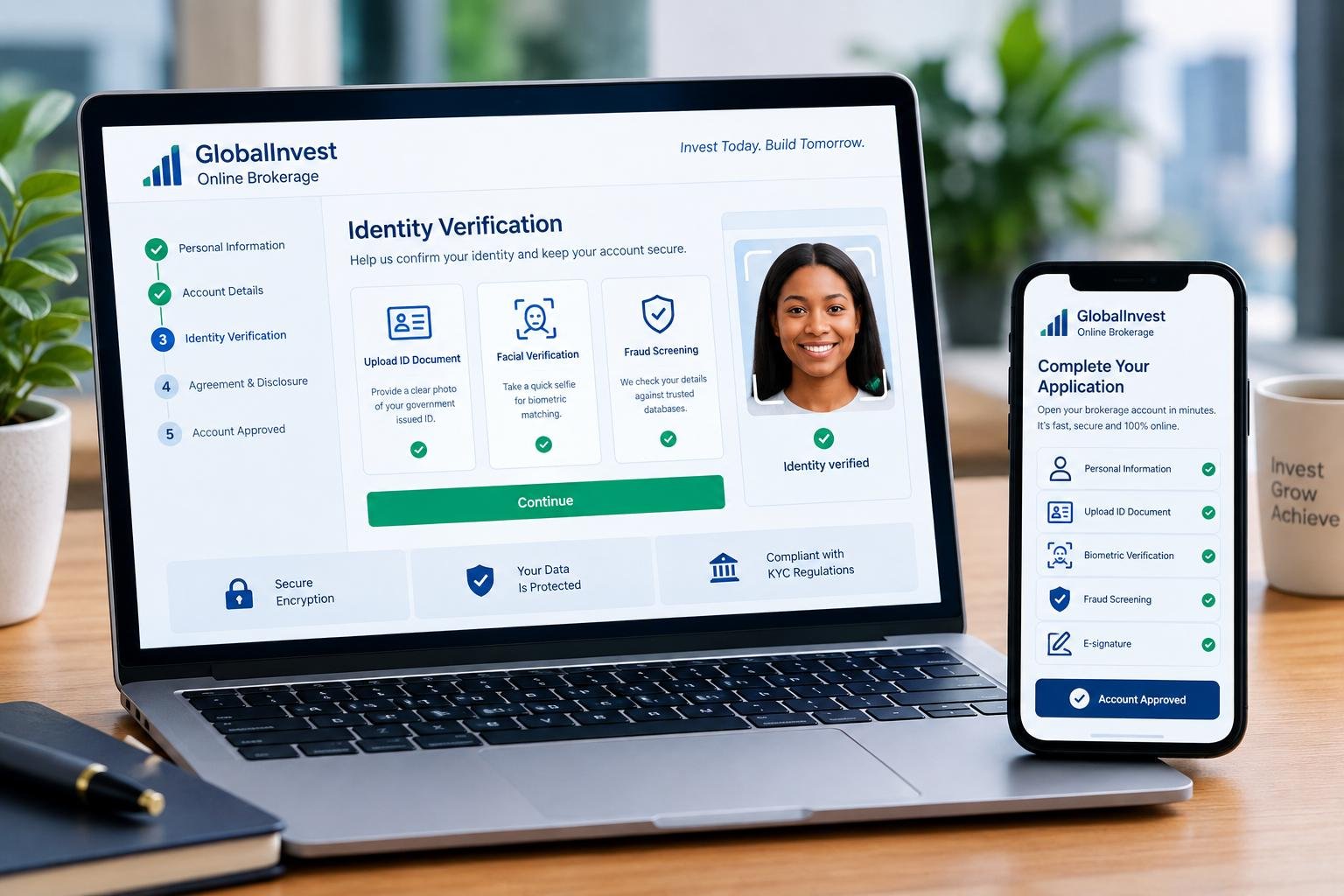
The next level of automation consists of systems that answer more complex questions. Using data from customer interactions, interactions on a customer’s accounts, knowledge bases, and service histories, intelligent support systems can be used to provide information to help decide what type of support may be needed. For instance, if a customer asks a few similar questions he might be having the same issue with the account process, and a support system might be able to give a more relevant series of instructions to the customer. It could also pinpoint if a basic enquiry is now a more serious matter and suggest for escalation. But financial platforms have to be aware of the processing and utilization of customer information. Automation should be used within the proper privacy, security, compliance and access controls including when dealing with sensitive financial or identity information. The efficient intelligent support thus needs to be based on both on some useful automation as well as some suitable protections on the information on which this support is based.
Automated Routing and Human Escalation
It’s not like automation is a way to keep people out of the way of customers. Automation can be used within well-designed brokerage support systems to drive towards automation and towards the representative in cases that are not meant to be automated. An automated solution can be provided immediately to a customer with a straightforward request for a statement and a dedicated support team can be assigned to a customer reporting suspected unauthorized activity. Factors like topic of the request, past interactions with the customer, information already given and the urgency of the issue can be taken into consideration while routing. This can cut down on unnecessary transfers, and provide the representative with helpful background before they start talking in a conversation. The goal is not to replace human service, but to leverage human attention when it can add the most value, especially when a case needs to be explained, discretion exercised, investigated or a decision needs to be made that does not warrant the computer making it on its own.
Planning and Delivery of Fraud Detection and Security Support
There’s also a significant link between customer-service automation and fraud prevention. Brokerage platforms can track the activity of an account and alert for unusual activity that may need further verification, such as unusual logon times or changes to account data or transactions that do not match account activity patterns. If a security problem is detected a system might alert automatically, block some activities, ask for further security checks of the problem or create a security case to investigate. These actions can happen much sooner than if a customer noticed something out of the ordinary and reached out to support. Automated security systems, on the other hand, can occasionally generate false positives and legitimate activity could be interpreted as suspicious. When the customer’s transaction or access is interrupted, they must be able to go back to the human representative to discuss the situation and what the next steps should be. Human intervention is still needed as a person’s decisions about security can impact on the legitimate customer.
The Future of Automation in Brokerage Customer Support
While automation can speed up customer service and ensure it is more scalable, it can’t handle all situations appropriately. There may be a number of financial questions that could have complex situations, which may need interpretation, detailed explanations or careful investigation. If a customer is unhappy with a transaction, wants to challenge the restrictions on an account, suspects’ fraud or has documentation issues, they may need to talk to a trained member of the staff. Additionally, customers may become aggravated if an automated system gives them nonsensical responses or makes it hard to contact an individual. Brokerage agencies need to build up pathways that are very obvious and feasible, instead of regarding automation as a wall between the customer and employee. Human oversight of automated decisions can also be used to rectify inaccuracies, clarify complex data, and uncover trends indicating a broader issue with the service. With effective automation, there shouldn’t be an increase in the need for human assistance; rather, it should become easier for people to receive human support.
Conclusion
The use of automation in customer service is crucial on contemporary brokerage websites, as it can manage extensive amounts of routine activity rapidly and precisely. You can use AI chatbots to respond to frequently asked questions, offer a self-service menu on your customer center, and send automated alerts to keep your customers up-to-date on account events. Password recovery workflows can make accessing these passwords easier and impose security criteria, and automated document generation and transaction confirmations can make it easier for customers to get a record without having to manual process each request. In more sophisticated support systems, these can be integrated and used to determine the needs of customers and forward more complex cases to the relevant human support. The best way to do this is to use a service model that has a predictable set of tasks that are automated to get done efficiently, and still employ trained representatives as backup for sensitive, unusual or complicated scenarios. The equilibrium can enable a brokerage platform to provide quicker assistance without compromising on judgment and hands-on help to customers who may require it.
Get more well researched information about brokerage customer service automation here.