Introduction
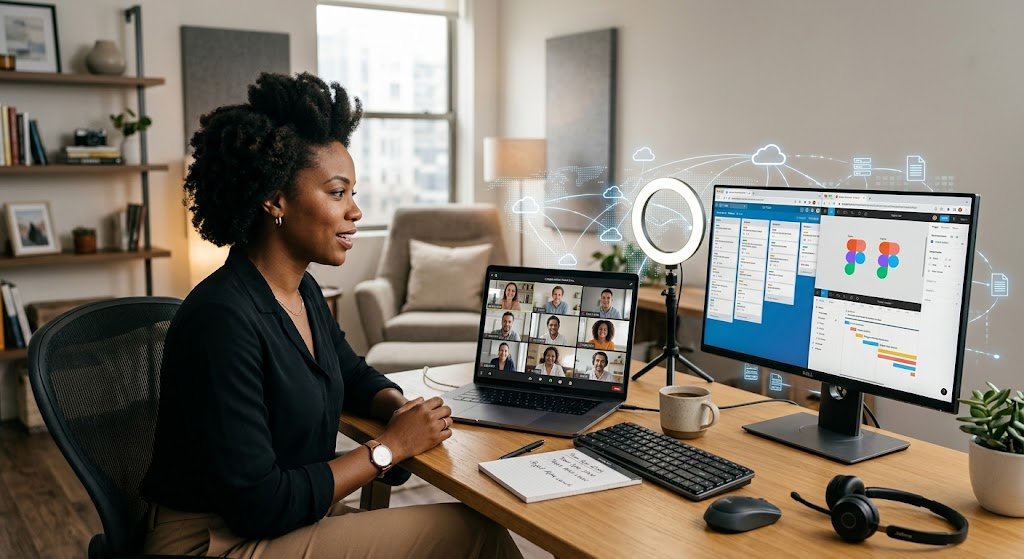
Computing has evolved past the old desktop model which was the main platform for access to digital info and apps. Today we see that which once was done at a desk is now done via smart phones and other mobile devices from any location. This change is in great part due to the connection between mobile computing and net centered computing which sees devices that rely on networks and online services for communication and task performance.
Also we no longer see the need to keep apps and data in one computer, present day systems connect the user to remote servers, cloud platforms, databases and online apps via wireless networks. This has created an environment in which smart phones, tablets, wearables and other connected tech can provide what in the past only stand alone computers could. Net centered computing thus takes computing out of the physical desktop into a wide range of locations and devices by making network resources accessible.
Understanding Net-Centric Computing
Net centered computing is a model which has computing devices, applications, data, and services work within an integrated network of systems as opposed to standalone entities. The network in this model takes a primary role in the info structure because users and devices have access to resources which are hosted on remote computers or data centers. In a typical desktop setting a user will install software that is local and use storage which is internal to the computer.
In a net centered environment though info and apps are accessed via network which may go out to remote infrastructure for processing and storage. Also it supports collaboration, central data management, remote access, and communication between many diverse devices. Also it allows companies to present services to users without each device having to have all the required hardware and software. The growth of the internet, cloud computing, wireless tech and mobile apps has made net centered computing a key element of today’s digital infrastructure.
Mobile and Network Centered Computing
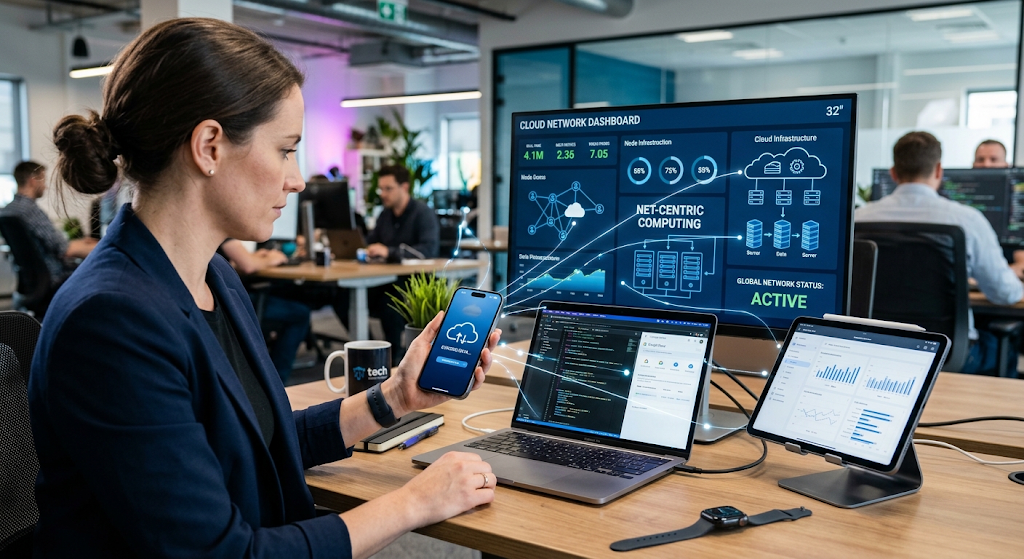
Mobile computing and net centered computing are very much related as we see in the fact that most modern mobile devices use networks to deliver a full range of their features. A smart phone for instance is able to perform some functions stand alone, but for the most part many of its very useful services require a connection to remote systems. When a user sends out a message via an app, checks a bank account, streams a video, uses a navigation app, or accesses a cloud document the smart phone is in fact communicating with remote based systems which process the request and return the information.
This relationship also means that the mobile device in large part is a point of access to a much larger computing environment. The device itself provides the interface, sensors and local processing power, while the network does the heavy lifting of connecting to remote applications, databases and cloud infrastructure. As a result users are able to access computing resources while on the go, at school, working from home or going about daily activities away from the traditional desktop computer.
Smartphones as Mobile Computing Platforms
Smartphones are at the forefront of mobile computing which they are of great importance in — they pack into a handy device powerful hardware, OS’s, communication tools, sensors and applications. Today’s smart phones have processors which handle complex tasks, large memory, cameras, GPS, biometric sensors and wireless tech. But what makes their power really great is when they connect to external networks and online services. A phone can access the web, sync files, talk to remote databases, use cloud apps, get real time notifications, and interact with other connected devices.
Also mobile OS’s present an environment in which apps can use device features and communicate with the internet. This has transformed the smartphone from a basic communication tool into a general purpose computing platform. We see users now do in their phones what before they required desktops for — editing docs, attending virtual meetings, managing finance, learning online, creating content, and access to business systems.
Mobile Applications and Network Services
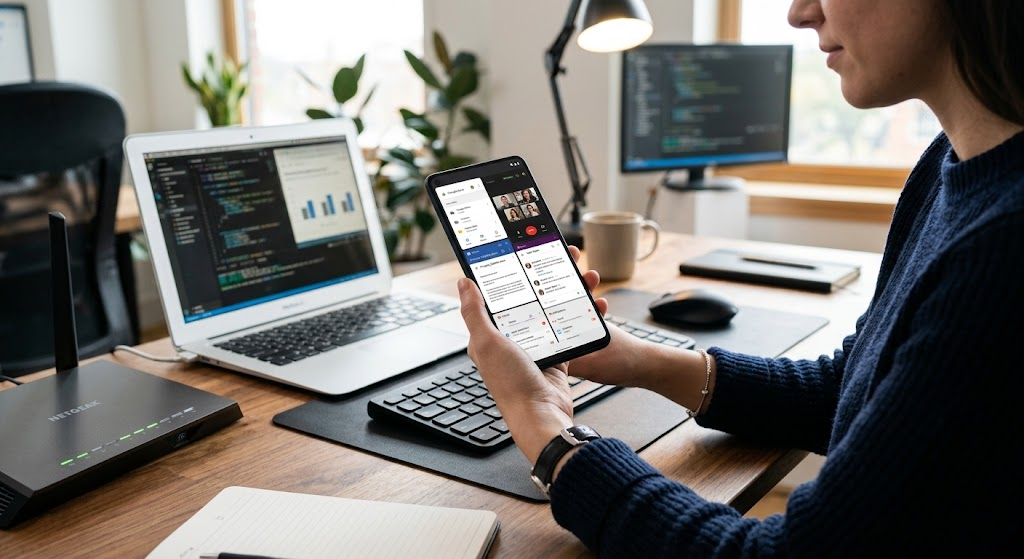
Mobile applications are a key interface between users and network based computing services. What we see is that apps which are installed on smart phones put out to remote servers via the internet which in turn they use to get info, make requests, sync data, and which also provide real time services. For example a weather app may get present weather reports from an online service instead of having that info stored solely on the phone. A social media app may post to remote servers, while a shopping app may talk to databases which have product info and customer orders.
Thus many mobile apps in fact are interfaces to much larger scale computing systems which run in the background. What developers do is to separate the user interface from the back end processing which allows the apps to stay light weight while the heavy lifting is done by remote systems. Also this structure which we see in these apps allows for central service update, management of large info sets and also to present the same features to users across many devices.
Wireless Networks and Mobile Connectivity
Wireless networks serve as the base for communication which in turn enables mobile devices to take part in net centered computing. We see in Wi-Fi and cell phone networks the technology that enables your smartphones and other mobile devices to trade info without the use of physical network cables. Cell phone networks which allow you to stay connected as you go between locations, and Wi-Fi which provides high speed access in homes, schools, offices, public places and other environments. Also we are seeing modern mobile networks improve speed and response of online services which in turn makes features like video conferencing, cloud gaming, streaming, navigation, and real time collaboration more so on mobile devices.
It is in this area of remote service dependence that we see the value of wireless connection most clearly which is in the fact that many apps today are designed around remote info and functions. Thus without reliable network access many apps may lose access to the latest info or key backend features. In this way wireless networking plays the role of the bridge between your hand held devices and the large scale computing resources which are made available through connected systems.
Network-Based Computing Services and Cloud Platforms
Cloud base infrastructure has seen great expansion of what mobile devices are able to do by using remote storage, processing, apps and other resources. We see that computing resources are accessed via the internet by users as opposed to having to run all the computing functions locally. This in turn makes network based computing services very important to the mobile computing experience as smartphones are always able to connect to remote systems when there is a network connection. Cloud services we see include file storage, databases, app hosting, AI features, collaboration tools, and data processing.
For example a user may take a picture on a smart phone which is then synced to the cloud for access from another device. Also we see cloud based productivity apps which enable the user to create and edit docs which in turn sync info across multiple devices. This relationship between mobile devices and cloud infrastructure means that we are able to access very powerful computing resources without the physical burden of the hardware that provides them.
Mobile Databases and Data Synchronization
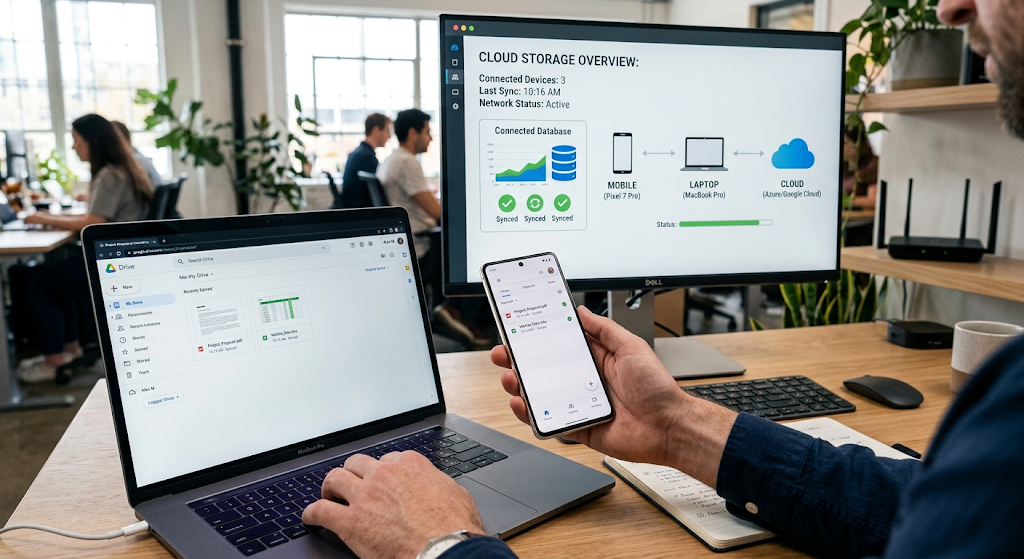
Mobile databases are also a key element of net centered mobile computing. We see that apps put in and take out info like customer info, messages, products’ details, user preferences, transactions, or location info. Some data is stored at the smart phone’s end which makes it available for app use when there is no network access. Also we see large scale data kept in remote servers or cloud databases which is accessible to authorized users and devices. Synchronization is what ties these two settings together by which we mean that it sees to it that the right info is updated in local machines and remote systems.
For example a note made on a smart phone may be synced with a cloud based account and later that same note is accessible from a laptop or tablet. For effective sync we have to see that systems manage changes, issues with connection, security, and also sort out issues of different versions of the same data. Thus mobile databases play a role in that they enable a continuous computing experience across devices and locations.
Location-Based Services
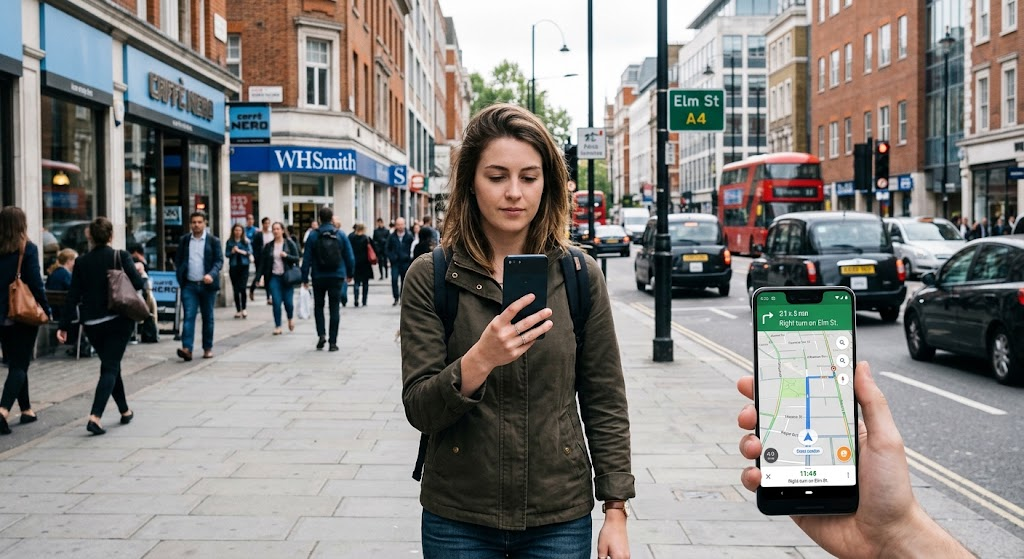
Location based services present a picture of how mobile computing is used to combine network access with info from device sensors. In today’s world smartphones which are equipped with GPS and other tech are able to determine or to estimate a user’s location. Apps put that info to work to present relevant services based on a user’s location. In the case of navigation apps they are able to present route options, maps which display what is nearby, and transit apps which put users in touch with local services. Also businesses use this location data to present content or services which are relevant to a user’s geographical location which all must be handled in a responsible way with regard to privacy.
What we see in location based computing is a collaboration between the mobile device, positioning tech, wireless networks, databases and app servers. A navigation app for instance will use the phones’ location data, get map info from remote servers, calculate the best route, and give out updated directions as the user moves. This is an example of how many computing technologies have to work together to present a service that a stand alone computer would have a hard time to put forward.
Cloud Services Supporting Mobile Computing
Cloud computing has become the base for mobile computing which we see today because it provides scale which in turn supports large scale user and application growth. Instead of each phone having to do all the work itself, we see developers utilize cloud infrastructure for functions that require great storage or processing power. Also we see that companies are using cloud services to present the same applications to users no matter what device they are on.
As users sign in to an app we can have their info pulled from the cloud based systems which in turn allows them to pick up right where they left off in a different device. This is also very useful for companies as they can get their staff to access company info while out of the office or traveling. Also we see that schools are using cloud services to put out material and apps to students. In this cloud and mobile combo we have a very flexible computing model in which users can get into any service from any device rather than being tied to a single machine.
Security Issues in Mobile and Net-Centric Computing
The issue of security is a greater concern with increased use of networks. Mobile devices include personal info, authentication details, photos, financial info, communication records, and business data. As they connect to remote services, info must be secured in transit and at rest on servers or devices. Also at issue are weak passwords, malicious apps, insecure wireless networks, out of date software, and phishing attacks that present opportunity for unauthorized access. What is required of organizations is to put in place security measures like encryption, strong auth, secure app development, access controls, regular software updates, and appropriate data protection policies.
Also a great role is played by users in security which includes getting apps from trusted sources, using strong passwords, turning on security features, and being alert to suspicious messages or links. As mobile computing integrates into business and personal life, securing the devices and the network services which they connect to is more critical.
Benefits of Net-Centric Mobile Computing
The integration of net-centric computing and mobile technologies brings about many large benefits, which in turn better our daily lives. Of all these benefits, the most important is that of access which is that users can get into info and services in places which don’t have traditional desk top computers. Also mobility allows for flexible work options which in turn support remote communication and access to company resources. In education we see that students can use their mobile devices to get into learning platforms, digital libraries, collaboration tools, and educational apps.
Also companies can now reach out to their customers via mobile apps and at the same time run continuous services. Also we see that collaboration is a large benefit as network enabled apps enable many people to work on the same data at once. Also cloud services are reduced which in turn lessens the storage of each resource locally, and also central systems are made for easier updates and maintenance. In total these pros make net centered and mobile computing very useful in many areas of today’s world.
Challenges and Limitations
Despite the benefits we see in mobile net centric computing it also has issues. We still see network availability as a key issue which remote service heavy applications may in fact do away with when there is poor or no connection. Also we see that mobile devices have issues with battery life, storage, processing power and screen size although we note that modern hardware is improving in this area. Also we have the issue of privacy as many mobile services collect info on users, devices, location and activity. What we are seeing is that organizations must balance personalization and convenience with what is responsible data management.
Also we see that compatibility is an issue as applications have to perform across many different operating systems, device types, network and hardware platforms. Also to that we add that network based services can have outages or performance issues which affect large scale user groups. To address these issues we require careful system design, reliable infrastructure, appropriate security measures and also how applications perform in different network settings.
The Future of Mobile and Networked Computing
In the coming years we see the trend toward greater integration of devices in mobile and net centered computing. We will have faster wireless networks which in turn will support apps that require quick info transfer, also we will have edge computing which does processing right at the source thus reducing delay. AI will play a big role in mobile apps which will see them better interpret user input, identify patterns, and supply very personal services.
Also the Internet of Things will play a role in mobile computing by connecting smart phones to cars, home appliances, wearables, industrial equipment and other systems. As we go along we may see mobile devices take on a role more as gateways to large scale digital environments then as independent computers. Also we will see growth in cloud services, wireless tech, mobile databases and intelligent apps which will in turn put that which is mobile in a stronger relationship with network based computing infrastructure.
Conclusion
Net oriented computing and mobile computing have redefined how we interact with digital technology by doing away with many of the issues present in the old desktop models. Smart phones bring with them portable computing which in turn is made use of via wireless networks that tie in applications, databases, cloud platforms and other network resources. Mobile apps provide easy access to remote services, mobile databases support info storage and sync, and location based services use device and network info to present context aware experiences.
Cloud computing also plays a role in the mobile space by way of its scalable storage and processing resources which do not have to be present on the user’s device. While issues of security, privacy, connection, and device performance still are very much present and important, the pros of this connected model are great. As wireless networks, cloud platforms, AI, edge computing and connected devices continue to advance, net centered computing will still be a key player in the delivery of computing to people no matter where they are.