
Technology has been at the heart of most areas of international business, making a dramatic transformation in the field. It once was a difficult and complex task for businesses aiming to expand their reach beyond their own borders, in terms of both communication and transportation, payments and market research and documentation and customer service. If a business in Nigeria tries to sell its product in Europe, Asia or North America, it may be challenging to market the product unless it has physical presence or is forced to depend very much on international intermediaries. Many of these are being overcome by digital innovation, which makes it possible for businesses to communicate instantaneously, sell products digitally, take payments from abroad, operate remotely and coordinate various supply chains across countries.
E-commerce, digital payments, cloud computing, supply-chain technology and online marketplaces have thus emerged as significant instruments for businesses looking to expand overseas. These technologies aren’t just quicker and more efficient; they are altering how businesses enter foreign markets, how they engage customers, how they manage resources, and how they compete in a hyper-connected global economy.
How to Make International Business Go Digital
The world of international business has been opened to businesses of all scales thanks to digital technology. In the past, international growth was linked to big businesses that have the funds to have international offices, warehouses, employees, ads campaigns, distribution channels etc.Up until recently, international growth was related to large businesses with enough money to have international offices, warehouses, employees, ads campaigns and distribution channels. A small business today can have a web site, social media, digital advertising, cloud-based software, and international payment services, enabling it to serve customers in several countries without having to establish a physical presence in each country. This has resulted in opportunities for entrepreneurs, startups, freelance, manufacturers, retailers and service providers to engage in international trade. A company can conduct market research on overseas markets online, hold meetings with potential partners via video call, reach out to targeted customers, receive orders electronically, and track business growth from a single point. Technology has also enhanced the availability of information, which enables businesses to analyze consumer trends, research the competitor, keep track of global trends, and make quicker decisions. Therefore, geographical distance still has its significance but no longer plays the same role in international trade as before.
The Emergence of E-Commerce and Expansion of Cross-Border Sales
Ecommerce has emerged as one of the biggest technologies that have revolutionized international commerce, enabling businesses to sell to people beyond their home markets. A firm doesn’t have to rely on international distributors or physical stores to reach foreign buyers. Businesses can sell products online, write product descriptions, take orders, chat with customers, arrange delivery etc. all on the web. In doing so, this model has made overseas markets available to smaller companies which would not have been able to expand because of financial limitations. E-commerce offers consumers access to products from different countries and aids in comparing prices and the quality, reviews, and delivery options of those products. Customer information is also useful in identifying which products are successful in various markets and making the appropriate adjustments to marketing campaigns. But it isn’t enough to have a website to do e-commerce in other countries. When dealing with international sales, companies need to take into account issues such as cost, customs clearance, taxes, consumer protection laws, currency variations, consumer tastes, delivery times, and return policies.
Online Markets and Global Customers
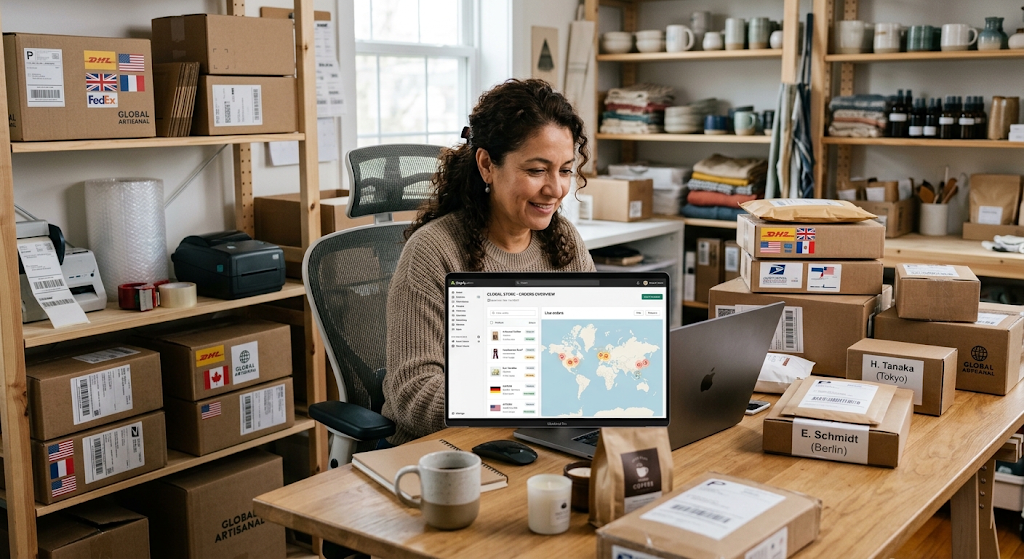
The complexity of accessing international markets has also been eased by online marketplaces which are able to connect sellers and buyers via established online platforms. Rather than starting from scratch and creating an entire customer acquisition system, companies can leverage platforms that already bring in big customer bases with products they can list, payments they can accept, communication they can offer, and order management that’s in place. Knowing how these platforms work is essential for businesses that are looking to grow their business internationally, making resources that explain online marketplaces handy for companies that are starting to get into digital commerce.
Marketplaces can be especially beneficial for small businesses as they enable them to connect with customers that they would not be able to access directly. They also offer companies the opportunity to gauge customer interest in products in different countries before spending tons of dollars in building physical facilities. Meanwhile, businesses need to be aware of platform charges, competitors, customer feedback, marketplace rules, and varying consumer expectations. Relying solely on one marketplace can also pose risk, and businesses might want to use the marketplace and their own websites and digital channels together.
Digital Payments makes International Transactions Easier
The digital payments have taken another big hurdle off international trade, which is now easier for businesses and buyers to move money across borders. The traditional way of international transactions may encounter long processing times, complex banking operations, high charges, and exchange rate volatility. Today, businesses can receive card payments, bank transfers, digital wallet payments, payments via payment gateways, and more — all by using digital payment systems. These services can help to speed up transactions and provide customers with more convenient payment options.

Payment technology can also enhance the financial management of businesses in countries other than the United States, as electronic transaction records can be transferred with financial and business systems. International payments still have significant issues to overcome, however. The fluctuation of exchange rates may impact revenues and fees may impact profit. Fraud prevention, payment security, financial regulations, taxation, and customer privacy are also crucial concerns businesses need to take into account. Thus, the selection of appropriate payment methods for every targeted market may be a significant component of the international business strategy.
Secure Digital Transactions – Building Trust
When businesses are cross-border, trust is especially crucial because customers might be ordering from companies they have never interacted with face-to-face. Secure digital payment systems can offer more confidence by offering authentication, transaction records, fraud monitoring, and other security features. In addition, companies can gain credibility by stating prices, shipping details, return policies, warranties and customer support procedures before a purchase is made. Payment technology is therefore not just a way to move money, but it’s a part of the customer experience. Consumers are more inclined to finish a purchase when they think the financial details are secure and that the firm will take responsibility for issues. Cybersecurity and payment protection are therefore no longer just technical add-ons, but strategic investments for businesses. In the case of a security breach, their trust can be lost, they may be unable to operate or incur financial and legal consequences, especially if the business conducts transactions across countries with varying regulations.
Cloud Computing aids International Operations
Cloud computing has revolutionized how international firms store data, operate software and communicate across geographical lines. Companies can access applications, databases, storage, and computing resources via internet-based cloud platforms rather than using all business systems on the computers or servers in one office. This is particularly beneficial when businesses have employees, suppliers and customers from other countries, or offices in other countries. A sales team in Lagos can receive the same business system as a sales team in London, Dubai or New York and managers can read key information without having to be in the same location. Companies can also cut down the hardware requirement by adopting cloud computing. Computing resources can be scaled-up or down as the business requires, which is very convenient when there is a fluctuation in the international demand. The cloud-based collaboration tools also facilitate remote meetings, sharing of documents and files, project management, customer relationship management and more that makes it easy for international teams to collaborate.
Cloud Technology and Business Scalability
Scalability is one of the key benefits of cloud computing services for foreign companies. When a company is launching into a new market, it is not always possible to predict the number of customers that will buy its products or services and the amount of computing capacity required. Often traditional infrastructure requires a large capital investment before a demand is known, and thus resources must be bought that are not being used. Cloud services offer increased flexibility as businesses may be able to scale up or down their computing needs based on requirements. By doing so, a company can increase digital service offerings when customers demand more without constructing a completely new technology platform to support the growth.
Cloud platforms can also serve businesses with operations in several regions by enabling access to applications and data from various regions. However, planning is essential for a successful cloud adoption. Data security, access controls, compliance regulations, service availability, costs, where information is stored, etc. must be considered. Thus, in order to have flexibility without incurring unnecessary expenses or security risks, it is essential that the business management of the cloud is undertaken effectively.
Supply-Chain Technology aids Logistics Around the World
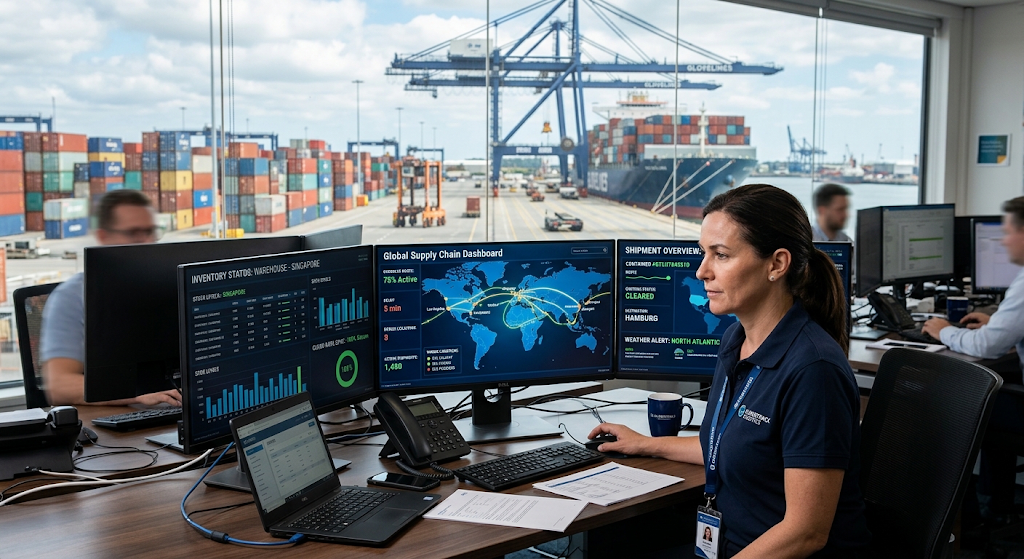
Supply chains are integral to international trade and technology has helped to bring them into sight and into control. Today, a supply chain may include manufacturers, raw-material suppliers, warehouses, shipping companies, customs authorities, distributors, retailers, and customers from various countries. They can disrupt the networks if incorrect information is not provided. Businesses use digital supply-chain systems to maintain inventory, track shipments, predict demand, control their suppliers and detect delays. The Internet of Things sensors, GPS tracking, automated inventory systems, data analytics and digital documentation can provide businesses with information about the location of goods and what they are doing. This visibility enables businesses to act faster in case of issues. If there’s a delay in the shipment, for instance due to issues with transportation, a business can use the new data to alert customers, modify inventory strategies, or seek different logistics solutions. Having more supply-chain information will, in turn, decrease uncertainty and the capacity of companies to serve international customers.
Automation and Data in Global Supply Chains
Another major development is automation, as numerous activities in the supply chain are repetitive, and could be done more efficiently using software and machines. The automated systems can update the stock information, generate shipping documents, organize stock operations, detect unusual patterns and alert them when stock levels are reaching certain thresholds. AI and data analytics can also aid businesses in predicting demand based on previous sales data, seasonal trends, market conditions, and more. Clearer predictions will help minimize inventory risks and diminish the chance of stocking out of hot items. Often, transportation and replenishment are a time-consuming part of international trade, and forecasting can make a big difference in customer satisfaction and operating costs. Automation doesn’t mean that humans aren’t needed for decision-making. Employees must still be able to decipher the information, deal with the unexpected, assess suppliers, interact and make decisions regarding relationships, and make strategic decisions if the markets are unexpectedly changing.
Technology reduces Geographical Barriers
A key effect of digital innovation on international business is the ability to diminish the tangible ‘distance effect’. Teams in multiple countries can share almost instantaneously via communication apps, email, video meetings, and collaborative applications. Digital marketing allows companies to target customers in particular geographical areas without having to establish physical advertising offices there. Ecommerce helps users get products from overseas sellers and digital payments help the users with the ease of making payments.
Cloud computing enables workers in various countries to access shared business systems, and supply-chain technologies offer improved visibility throughout extended supply chains. The combination of these technologies produces a solution in which an enterprise can manage international operations from a fairly centralized location. While the influence of geography on transportation, regulations, culture, and infrastructure and market conditions remains, the technology has minimized many of the communication and coordination challenges of distance.
New Opportunities for Small and Medium-Sized Businesses in the U.S. and Europe
Technology has provided important opportunities for SMEs to expand internationally, as some of the expenses usually involved with international expansion can be reduced. While a small company might not have the financial means to open offices in several nations, they might have the ability to make use of digital marketing, eCommerce platforms, cloud software, online marketplaces, and international payments to get to global customers. Digital tools may be a means for smaller businesses to level the playing field, too, since they can narrow their focus on a specific product or service and focus on targeting a specific international audience.
A local fashion company, a software developer, food processor, education provider, or creative business may be able to target an international customer base without the need to be a multinational company in the conventional sense. But technology is not the key to international success. The same qualities are required of the smaller businesses, such as strong products, customer service, competitive pricing, effective branding, and understanding the market they are entering. Digital is about affording opportunities, but business needs to be smart and use the tools to turn the opportunities into sustainable growth.
Difficulties Associated with Technology-Enabled Global Trade
While technology offers advantages, it poses challenges for international businesses as well. Issues related to cybersecurity are one of the most critical ones as companies rely on connected systems for payments, customer data, communications and operations. A cyber attack can affect business operations and the company’s brand. Personal data privacy is also a concern since countries have various requirements on the collection, holding and processing of personal and business data. International firms need to grasp the tax and customs laws, consumer protection measures and digital commerce laws in the markets within which they trade. Another challenge is the technological disparity. In some areas, businesses and consumers may be still limited in their access to reliable internet connectivity, digital infrastructure, and financial technology. This means that businesses looking to take advantage of global digital trade need to take local factors into account, and not assume that the approach they use for digital trade in one country is effective in another.
The Future of Technology and International Business

As emerging technologies are developed, the bond between technology and international business will only grow tighter. AI can be used to analyze markets, customize customer experiences, automate repetitive tasks, and detect patterns in vast amounts of information, enabling companies to make better-informed decisions. While blockchain and other distributed technologies hold promise for areas like transactions, digital records, and supply-chain verification, their potential impact will be determined by their adoption in practice and regulatory frameworks. Businesses can use advanced analytics to make better pricing and inventory decisions, customer decisions, and market opportunity decisions. Repetitive work can be eliminated with automation systems and more and more advanced cloud solutions can be used for complex international operations. As businesses evolve their digital capabilities, they will also have to turn their staff into digital-skilled workers and establish digital strategies for responsible technology management. International commerce of the future will not be decided by technology, then. Those companies that incorporate digital innovation, combined with robust management practices, customer awareness, cyber security, regulatory compliance and reliable operations will be more successful in global markets.
Conclusion
The business world has been revolutionized by technology, which makes it easier for companies to communicate, sell, receive payment, handle information, coordinate supply chains and reach customers outside of their respective countries. Cross border sales have been facilitated by e-commerce, digital payment systems have made transactions easier, cloud data has made it easier to collaborate internationally and supply chain technologies have enhanced visibility and efficiency. Online marketplaces have also enabled smaller businesses to reach customers that they previously could not.
The changes have lowered many geographical barriers and opened up new opportunities for all businesses of various sizes to engage in international trade. But international expansion still needs to be done carefully as cybersecurity concerns, regulations, cultural differences, logistics, payment risks and infrastructure are important challenges. Businesses will have a better array of tools to compete internationally as AI, automation, cloud services, analytics, and more continue to evolve. Companies are likely to gain most from those that don’t see technology as just a bunch of digital tools, but as a strategy that supports efficient, flexible and customer-centric operations around the world.