Introduction
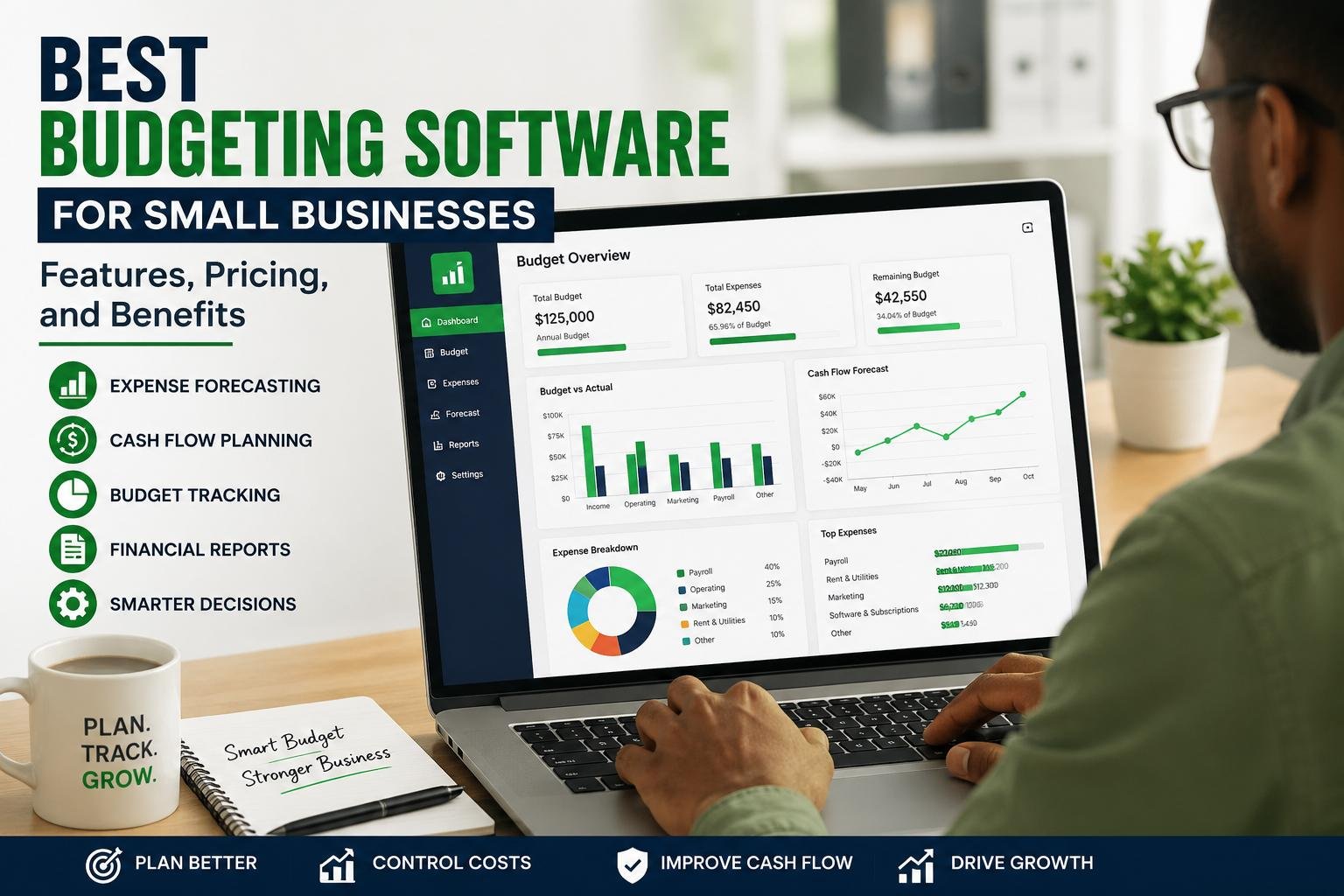
It can be challenging to budget any small business when bills keep coming in and wages fluctuate from one month to the next and when financial decisions have to be made on a quick turnaround. Spreadsheets may be useful for small businesses, but become hard to manage as the business expands with employees, customers, suppliers and other income. It’s here that using budgeting software could help you make budgeting a more organized task. Today’s budgeting software allows the owner to develop a budget, track money spent, predict spending, plan for cash flow, make reports, and link financial data to accounting systems. Entrepreneurs can use software instead of doing everything by hand to get a better handle on how money is being spent and if the business is on target to meet its financial objectives. In addition to the other budgeting software solutions for small businesses, Sage financial planning budgeting software is one to consider if businesses are looking for a dedicated budgeting solution.
The optimal budgeting software for a small business varies from business to business, depending on size, financial complexity, industry and accounting processes. A freelancer with a few expenses per month will need to have different needs than a growing company with multiple departments, staff, inventory expenses and recurring payments. There are platforms that focus mainly on budgeting and forecasting and then there are others that integrate budgeting into accounting, invoicing, payroll, reporting, or some other financial management. A solution’s value also is tied to its pricing; a very simple operation may not be worth the sophistication of their forecasting. As such, business owners should pay attention to extra features offered, the number of users it supports, integrations, automation, reporting, and user-friendliness. It is easier to determine together these factors to choose software that allows financial control without adding to the complexity or costs.
Small Business Budgeting Software
Small-business budgeting software is a tool for financial planning that allows small businesses to plan their anticipated income and expenses, set financial limits, track their actual financial results, and make good financial choices. It could also feature cash-flow forecasting, scenario planning, financial dashboards, automated reporting, expense monitoring and accounting system integration, depending on the platform. The primary distinction between a dedicated budgeting solution and a simple spreadsheet is the capacity to have all financial data in one spot and automate portions of the budgeting procedure. If a transaction is changed, the data can be connected to software that can retrieve the data from the accounting or banking system and compare actual performance to the budget, without having to update all the formulas manually each time. This can help to ensure consistent financial planning and minimize the chance of missing out on important changes. The challenge for entrepreneurs it is not only to prepare a budget at the start of the year, but to have a constant overview of the company’s financial situation.
The Key Features to Compare
1. Expense Forecasting
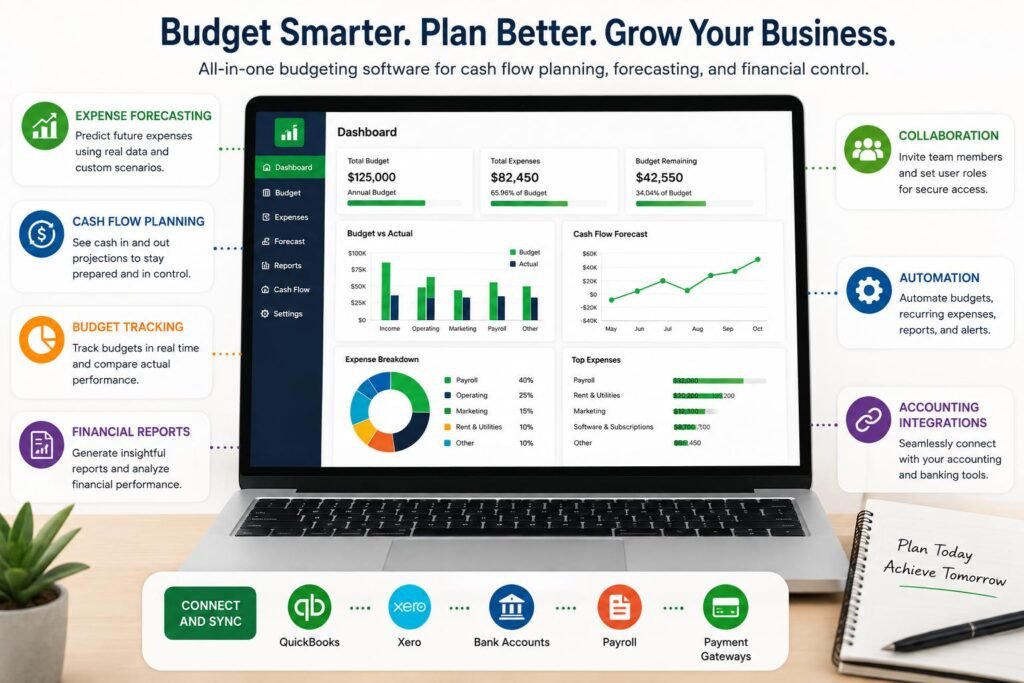
One of the most beneficial capabilities to review when looking at budgeting platforms is expense forecasting. In order to run a business, one must be aware of the expenses incurred in the previous month and also be aware of the expenses in the upcoming weeks or months. Historical financial data, ongoing expenses and planned spending will be used by budgeting software to help to estimate future expenses. This can be helpful for expenses like rent, salaries, subscriptions, utilities, marketing, inventory and suppliers payments. More sophisticated forecasting options exist on some platforms that enable owners to make changes to the assumptions and observe what changes to their spending choices might impact future outcomes. When assessing this, companies need to find out if they can tailor forecasts, import past data, and if the system allows for easy comparison with actual spending. With the help of reliable forecasting, entrepreneurs can help to anticipate any cost rises before they start to put pressure on available funds.
2. Cash-Flow Planning
Cash flow differs from profit and cash-flow planning is a crucial aspect of business budgeting. If a company makes a profit on its books but still has problems paying its suppliers, employees or other obligations because the cash comes in at a later time, it can still have a problem. Budgeting software with cash-flow planning capabilities can help owners to predict when cash will flow into their business and when it is expected to flow out of the company. This can be helpful in recognizing the times that cash flow limitations can arise. By enabling you to see what you are expecting to earn, expected recurring payments, outstanding payments, and future obligations all in one place, this is where good software comes in handy. Some solutions also give businesses the ability to develop various scenarios, such as slower customer payments and/or increased operating expenses. A small-business owner can make informed spending, buying, hiring and saving decisions by periodically checking cash flow projections.
3. Financial Dashboards
Financial dashboards are visual representations of financial data that can be easier to comprehend than rows of financial data. Useful dashboard data could show revenues, expenses, cash flow, budget performance, profit figures, and more to help owners gauge the business on a dime. This is especially useful for business owners who don’t have a finance team and want to keep an eye on their business without having to sift through detailed reports that take hours to review. In the software comparison, looking for a business with a dashboard that is customizable to their priorities is important. If you’re in a retail business, you might be interested in sales, inventory and operating expenses; if you’re in a professional services business, you may be more interested in revenue, project expenses and cash flow. The ideal dashboards should provide real-time and historical data in an easy-to-understand format and make it easy to notice when things are different from normal, even if you’re not a financial expert.
4. Budget Tracking and Variance Analysis
Making a budget is just the initial step in successful finance management. Businesses also should monitor if actual performance is in line with the plan. With budget tracking, owners can track and compare the amount of money expected to come in and go out of the business with actual earnings and spending. Variance analysis goes one step further by determining variance between budgeted and actual figures. For instance, if a business has budgeted $2,000 for marketing but has already spent $2,700, the software will show the business the amount of money they are spending – in this instance, $700 – and alert the business owner to investigate why. Frequent variance monitoring will show if spending is out of control, costs are higher than anticipated, or revenue is higher than anticipated, before those issues get out of hand. Entrepreneurs should ask about the ease of budgeting software updates, easy auto categorization of spending amounts and whether the budgeting software gives explanations or visual cues for spending.
5. Reporting and Financial Analysis
Reporting features are also crucial as business owners require accurate information to enable them to assess their performance and make decisions. Budgeting software can generate reports on income and expenses, budget variances, cash flow, forecasts, departmental spending and more. On more sophisticated platforms, users can tailor reports with respect to time, category, and project or business unit. This can be helpful when producing management reviews, putting together financial forecasts or explaining financial results to business partners. Easy export or sharing of reports as needed should also be a consideration. But don’t pay for a lot of complicated reporting features that you don’t plan to utilize. The best solution is to have sufficient detail to assist in making better decisions and not so much that reports are hard to follow. A small business should be able to answer questions like where the money went, if the company stayed within the budget and what the financial trends are that need to be paid attention to.
6. Collaboration and User Access
Financial planning can be a multi-person job as a small business grows. An owner could collaborate with an accountant, bookkeeper, finance manager, department head or business partner. With collaboration features, authorized users can view relevant financial information, add to budgets, view reports, or give feedback without needing to send numerous versions of spreadsheets. User permissions are especially crucial as not all of the details of the finances need to be found by all of the employees. Businesses should look at the number of users in each platform’s pricing model, and if they can set additional access levels. An effective collaboration system can minimize delays in communication and the confusion that can result from the use of outdated files. It can also provide enhanced budgeting procedure with clear responsibilities and access to sensitive data to those who need it.
7. Automation
Budgeting and financial monitoring can save a lot of administrative tasks with the help of automation. Automated tasks can vary depending on the software, such as repeating transactions, categorizing expenses, modifying budgets, generating reports, sending alerts, transferring data, and calculating finances. In small businesses, automation can be particularly beneficial since the business owner may be pressed for time, or have to perform multiple functions at a time. Automated processes can help a business to maintain up-to-date financial records, rather than having to manually enter the same recurring expenses each month. Alerts can also be set up to warn users if they are nearing their budget limit, or if their actual system performance significantly exceeds or falls short of what they would expect. Automations should not however be a substitute for human oversight. It is advisable for the business owner to still inspect categorized transactions, forecasts and odd numbers periodically. Automation is meant to eliminate repetitive tasks and provide consistency, not to eliminate the use of financial judgment.
8. Accounting Integrations
Budgeting is more effective when integrated with the accounting system, making integration one of the most vital features to keep in mind. When there is no communication between budgeting and accounting systems, employees may be forced to input the same data into the system more than once and the risk of error is higher. Financial information may be more easily integrated between accounting/budgeting applications, enabling businesses to have a more up-to-date picture of their performance. Owners need to make sure that a platform will support their accounting software, banking services, payroll systems, payment methods or other applications used. They should also ask about the integration being free, or an extra charge. Budgeting can be an integral part of the regular accounting process as opposed to a standalone project that requires manual maintenance.
Pricing Considerations for Small Business
The cost of budgeting software is different among the software providers, therefore, entrepreneurs should consider the overall cost instead of just the lowest subscription price advertised by the software provider. Some platforms provide free or low-cost plans with the basic budgeting tools and others have monthly or annual fees depending on users, features, business size or financial complexity. Sometimes integrations advanced forecasting or extra users, premium reporting or implementation fees may apply. The first step is to list all the vital elements that a small business requires, and then decide which pricing plan will cover them. Many of the features that are available may not be necessary for your business, which could cause unnecessary operating expenses, or you may opt for a budget-friendly platform but not necessarily the one with the needed integrations, leading to additional work later on. Scalability is also a factor that should be taken into account with businesses. What works well for a small company with only three employees could prove to be costly or limiting for a larger company. When comparing pricing and functionality, owners can ensure they are getting a value for money while also making sure it will continuously serve their best interests.
The Advantages of Budgeting Software
Budgeting software helps to achieve the most important advantage better financial visibility. Owners can take the important financial information and place it in a more organized system rather than relying on the manual process of creating a report or spreadsheets, receipts and bank records. This can help speed up decision making processes as business owners can determine if their expenses are consistent with their plans, and if cash-flow issues may be emerging. Budgeting software can also enhance accountability by providing budgets to departments, projects or spending categories, and giving managers the ability to track performance. Businesses can save on repetitive administrative tasks with automation, and forecast for future expenses and revenue changes by utilizing forecasting tools. One of the other key advantages is financial discipline. Owning this way, when actual performance is regularly compared to the budget, the owners will have a better chance of noticing that any unnecessary spending is occurring and will investigate what is causing any financial variance. This ongoing process can aid a business to make more conscious decisions regarding recruitment, business promotion, expansion, acquisition and other significant decisions.
Benefits of Using Budgeting Software
When selecting the best budgeting software, it is important to start with the company’s current financial process and not a list of popular products. First of all know the issues that the software is anticipated to address in the business. With cash flow issues as the primary concern, advanced collaboration features might not be as significant as strong cash-flow forecasting. Seamless integration may be an important consideration if the company already has an accounting system. Then businesses should look at forecasting, dashboards, budget tracking, reporting, automation, collaboration and user-access features. Ease of use should also not be taken lightly since it is less valuable if employees fail to use the software that is too complex. Owners need to consider the benefits of testing out the platform with realistic financial data and, if available, take advantage of any demos or trial periods. Last but not least look into future growth. The ideal solution will deliver valuable financial control now and future flexibility for the business as it grows in transactions, staff and revenue, and evolves in its financial planning needs.
Conclusion
Budgeting software can provide small businesses with a more organized approach to budgeting, track business performance, predict expenses, and control cash flow. But there’s no one-size-fits-all solution that’s right for every business. The correct option will be determined by the size and budget of the business, the nature of the accounting setup, financial objectives and reporting / forecasting needs of the business. When deciding on accounting software, it is crucial for entrepreneurs to take into account key features like expense forecasting, cash-flow planning, financial dashboards, budget tracking, variance analysis, reporting, collaboration, automation, and accounting integration. In addition, it is better to consider pricing in relation to the value that the software offers and not just the lowest price. Choosing the right platform that aligns with their current workflow and is scalable to the business helps small-business owners minimize financial manual tasks and improve financial visibility. Finally, good budgeting software is not only a repository for financial data; it is a tool to leverage financial information for more effective planning, improved control, and more confident business decisions.
Get more well researched information about Best budgeting software for small businesses here.