Most people know their own birthstone, but few know why it was assigned to their month, what it was believed to protect against, or how to wear it in a way that flatters modern outfits rather than looking like a keepsake pulled from a drawer. Birthstones sit in an unusual spot in the jewelry world. They carry centuries of folklore, they are personal without being loud, and they work as gifts for people whose taste you barely know. Yet they are also easy to get wrong. A garnet chosen for the wrong skin undertone, a peridot cluttered by competing gemstones, or an opal set in the wrong metal can all miss the mark. This guide unpacks the meaning behind each month’s stone and offers practical advice for choosing, styling, and combining birthstone pieces so they feel current rather than dated. Along the way, you will find honest answers about mixing family birthstones, gifting them across generations, and building a collection that actually gets worn.
Where Birthstone Traditions Came From
The habit of tying gemstones to months of the year is older than most jewelry traditions still in use. Its roots trace back to writings that assigned twelve stones to twelve tribes and later to twelve zodiac signs. Over time, wearers began matching the stone to their birth month rather than owning the whole set, and the modern list was standardized in the early twentieth century by jewelers who wanted a shared reference. That list has quietly shifted a few times since, adding alternatives for months whose original stones were rare, expensive, or difficult to source in commercial quantities.

Understanding this history matters when you shop. A few months have more than one traditionally accepted stone, so if your assigned option feels wrong, there is often a legitimate alternative already in circulation. If you are building a personal collection or gifting birthstone jewelry to someone else, take a moment to check whether their month offers a secondary stone. This one small step can turn an obligatory gift into something that actually gets worn every day.
A Month-by-Month Guide to Meaning and Styling
Each stone carries its own visual character, folklore, and practical considerations. What follows is a compact but honest overview, focused on how each looks in real jewelry rather than idealized marketing photos.
Winter Months: January to March
January’s garnet is deeper and warmer than most people expect, closer to spiced wine than to a bright red. It flatters warm skin undertones and pairs well with yellow gold and rose gold. February’s amethyst runs from pale lavender to deep royal purple, with the mid-tone violet remaining the most flattering across skin tones. It sits beautifully in silver and white gold. March offers aquamarine, a cool, watery blue-green that behaves like a whisper. It suits people who prefer subtle jewelry and works well as a small pendant or a delicate ring rather than a heavy statement piece.
Spring Months: April to June
April’s diamond gets the most attention but is also the most flexible, working in almost any metal, cut, or setting. May’s emerald is richer than photographs usually convey, with the best stones showing a soft internal glow rather than glassy transparency. It pairs strikingly with yellow gold. June has multiple stones, including pearl, alexandrite, and moonstone. Pearls suit classic, understated wearers; moonstone offers a cool, iridescent option for people who love subtle color shifts. Both feel timeless without being formal.

Summer Months: July to September
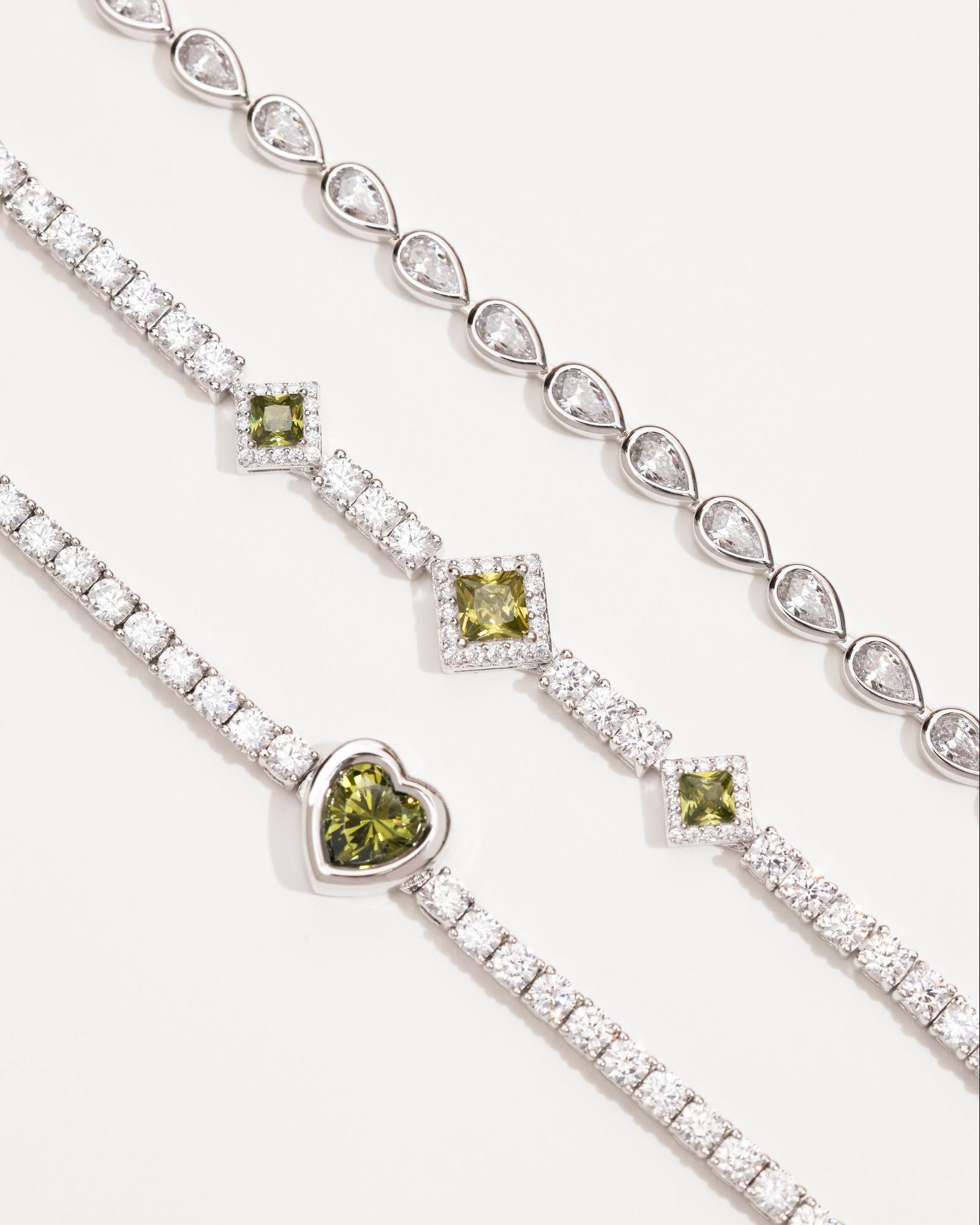
July’s ruby leans slightly pinker than garnet and photographs beautifully in every metal but especially in yellow gold. It suits people comfortable with a small burst of color. August’s peridot is a fresh, lime-leaning green that reads as summery and youthful, though it needs careful pairing to avoid clashing with warm-toned outfits. September’s sapphire is best known in deep blue, but the stone comes in many colors, including pink, yellow, and near-colorless. Consider a non-blue sapphire if the wearer is unsure about traditional stones.
Autumn Months: October to December
October’s opal displays a shifting rainbow of internal fire and demands careful handling because it is softer than most gemstones. Its alternative, tourmaline, offers similar visual richness with far more durability. November has topaz and citrine, both in warm honey to golden orange tones that flatter autumn wardrobes. December offers turquoise, tanzanite, and blue zircon, giving the most flexibility of any month. Tanzanite in particular has become a modern favorite for its deep violet-blue shift that changes subtly under different light.

Choosing the Right Setting and Metal
The gemstone gets the attention, but the setting decides how often the piece actually gets worn. Softer stones like opal, pearl, and turquoise need protective bezel settings for daily wear, especially in rings that see frequent knocks. Harder stones like sapphire, ruby, and diamond can handle prong settings without much worry. When choosing metal, consider skin undertone rather than trend. Warm undertones typically flatter yellow and rose gold, cool undertones favor silver and white gold, and neutral undertones can wear either. Pieces from FANCI’s collections often show the same gemstone across multiple metal options, which makes it easier to compare finishes before committing to one.
Chain length also matters more than most shoppers realize. A pendant that sits at collarbone level flatters most necklines, while shorter chains work better for layering and longer ones suit low-cut tops or dress necklines. If the piece is meant for daily wear, aim for a chain gauge sturdy enough to survive being caught in clothing without snapping.
Combining Multiple Birthstones Elegantly
Mother’s pendants and family bracelets that gather several birthstones in one piece can either look cohesive or chaotic. The difference usually comes down to three things: stone size, color balance, and metal consistency. Keep all the stones the same size for a calm, orderly look, or intentionally vary sizes if the piece is meant to feel organic. Group cooler stones together and warmer stones together if possible, or space them so no two clashing tones sit adjacent. Stick to a single metal throughout the piece unless the design specifically calls for mixed metals as a feature.

For Family Pieces
When representing several family members, consider a linear arrangement by birth order rather than trying to match color harmony. This gives the piece narrative meaning that outweighs visual friction between stones. If two stones clash strongly, place a small neutral diamond or plain metal accent between them to soften the transition.

For Personal Layering
If you own several birthstone pieces yourself, whether from your own month, your children’s months, or meaningful anniversaries, layer them by chain length rather than by stone. Keep a few centimeters of separation between necklaces to prevent tangling, and let the stones sit at visibly different heights so each one reads clearly. Two or three necklaces is usually the sweet spot; four or more often starts to look busy.

Caring for Different Gemstones
Not all birthstones tolerate the same care. Harder stones handle warm soapy water and a soft brush without complaint. Softer or organic stones need gentler treatment. Pearls should never soak, and opals dislike temperature changes and dry environments. Emeralds are often treated with oil to enhance clarity, which means ultrasonic cleaners can strip the treatment and dull the stone. When in doubt, wipe the piece with a soft, dry cloth after each wear and reserve deeper cleaning for a professional visit every year or two. Store each birthstone piece in its own soft pouch, since harder gems can scratch softer ones inside the same box.

Stones That Carry the Year in Them
Birthstones survive as a jewelry tradition because they solve a real problem. They give a piece personal meaning without needing an engraving, and they open the door to color in a wardrobe of otherwise neutral fine jewelry. The wearers who love their birthstones longest are the ones who chose their piece with intention rather than obligation. Start with the meaning that resonates, whether that is the folklore, the birth month link, or simply the color that suits your skin. Match the setting and metal to the way you actually live, not the way you imagine you might. Care for softer stones like the small treasures they are, and take advantage of alternative stones when a traditional option feels off. A well-chosen birthstone piece can outlast fashion cycles by decades, quietly recording the wearer’s history in a form small enough to travel through every ordinary day.