
Introduction: Breaking in to Software Development Without a Traditional Degree
A career in software development has outgrown the traditional path of the computer science degree. Although a degree still provides a very good base in programming, algorithms, and computer systems which is great for some, many successful developers today are from a self taught background, they come from practical experience and other alternative education paths. Presently companies are more on board with what you have built, how you approach problem solving, and your contribution to real world projects as opposed to just your academic history.
With the right study plan, dedication and lots of practice any tech interested individual can acquire the skills required to be a software developer. This guide we present is for those that are changing careers or did not go the degree route, we cover practical steps for programming skill up, project development, portfolio creation, interview prep, and tips for landing that first junior dev role.
Grasping the Transforming Software Development Career Scene
The tech industry has put forth more opportunities for people of various educational backgrounds to get into software development. We see that companies are looking for developers which in turn create apps, maintain systems, solve tech problems, and which are able to adapt to new technologies. While computer science grads do still have it easy in terms of theory, many companies today are looking at candidate’s coding tests, technical interview performance, past projects, and practical application of what they know.
This has in turn opened up the field for the self taught programmer, the professional looking to transition from another field, and the individual that learns via online platforms and hands on doings. Also we are seeing the growth of remote work, open source communities, and online learning which in large part has broken the traditional university program as a requirement for gaining experience. To do well in this changed setting is the first step towards making a great plan for getting into the software industry.

Exploring Alternative Pathways Into Software Development
For those that do not have a computer science degree there are many who develop software engineering skills and get ahead in the job market. These include self study, coding bootcamps, online courses, open source projects, internships, freelance work, and personal application development. These options present a chance for students to focus on the technical skills that employers want as well as to put together a portfolio of their work. Many have gone from non-tech backgrounds into tech careers by way of these alternative pathways into software development and they have built impressive portfolios that speak to their ability.
The key is not what specific route you take but the consistency and commitment you bring to the learning process. Success in this transition requires patience, regular practice, curiosity, and the ability to solve real world problems through code. By putting practical skills to use instead of just depending on certifications or qualifications, as a developer in training you can create your own opportunities in a competitive field.
Step 1: Study the Basics of Programming
The base of any software development career is in that which one has a great grasp of programming concepts. As a beginner, start out by learning what computers do with instructions, how programs are put together, and how we as developers use code to solve issues. Key concepts are variables, data types, conditional statements, loops, functions, error handling, and basic software design principles. Instead of trying to learn many programming languages at once it is better to master one first before you expand your knowledge.
What we learn from programming is logical thinking and problem solving which in turn applies to all tech out there. Practice is key because programming is a skill that grows with repetition and experiment. Tutorials are a start but that is not enough; learners should write code, make mistakes, debug issues and build out small projects. It is through these early experiences that the confidence is built up to take on more complex software development challenges.
Step 2: Master in High Demand Programming Languages like Python and JavaScript
Choosing which programming languages to learn may greatly improve your development journey as a professional. Python is put forth for beginners at which it excels at simple, easy to read syntax which also happens to be very broad in use from web dev to auto that, data analysis, AI, and backend work. Also in high demand is JavaScript for its role in making interactive sites which also has a dual play in front end and back end through things like Node.js. Python for the new coder to play with logic and structure in a non complex way and JavaScript to get into the nitty gritty of what makes up a web app.
Once you have confidence in one language the next step is to look into other tech which will best fit your career path. We aren’t trying to have a huge repo of known languages at your fingertips but to have a solid base of key concepts which will allow you to pick up new tools and frameworks as you go into your software development career.
Step 3: Develop Practical Experience through Projects
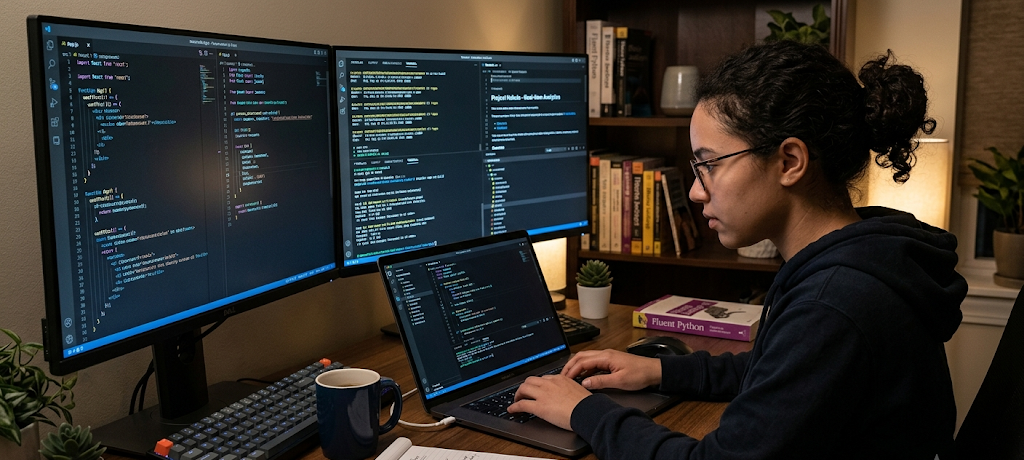
In terms of what sets successful developers apart from beginners it is the application of what they know in real projects. Employers are looking for proof that a candidate is able to use programming to put together workable solutions. By doing projects students are able to go beyond basic drills and show off their ability to plan, design, test, and improve software. At the start beginners may work on personal websites, calculators, task management apps, weather apps, or simple automation tools which they grow into more complex applications.
Each project should address a particular issue and have clear docs which detail the what, how and why of the project as well as the tech used and the development process. Also through projects developers learn very well from experience which is hard to get from just following along in a tutorial skills like debugging, research, file management and improving upon existing code. A robust project portfolio may become one of the best assets a junior developer has when going after a job.
Step 4: Build out your Professional GitHub Portfolio
GitHub is a primary platform for developers which they use to host, structure, and share their code projects. What you put out there on your GitHub account is like a portfolio which in turn gives employers a look at a candidate’s tech skills and development growth. For beginners it is advised to put up what you have worked on, write out what you did in clear commit notes, keep your repo’s in order and include in each project a very detailed README which goes into how it all works. Also a great GitHub profile will show growth over time which you do by including many types of applications you have developed and which you have improved over.
Also to boot developers should get involved in open source projects, team up with other programmers, and get into the coding communities which will give you practical experience. That which you put out there also shows off your team player skills, communication skills, and that you can handle existing code which is what pro are looking for. While a robust GitHub doesn’t replace experience it can make a candidate stand out in the job market when they don’t have as much of it under their belt.

Step 5: Check out Coding Bootcamps and Structured Learning Programs
Coding bootstraps which is an option for those looking for a structured path into software development. These programs put together a package of instruction in programming which is delivered in a shorter time frame as compared to what is put out by traditional universities. A good bootcamp will cover programming basics, web development tools, databases, software dev practices and also has elements of career prep. The benefit of bootcamps is that they present a set learning path, include mentorship, have a peer support structure in place and that they get you to do practical projects.
But at the same time choice of a bootcamp requires research as the quality, price and results put out by each program may differ. Students should look at the curriculum, instructor background, what other students are saying, job support they offer and the project options before they decide. While bootcamps do speed up the learning process they are not the end of the road. Graduates still have to put in the work to improve their skills, build out their portfolios and prepare for tech interviews in order to get into the software development field.
Step 6: Prepare your first junior role in tech
Landing that first software development job is a tough go because many entry level positions require that candidates display both technical and professional skills. Before you apply, get out the resume and improve your LinkedIn profile and put together your portfolio. Also do a better job of explaining your projects. Employers ask how you approached problems, what challenges you face, and how you improve your applications.
Also preparation for coding interviews is a must. Many companies use technical assessments to check out problem solving skills. Candidacy prep should not be centered around just solving problems fast — learn to talk through your thought process and explain your decisions. A mix of tech prep, project experience and confidence will greatly improve the chance of securing that first junior developer role.
Step 7: Continuous growth as a developer
Software development is a field that is ever changing which means that successful developers must be lifelong learners. We see the introduction of new programming languages, frameworks, security practices, and development tools on a very regular basis which in turn makes for a very dynamic field. After getting that first break in at a junior level what developers do is to improve themselves by getting into the advanced concepts, working with the more experienced members of staff, into larger scale projects and also to explore new tech areas.
While formal education is a great thing many developers grow via use of documentation, online communities, technical books, open source contributions and practical hands-on work. What is key is that developers have a growth mindset which they apply to seeing challenges as chances to grow rather than road blocks. Also the ability to learn independently is very valuable in tech as it is what helps developers to stay relevant as tools and what is expected of the profession is in constant flux.

Conclusion: Developing a Career in Software Through Skill and Persistence
A computer science degree is but one of many paths which lead into software development, also it is not the key to success. We see many that do not have a formal computer science background which still do very well in building great careers by which they develop programming skills, create practical projects, maintain strong portfolios, and prepare well for job opportunities. The journey is a dedicated, patient and consistent process which has become more accessible than ever before with modern technology resources.
By learning languages like Python and JavaScript, practicing problem solving, contributing to coding communities, and proving themselves through real world projects, aspirant developers may present great value to employers. We see the most successful stories from those that focus on building useful skills instead of just amassing certificates. With the right strategy and put in effort, any person can take great steps toward a professional software development career.



This was beautiful Admin. Thank you for your reflections.
Its like you read my mind You appear to know so much about this like you wrote the book in it or something I think that you can do with a few pics to drive the message home a little bit but instead of that this is excellent blog A fantastic read Ill certainly be back