
Introduction: Understanding the Modern Cybersecurity Landscape
Today’s digital world is in a state of enormous change, with the advent of cloud-based technologies, pervasive access to mobile devices, proliferation of Internet of Things (IoT) devices, and integration of artificial intelligence. These technological developments have helped unlock unimagined levels of efficiency and innovation for businesses around the world but have also created an enlarged attack surface for cyber criminals. Today’s cyber threats are not just basic viruses or malicious hackers going rogue, but state sponsored threat groups, ransomware syndicate groups, and automated exploitation bots. Given the critical infrastructure, financial services, health care and private sector’s reliance entirely on digital assets, ensuring data integrity, confidentiality and availability is no longer a mere IT mandate but a critical business goal.
As the migration to secure digital environments continues to grow, the demand for cybersecurity professionals is more acute than ever before, on a global scale. As the economy fluctuates in other technology areas, the demand for cybersecurity will continue to grow and stay strong — because security is a business need rather than a “nice-to-have” expense. There is a growing competition for talent among organisations seeking to secure staff who have the skills to protect networks, understand advanced attack surfaces and construct strong technical environments. Cyber security can be a great choice for those looking to pursue a career with job security, high salary, quick career growth, and stimulating work. But with numerous domains, technical tools, certifications, and specific jobs, it can be daunting for novices. Creating a plan is essential for making a smooth jump from a novice to job-ready security expert.
Building the Foundation: Core Knowledge Before Specialization
Rather than jumping straight into advanced security concepts, ethical hacking techniques, or complex defensive platforms, aspiring cybersecurity professionals need to build a strong foundation in the fundamental information technology concepts. Security is not a separate subject but an analytical component that is layered over the computer system, storage array and network structure. If you don’t fully grasp the ways in which data packets move between routers, switches, and firewalls, then you can’t protect or secure a network. The very basics of networking protocols that must be learned first are the Open Systems Interconnection (OSI) 7 layer model, the TCP/IP stack, Domain Name System (DNS) resolution, Dynamic Host Configuration Protocol (DHCP), subnetting and routing protocols. Knowing how the normal traffic on a network behaves is key to security analysis as it is based on the ability to detect anomalies that differ from an established operational baseline.
Along with networking basics, any aspiring professional will need to become proficient with the main operating systems, especially the Linux distributions and the Microsoft Windows platforms. For any dedicated cloud practitioner, enterprise server user, or security testing expert such as Kali Linux, command-line interface (CLI) skills are crucial.For a cloud practitioner, an enterprise server user, or a security testing player like Kali Linux, command-line interface (CLI) skills are vital. Candidates need to be at ease with managing permissions on files, navigating file systems in bash shells, watching processes and setting up simple service daemons. Moreover, having basic knowledge of programming languages like Python, PowerShell and Bash gives a huge edge. Scripting allows security practitioners to cut down on repetitive tasks, process massive log files, create custom security tools and communicate directly with Application Programming Interfaces (APIs) making a candidate from a tool operator to an adaptable security practitioner.
But in addition to the nuts and bolts of system action, new users need to know the basic principles of information security and governance. The core concepts for the understanding of security, including the CIA Triad, Confidentiality, Integrity and Availability, form the basis of all the security policies and technical controls used and applied in the enterprise environment. Candidates should understand the principles of risk management and how these differ between vulnerability (a flaw within a system), threat (a likelihood of danger to the system on the basis of a flaw) and risk (the financial or operational consequences of a threat successfully exploiting a vulnerability). Become familiar with existing industry frameworks like the National Institute of Standards and Technology (NIST) Cybersecurity Framework, and ISO/IEC 27001, which is the ISO standard for information security management systems, so that aspiring information security professionals can gain insights into how enterprise organizations around the globe design, measure, and audit their overall security posture.

Entering the Cybersecurity Job Market: Starting a Career in Security
Pathway 1: Enter the Security Operations Center (SOC)
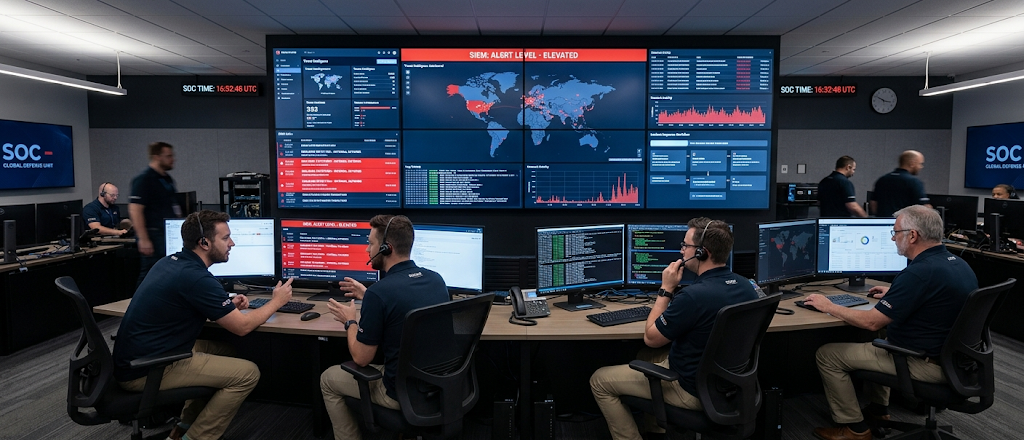
In most cases, the Security Operations Center (SOC) is the first place most professionals venture into the cybersecurity world. The SOC serves as the nerve center of a company’s security team, proactively monitoring networks, endpoints, applications and clouds for security threats 24/7. In such an environment, a SOC Analyst is a key member of the frontline team that receives alert telemetry from Security Information and Event Management (SIEM) systems, filters out false alarms, responds to suspicious security events, and starts mitigation procedures. Beginners will gain unparalleled hands-on experience in a SOC, where they will encounter live malware and actual attack methodologies, as well as enterprise log analysis and incident triage processes in multi-platform corporate environments.
A good way to get into Cyber Security is to begin in related entry-level Information Technology (IT) positions; although a direct job placement is a popular career goal. These roles offer essential practical experience in enterprise infrastructure, user account management, ticketing systems, and enterprise troubleshooting processes. Practical experience in IT support over a period of six to twelve months can help candidates gain insights into today’s corporate environment, hardware setups and user behavior that cannot be covered by a theoretical security study. Careers in IT security are a foundational step toward a more in-depth career in cybersecurity, and by intentionally taking on security-related tasks in an entry-level position, these professionals can develop a resume that makes them an attractive candidate for a security-focused role.
Pathway 2 – Offensive Security (Ethical Hacking & Penetration Testing)
Offensive security is also known as the “Red Team,” which is a proactive approach to assessing an organisation’s security, aimed at discovering, probing and exploiting technical vulnerabilities before a bad actor can. The same tactics, techniques and procedures (TTPs) are used by ethical hackers and penetration testers, but with legal guidelines and rules of engagement. This specialization requires advanced knowledge in vulnerability discovery, web app security testing, wireless network exploitation, network protocol manipulation, social engineering techniques and post-exploitation privilege escalation.
Red Teamers create thorough assessment reports which include information covering found vulnerabilities, show potential business impact, and present actionable remediation recommendations for effective patching by system administrators.
Pathway 3: Defensive Security and Incident Response
Defensive security, what we term the “Blue Team”, is focused on the protection of corporate assets, we see them run continuous operational monitoring, harden systems against attack vectors, and they work to quickly contain active security incidents. In the world of Incident Response (IR) our primary emergency responders are what we find in the cyber world, they step in when we have an active ransomware outbreak, unauthorized data exfiltration, or cloud account breach.
Blue Team professionals use digital forensics, memory analysis, log aggregation, threat hunting tactics, and automated containment tools to reduce dwell time which is the period that an attacker is undetected within an internal network. This path requires strong analytic problem solving skills, in-depth knowledge of threat intelligence feeds, excellent organizational ability and the presence of mind to perform well in high pressure, crisis situations.
Pathway 4: Security and Cloud Engineering
As in the transition of large scale companies’ core functions from physical on premise datacenters to virtual cloud environments we see the rise of Security Architecture and Cloud Security Engineering as key areas of practice. In these roles security architects are charged with the design, implementation and operation of secure IT which is built from the ground up in the cloud, which they do by integrating security into cloud infrastructure platforms like Amazon Web Services, Microsoft Azure, and Google Cloud Platform.
In this field professionals pay attention to identity and access management policies, zero trust network designs, automated infrastructure deployment pipelines (DevSecOps), data at rest and in transit encryption standards, and continuous cloud security posture management which in turn allays the issue of rapid software development which may compromise system integrity or regulatory compliance.

Certification Roadmap: Developing Your Career Skills at Each Stage
Entry-Level Certifications: Growing Core Credibility
Certifications which serve as great third party validation of technical know-how, in particular for candidates which do not have a formal cybersecurity degree or large scale direct work experience. For entry level candidates the CompTIA Security+ is a universal point of reference which sets the industry benchmark. This is a vendor neutral certification which proves basic competence in network security, threat vectors, risk management, cryptography, and operational compliance.
Hiring managers use Security+ as a primary screen when going through entry level applications which in turn makes it an ideal first step for beginners. To that end we see that which add to the Security+ are entry level practical certs like the eLearnSecurity Junior Penetration Tester (eJPT) or CompTIA Network which present both base level concept knowledge and practical command line skills to the prospective employer.
Intermediate & Practical Certifications: Displaying Technical Skill
As security professionals grow out of entry level roles, we see that which of the more in-depth and practical certifications becomes a requirement to move into the more advanced technical positions. The Certified Ethical Hacker (CEH) which we see as a very popular choice for government and enterprise security roles provides an in depth look at offensive security methods, regulatory frameworks, and common exploitation tools.
In the world of defense we see the CompTIA Cybersecurity Analyst (CySA+ which is very much the go to for those that want to focus on behavioral analysis, threat detection and SIEM management. Also we have performance based certifications like the Offensive Security Certified Professional (OSCP) which has earned great respect in the tech community. The OSCP which requires a very difficult 24 hour hands on exam that proves the candidate’s ability to get into target systems and put together professional pen test reports in a short time frame.
Advanced & Leadership Certifications: Arriving in the C-Suite
For professionals with experience in cybersecurity that are looking to take on senior engineering, management, or executive roles which include Chief Information Security Officer (CISO) we see that top tier governance and management certifications are key. The Certified Information Systems Security Professional (CISSP) which is issued by (ISC)² is the gold standard for experienced security managers and enterprise architects.
To obtain this certification which requires 5 years of paid full time work experience in specific security fields we see it cover very in depth topics which range from enterprise risk management and software development security to legal compliance and physical security infrastructure. Also we have certifications like the Certified Information Security Manager (CISM) and Certified Information Systems Auditor (CISA) which play to professionals that are into security governance, risk mitigation, program management and regulatory compliance oversight.
Practical Skills & Hands-On Experience: Developing Your Job Ready Portfolio
Building a Personal Home Lab
In the field of cybersecurity what we see is that theory out of textbooks and online courses has to be combined with practice and hands on work to prove to employers your value. Setting up a personal home lab is the best way to gain that practical experience without going after live production environments or breaking the law. With free hypervisor software like VMware Workstation Player or Oracle VirtualBox candidates may put together virtual networks which include attack machines (for instance Kali Linux) and vulnerable target systems (Metasploitable or custom Windows Active Directory domains).
Running a home lab gives beginners the chance to practice firewall config, deploy open source SIEM like the Elastic Stack or Wazuh, do vulnerability scans, and run controlled attacks which in turn show how malicious action plays out in system logs.
Practical Training Labs and Capture The Flag (CTF)
Beyond the home labs, we see that online platforms have transformed what it means for security enthusiasts to learn and practice. In the online space we see the rise of gamified training which takes users through step by step real world cyber attack and defense scenarios. TryHackMe is at the forefront for beginners with its’ structured approach which includes short, guided modules on topics like network analysis, web app security, defensive logging, and command line use.
Also into the mix we have CTF competitions which put individuals head to head with global security communities on realistic security challenges. CTFs also serve to improve critical thinking under pressure, reverse engineering of binary files, analysis of packet captures, and the detection of subtle system issues.
Documenting Projects and Community Networking
A well output of which is a collection of proven projects is often what a hiring manager is looking for over a bare resume of claims. As we see it, growing your value as a candidate is in maintaining an active GitHub repo, tech blog, or digital portfolio that details your home lab set ups, script repositories, CTF write ups, and security research. Also by taking the time to explain technical processes in easy to understand terms you are in fact also developing important soft skills like attention to detail in documentation and technical communication which are very much in demand in the corporate world.
Also by getting out there and into local security meet ups OWASP chapters, BSides conferences, Local InfraGard groups for instance you not only build your professional network but also put yourself in a position to learn of open positions which may not be advertised.
Step-by-Step Cybersecurity Career Progression Framework
To present the full career journey we have put together a structured step by step career progression framework which details technical focus areas, recommended certifications, and which real world job roles to aim for at each career stage:.
| Phase | Milestone / Focus Area | Recommended Certifications | Target Job Roles |
| Phase 1: Bases. | Networking, OS internals (Linux/Windows), Python/PowerShell scripting | CompTIA Network+, CompTIA Security+ | IT Helpdesk, Junior SysAdmin, Network Support |
| Phase 2: Starting Out. | Log review, SIEM software, incident response, basic threat analysis. | eJPT, CompTIA CySA+ | Level 1 SOC Analyst, Junior Incident Responder. |
| Phase 3: Specialisation. | Penetrative testing, malware research, cloud security design. | OSCP, CEH, AWS/Azure Security Specialty | Penetration Tester, Incident Response Specialist |
| Phase 4: Tenure Governance. | Security leaders, enterprise risk management, Zero Trust model. | CISSP, CISM, CISA | Senior Security Architect, CISO, Security Director |
Conclusion: Growing a Career Longevity Mentality
Building out a successful long term career in cybersecurity is not about getting a single cert or mastering a certain software which is what many think; it is about your dedication to continuous growth and intellectual curiosity. We see cyber threats, defense tools, and infrastructure change at break neck speed which in turn means the tech knowledge that is relevant today may be old in a few years. What we find in successful infosec professionals is that they are lifelong students, they are on top of security news, following threat intel updates, reading up on vuln disclosures and at it’s also very much a doer’s field they are trying out new security platforms.
Also by creating a strong base in core IT issues, choosing a specialty that fits, working on practical project experience, and at the same time growing your professional network you can build a very fulfilling, high impact career which is dedicated to protecting the digital world.