Introduction: The Evolution of Today’s Transportation Through IoT
Transportation has played a key role in economic growth, social connection, and urban development for years, but in turn traditional transport systems have had issues like traffic jams, car accidents, poor vehicle use, and also a lack of real time info. Today the Internet of Things is transforming how we as people, how our cars, and our cities interact by creating a connected transport environment which collects and analyzes data and in return is used to make better decisions. IoT is a term we use for a network of physical devices that have sensors, software and are able to talk to each other.
In transport we see these tech enabled vehicles talking to each other, drivers getting real time reports, companies doing a better job at managing their fleets and cities in turn are able to improve their mobility services. As urban populations grow so do the importance of IoT based transport solutions which in turn are making our roads safer, reducing our enviro impact and in the end improving the travel experience for the individual and the community
.
Role of IoT in Transport Systems
IoT is a key player in today’s transport which it does via the connection of vehicles, infrastructure and users via constant data exchange. We see sensors in cars that report on speed, fuel use, engine health, location, and driving behavior, also we have road side units that report on traffic flow, road conditions, and public transport use. This continuous collection of data allows for real time analysis which in turn leads to better response from transport operators and city planners. For example, out of the blue a car may report a mechanical issue which the IoT system will alert the driver or fleet manager before it becomes a large issue. Also cities can use this info to identify which routes are at peak use, which in turn they can use to improve road design and public transport. The fact that we are able to collect and analyze this info as it comes in makes our transport systems smarter, more responsive, and better at dealing with what comes their way.
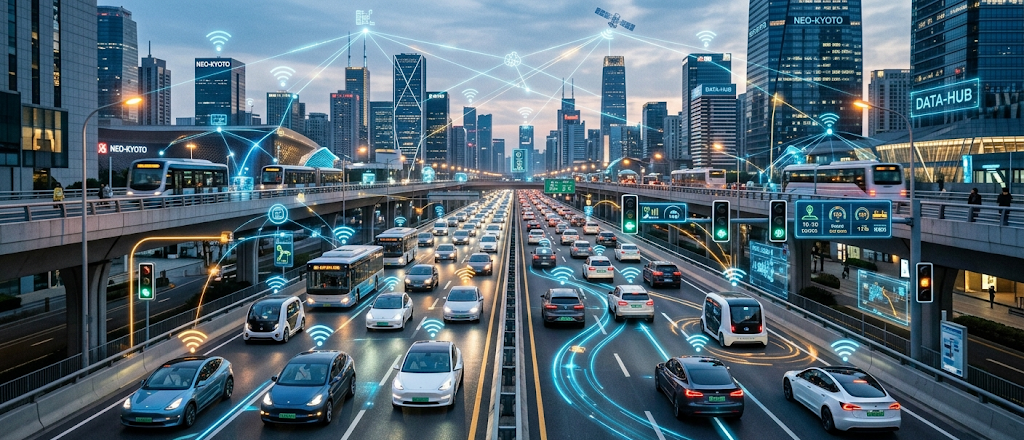
In the area of urban mobility one of the primary uses of IoT is in the development of what we term intelligent traffic management systems which in turn help cities with the task of monitoring and controlling transport activities better. Presently traffic control methods which are put in place are mostly based on set schedules and a limited set of info which in turn does not allow for a quick response to unexpected events like accidents, road work, or sudden increase in traffic. What we see with IoT based systems is the use of cameras, sensors, connected traffic lights, and data analytics which in turn present real time info on traffic conditions. This in turn allows traffic authorities to change traffic light patterns, re route traffic and in that process reduce traffic jams. By improving how we monitor and manage traffic these systems put out better results in terms of travel time, fuel use and safety. Also these systems are to become a key element of smart city growth as they enable our transport networks to run more intelligently and efficiently.
Connected Vehicles and the Future of Auto Tech
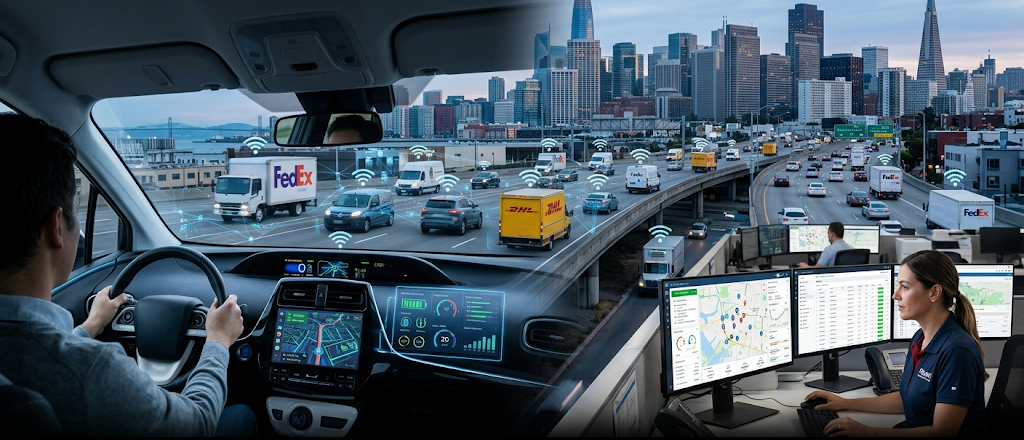
Connected in the Internet of Things is a large group which includes cars. These vehicles come with in board sensors, internet access and communication which they use to interact with the driver, other cars, and external networks. Unlike traditional cars which did this all by themselves, connected cars which are able to give real time navigation info, which also detect possible dangers, which also monitor the health of the vehicle, and which support auto drive features.
For example a connected car may get info that there is traffic ahead and which will put forth a different route. Also it will alert the driver to maintenance which is determined by the car’s analysis of data from its many components. This improves convenience which also reduces the chance of break down. As auto makers develop smarter cars connected cars are to become a main part of the future transport systems which see2 communication between cars and infrastructure which in turn makes for safer and more organized traffic flow.
Vehicle-to-Vehicle and Vehicle-to-Infrastructure Communication
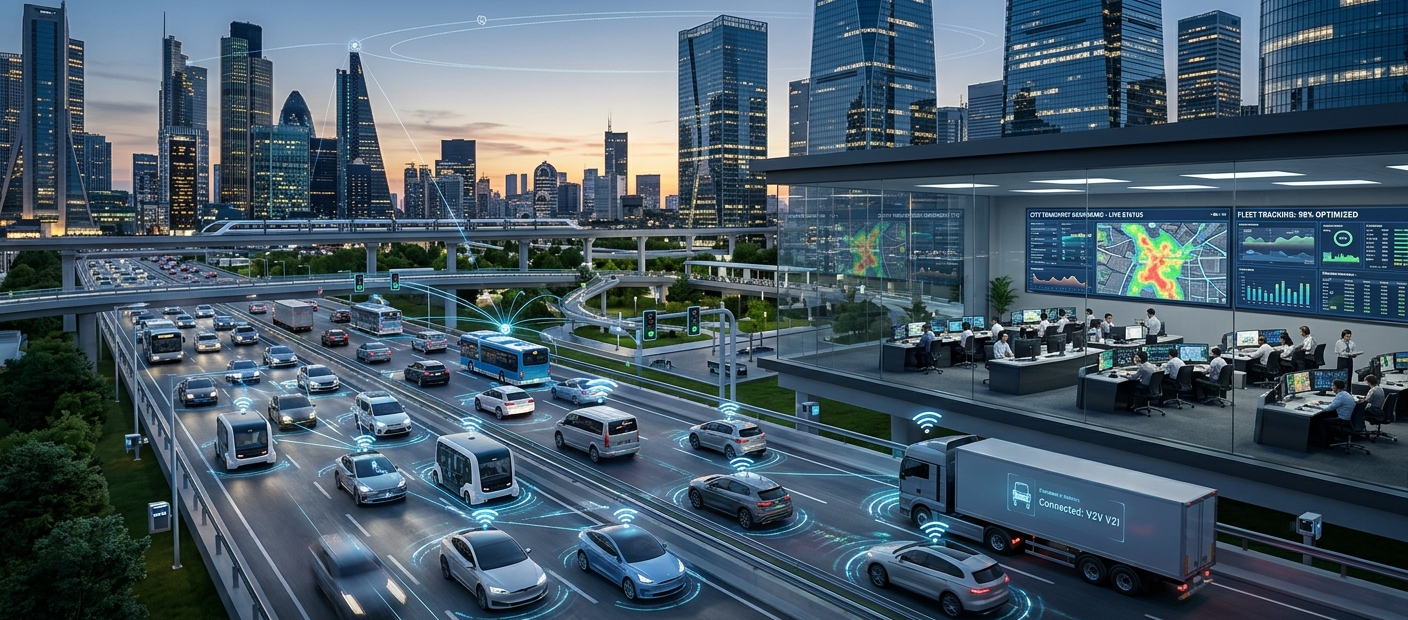
Vehicle to vehicle (V2V) and vehicle to infrastructure (V2I) communication are key in the field of connected transport. V2V communication has developed which see cars share info on speed, direction, brake activity, and road conditions which in turn helps to avoid accidents and which in turn improves driver awareness. For example should one car brake due to an issue on the road, the nearby connected cars will get the warning and react in time.
V2I communication includes the connection between cars and traffic lights, parking structures, toll gates and other transport infrastructure. This puts forth a more interactive environment for the roads where cars and cities may work as a team to improve efficiency. Also these techs play a role in the growth of the autonomous car by providing the info required for better decision making. While we see issues in the areas of cyber security, privacy protection and also the cost of infrastructure still present, connected vehicle tech is improving and has the chance to change how we travel.
IoT-Based Fleet Management and Business Efficiency
Fleet management is also an area which has seen great improvement from the implementation of IoT, in particular for companies which have large scale vehicle fleets. In the fields of logistics, delivery, transport, and public utilities we see the greatest adoption of fleet management systems which in turn track vehicles, monitor performance and reduce operating costs. In vehicles we have put in IoT devices which report on location, fuel use, driver behavior and maintenance issues.
Through digital platforms fleet managers have access to this info and are able to make decisions based on accurate real time data. Instead of waiting for manual reports or delayed updates which were the norm before, companies are now able to immediately identify issues and improve what they do. We see a move away from a reactive approach to a proactive one in which businesses are able to predict issues and solve them before they impact performance.
GPS Tracking and Real-Time Fleet Monitoring
GPS technology is a very popular IoT application in fleet management which does continuous reporting on vehicle locations and movement. We see companies which are using this to check in real time if drivers are following the set routes, to estimate delivery times, and to quickly react to unforeseen delays. Also GPS based systems improve security for us which means we are able to track vehicles and recover them in emergency situations.
To that we add that which go beyond basic location tracking and integrate other info like fuel use, engine health, and driver behavior. This gives a full report of how the vehicle is performing and which in turn allows managers to improve efficiency. For example, out of this data we may see that there is a lot of idling which is unnecessary, or that the driver is engaging in unsafe behavior or that the route taken is not the best. By using these IoT enabled tracking solutions companies are able to save on resources, to better serve their customers, and to put in place more sustainable transport solutions.
Smart Cities and Public Transportation Optimization
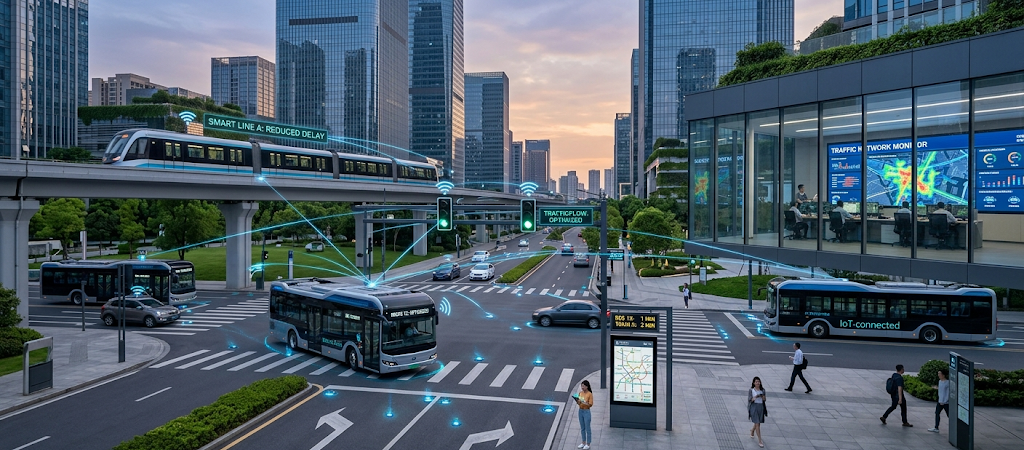
Smart cities which are implementing IoT are bettering the quality of life for their residents by way of connected systems which in turn manage resources more efficiently. In terms of what areas see the greatest impact from smart city solutions transport is at the forefront – it affects employment, education, health care access, and economic activity. We see that IoT enables cities to collect transport data from buses, trains, roads, and passengers which in turn is used to develop more efficient mobility networks.
Public transit systems may use sensors and connected platforms to track vehicle location, predict arrival times, and change services based on what the passenger demand is. This in turn reduces wait times and improves the overall commute experience. By studying how people move through a city smart city planners are able to design better, more accessible and environment friendly transport systems.
Optimizing Public Transit Through IoT
Public in which we see that the City is using the IoT for better public transport which in turn supports the overall better management of resources and the environment. We have connected buses and trains that are giving out info on passenger load, energy use, and also reporting on maintenance issues, which in turn enables companies to better time their services and to cut out waste. Also we see that in the area of smart ticketing we are moving to digital payment and giving out personal travel info to passengers.
Also IoT is playing a role in shared mobility services like bike sharing and ride sharing which it does by connecting users to what is available. Also these changes are what in turn are getting more people to use better options instead of private cars. As cities try to reduce pollution and to manage growth we are seeing that the IoT based transport solutions are very much at the core of building better, cleaner, more organized and inclusive urban spaces.
Improving Road Safety Through Connected Transportation
Safety is a major advantage of what we see in the implementation of IoT in transport. We see that accidents usually happen as a result of human error, poor visibility, delayed reaction time, or unsafe driving which is what we term as the cause. What we are seeing with the introduction of IoT is that it brings to light these issues by way of very timely and accurate info. Connected cars which are part of this trend use sensors and cameras to identify hazards, report on driver action and also alert on issues that may not be safe.
Also we are seeing fleet operators implement driver monitoring systems which in turn promote better and safer behavior which in the long run reduces risk. Emergency services also profit from what is going on in connected transport as they are able to respond in real time to incidents. By way of the use of communication tech, sensors and smart analysis what we are achieving is an environment in which we are able to identify risks at an early stage and put in place preventive measures.
Issues and Prospects of IoT in Transportation
Although in the field of transport IoT presents many benefits there are still issues which must be solved before we see these systems fully realized. A large issue is that of cybersecurity which grows with the connection of vehicles and infrastructure which in turn collect large amounts of private info that must be secured against access by unauthorized parties. Also privacy is an issue as users may worry over what is done with their location and travel info.
Also we see great investment is required in infrastructure, technology and skilled personnel to put these systems in place. Also different transport networks must do a better job of talking to each other which in turn requires all players, government, business, tech providers to play nice and agree on common standards. Despite these issues we can expect to see great innovation in AI, 5G and data analysis which is to make00 these transport systems more reliable, secure and accessible in the future.
Conclusion: Building Out the Transport Systems of the Future
IoT is transforming transportation by which its vehicles are getting connected, we see improvement in fleet management, we’re reporting better performance in public transport, and also we are to report the growth of smart cities. Via connected cars, GPS tracking, intelligent infrastructure, and real time data analysis, transport systems are becoming safer, faster and more efficient. Businesses are seeing better results out of their fleet management, while cities are able to reduce traffic and put forth better mobility options for their residents.
Although we have issues related to security, privacy and implementation which we still are to sort out, the benefits of what we are seeing from IoT in transport is what is driving investment and innovation. As tech develops we see the future of transport is in that of connected systems which will get vehicles, people and cities to work as one. IoT is not only bettering how we travel today but also is in the process of building the base for safer, cleaner and more intelligent transport networks for the coming generations.