There’s never been a greater number of processor options to choose from when it comes to picking a laptop. Many people would just go on to buy a computer based on how fast the clock speed is and the number of cores. The processor names, generations, performance ratings, efficiency boasts and technical jargon concerning threads, neural engines, integrated graphics, architecture, etc. make the choice a lot more difficult today. There are a number of different processors available to offer powerful options, each with a specific focus. There are multiple powerful processors to choose from, each with a particular focus. Some emphasis on maximum performance, some on battery life and efficiency and some on a balance for all-day use.
The highest benchmark scores don’t necessarily mean the fastest processor and the highest price tags do not necessarily mean the best processor. Instead, it will rely on an individual’s computer use. You don’t need the same processor if you’re a student taking notes in class and then logging online, have a video editor editing 4K footage, or a professional handling heavy software. The practical disparity between the Intel Core, AMD Ryzen, and Apple M series chips helps ensure buyers don’t spend more than they need to.
Laptop Processors: What matters?
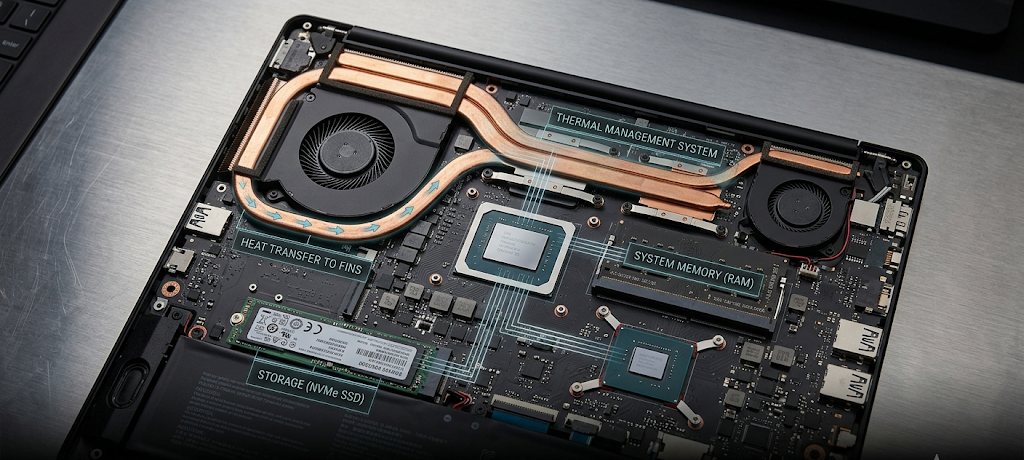
The central processing unit (CPU) is the primary component of a laptop that processes instructions, runs applications and controls many of the functions of the computer. It has an impact on the time it needs to open programs, how many programs can be open simultaneously, power efficiency, and generation of heat. But a single specification is not enough to define the performance of the processor. The user experience can be affected by a variety of factors, including the architecture of the processor, the design of its cores, the manufacturing process, thermal dissipation, and the optimization of software.
People tend to pay attention to the name or number of the processor, but today’s CPUs are far more complex. Sometimes a processor having less number of cores can outperform the other processor which has more cores but has an older and less efficient core design. Likewise, a computer that has a high processor could be a bad choice if the cooling is inadequate to deal with the heat that’s produced in heavier usage. The performance in the real world will depend on how well the processor integrates with the design, operating system, memory and storage components of the laptop.
Intel Core Processors: A Long-Standing Laptop Standard
For decades, Intel Core Processors have been the standard for laptops. For decades, Intel Core Processors have been one of the most sought after laptop processors. Intel has established itself as a trusted brand that offers processors for various kinds of computers, including student laptops and workstations for professionals. Intel Core processors are renowned for their outstanding single-core performance capabilities, wide software compatibility, and ubiquity on a number of laptop brands.
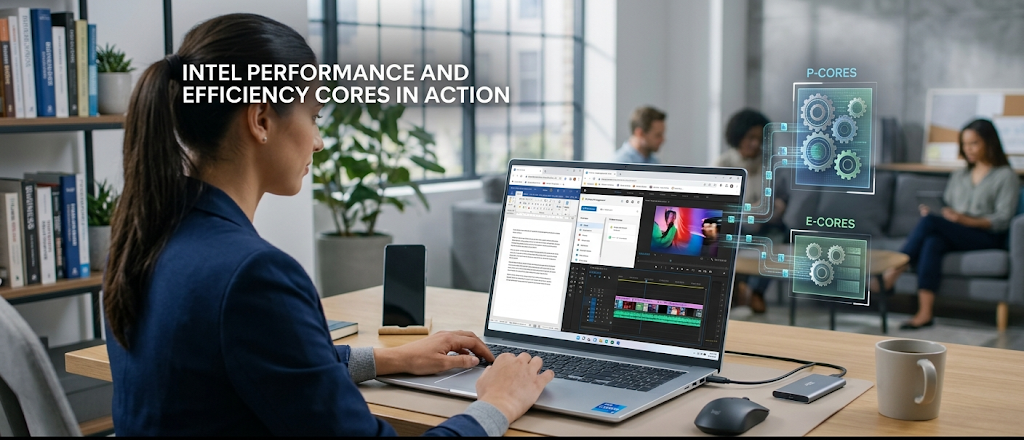
Modern-day laptop processors from Intel are composed of a mixed array of chip cores. Performance cores are used for heavy tasks like video editing, gaming and other powerful applications, and efficiency cores are used for lighter tasks that consume less battery. This way, laptops can deliver the right performance and power efficiency for the right task. The mid-range Intel processors might still be adequate for everyday applications, such as browsing, editing documents, streaming and conducting online meetings.
The benefit of Intel Core processors is compatibility. Intel is a very widely used chipset on Windows computers, so the majority of professional tools, drivers, accessories and applications will work well on Intel-based computers. This ensures that companies, students, and users can count on the reliability of Intel when it comes to compatibility with a variety of software options.
But at times, the Intel chips may require more power and produce more heat than some of the rivals, particularly when they are under heavy load. More powerful Intel laptops might need more powerful cooling systems, making them heavier or decreasing battery life. Although there has been an improvement in efficiency in recent times, there are factors such as power consumption to take into account when comparing one laptop to another.
AMD Ryzen Processors: High Performance and Efficiency
AMD has officially become one of the biggest competitors to Intel in the laptop market with their Ryzen line of processors. In recent years, AMD has been making strides in its processor architecture, and is also becoming more popular due to its balance of performance, efficiency and competitiveness. The Ryzen processors are widely used in a variety of laptops, from everyday and budget-friendly options to gaming and professional-grade devices.
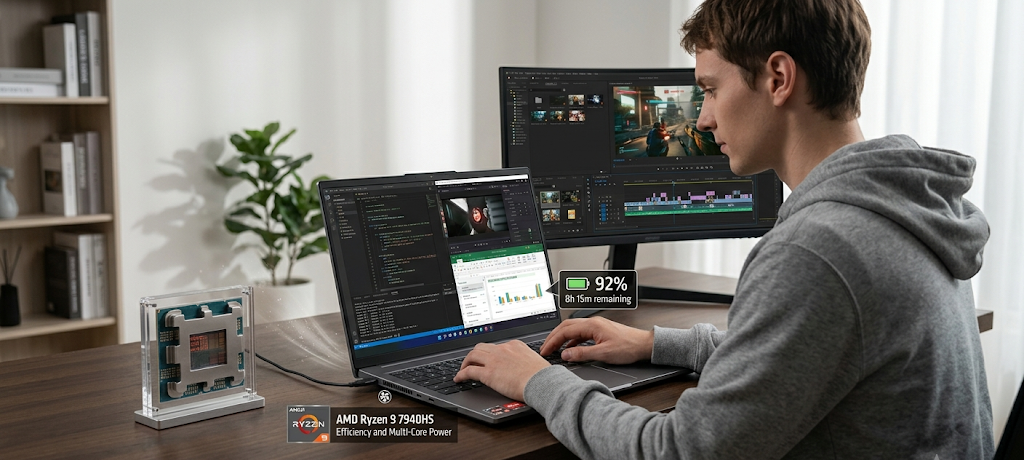
One of AMD’s best assets is its ability to deliver solid multi-core performance. With the ability to deliver impressive performance in handling tasks that utilize two or more cores, Ryzen processors are well-suited for tasks like multitasking, programming, content creation and productivity workloads. For those that use their laptop a lot for running numerous applications simultaneously, they may experience outstanding responsiveness when using a laptop equipped with the Ryzen chipset.
Energy efficiency has been a major focus of AMD. There are ways to achieve an impressive battery life with many of the processors found in Ryzen laptops as they are built to perform robustly while consuming minimal power. This can lead to quieter, longer-lasting, cooler-running laptops when they are not plugged in. This convenience of speed and efficiency is particularly beneficial for students, remote workers, and professionals who travel often.
The other benefit of the AMD Ryzen laptops is the price. AMD-powered laptops are often capable of the same performance as an Intel laptop for lower prices. This is why they are appealing to buyers interested in entering the market for top quality hardware, but not willing to pay a premium. For general tasks like school work, office work, creative work, and moderate gaming, a mid-range Ryzen laptop can be sufficient.
While these benefits exist, however, in some categories of greater-quality laptops, AMD may be less available than Intel. There are also some special professional applications that are also traditionally well suited to Intel platforms, but this has narrowed significantly over the years.
Apple Silicon: Performance Achieved Through Efficiency and Integration
Apple Silicon is a new type of laptop processor. Apple’s processors are not based on the traditional PC architecture, but on ARM technology. The M-series chips cover the Apple’s MacBook Air and MacBook Pro lines of products and are specifically designed for those devices. The M-series chips, including the M1, M2, M3 series and later, are dedicated to Apple’s MacBook Air and MacBook Pro ranges of products.
Efficiency is the greatest benefit of Apple Silicon. The processor, graphics, memory system and other parts are integrated to a high degree in Apple’s design. This enables MacBooks to perform very well on a relatively low power consumption. This means that many Apple laptops offer extended battery life, minimal heat generation, and reduced noise levels, even under heavy usage.
Apple Silicon processors really excel in creative tasks. The specialized hardware and high performance of Apple’s chips are often advantageous for video editing, photo processing, music production, and software development. The integrated graphics performance is also much better than many conventional integrated laptop graphics solutions.
One of the other key benefits is software optimisation. Since Apple regulates both the hardware and operating system, the OS can be optimised to run well on Apple Silicon. This intimate connection between hardware and software enables Apple’s laptops to run smoothly even with less than a super-high level of gear.
But Apple Silicon has its drawbacks. MacBooks typically have a smaller selection of options for hardware than Windows laptops do. Apple laptops might just be less flexible for users who rely on the use of some Windows-exclusive programs, specific business applications, or gaming libraries. Furthermore, the initial costs of Apple devices can be a bit steep, making them less cost-effective for some budgets.
Performance Comparison: Intel vs AMD vs Apple Silicon
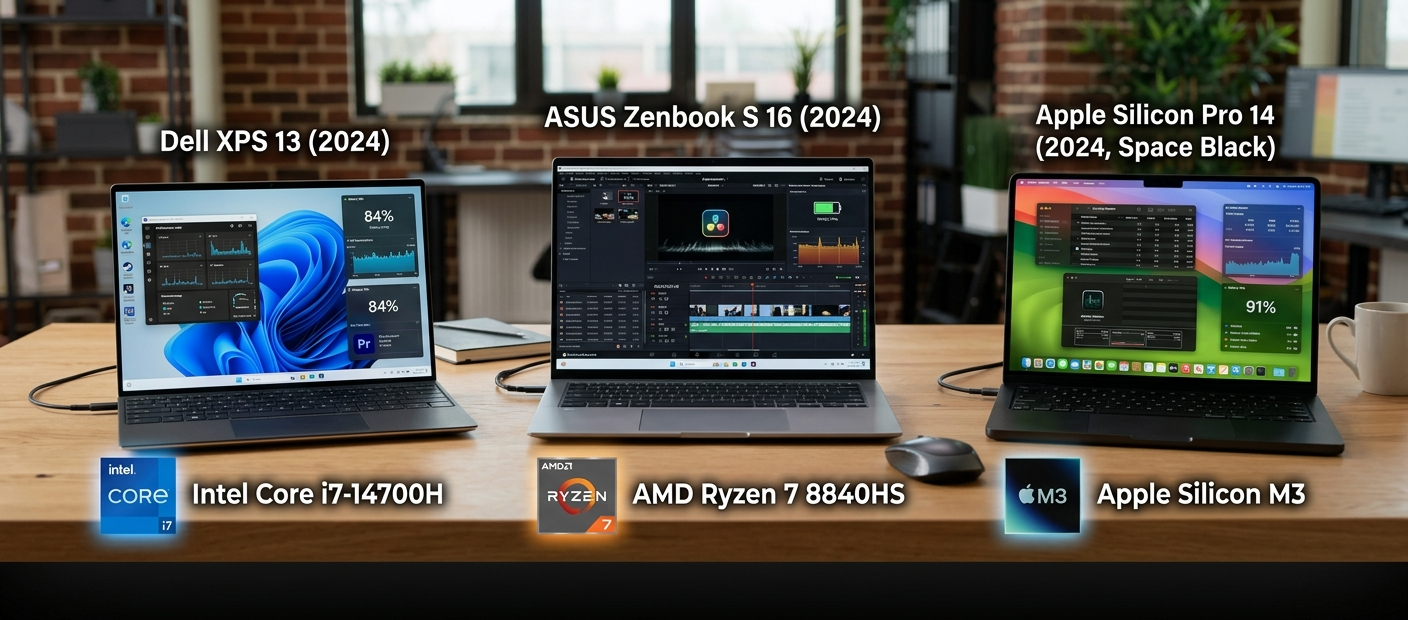
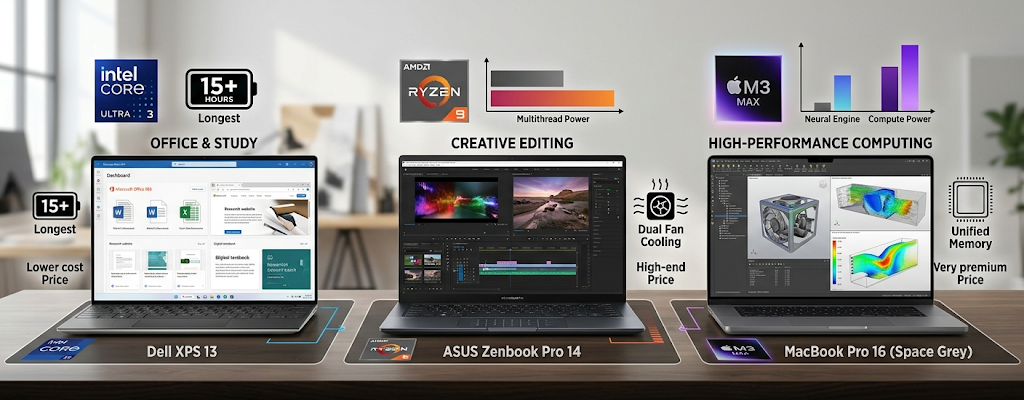
In terms of performance, there is no clear winner since each processor family delivers varying performance levels under different workloads. Many users find Intel Core processors offer great overall performance and compatibility, making them an appropriate choice for a variety of applications. For those who use multiple applications at once, the performance and efficiency of multi-core AMD Ryzen processors can be a compelling choice. The power of Apple Silicon is evident in software that is tailored to macOS and where people appreciate efficiency, quietness and creativeness.
All three processor families can deliver great performance for office tasks like writing documents, creating presentations, handling e-mail and surfing the web. There is no need for the buyer to have the most expensive processor for these jobs. Typically a smooth performance can be achieved with a modern entry-level or mid-range chip by Intel, AMD or Apple.
Students’ processor preference is based on their discipline. Most general students whose primary use of a computer is in Web applications, research tools, and productivity programs can select just about any contemporary processor. For students who are engineering, programming, designing, making video or to use advanced simulations, these higher performance processors may have more cores and graphics power.
The differences are more apparent for those people who are involved in demanding applications. When choosing a video editor, programmer, designer or researcher, processor speed is just one of several factors that should be taken into account, including software compatibility, memory capacity and cooling.
Which Processor Will Run Cooler at High Heat?
One of the most critical aspects of laptop design is heat management. An overheating processor will make fans spin at higher speeds, will shorten battery life and will limit performance in extended tasks. Some variation still remains between modern processors since each one is built to deal with power intelligently.
The architecture of Apple Silicon is known for its great efficiency – it can offer strong performance without using too much power. A lot of MacBooks stay cool and quiet throughout normal use, and offer exceptional battery life.
AMD’s Ryzen chips too deliver solid efficiency. There are a number of Ryzen laptops that offer outstanding battery life and still deliver competitive performance. They have been effective at increasing the efficiency and are popular in thin and lightweight laptops.
In recent generations, Intel has come a long way, particularly with the advent of hybrid architectures to optimize performance and efficiency. But, for some high-end Intel laptops, the cooling solution might still need to become more powerful due to their high-performance.
Price Comparison: To Get the Best Value
Many laptop buyers are influenced by the price. There are processors from Intel, AMD and Apple in a variety of range of prices but the overall value of the processor will depend on the laptop type.
AMD Ryzen laptops are sometimes regarded as a great choice due to their solid performance at affordable costs. They’re an ideal choice for those looking for performance without breaking the bank.
These range from budget to more expensive professional laptops, which are available in virtually every category. The ubiquity of this allows buyers a large number of options, which makes it a lot easier to find the laptop which suits their requirements and finances.
Apple laptops typically come with a higher price tag but many people believe the increased initial cost, battery life, construction quality, performance and software support over the long-term makes them more than worth it. The price might be worth it for users who like macOS and Apple’s ecosystem.
Which Processor is Best For Your Laptop?
It is not about the brand per se, but about the best processor for your needs. Students requiring a reliable laptop for research, writing, online education, and general use may select any modern, Intel Core, AMD Ryzen, or Apple Silicon (silicon) laptop. It should have a balance of processor with enough RAM and storage for performing daily tasks.
Intel and AMD laptop computers are typically good options for office workers requiring productivity applications, video conferencing, and the ability to multitask. Battery life is also a great selling point for Apple Silicon, if you’re a Mac OS user.
For creative professionals, developers and power users, consider the higher performance models. The advantages of Apple Silicon are great for creating-oriented use cases, and Intel and AMD offer more flexibility for those who need Windows-based tools or specialized software.
Finally, do not select a processor because of a marketing term or the most expensive specification. A high-powered processor that is more powerful than you need will just make the laptop more expensive without giving you much. If it has a more powerful processor than you need, the laptop could be more expensive than it will benefit you. The best option is a processor that offers the optimum combination of speed, battery time, compatibility and cost for the jobs you do.
Conclusion
There are advantages to each of the processors offered by Intel Core, AMD Ryzen, and Apple Silicon. Intel is a good option that is widely available and has excellent compatibility. AMD Ryzen delivers great performance, efficiency, and value to a lot of laptop users. Apple Silicon will provide exceptional power efficiency, low noise and high performance in Apple’s ecosystem.
The winner is not determined, as there is no universal winner as everyone has their own needs. Different processor features are required by a student, office worker, creative professional, and gamer. Rather than just looking at the specs, buyers can make the right choice about the laptop processor depending on what the processor can do in real-world situations – and what they’re not paying for to boot.