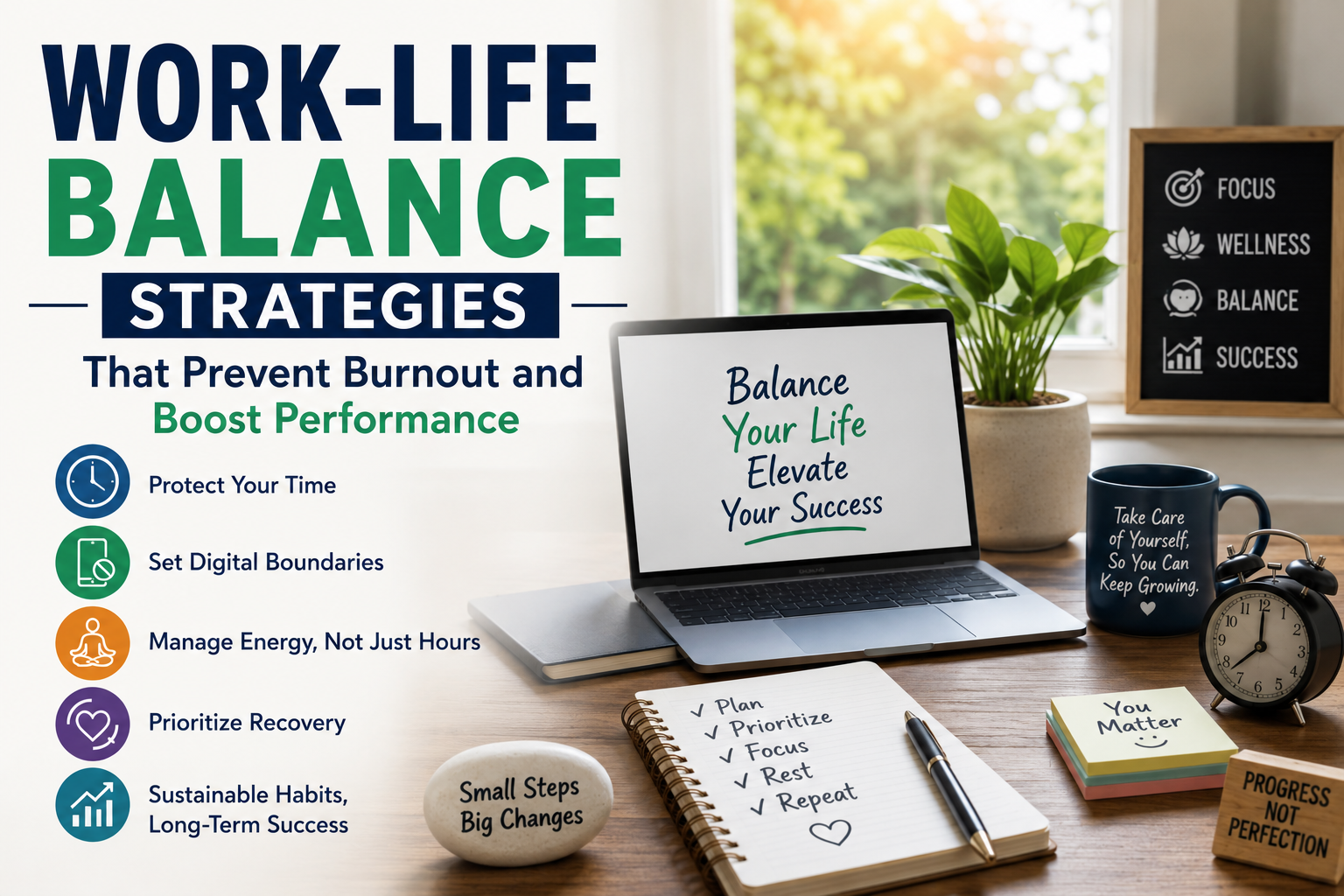
The contemporary workplace is often a place that values those who are willing to go the extra mile. Dedication is important, but if there are no limits, it will impact physical health, mental health, and career stability. Sustainable performance is not about working longer hours; it’s about developing habits that preserve energy, enhance concentration, and enable sustained high-quality work. Healthcare workers who know how to manage heavy workloads and take time to make recovery a positive aspect of their lives will be more likely to stay productive, creative, and resilient in the long term. Rather than aimlessly striving for productivity, engaging in work-life balance strategies will not only help avoid burnout but also contribute to career development that can be sustained for months and years.
There is a mindset shift that is very powerful: energy management over time management. If your mind and body are exhausted, there’s not much that you can do to get through an entire day. By planning challenging activities during their time of maximum energy, allowing time for rest, and understanding their own energy flow, they are more likely to get the job done with less stress all the time. It could lead to more efficient working habits, rather than longer hours and serve as a practical basis for better working practice.
Work-Life Balance Strategies: What Are the Benefits?
Work-Life Balance Strategies Improve Performance
It’s important to understand that work-life balance isn’t just about reducing your work hours. It really comes down to establishing habits that enable you to excel without compromising your well-being or personal life. Excellent employees understand that they cannot sustain high performance without keeping their physical, emotional, and mental states in top condition. If recovery is neglected, thinking becomes slower, creativity decreases, and motivation slowly fades away. When these areas are intentionally managed so that there is meaningful personal time in between, employees become more engaged, make better decisions, communicate effectively, and perform consistently, even during the busiest times. Many companies are now realizing that their staff members are more productive when they take care of themselves rather than exhausting themselves all day long.
6 Powerful Work-Life Balance Strategies
1. Set Hard Stops to Protect Your Personal Time
A good rule for any professional is to set a definite end time for work. People still send emails, check documents, or prepare what they are going to do the next day after they finish their day’s work. This can seem like a good short-term strategy, but over time it makes it difficult to keep work and personal time separate and leaves people unable to truly relax. Hard stops are defined as the determination ahead of time to stop work at a specific time (unless there is a real emergency). This practice can help improve time management while working, as unnecessary activities will not consume precious time. It also provides room for family, hobbies, exercise, and a good night’s sleep, all of which have a direct impact on work performance the next day. Consistency is key because if you only enforce boundaries occasionally, mental recovery is unlikely to be sufficient for long-term success.
2. Build Digital Boundaries After Working Hours
Communication is now quicker, but there is also the expectation of being available at all times. Thanks to notifications from messaging apps, project management software, and email applications, it is possible to lose time responding to notifications and prevent the brain from “switching off” from work. Digital boundaries can facilitate this separation. Disconnecting from work, such as after work hours, before bedtime, and, when possible, on personal phones, can help lower stress. You should also inform your co-workers about your communication hours to set healthy expectations without sounding unprofessional. Most work-related issues should be delayed until the next business day, and maintaining uninterrupted personal time is good for mental health and workplace performance. Unplugging is not a sign of avoidance; it is a sign of recovery that is needed to be at your best when you return to work.
3. Focus on Energy Instead of Hours Worked
Productivity is often measured in terms of time rather than work produced. This attitude can cause fatigue because more hours don’t always mean better results. Rather, by shifting focus to personal energy cycles, people can complete demanding work when it most logically fits their peak thinking energy and leave lower-energy tasks for administrative duties. Proper nutrition, fluid intake, exercise, and sleep play a large role in helping maintain energy levels throughout the day. There are also breaks between periods of focused work that help alleviate mental fatigue and increase concentration. Instead of pushing through and working for longer periods, respecting the body’s natural limits allows professionals to keep performing for longer without burning out.
4. Create Recovery Rituals for High-Pressure Jobs
Recovery should be incorporated into work routines rather than being treated as an afterthought. For those in high-pressure occupations, simple routines can act as reminders to transition from work to home. These can be anything from a 10-minute post-work stroll, a bike ride, reading, meditation, a nutritious meal, or a quiet family dinner. These rituals are designed to lower stress hormone levels and give the mind a chance to decompress from the events of the day before the next work cycle begins. Weekends are also crucial because they allow greater physical and emotional recovery. Frequent use of these habits builds resilience, enabling individuals to better cope with future workplace demands while maintaining their well-being.
5. Recognize the Early Warning Signs of Burnout
Burnout doesn’t occur in a single day. It builds up over time as a result of prolonged stress and inadequate recovery. Some common early signs are feeling constantly fatigued despite getting a good night’s rest, becoming more irritable, feeling less motivated, struggling to concentrate, producing poor-quality work, feeling detached from work duties, experiencing headaches, and having restless sleep. Some professionals also develop cynicism toward work colleagues and lose interest in projects they once enjoyed. Often, these indications are ignored, and the situation becomes more serious over time until productivity declines significantly and health issues arise. Identifying these symptoms early enables people to make appropriate changes before burnout takes hold. Regular self-assessment and honest reflection make it easier to recognize unhealthy patterns before they affect long-term career success.
6. Reset Before Burnout Takes Control
It takes more than a single day off to recover from extended stress. The initial task is to identify the greatest pressure points and make decisions about reducing, delegating, or postponing responsibilities. Daily schedules can be reviewed to identify unnecessary meetings, unreasonable deadlines, and other bad habits that lead to being overburdened. A good night’s sleep should be a top priority because it supports physical recovery, emotional regulation, and cognitive performance. Exercise, even at a moderate level, lowers stress levels while boosting mood and energy. Having friends, family, or mentors who can support you can also help during stressful times. When lifestyle changes aren’t enough to reduce burnout symptoms, it is important to seek assistance from a healthcare provider or mental health specialist. When burnout is addressed early, it doesn’t have to become a chronic condition.
Build Sustainable Habits for Long-Term Career Success
True long-term success is more about building habits and practicing them consistently on a day-to-day basis. Regular breaks, protecting vacation time, eating healthy, exercising regularly, and setting reasonable work schedules are all factors that help build resilience over time. Saying no to unnecessary tasks helps protect your capacity to take on what is truly important. Checking your goals regularly helps ensure that everyday tasks remain focused on priorities rather than becoming busy work. Managers and employers value employees who consistently deliver reliable results, and these results are easier to sustain when health and well-being are not treated as afterthoughts. Sustainable habits help improve productivity while also increasing job satisfaction, strengthening relationships, and supporting ongoing professional development throughout every stage of a career.
Conclusion
Burnout prevention isn’t a one-time activity. Sustainable career performance is established through hard stops, digital boundaries, effective energy management, and consistent recovery rituals. Recognizing the early signs of exhaustion and responding before burnout takes hold can make all the difference in maintaining good health and long-term success. Work-life balance strategies isn’t about scaling down ambition; it’s about developing a healthy and sustainable way of living that allows ambition to thrive. Those who protect their energy, respect their personal boundaries, and prioritize recovery position themselves for improved performance, greater resilience, and lasting career satisfaction.
Work-life balance strategies is a lifelong journey, not a finish line. Your work and personal routines will need to change over time as your needs and responsibilities evolve, so it is important to review them regularly and make adjustments when necessary. It’s always easier to achieve better long-term results through small, consistent improvements than through major changes that cannot be sustained. It’s about setting realistic expectations, conserving your energy, and ensuring proper recovery so you can continue performing at a high level without compromising your well-being. Your health today gives you the strength to take advantage of future opportunities, face challenges with confidence, and enjoy a satisfying career that lasts for many years.